

Week 7: July 19th - July 25th
Happy Sunday resolute guillemoteers!
Let’s start the week with some happy PIGU sounds in a video recorded by Suzanne Lieberman at her Battle Point colony on Bainbridge Island. Who else instantly perks up the moment you hear the distinctive high pitched chattering and trilling of these animated birds?
We are entering the 7th “official” week of the survey. This is the 3rd week of July, which is also the period in which we have historically seen the highest frequency of prey deliveries to chicks in burrows. While new “chick burrows” will undoubtedly continue to crop up in the coming weeks, or month even, this next week or two stretch should mark the high point of provisioning activity.
Here are some amazing prey photos from Erin Baumeister just off of Valdes Island, in the Gulf Island region of B.C., and Suzanne Lieberman from Bainbridge Island.
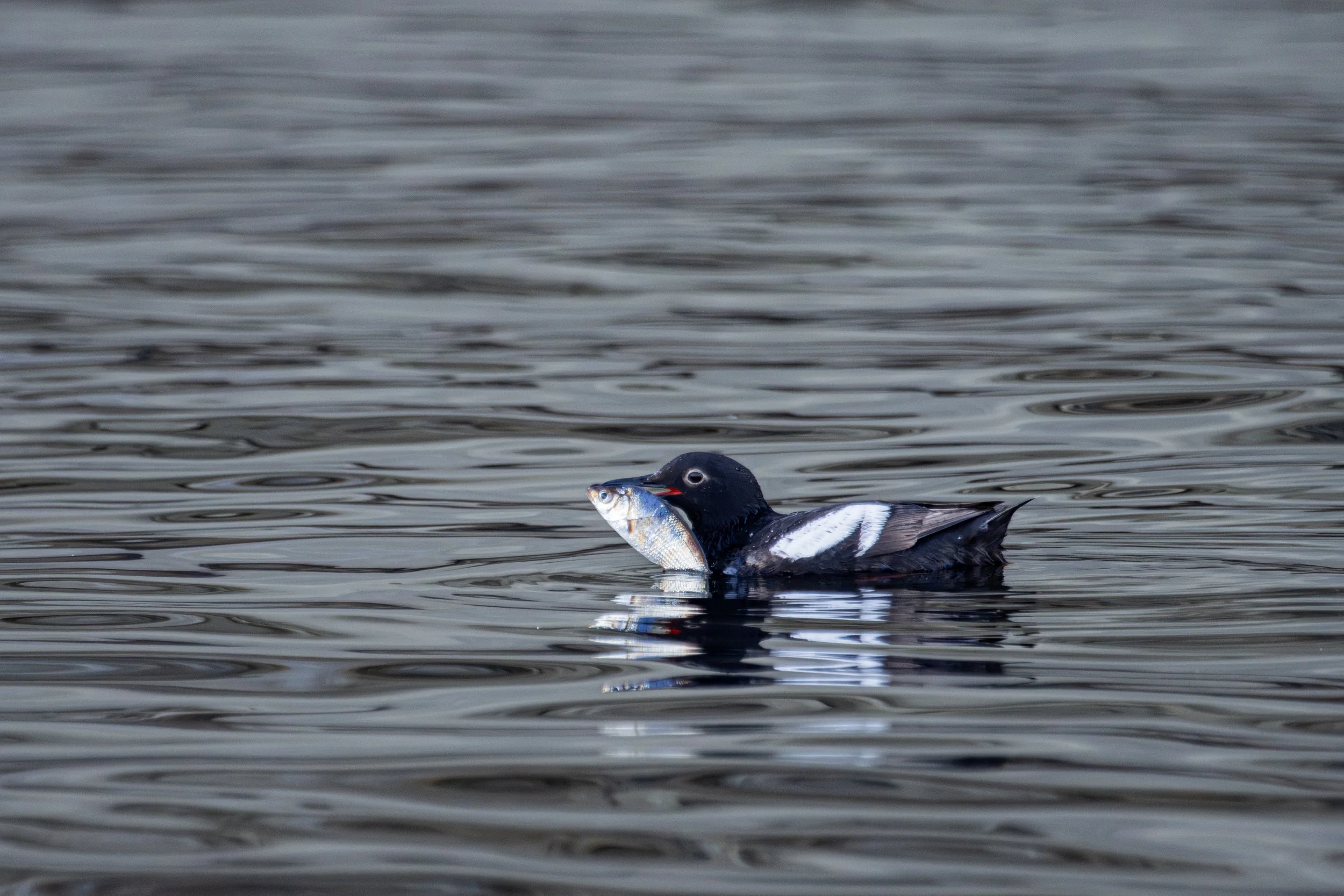
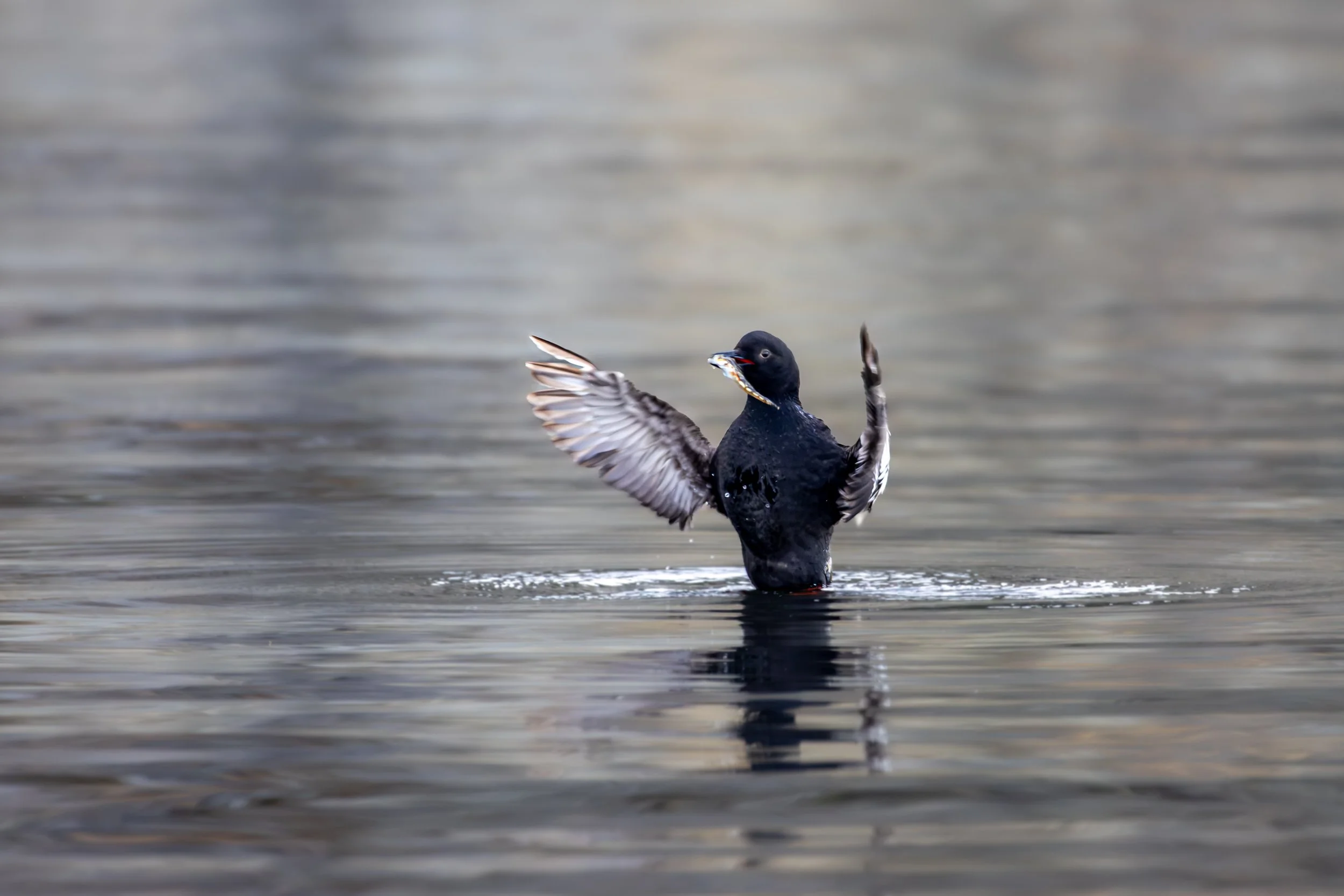
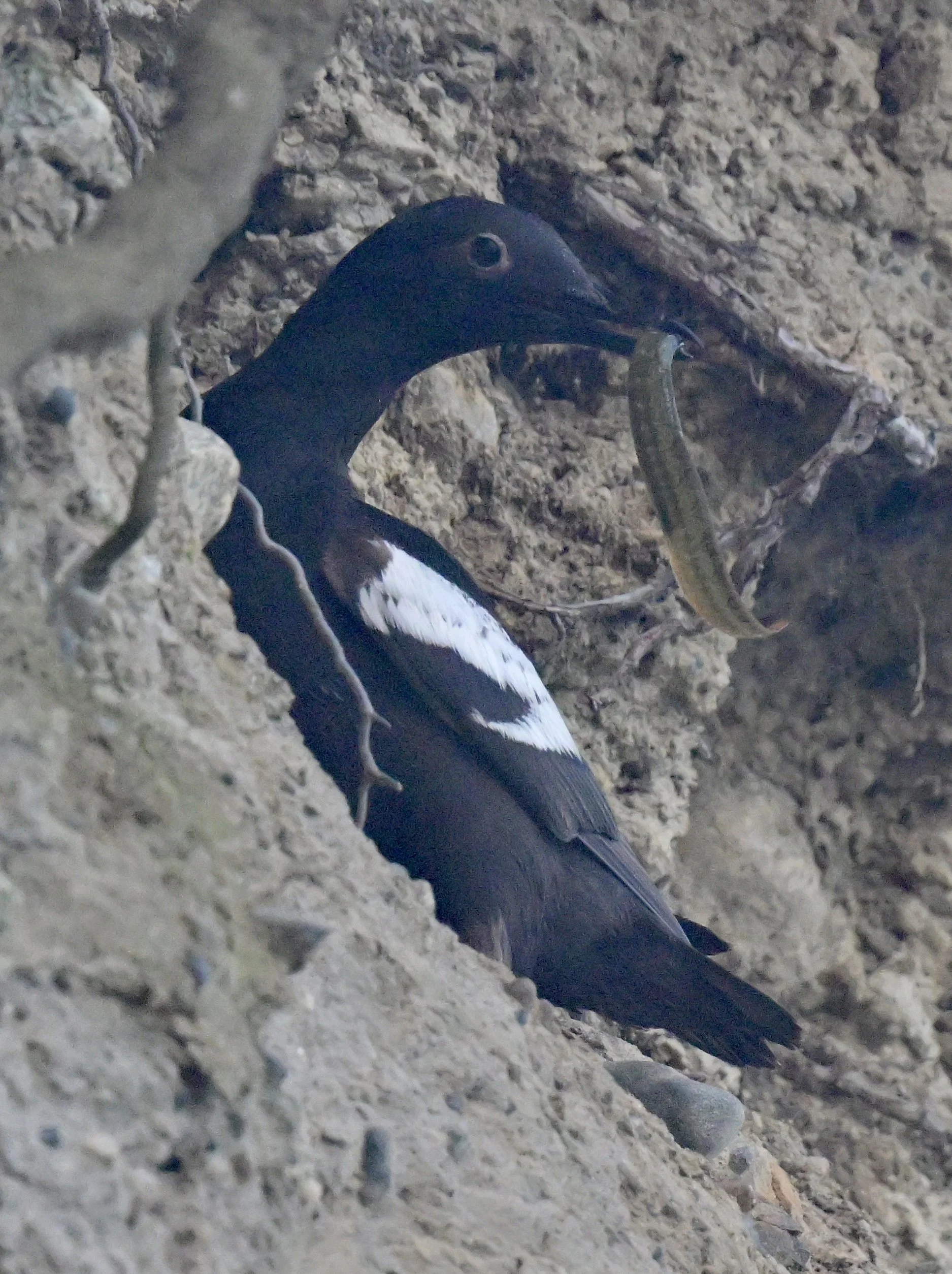
Even so, guillemots don’t always follow the play book we expect. You might notice that your colony activity levels seem to fluctuate from week to week, which may seem odd, especially if feeding has just begun. This was the story I heard from Erin following her survey at Valdes Island. Erin told me that the week before was marked by multiple prey deliveries and a flurry of activity, while last week the birds came across as almost lazy.
The very next day after hearing this, I experienced a similar change in activity at my colony in the South Sound. We observed our very first fish to burrow in week 5, so we anticipated more of the same in week 6. Instead, our guillemots repeatedly made no prey visits to burrows all through the hour. We witnessed 16 flights to 7 burrows, and there was not a fish in sight the entire hour! The PIGU also spent much of the hour flying up to ledge sit just below their burrows.
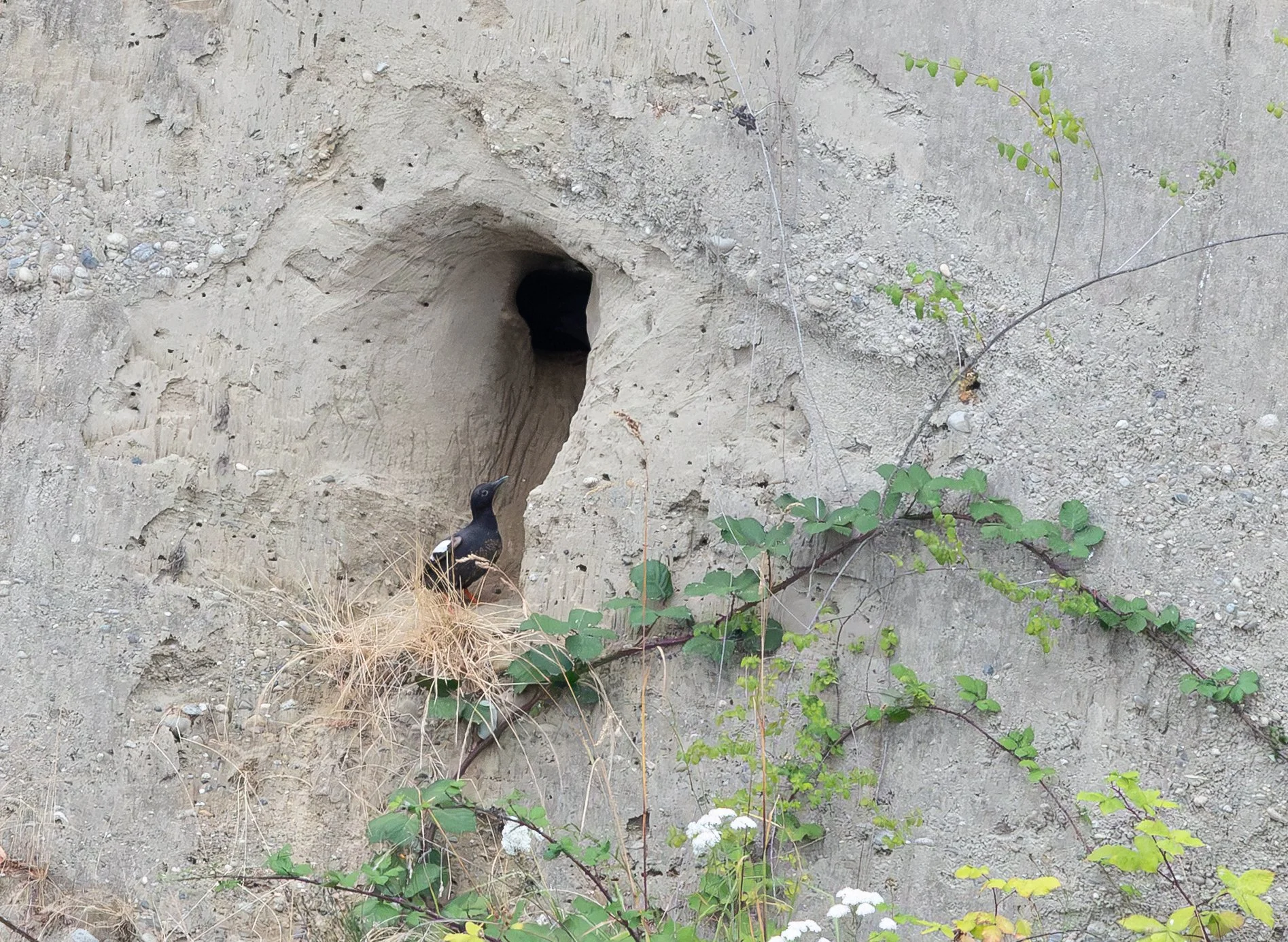
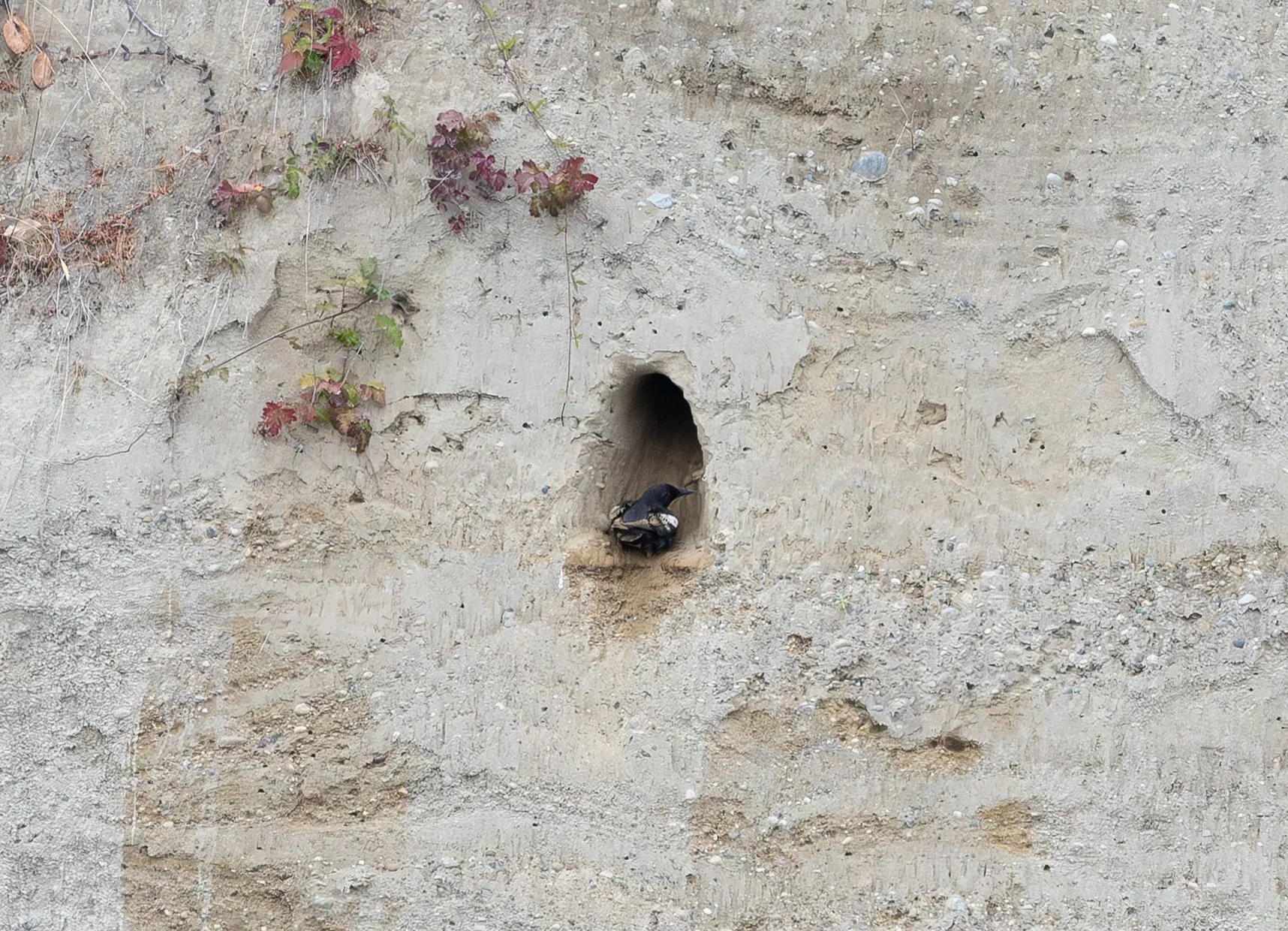
I don’t really know how to explain what is happening, but I assume as long as the guillemots are at the colony and interacting with each other and the bluff, something related to their reproductive cycle is surely still going on. I try to stay optimistic that all is okay and accept that there will always be some mystery surrounding pigeon guillemot behavior.
Another question asked was whether it is normal to have quite a few more active burrows than chick burrows? To clarify, an “active burrow” is any burrow that has been visited by a PIGU, whether with or without prey. A “chick burrow” is an active burrow that has received prey. At some colonies, a high percentage of active burrows do eventually become chick burrows, but at others, the birds visit many burrows in the early season, but only a few of those receive fish in the end.
We believe one reason is that PIGU do some amount of “apartment shopping” in the early season. Males return to the colony several weeks ahead of the females and begin checking out their digs and staking their claims. Sometimes, even mated pairs will stake out more than one burrow before settling into one.
There is also this excerpt from the Birds of the World Species Account for the Pigeon Guillemot that might further explain what we’ve observed. It says, “A few yearlings, and greater numbers of 2 to 3–yr olds, frequent breeding colonies, arriving later than established breeders. Indiscriminate copulation attempts and searching for unoccupied nest cavities are the main activities of males (Nelson, 1982).” So it could be that we are witnessing young males as they try out burrows and practice the behaviors they will use in future breeding seasons.
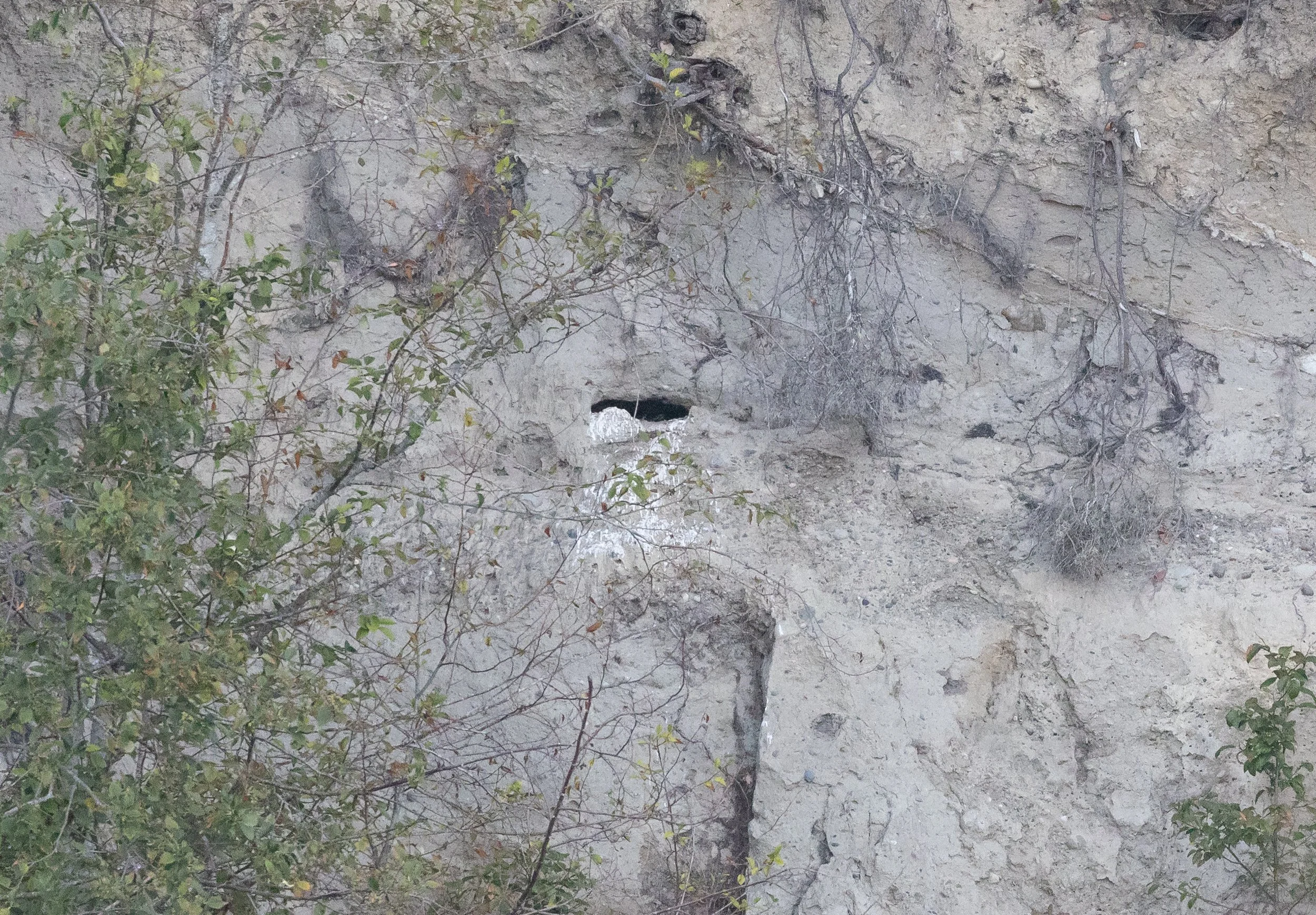
This leads me to a related topic! One almost sure sign of chicks in the burrow, is guano whitewashing the bluff beneath the entrance. The species account also says this, “Adults defecate away from the nest cavity, chicks to the sides or out the entrance (Thoresen and Booth 1958). Presence of accumulated feces strong evidence that site occupied.” I present you with Exhibit A, evidence of chick(s) in the burrow.
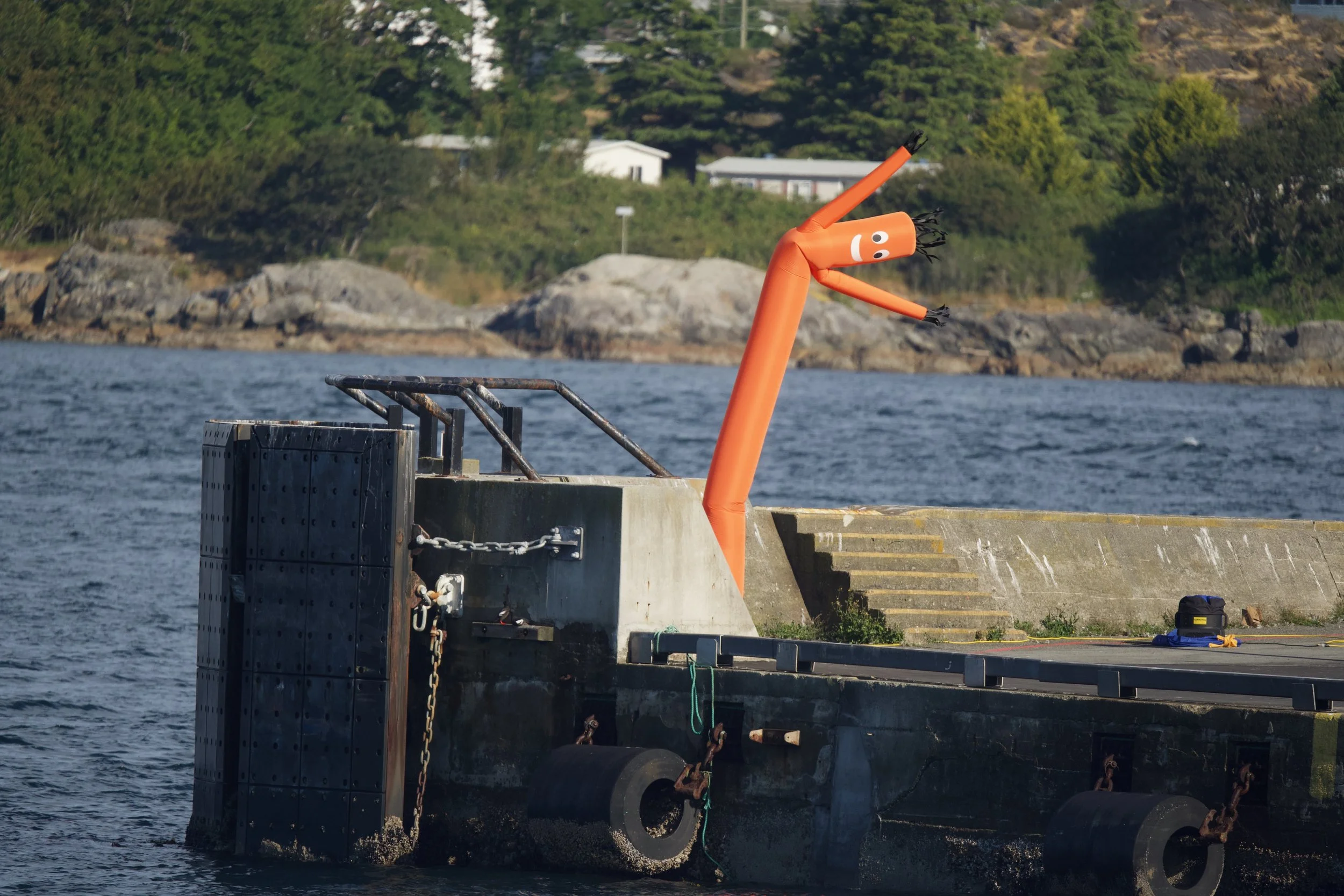
I want to share one more update, this from Liam R. in B.C., regarding probably the weirdest “disturbance” I could have ever imagined: a wacky, tube arm, waving, blow up man was placed directly above an area where PIGU are nesting at Ogden Pier in the Port of Victoria. Luckily, the guillemots seem to pay it no mind and go about their business. What are impacting them though, are the large ships that have moored in front of their “burrows”. This is definitely a unique colony—one at which we can document how PIGU respond to human disturbance on a large scale, and highlights the value of the information collected during weekly surveys.

I’ll send you off with good thoughts of more prey deliveries to come, evidence of chicks in burrows, few disturbances, and the peace and wonder than comes from monitoring our important little birds!
Thank you all for your continued efforts and dedication!
Shannon