

Why Study Pigeon Guillemots?
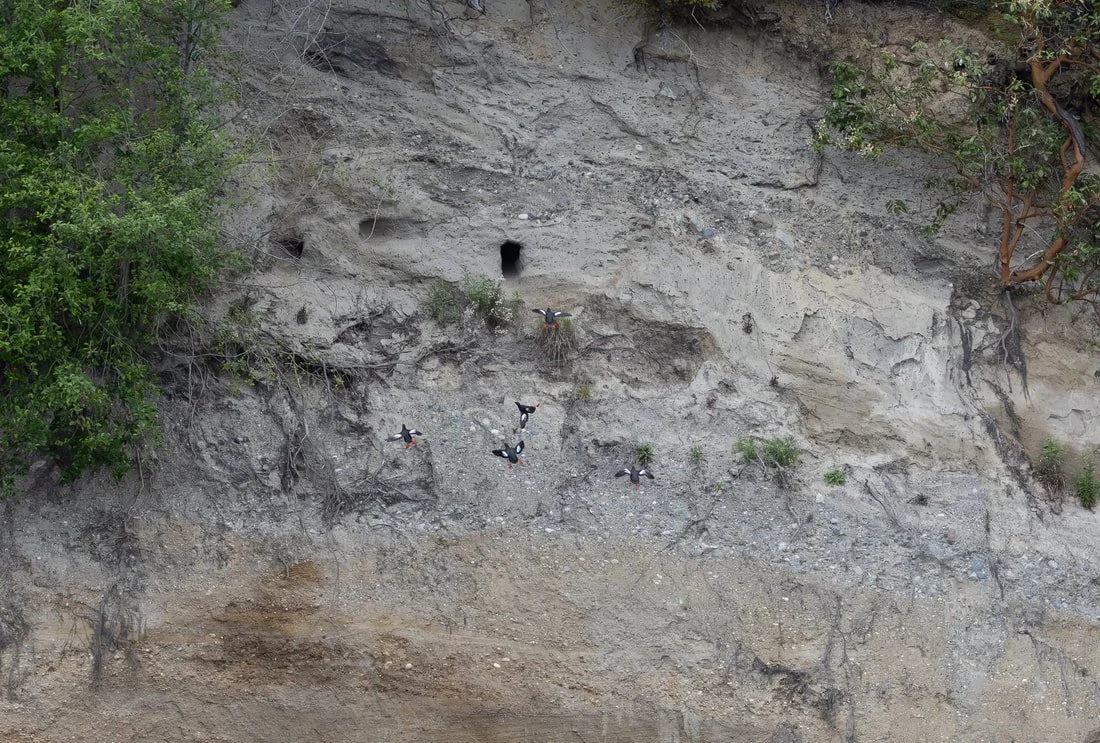
As one of the few seabirds that both breed and winter in the region, Pigeon Guillemots are considered an important indicator species of Salish Sea health Pigeon guillemots typically breed in coastal bluff ecosystems. This inextricably links them to the nearshore marine habitats that support vital natal grounds for many fish and invertebrate species. Additionally, these seabirds are near the top of their food chain, monitoring their populations and breeding success can help provide a snapshot of the health of subtidal marine environments and food webs. Because Pigeon Guillemots breed in smaller, more dispersed colonies, and have long been considered stable, they have not been the focus of much research in the Salish Sea. Our monitoring efforts seek to fill this knowledge gap, and in turn, inform our understanding of the health of nearshore marine environments.
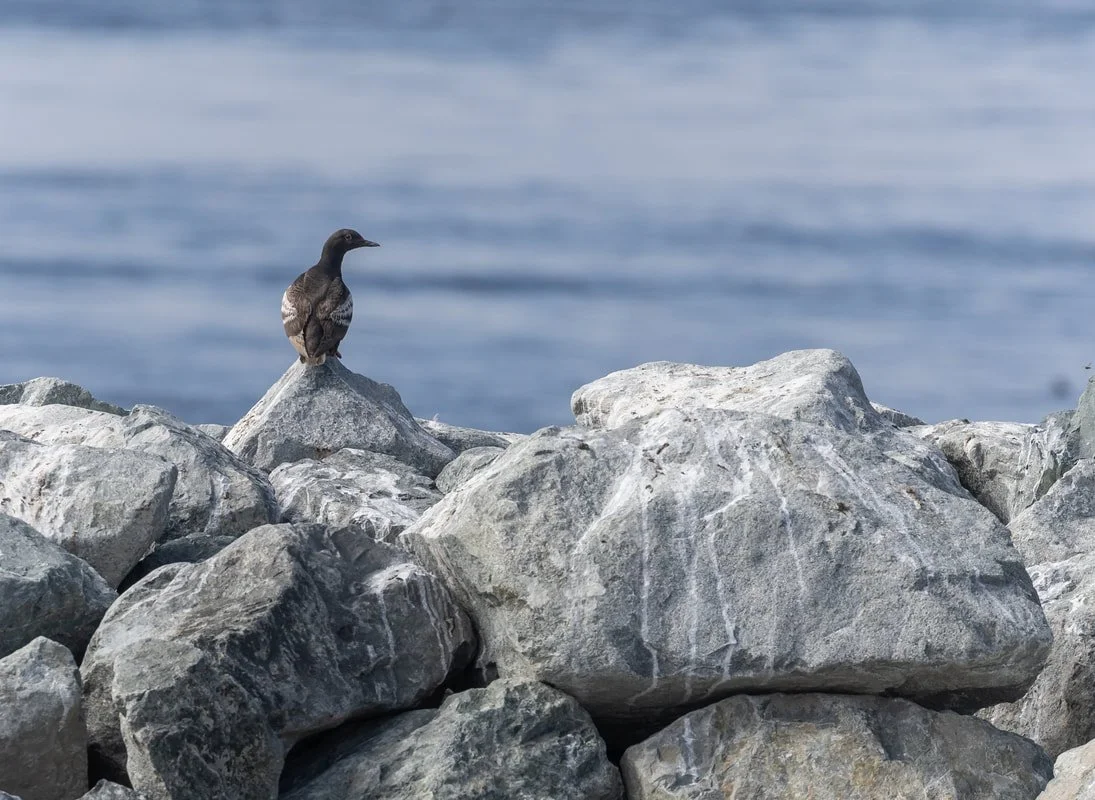
Photo: Shannon Boldt
Our Survey
During the breeding season (June through August), volunteers visit each colony weekly and observe the birds for one hour. They count the birds, map active burrows, and identify prey delivered to the nest burrows. Because Pigeon Guillemots feed themselves and their young almost entirely on benthic (bottom dwelling) fish, the success of this population depends on a healthy marine environment and an ample supply of fish. This is why we pay close attention to the species of fish that are being delivered to burrows through the season.
Prey deliveries begin in June and reach a peak around mid July. Prey are identified visually using binoculars and spotting scopes. The most common fish types we observe are gunnels (family Pholidae) and sculpins (superfamily Cottoidea). Focused research at this time will shed light on the success of fledglings as it is tied to the species of fish used to feed the young. We assume that the Pigeon Guillemot population is dependent upon the populations of these bottom fish.
As the project has expanded to other regions, we continue to build a more robust data set that can provide the answers to future questions. Monitoring is different from some modes of inquiry-based research. Our work is ultimately about keeping an eye on the population to look for trends within our colonies. Our volunteers learn many things in the field, but in all they are helping build a record for future studies and conservation efforts.
University of Washington Researchers
Below are videos of work done by University of Washington researchers, briefed to the SSGN on October 22nd, 2020.
University of Washington masters candidate, Emily Buckner, describes her thesis "Identifying Dietary Shifts in Breeding Pigeon Guillemots" through analysis of PIGU shell fragments collected during SSGN PIGU breeding surveys.
University of Washington doctoral candidate Amanda Warlick describes her use of the SSGN PIGU breeding survey data in statistical models to improve our understanding of Pigeon Guillemot abundance and nest success.
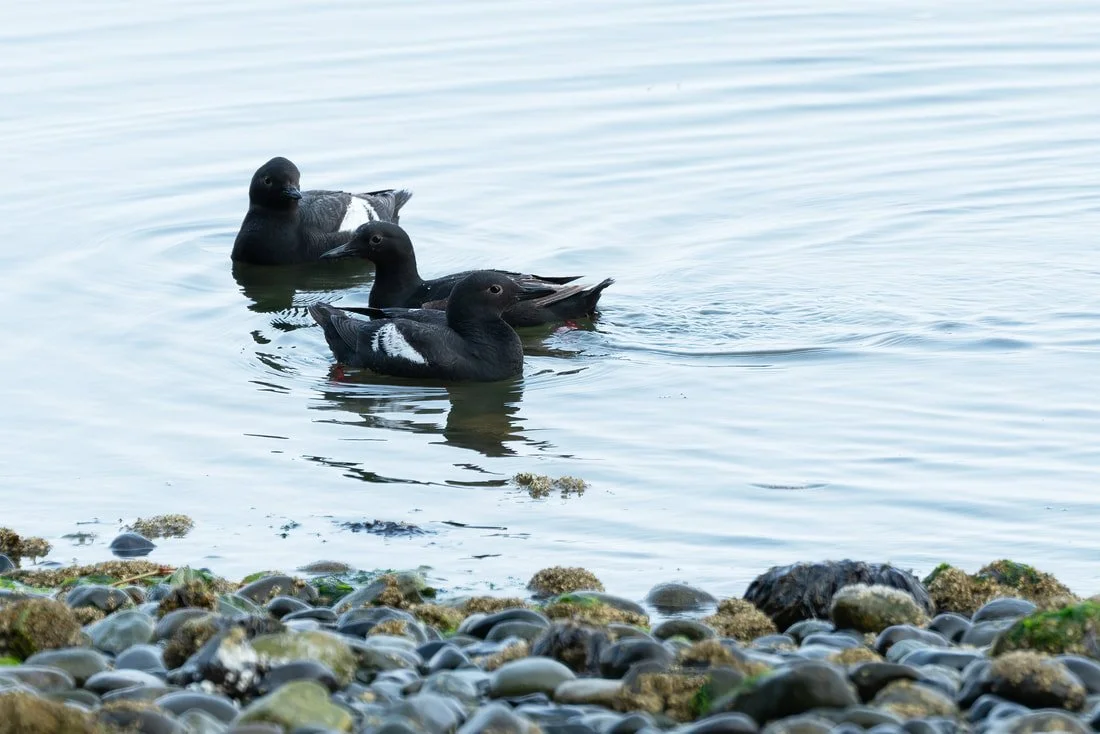
Photo: Daniel Hale
Raising Awareness
A final and equally important aspect of our work is to help educate the public about the importance of bluff stewardship and the joy of having guillemots in our waters. Our dedicated group of community science volunteers spread the word with their friends and neighbors as well as beach walkers. We monitor disturbances to colonies and attempt to decrease human-caused disturbances through education. This is a vital aspect of community science and encourages engagement from the greater community to take notice of and steward their local environments.