

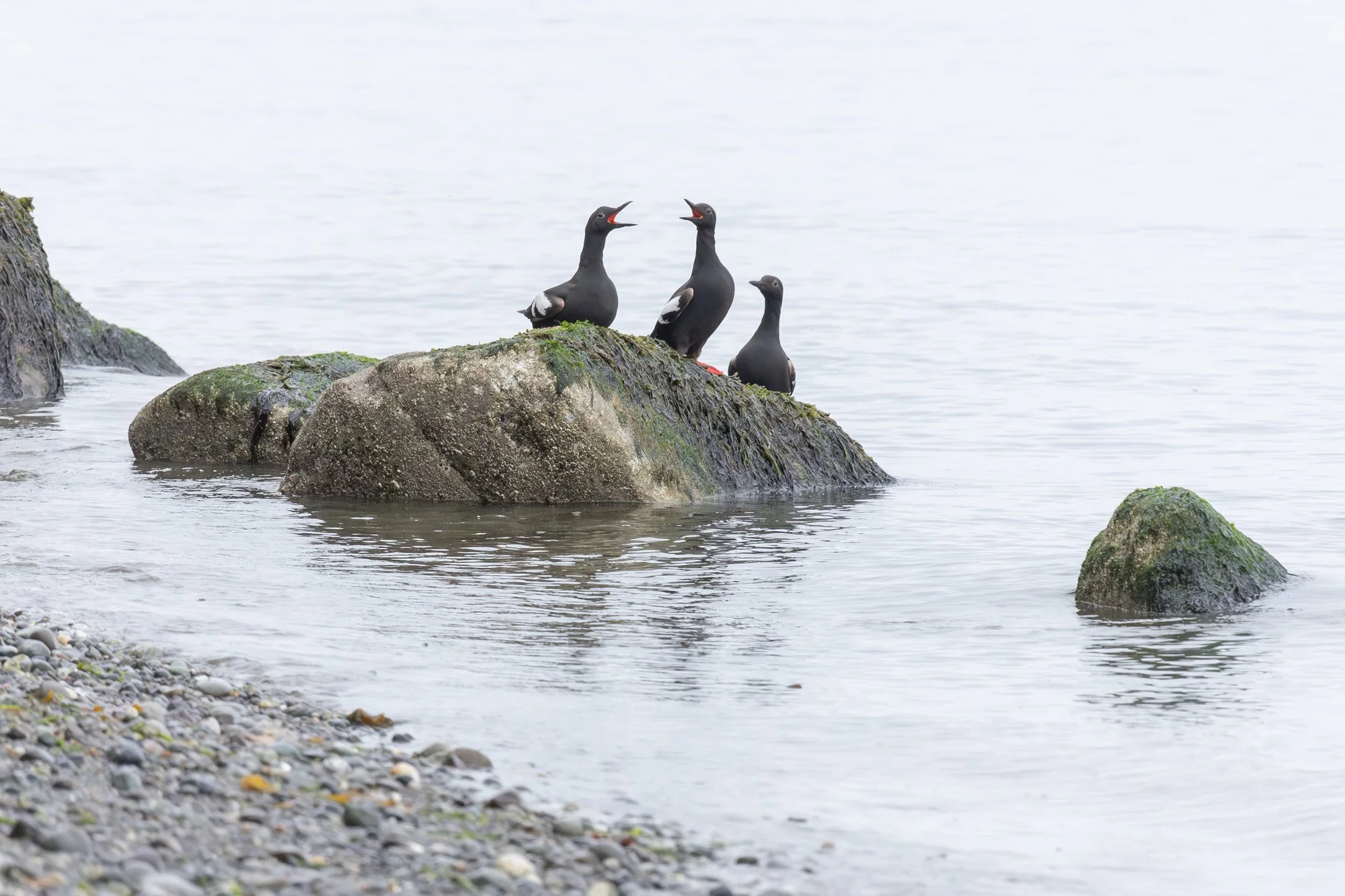
What is a Pigeon Guillemot?
At a Glance
Pigeon Guillemots (Cepphus columba) are members of the Alcid family. Commonly referred to as auks, this family includes puffins, auklets, murres, murrelets, and two other species of guillemots. There are five breeding species of alcids in Washington state, but Pigeon Guillemots are the only species that breeds in the interior of the Salish Sea. Their preference in using coastal bluffs for breeding and role in the nearshore subtidal communities makes them an important species, an indicator of overall health of marine environments.
Although they are relatively small, spend most of their time on the water, and don’t breed in large colonies like many other alcids, Pigeon Guillemots are striking birds both in appearance and behavior. They are medium-sized, around 13inches long, roughly the size and shape of a football. During the breeding season, their plumage is almost entirely dark, their striking white wing patches and brilliant red feet and mouth lining creating a vivid contrast. There is no mistaking the presence of these active and vocal birds, particularly during the breeding season, when they frequently call and dive near their breeding territories.
Photo: Lac Pope
Resident of the Salish Sea
Pigeon Guillemots inhabit the near shore environment along the Pacific coast of North America, from California to Alaska, and into the Bering Sea west along the northwest Pacific coastline of Russia. Rough estimates indicate their total population at 235,000.
Typical of many seabirds, Pigeon Guillemots dive under water to feed and are supremely adapted to this manner of foraging. Using their short stubby wings to “fly” under water, the birds follow a zigzag course to rocky seabeds where they search for benthic fish and invertebrates (like the sculpin in the photo below). The birds typically feed in water 10 to 30 meters deep.
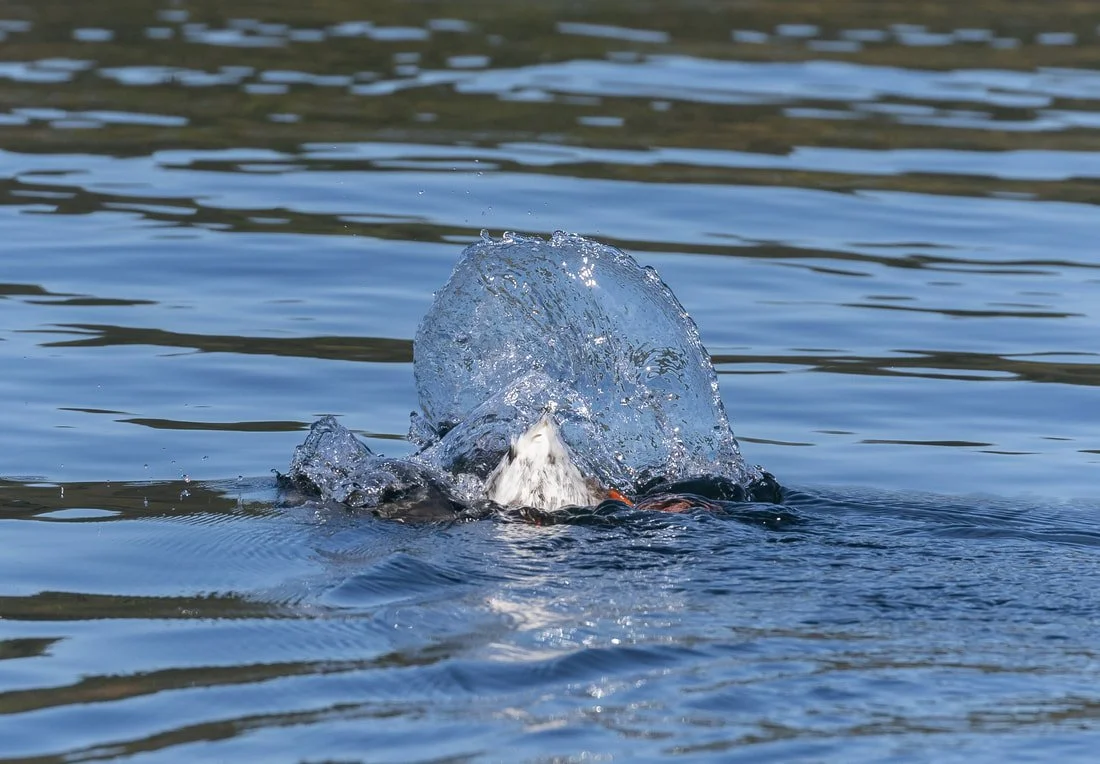
Photo: Shannon Boldt
Breeding
Pigeon Guillemots generally live and feed offshore except from early spring through September, when they return to their natal breeding grounds along steep rocky or sandy cliffs and predator-free islets. They typically select rock cavities or previously carved out burrows for nesting, like the old burrows of Belted Kingfishers. While natural sites are most common, this doesn’t stop some guillemots from establishing colonies in busy locations like ferry docks across the Salish Sea.
Early in the season, guillemots reestablish their pair bond by billing, singing, shuffling around each other, and participating in “water games," chasing each other around the water. This is typically done near the colony in April or May, well before breeding begins.
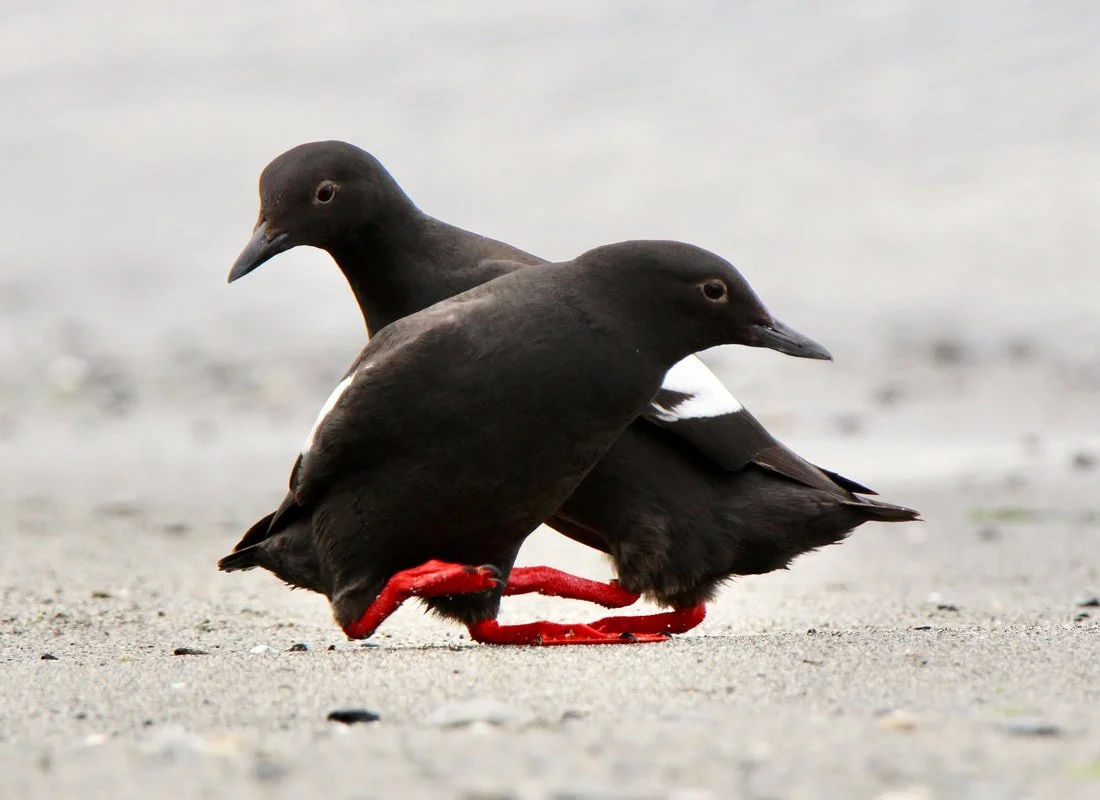
Photo: Govinda Holtby
Pigeon Guillemot colonies range in size from a couple of pairs to hundreds of birds.
Inside their burrows, guillemots typically lay two eggs, which are incubated for approximately 32 days. After the chicks hatch, both parents catch and carry small fish—mainly gunnels, sculpins, sand lance, and herring—to the fuzzy, dark brown chicks. The chicks consume the entire fish whole. As the chicks grow, their parents bring progressively larger fish until the young are ready to leave the burrow at about 35 days of age.
Colonies
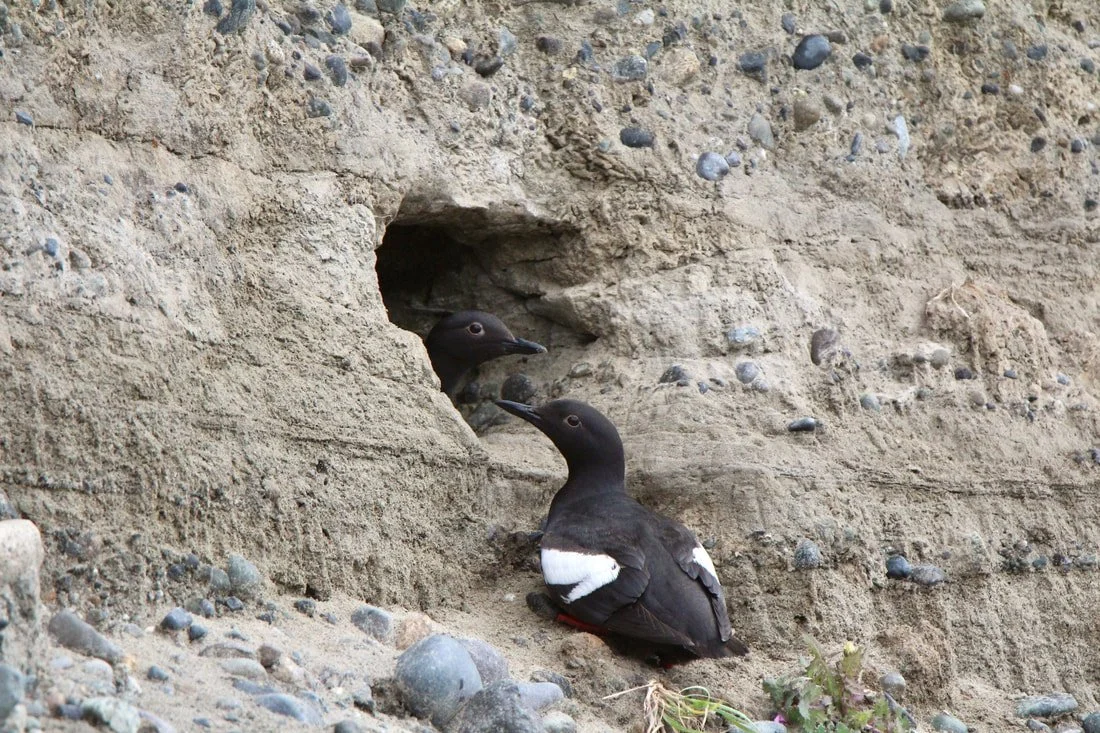
Photo: Govinda Holtby
Juveniles
Juvenile guillemots fledge (leave the burrows) by themselves, usually under cover of darkness. They flutter and tumble from their high burrows and scurry to the nearby sea. For the first two weeks the fledglings are flightless, but they are fully capable of feeding themselves by diving underwater for the same prey their parents once fed them. They do not tend to stay at the colony, instead floating, and eventually flying, away to seek out more distant feeding areas
Around the time they fledge, juvenile guillemots begin to molt into “winter” plumage, which is generally sooty white with mottled wing patches and grayish heads. When breeding activities have ceased in the fall, the adults follow suit, molting into similarly colored non-breeding plumage and leaving their onshore colonies to feed offshore throughout the winter.
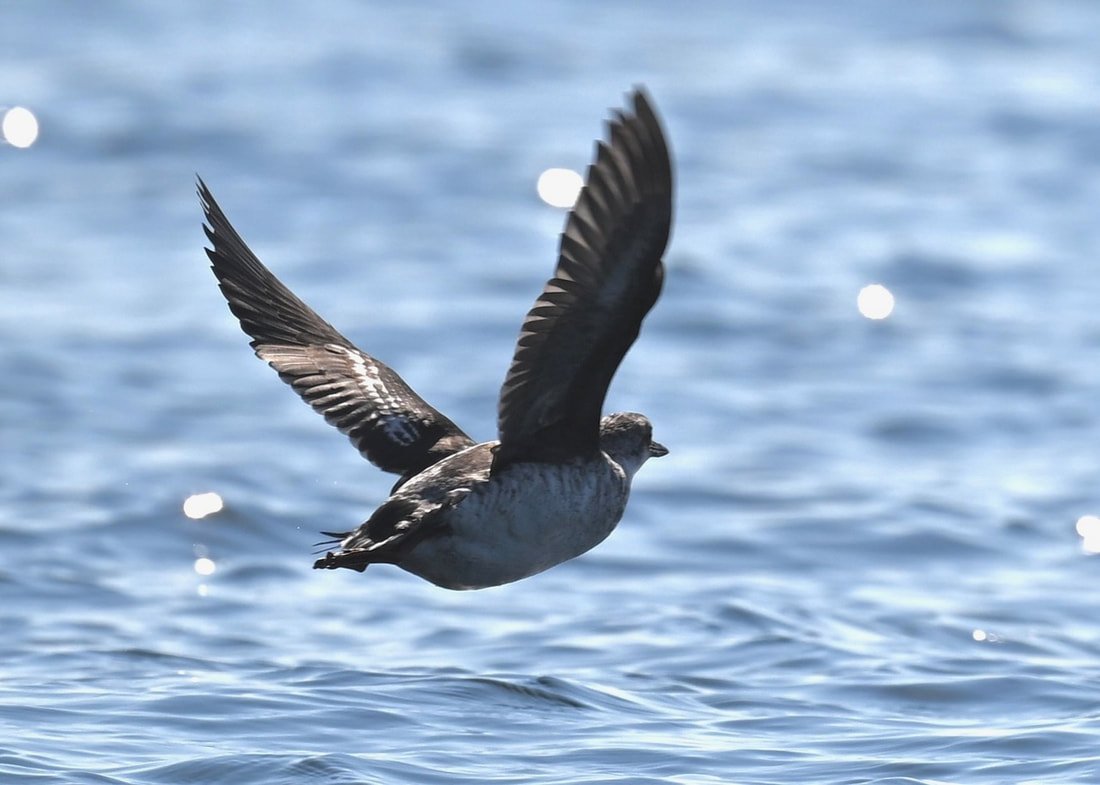
Photo: Lac Pope