

Hello PIGU friends!
Welcome to week 6! Today is notable because for some, it marks the halfway point in our breeding survey. Our protocol says that we must survey for a minimum of 10 weeks. Minimum because the endpoint is dictated by the guillemots! They are not privy to our protocol, they simply follow their own course and we simply hope we’ve calculated our timing such that we capture the portion of their cycle that includes burrow visits, prey deliveries, and eventually the fledging of a healthy juvenile. So, for those whose PIGU didn’t hesitate to lay eggs early in the season, you may only have a few weeks of burrow activity left to observe. In actuality, many of us will continue surveying for 12, 13, even 14 weeks!
This week also marks a turning point in prey deliveries. I do not have our full breakdown yet, and not all data is in for Week 5, but on browsing our database, it appears that the majority of colonies are now seeing their long-awaited prey deliveries! I know the rush of excitement this sight brings. There is a kind of joy, pride, even relief that wells up and we find ourselves cheering our guillemots on as they dutifully feed their chicks in burrows. I find myself saying, “you’ve got this, little bird!” This is what we’ve been waiting for, and it feels like now the season has really begun!
Bear in mind that we are likely not yet at the peak of deliveries, and we may continue to see new active burrows crop up for many weeks to come. I DID still see a pair of guillemots mating on a rock just last Thursday!!
I have new news to report from British Columbia colonies this week! The Fearney Point and Valdes Island surveyors are finally seeing fish swiftly escorted to burrows at their colonies on the Sunshine Coast and the west side of Valdes Island respectively. Boat captain and surveyor, Erin B. sent me some photo evidence of PIGU with sculpins en beak. She also captured a group lounging at the foot of the bluff.
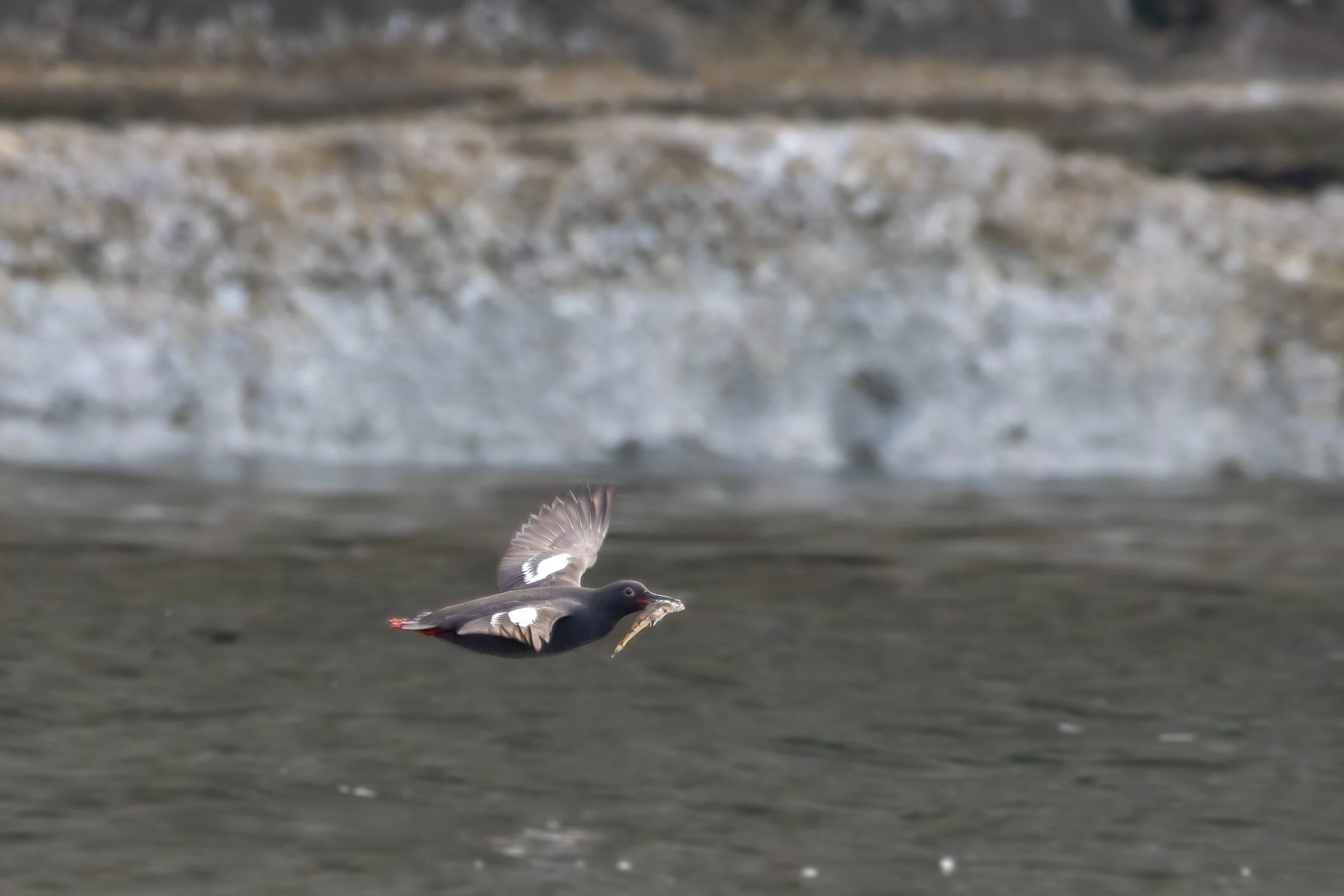
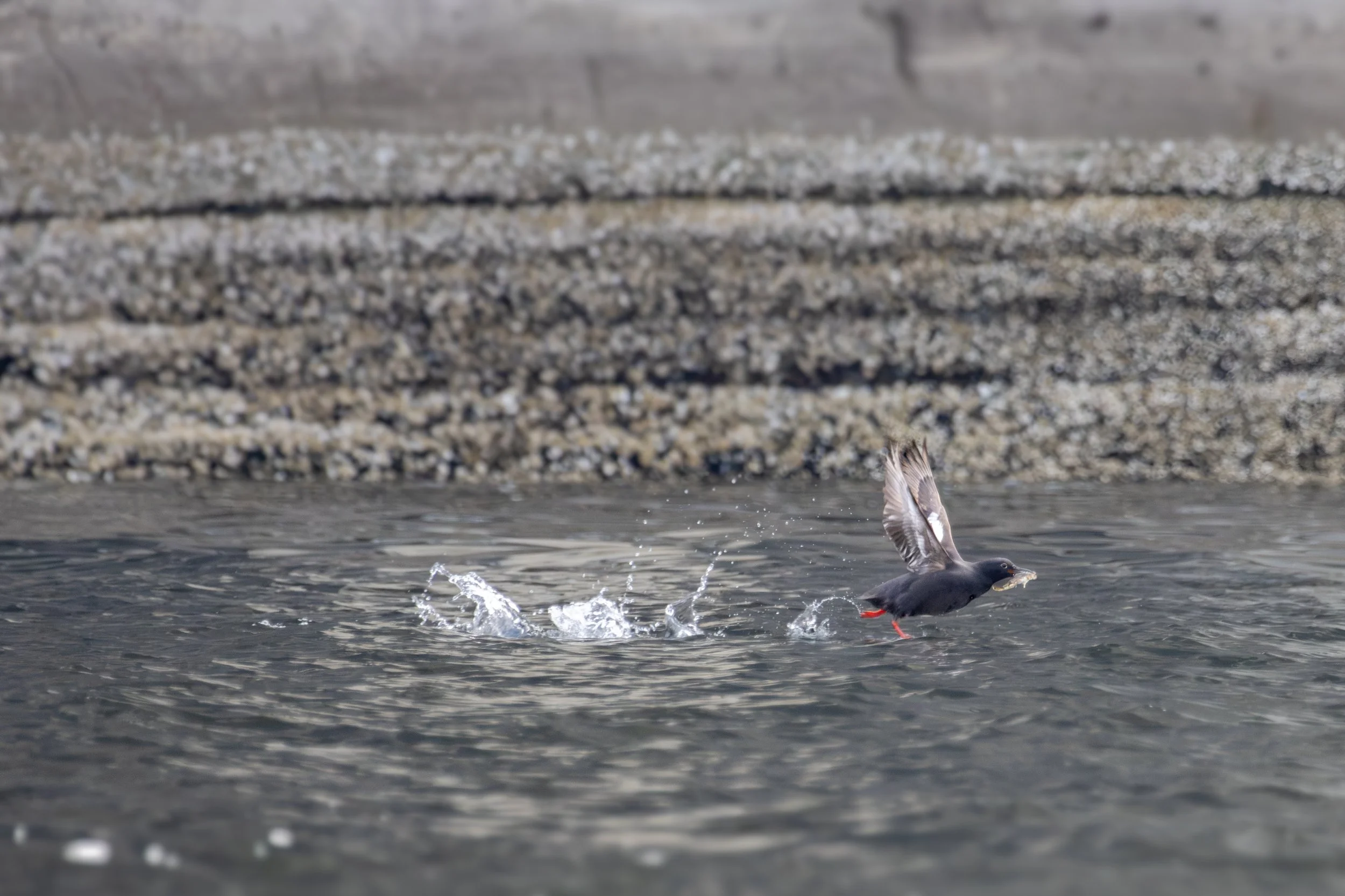
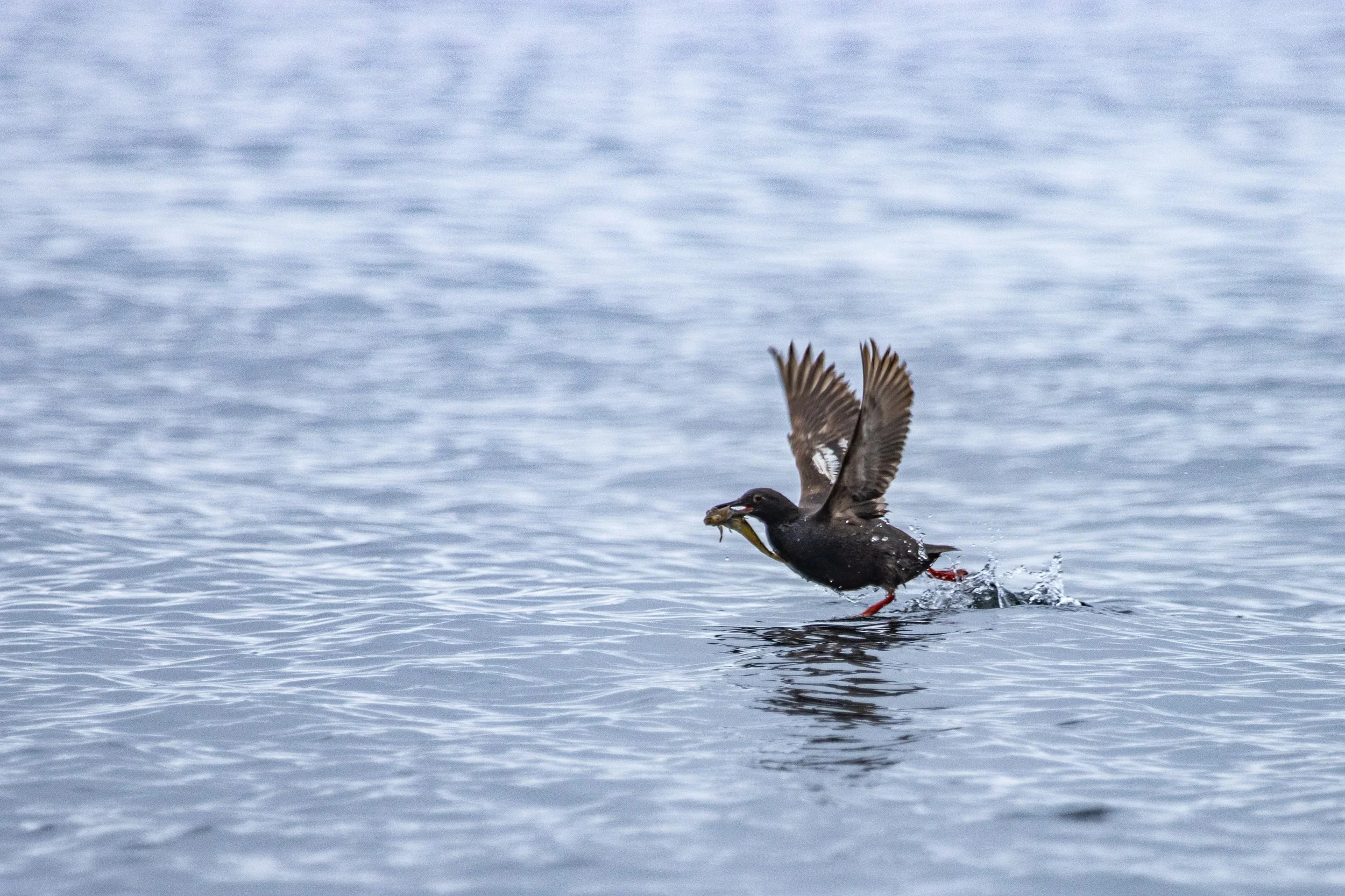
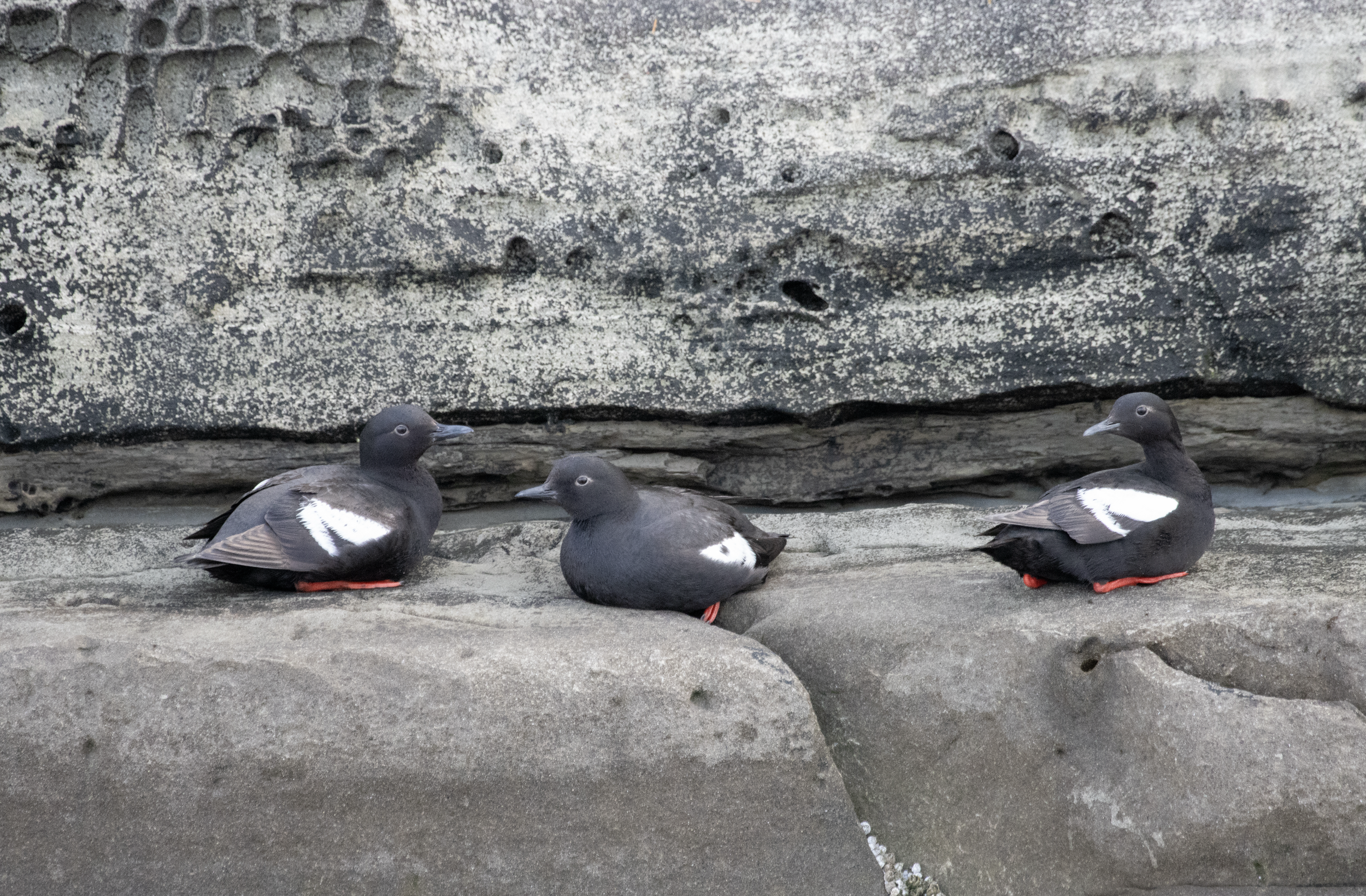
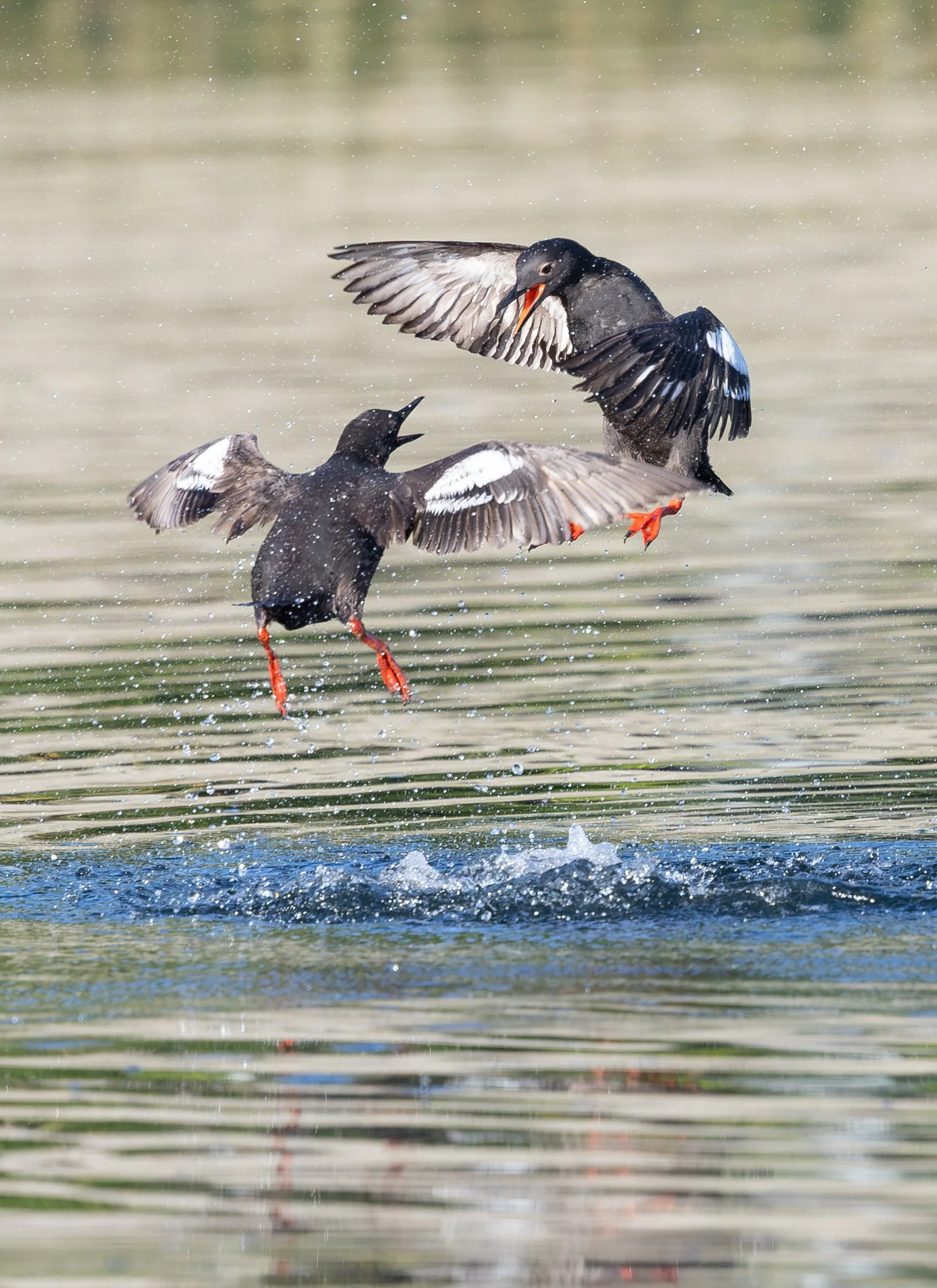
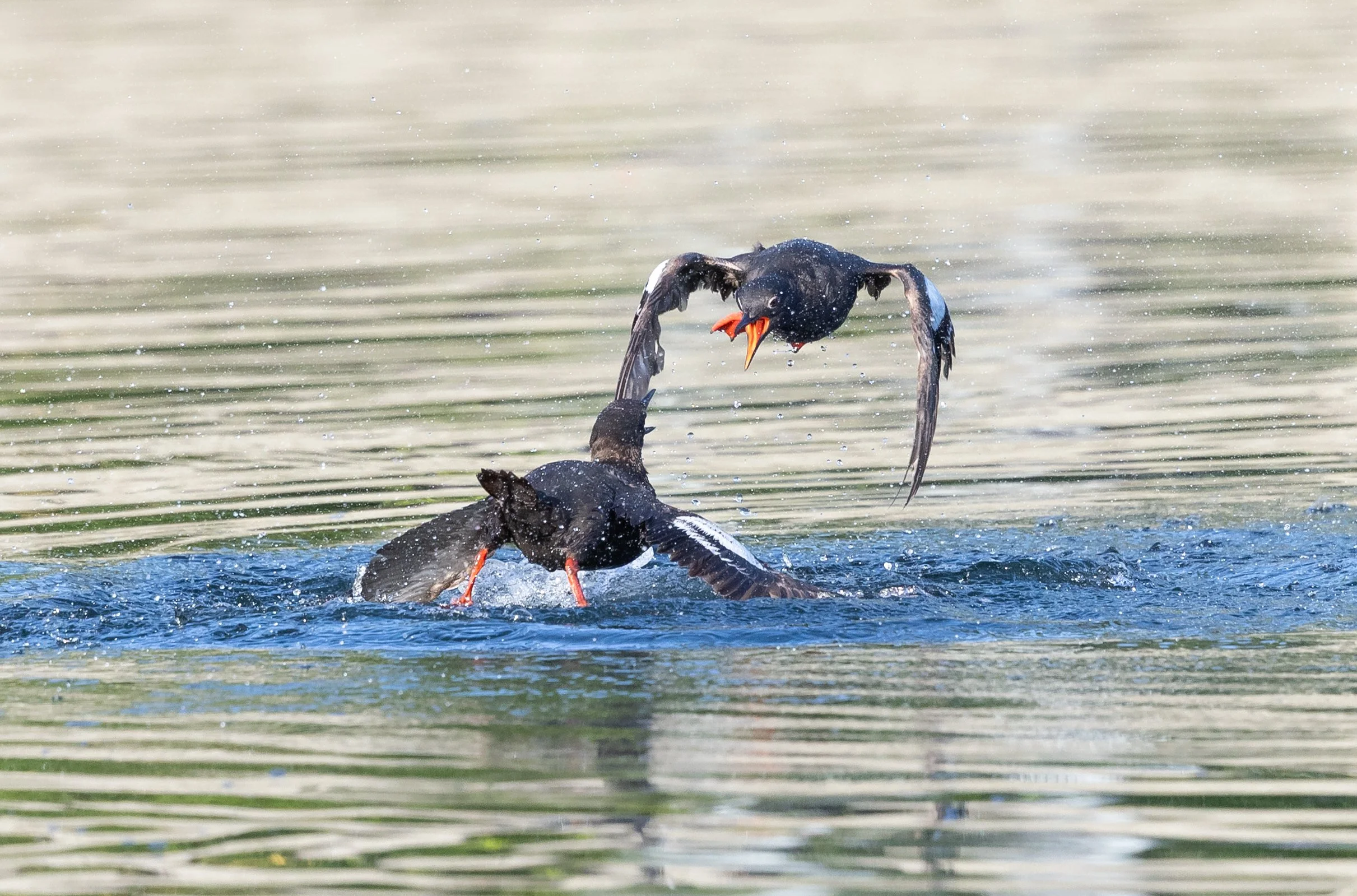
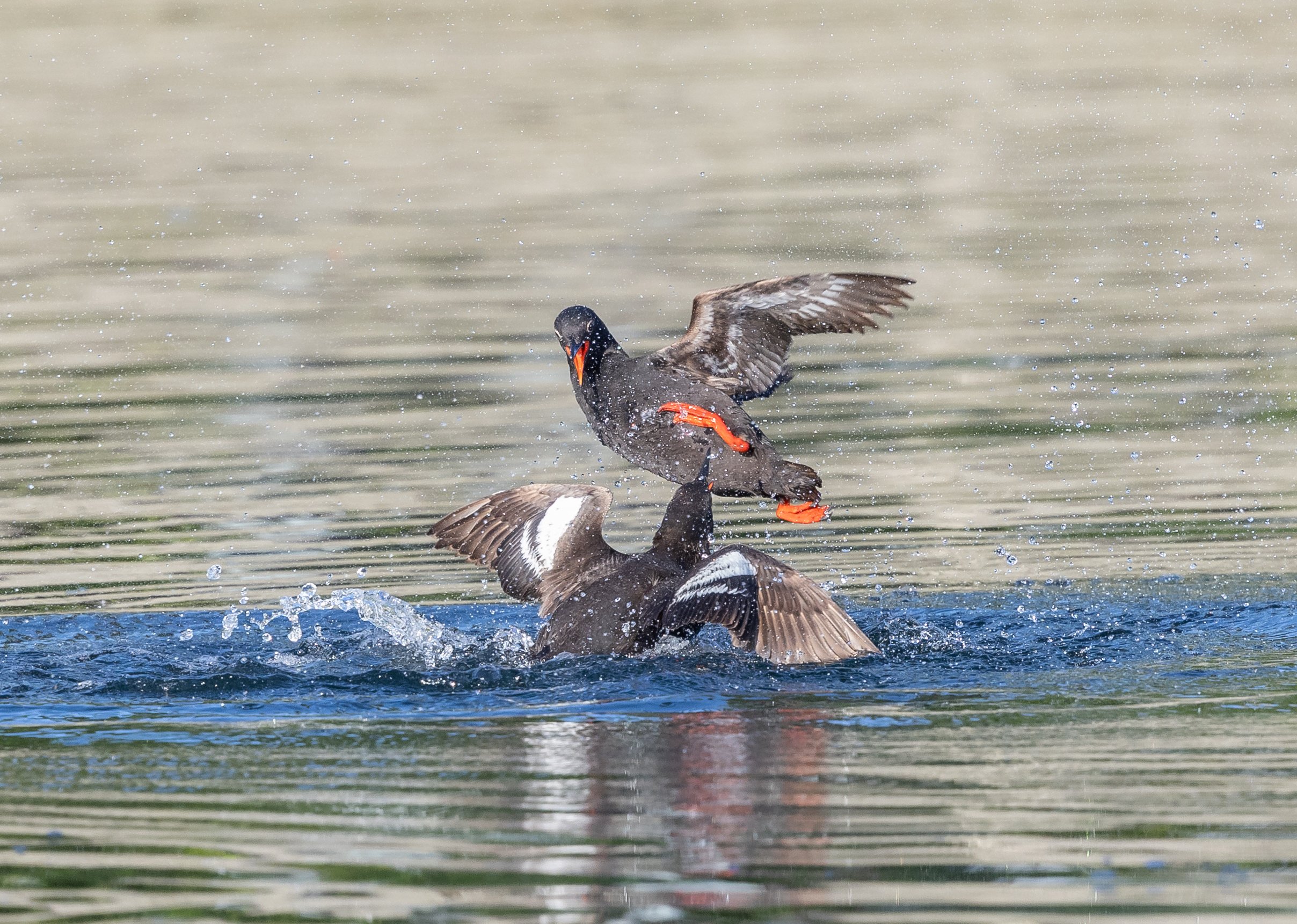
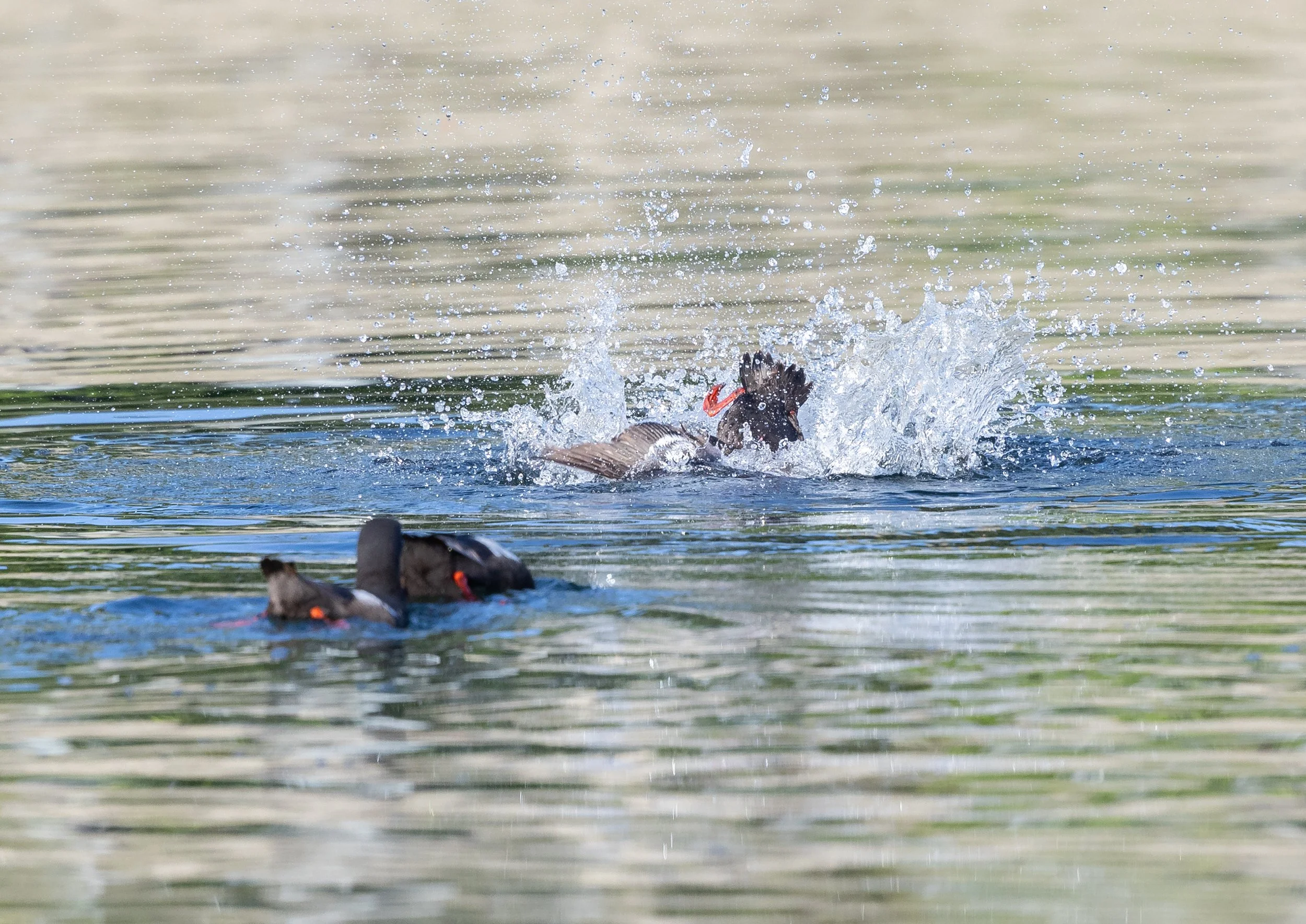
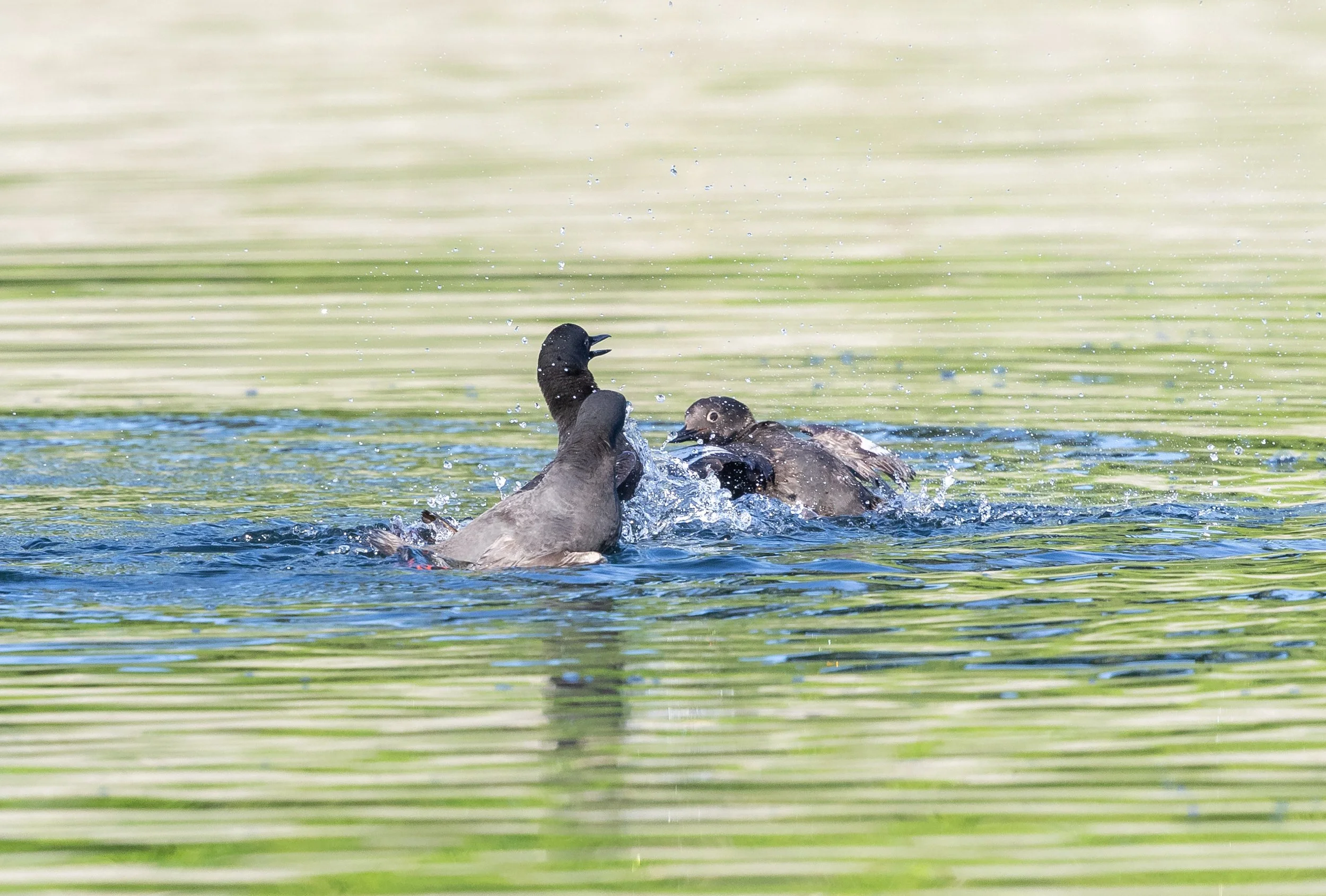
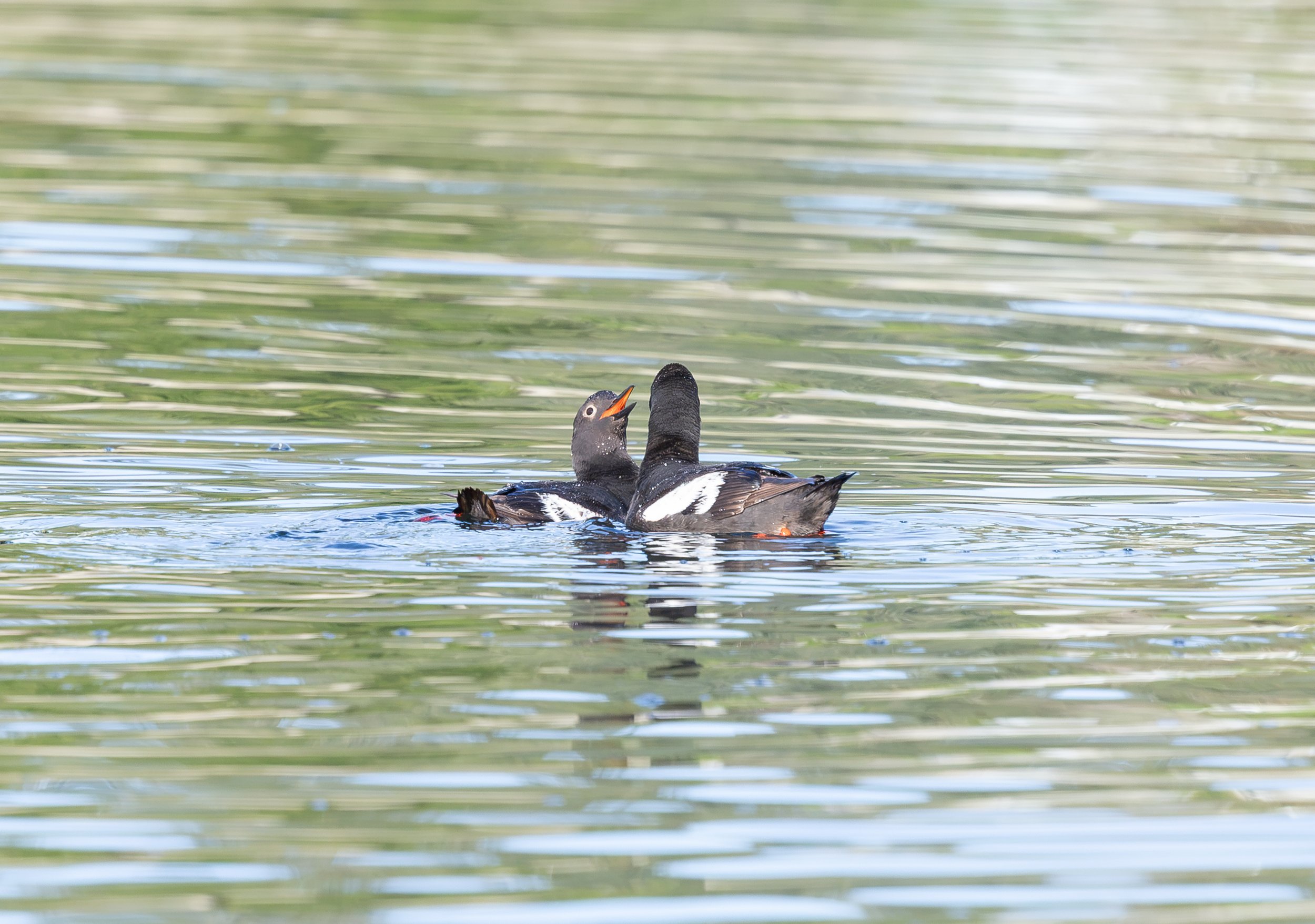
At Walnut Road, we saw both a gunnel and sculpin head to burrows, but the entertaining part of the survey was a pair of PIGU who were involved in a serious dust up for a spell. At one point, multiple guillemots got caught up in the kerfuffle. We’re guessing these were two males, working out some aggression. At least in the end, it seemed they had found a way to (sort of) make peace.
In other news, I wanted to share that the guillemots nesting in the breakwater at Vendovi Island got some good press recently. We do not officially survey on Vendovi, but the caretaker of the Island, Thyatira Thompson, is monitoring the colony ahead of a major restoration of the breakwater and shoreline surrounding the bay, which is planned for fall. A team of us, including Dr. Sarah Converse, who was interviewed for the article and is overseeing monitoring of guillemot activity, visited the island in May, to see where the PIGU are breeding and give survey tips to Thyatira. It’s a really interesting project, and we’ll be curious to see how the PIGU respond to the restoration, which should improve their opportunities to use the breakwater for breeding. You can read the article here.
As always, thank you for all of the effort you put into making this survey successful—coordination, early mornings, attentive observation, and data entry, and of course for your love of the birds! You all are an extraordinary group of people!
Have a magical week out there, all! Don’t forget to send me what’s happening in your neck of the Salish Sea!
Shannon