

Week 5: July 5th - July 11th
Hello Guillemoteers, or as they say on the Farallones, “Gu Crew”,
On this beautiful sunny day, we find ourselves venturing into Week 5 of our survey. I trust everyone survived the festivities of the 4th, and I especially hope that the birds did okay following an evening of earth shaking booms. I always worry about that, but I expect our resilient little birds will carry on! This week will tell.
Prey deliveries are still ramping up! Last week, the number of chick burrows nearly doubled and prey deliveries increased by a factor of 2.5! This upward trend should continue for at least the next couple of weeks. I was out on the boat yesterday afternoon at South Sound’s Lyle Point colony, and witnessed 8 prey deliveries myself—6 gunnels and 2 sculpins! Those are the first of the season for me. I felt the familiar swell of excitement as I watched the PIGU run off the water, achieve lift off, and do their familiar swoop in the air (with wingman in tow) before coming back around and up into burrows. The sight never gets old! As luck would have it, my camera batteries went kaput, so you’ll have to take my word for it!
At Isthmus Beach, in East Jefferson County, Hillary Smith also observed several gunnel deliveries to burrows. She was able to document them in the beautiful photos below.
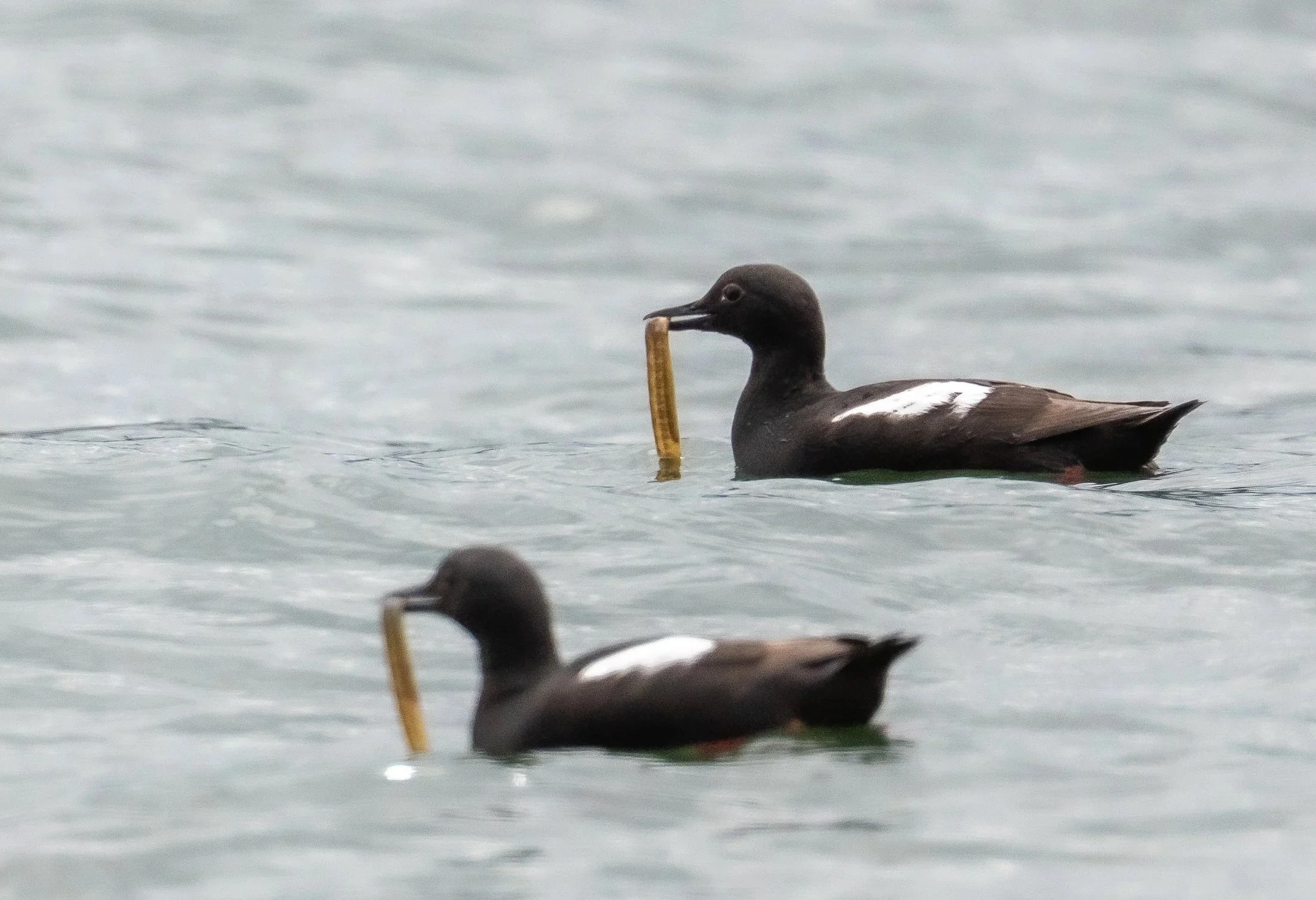
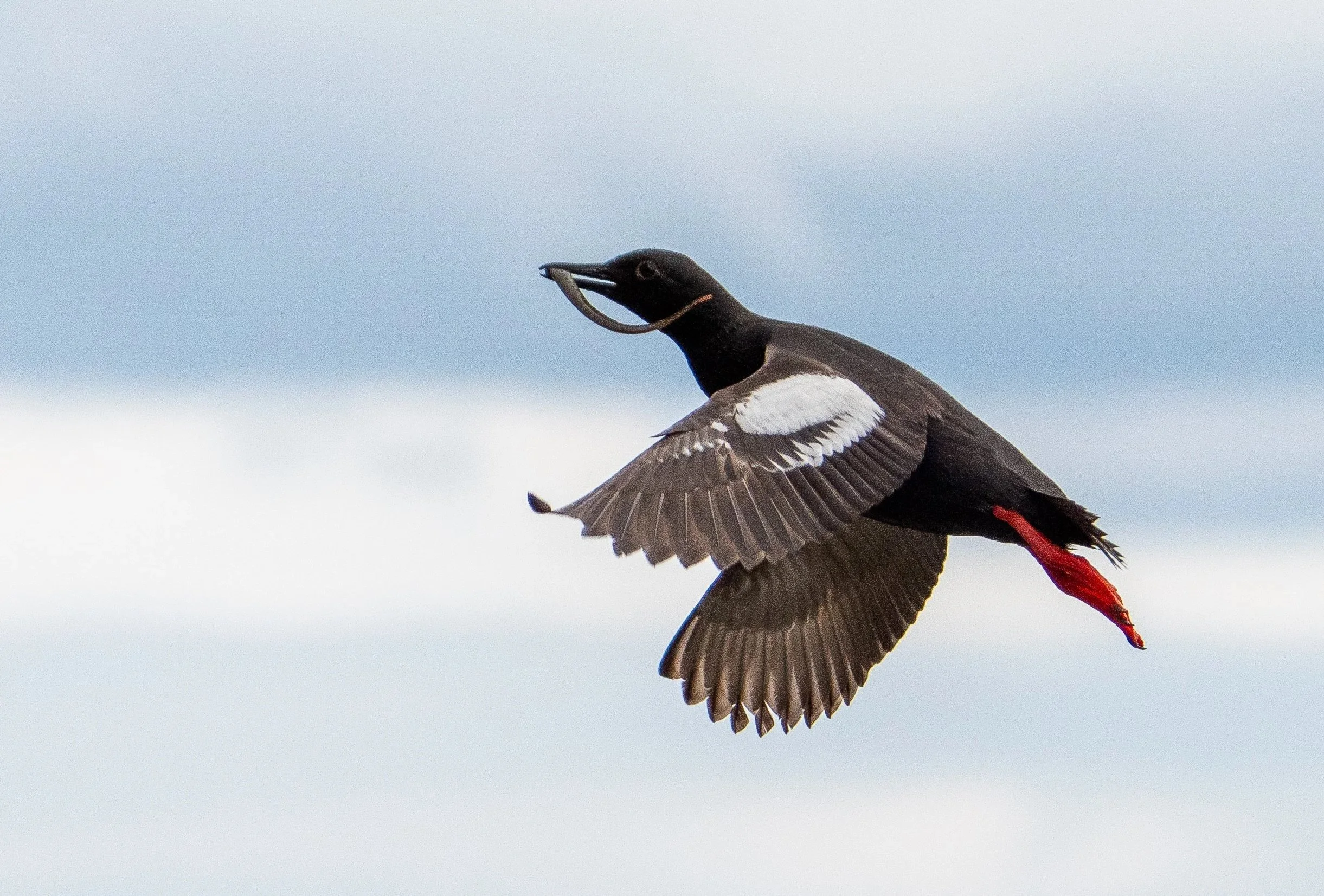
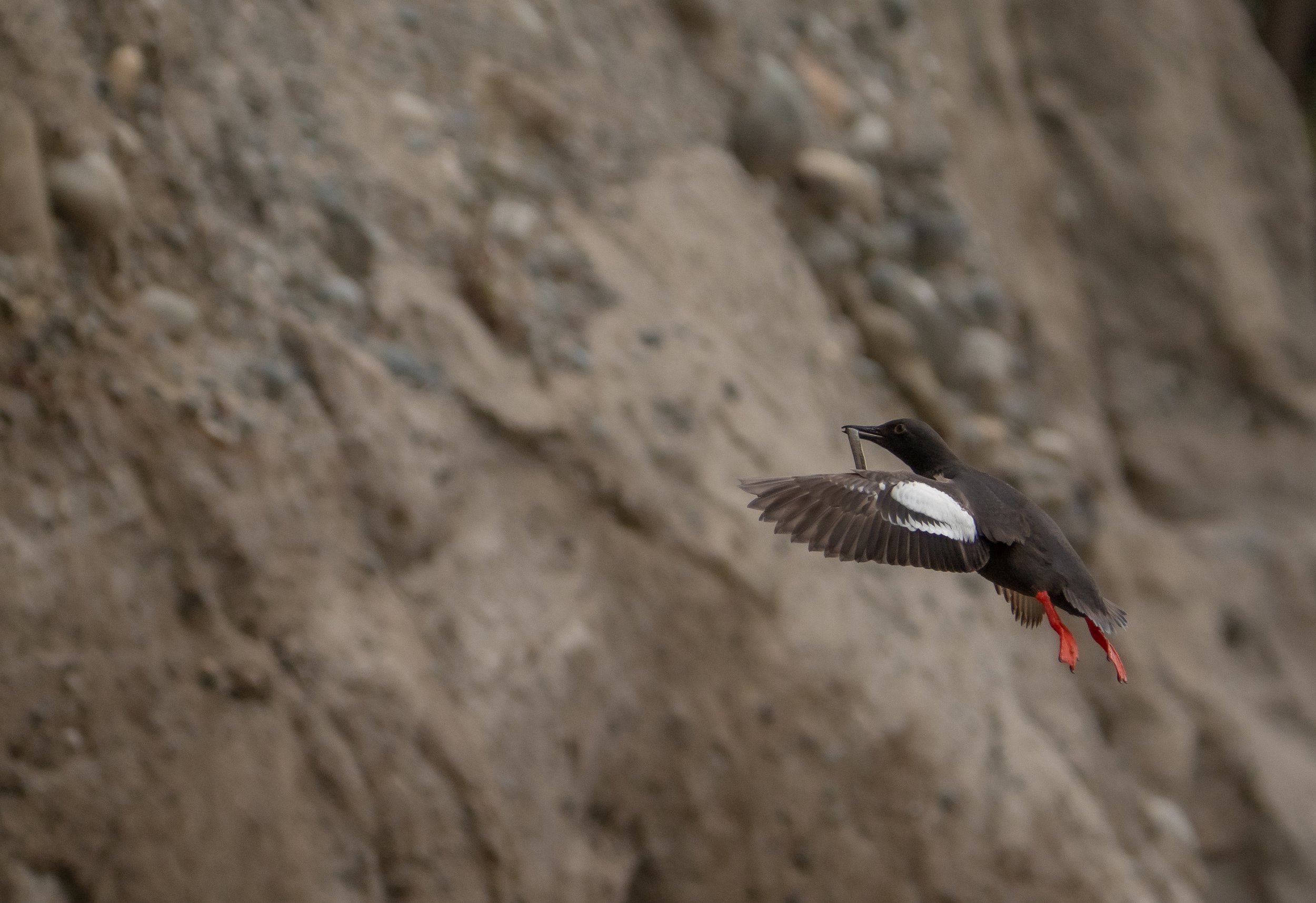
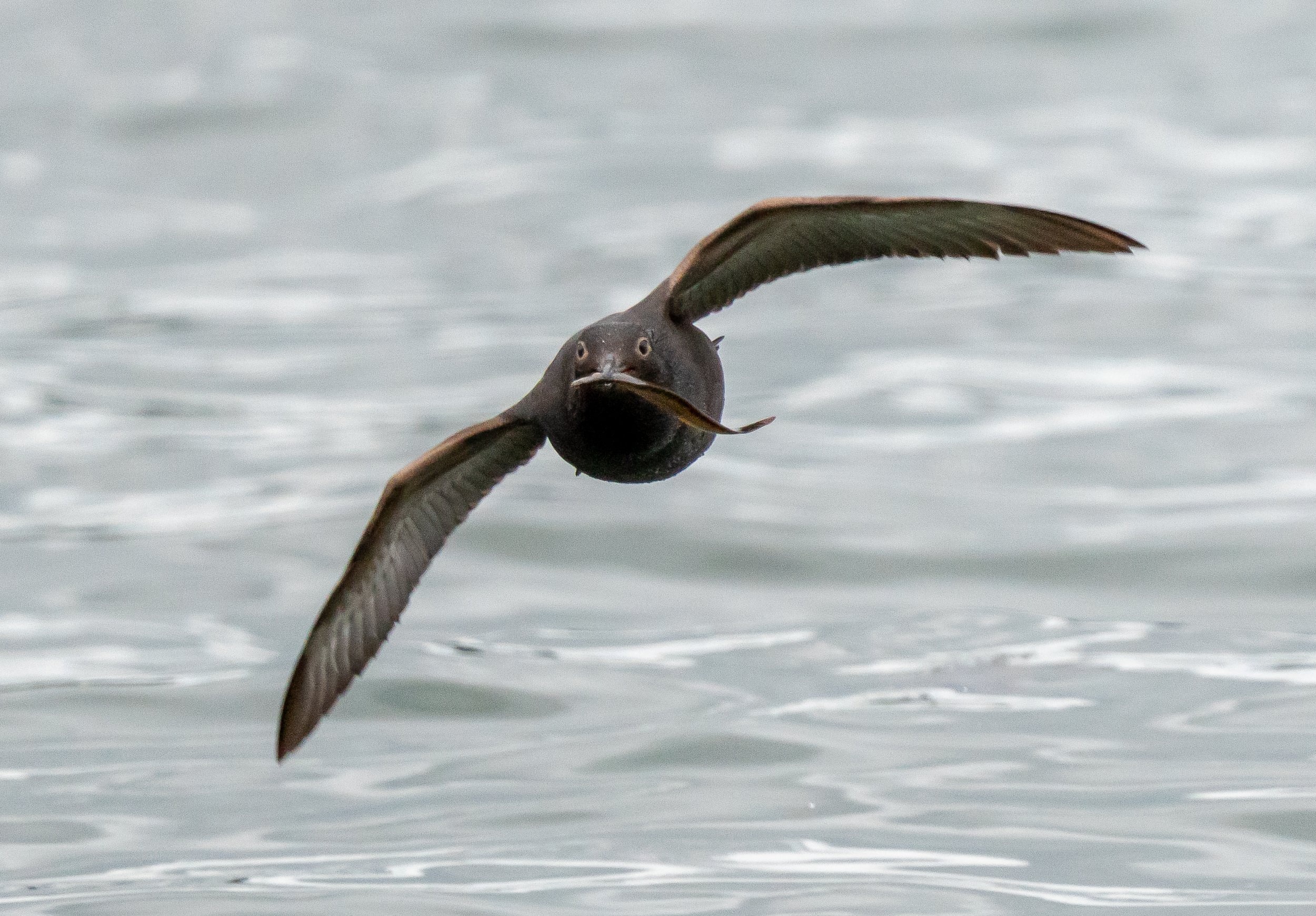
Has anyone seen a Pacific Snake Prickleback in beak yet? That is a gunnel-like fish that we typically see quite a bit during surveys, so much so, that we lump it in the same category as gunnels. Many of you have heard me talk about the PSP before, but if you don’t know what I’m talking about, this is what a Snake Prickleback looks like:
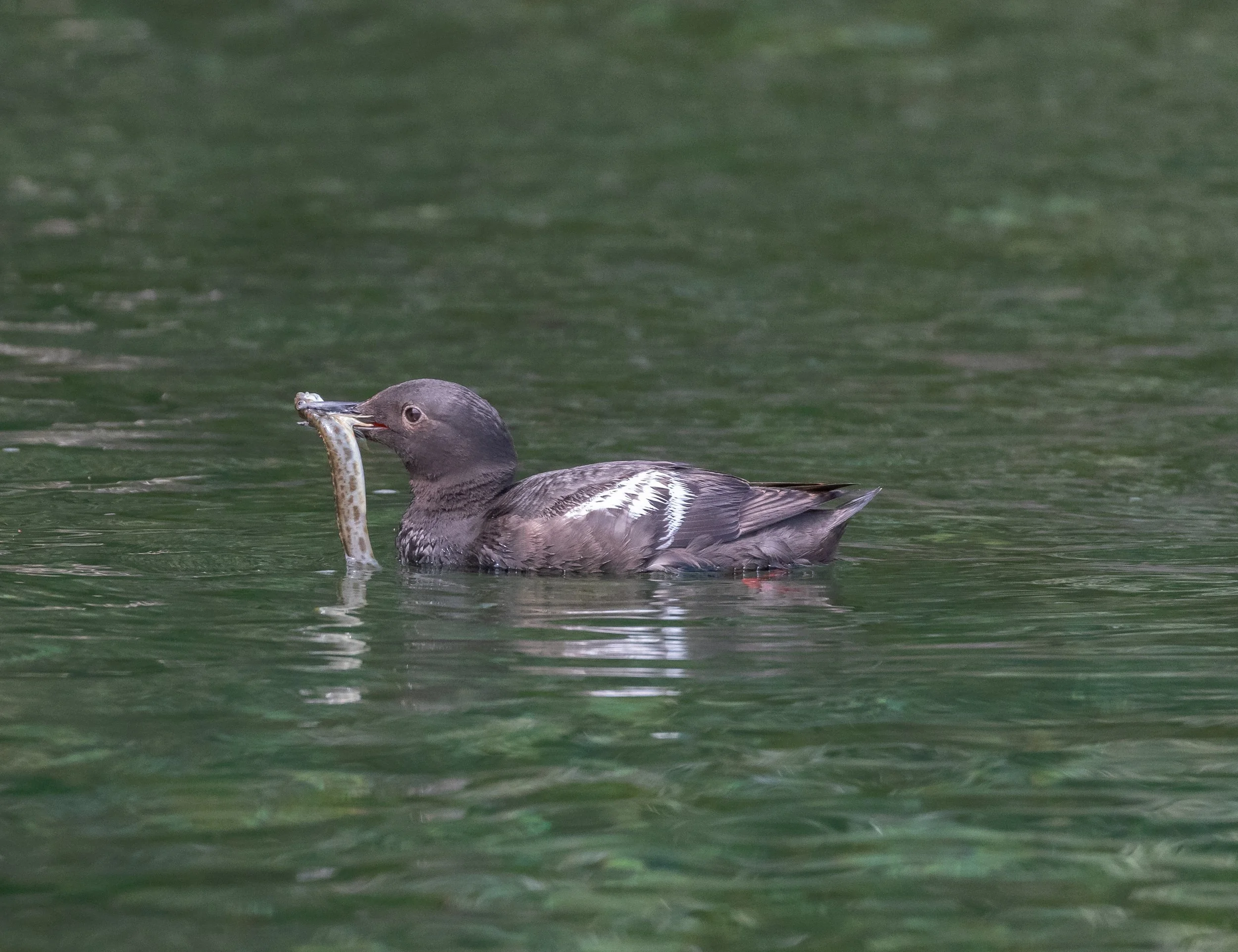
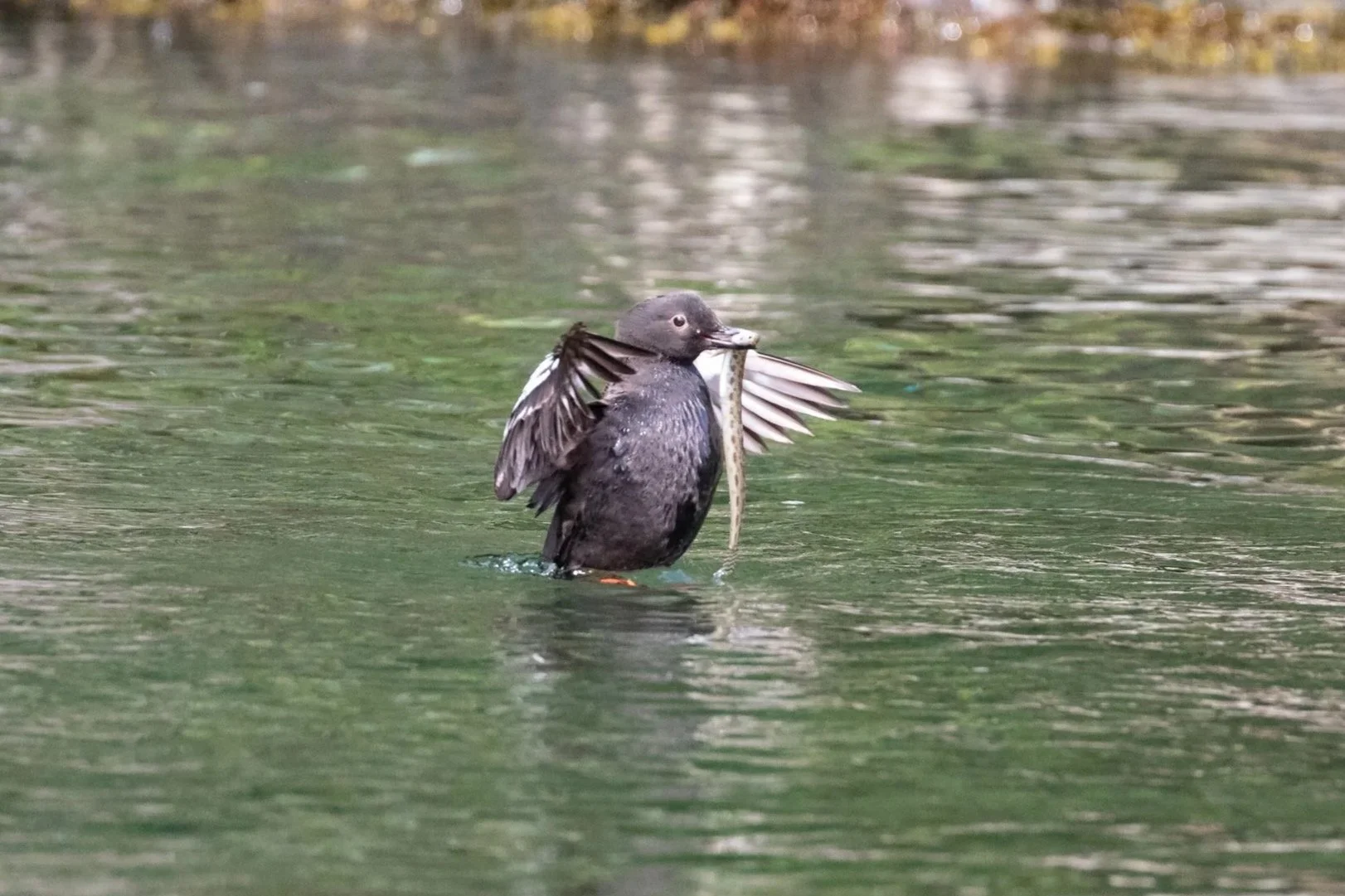
Notice that, like the gunnel, it is eel-like and hangs down long, but it has distinctive “dash” marks running down its midline and it tapers towards its tail. It also doesn’t seem as ribbon-like and it has a white belly. If you’re concerned you won’t be able to tell the difference between the two, or that you may have mistakenly identified one as a gunnel, no worries—we don’t expect anyone to positively ID this guy in a survey. Doing so can be tough, especially at a distance! We lump snake pricklebacks into the gunnel category, because we know many have already been counted as such. So if you see a snake prickleback, and you can tell the difference, don’t mark it as “other” prey, make sure to record its time of delivery squarely in the gunnel column.
Still, if you see one, please tell me about it! I haven’t seen or heard of any being fed to chicks yet, and I’m curious if we’ll see as many as we usually do.
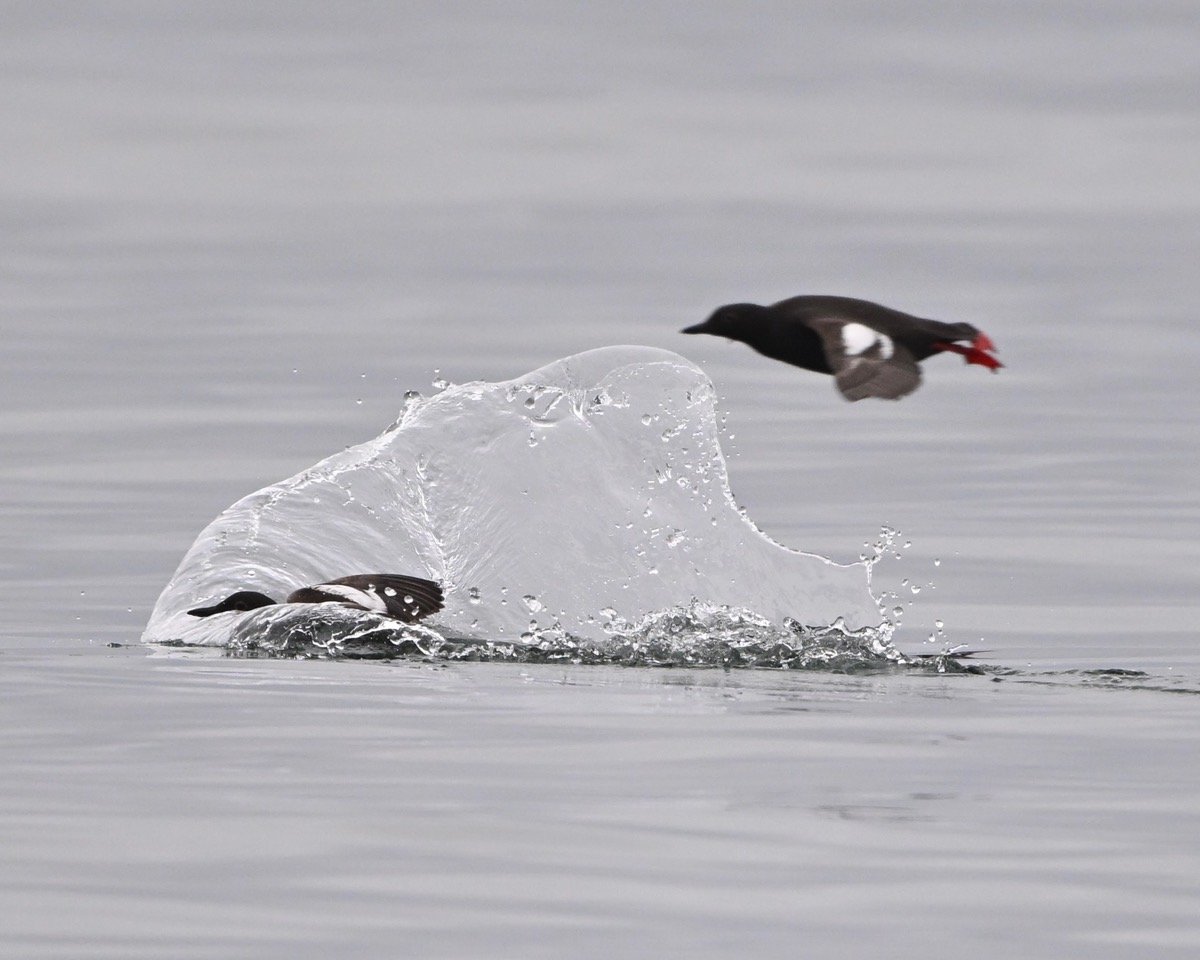
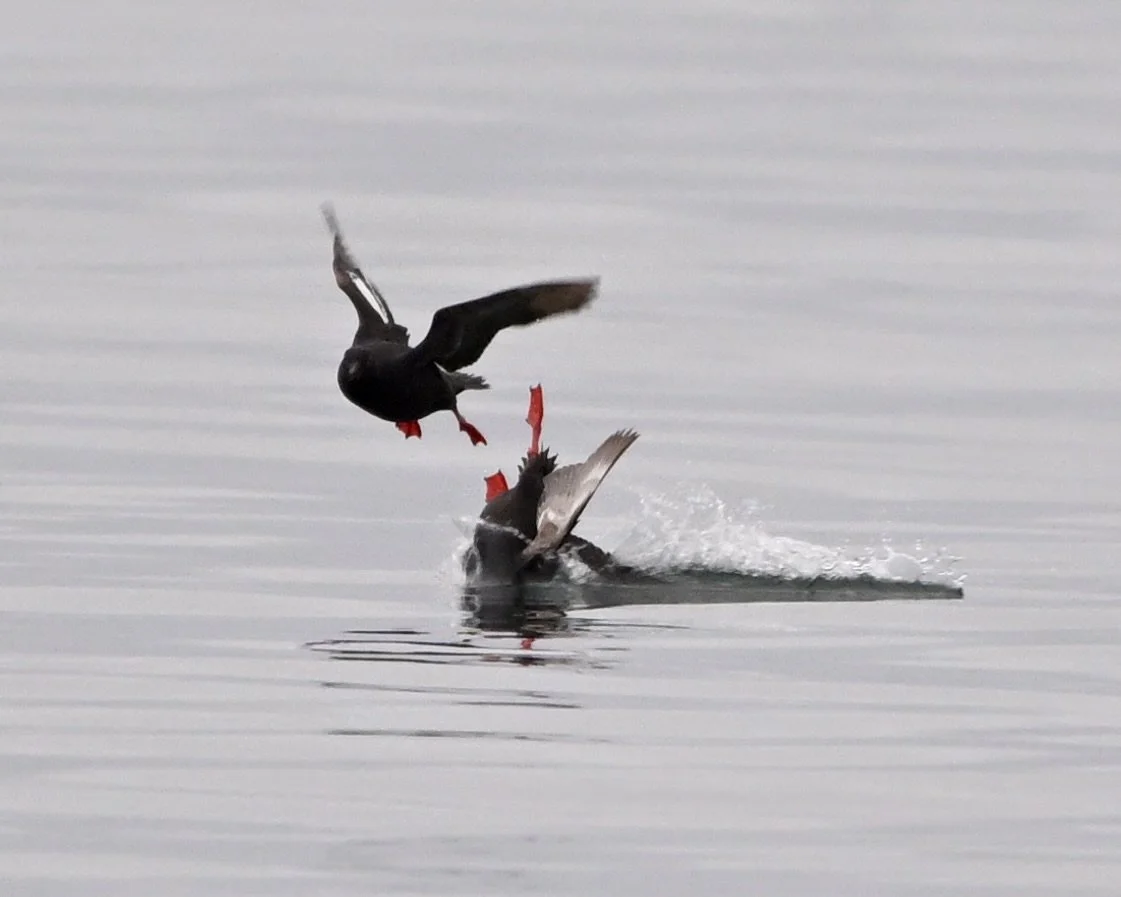
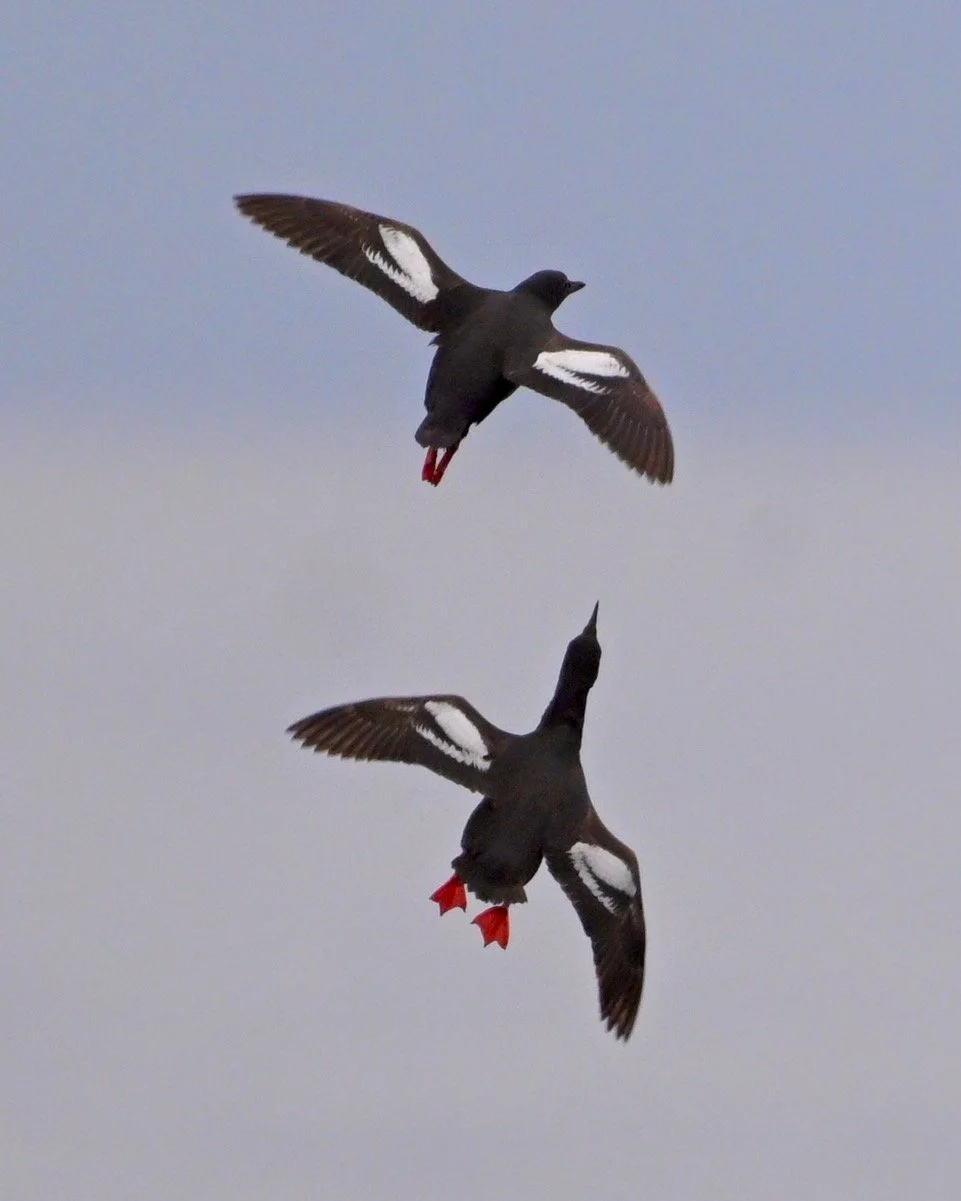
Lac Pope didn’t see any prey deliveries at his observation point at Hastie Lake last week, but from the looks of his photos, there was no shortage of PIGU antics. He managed to catch a belly flop, a head over heels flop, and a high speed air chase. I love the red feet up in the air in the middle photo!
I also have an exciting update from our B.C. region. They have jumped into our survey with gusto and have added two additional colonies (they’re up to five!) + one potential, and many new volunteers since the start of the season! Their motivation and dedication to getting their pilot up and running has been an inspiration! Nathan H. sent me an update last week about one of the new additions, Copper Cliffs on Quadra Island, which is an incredibly beautiful spot with close to 60 PIGU making up the colony. He observed several prey deliveries to the cliff to include a red snapper or cod. We will be looking very closely at the prey types seen up in B.C. waters, as it will be interesting to know if their composition is different from what we see in Puget Sound. Check out these stunning photos of PIGU perched at Copper Cliffs, taken by Nathan:
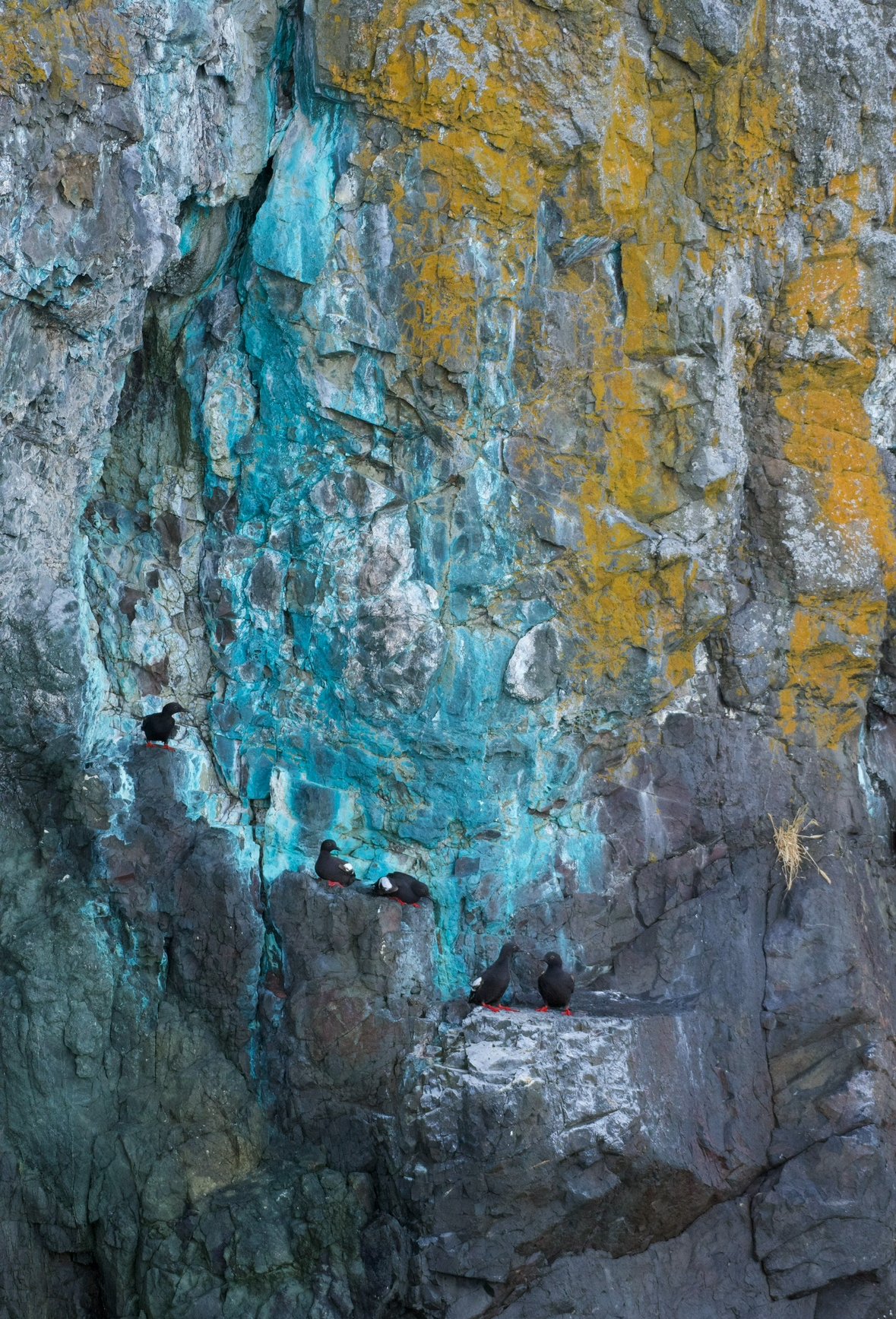
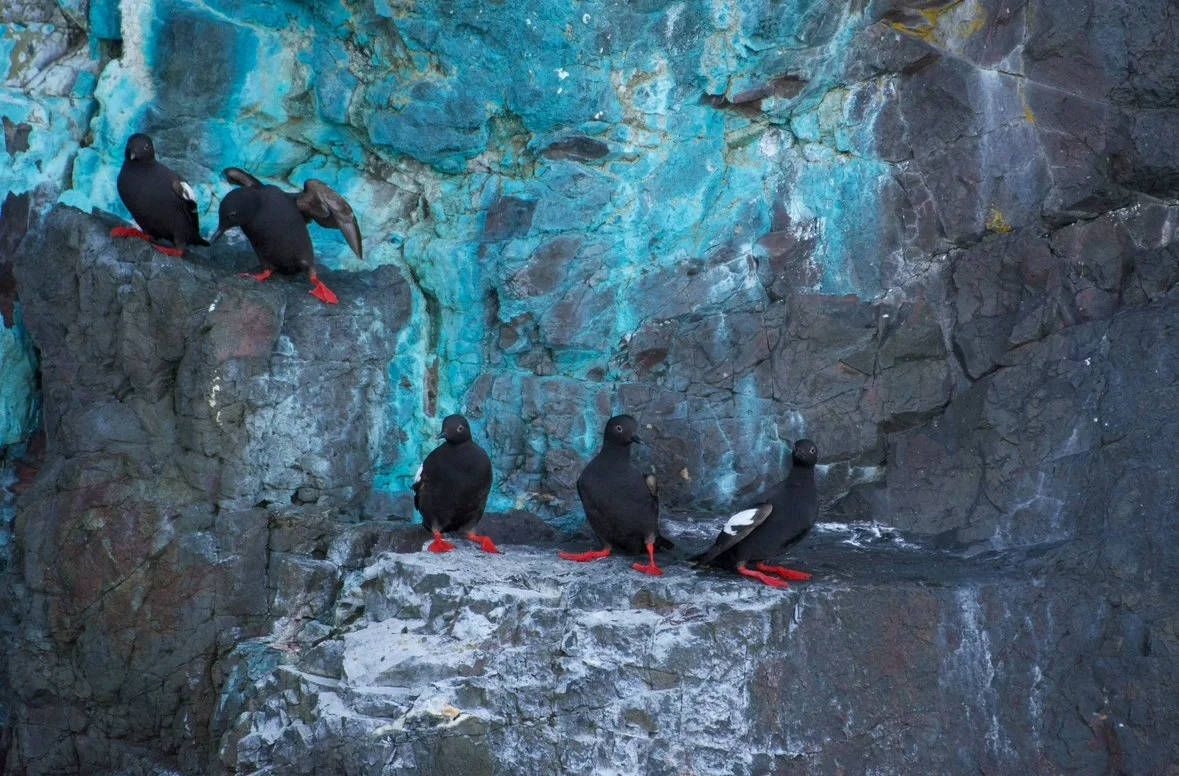
I got a report from regional coordinator Brenda about increased disturbance of breeding PIGU at the Fort Worden Pier in Port Townsend. These colony birds not only have to contend with the multitudes of people visiting atop the pier, but also folks paddling on SUPs and kayaks all around the pier. To add to that stress, last week an eagle was observed flying up and around the underside of the pier! What in the world??
Many of our PIGU nesting in human made structures deal with so many different forms and intensities of disturbance, it highlights the importance of our presence—that we are there monitoring PIGU activity and recording metrics of their breeding success. They really are incredibly adaptive birds, but we still don’t know exactly the toll that disturbance, whether human or natural, takes on their ability to thrive. We hope that when needed, we will be able to tell the story through the data we have to share. So thank you to all of you for showing up to document the incredible cycle of life we are so fortunate to witness!
On a different note, we were very happy to welcome Stella Solasz to speak at our July SSGN monthly meeting. Stella is a Senior Research Assistant working with Point Blue Conservation Science in the Farallones. She co-authored the paper that I shared back in Week 2 about PIGU foraging behavior in the Farallon Islands. (If you’re wondering about the “Gu Crew”, you’ll find the answer in her presentation!) One interesting finding from her study is that one tagged guillemot flew 120 miles in one trip to forage at Point Reyes, before heading back to the Farallon colony! This trip took around 48 hours. That must have been some good fishing to go all that way! You can see Stella’s awesome presentation here:
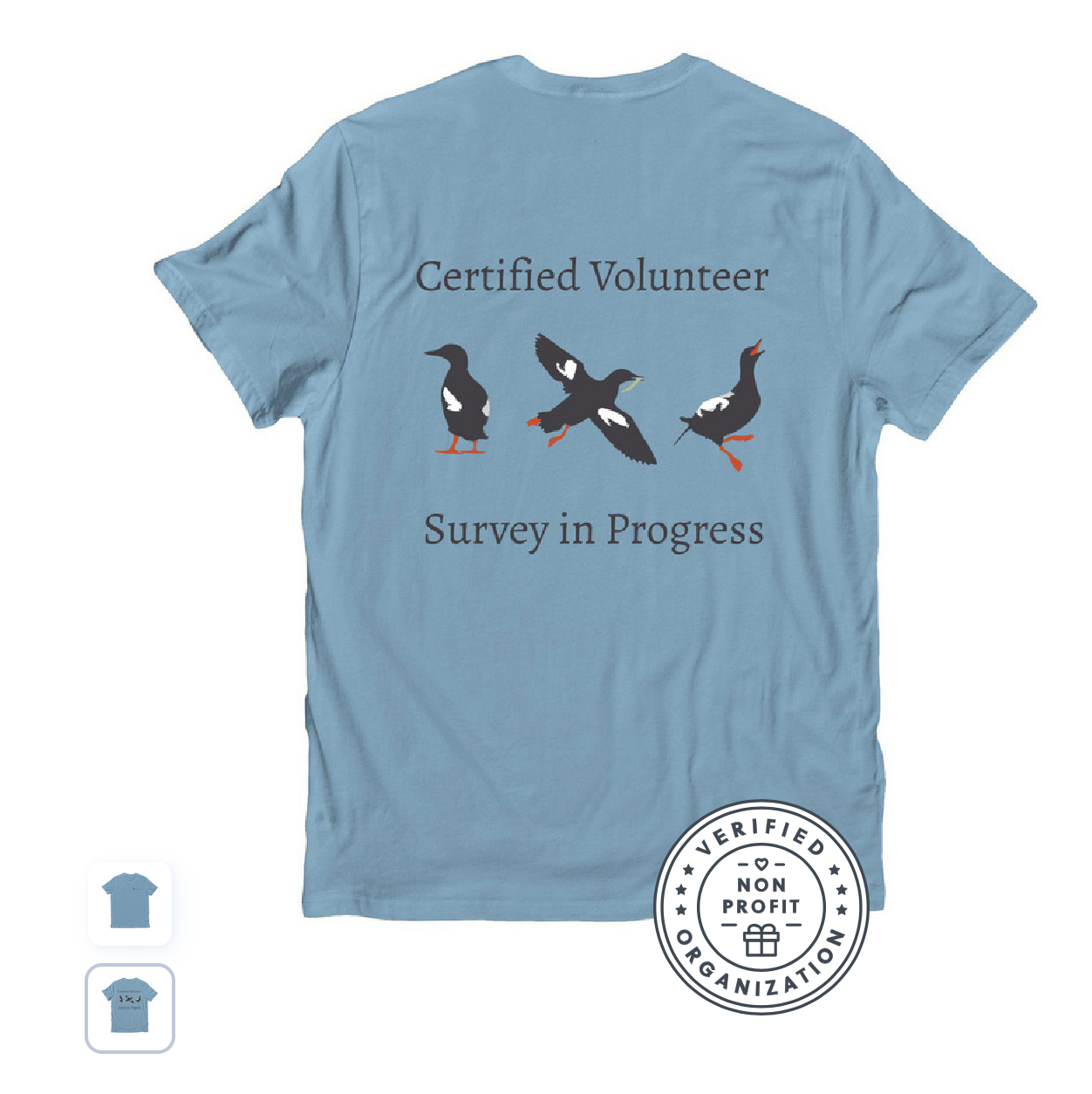
I want to leave you with a reminder to check out our SSGN Bonfire Storefront (click link) when you have a chance! You can also access the store from our website. We have several different t-shirt, hat, and other merch designs available, which feature our new branding and adorable PIGU icons. All net proceeds will go to the Whidbey Audubon Society in direct support of the Salish Sea Guillemot Network. Whidbey Audubon is our major sponsor and provides for management and coordination of the network.
If you’re looking for a way to support the survey and rep your favorite seabird at the same time, this is it!!
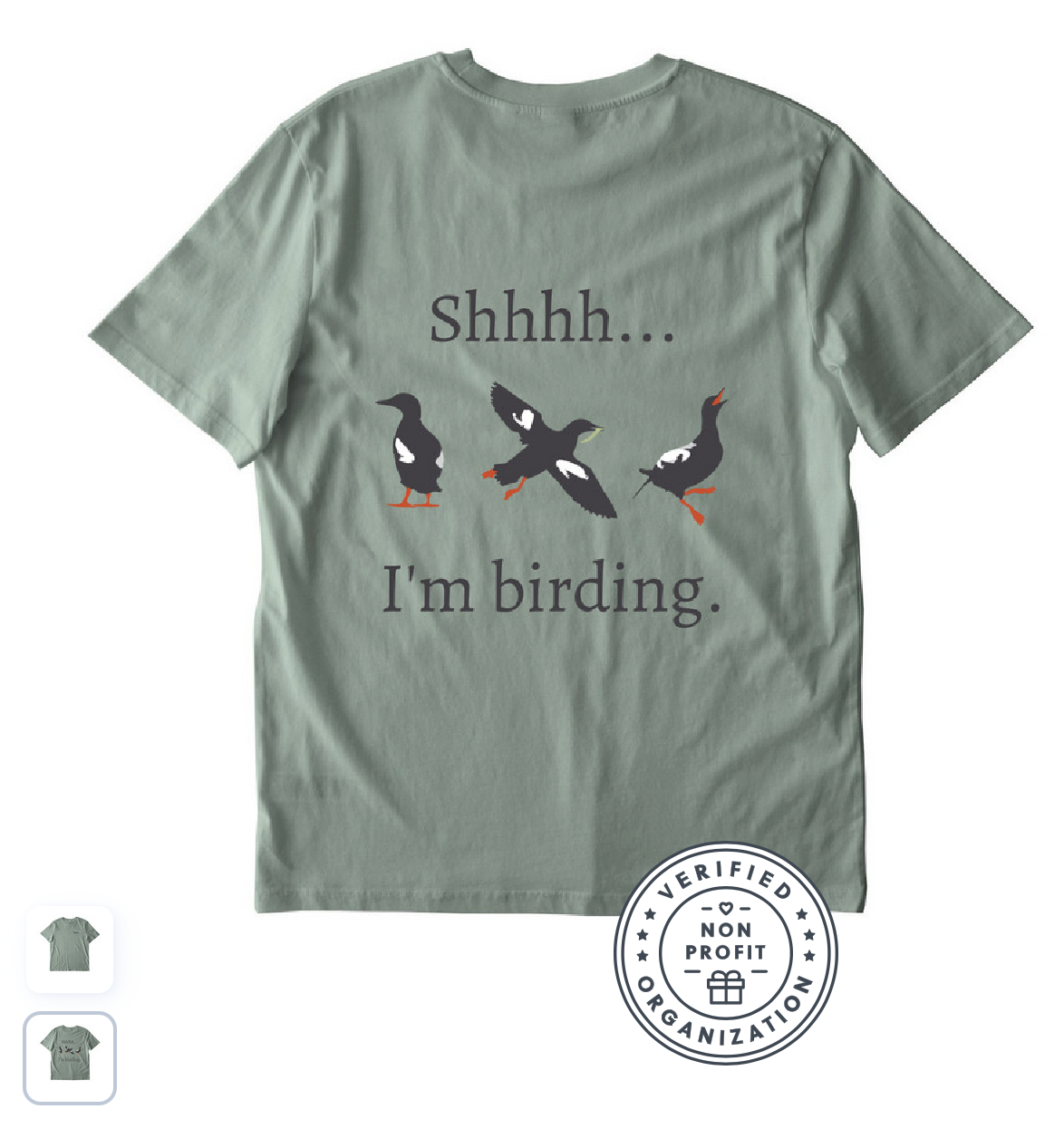
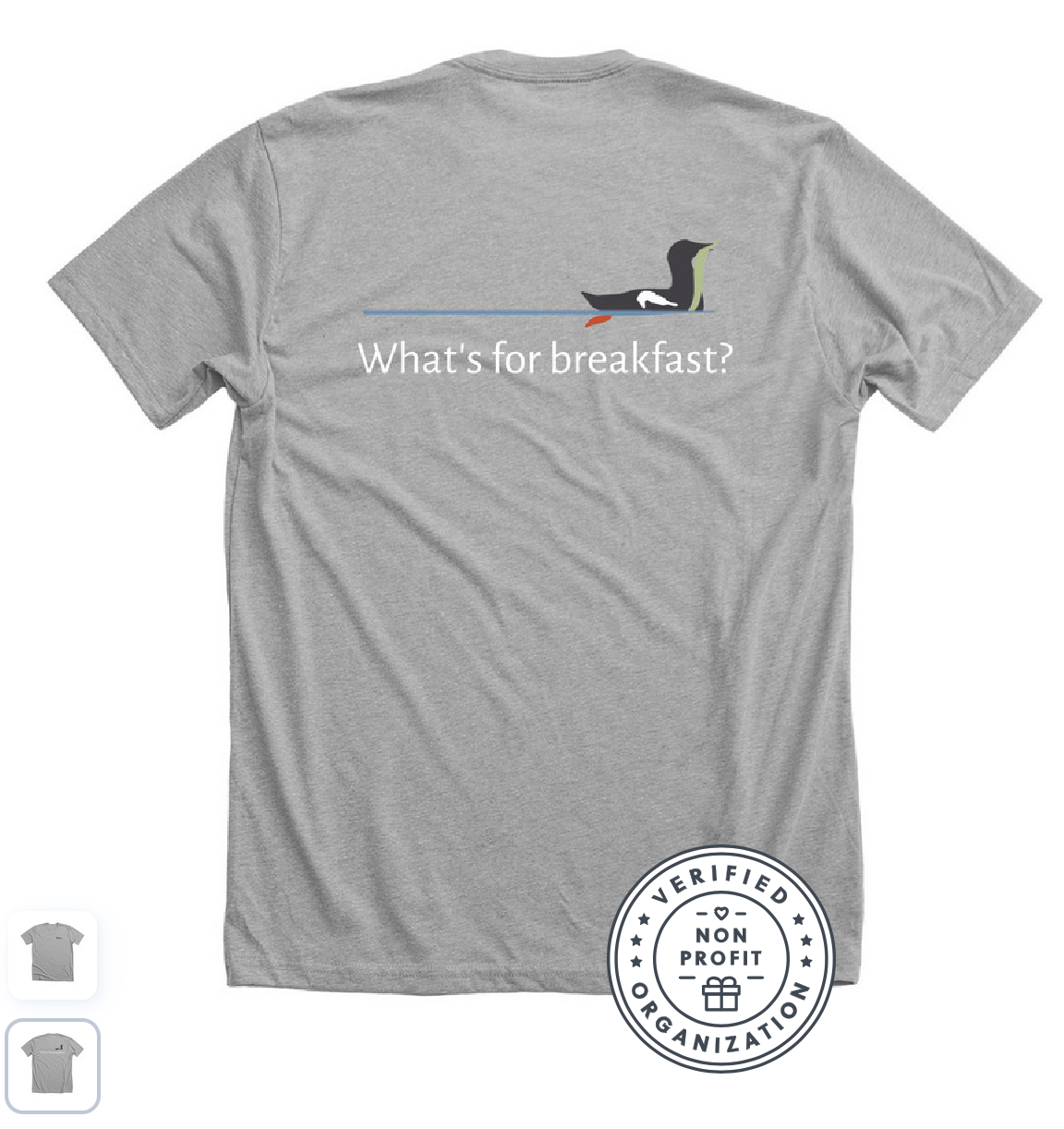
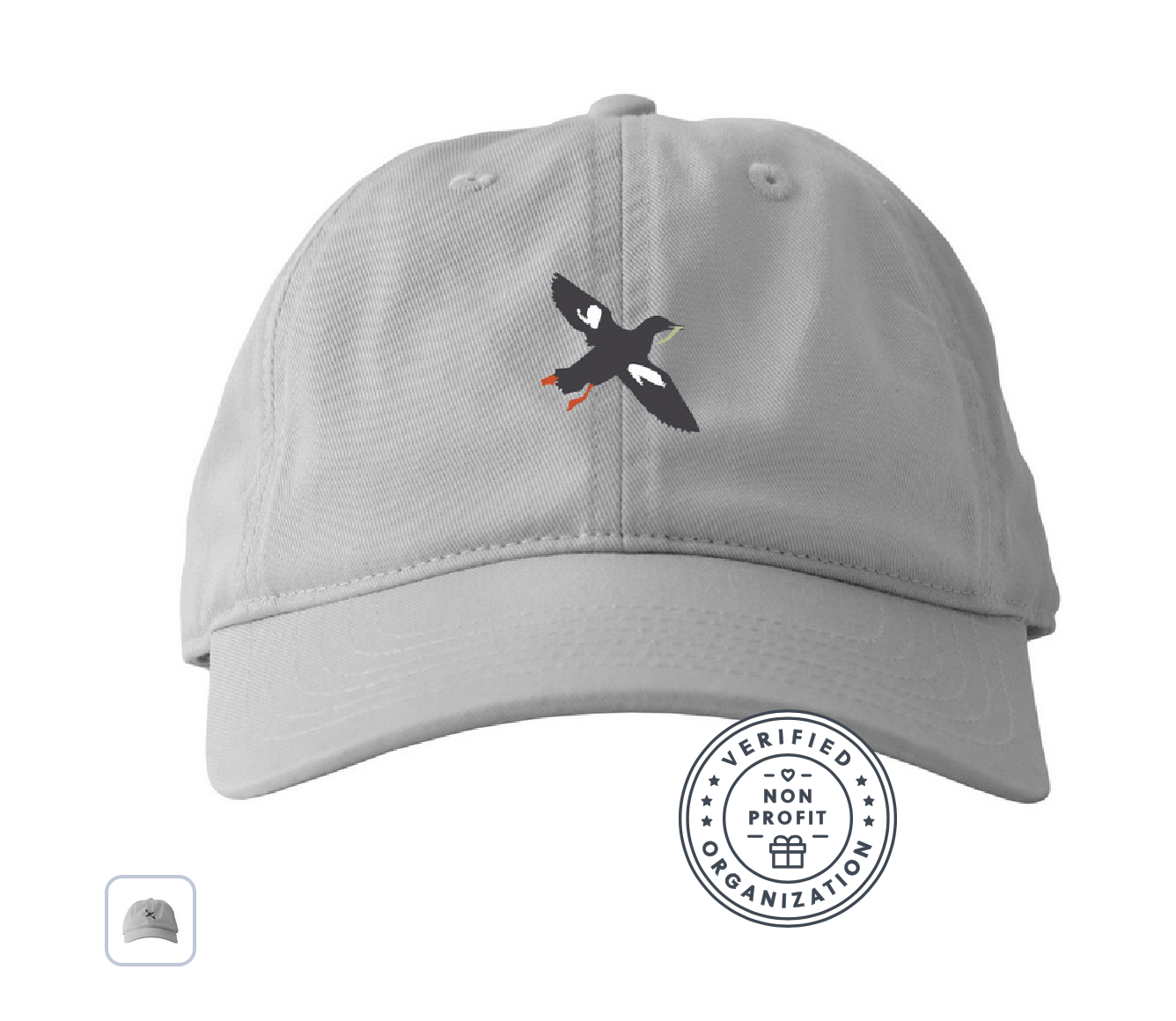
Last but not least, I’d love to start working on another video for our End of Season event to highlight all of our wonderful volunteers and PIGU colonies, especially since we’ve welcomed so many new volunteers over the last few years and have also added the beautiful B.C. region. Please take a survey team “group selfie” in front of your colony bluff and send them my way!! Let’s see just how many we can get this year! I want to represent as many of our colonies as possible. The people behind the survey are an incredibly important part of this program and it’s pretty moving to see all of the many smiling, dedicated faces who are making this thing work!
Thank you all for another great week! On we go into Week 5! Take care and have fun out there!
Shannon