

Week 8: July 26th - August 1st
Happy Sunday, guillemot enthusiasts!
Last week started out with an adventure to the Hood Canal Bridge and Isthmus Beach colonies in East Jefferson County, with Dave Krause (yes, THE Dave Krause, our extraordinary “data guy”) . We met up with some amazing folks, regional lead Brenda Johnson, and surveyors Karin Ertl and Hillary Smith. I love making site visits and getting the chance to meet with people face to face. It reminds me just how awesome this group is and how fortunate I am to work with such incredible humans. This survey simply would not be possible without the positive energy, love, and dedication each one of you pours into it. Visits are also an important part of understanding the unique dynamics of each colony and the challenges that go with that. Every colony is different! I have a huge appreciation for the way our surveyors get to know their colonies, handle challenges, and really dial in their observation techniques!
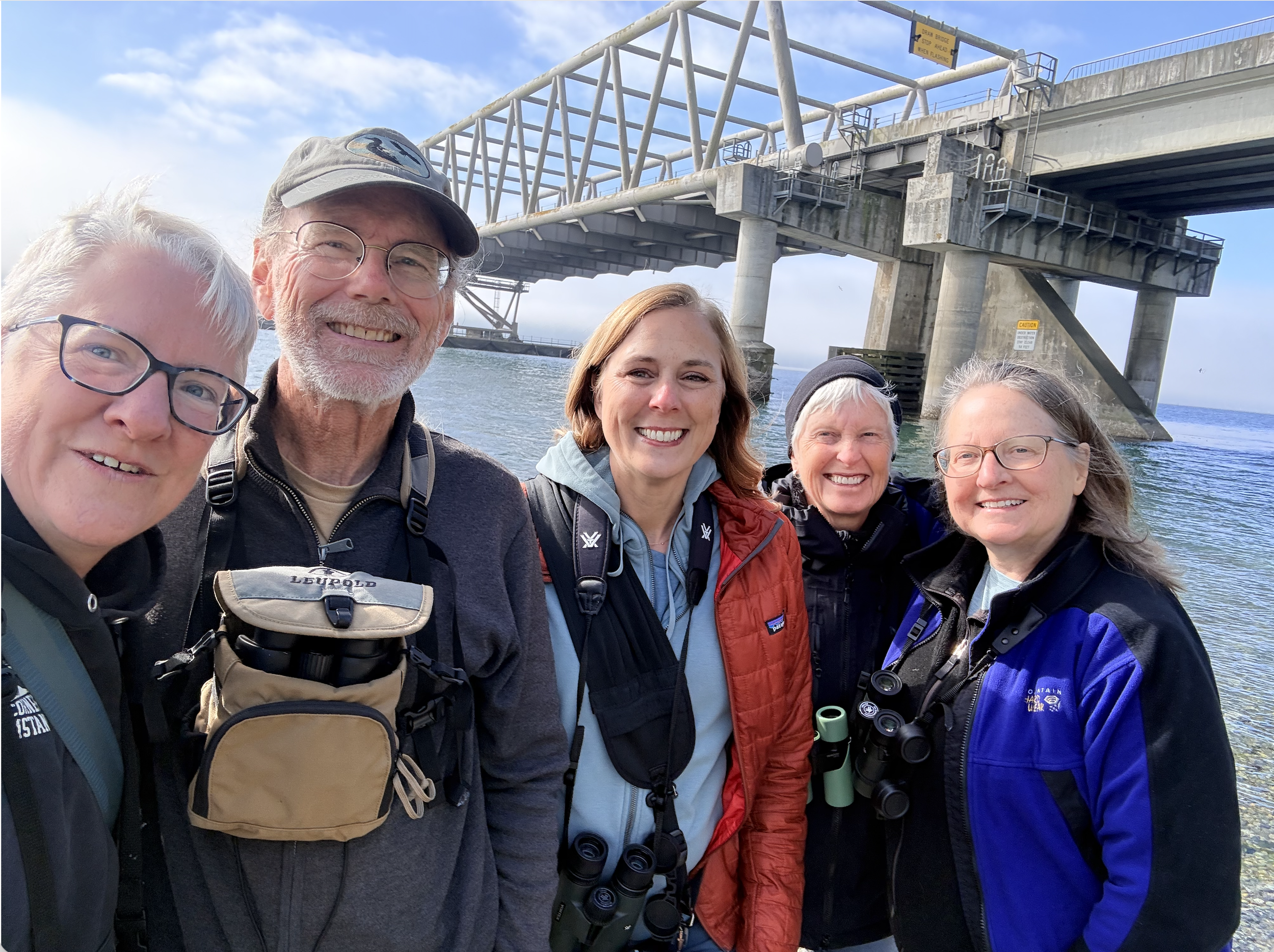
Hillary Smith, Dave Krause, Shannon, Brenda Johnson, and Karin Ertl in the shadow of the bridge.
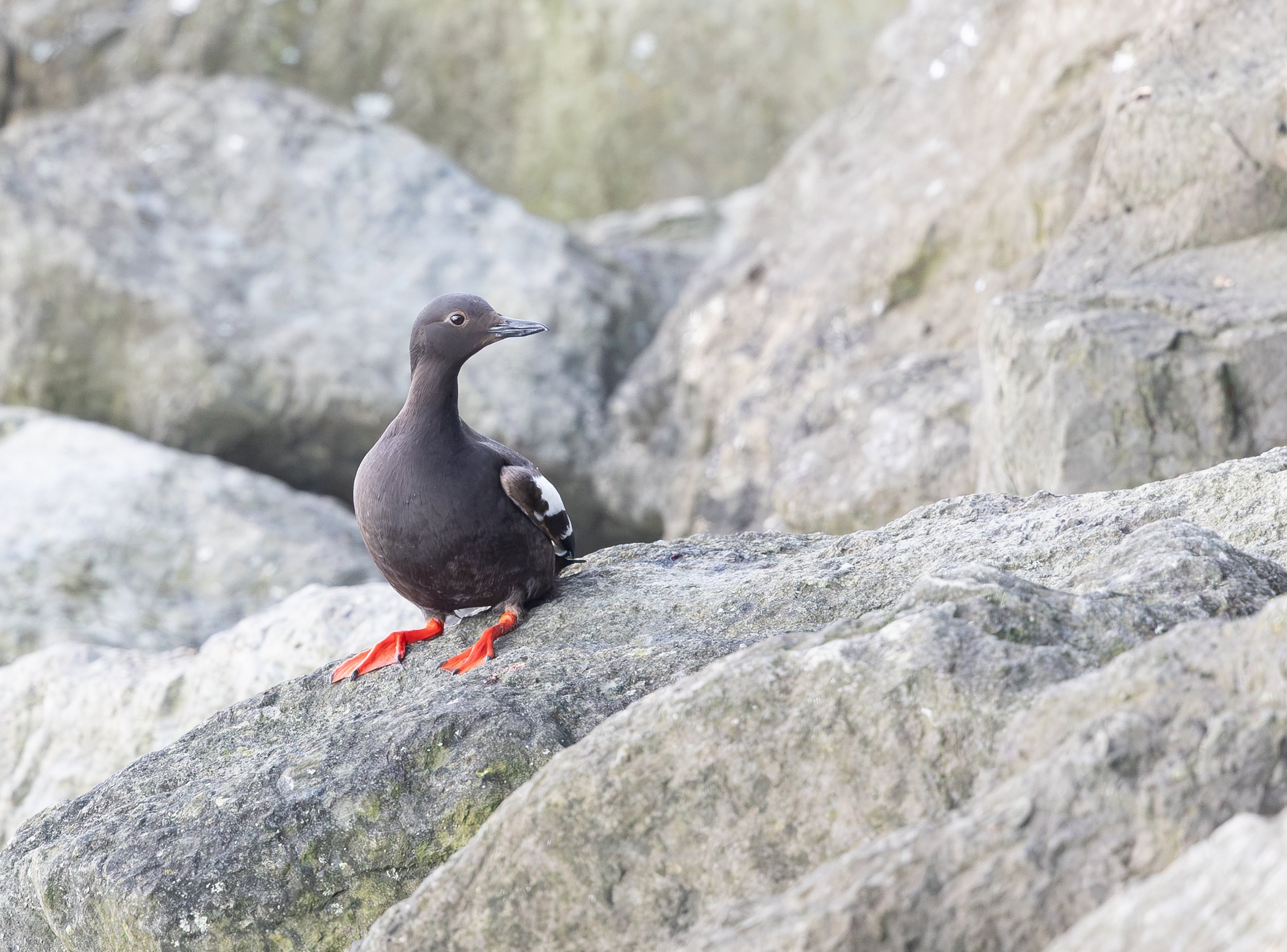
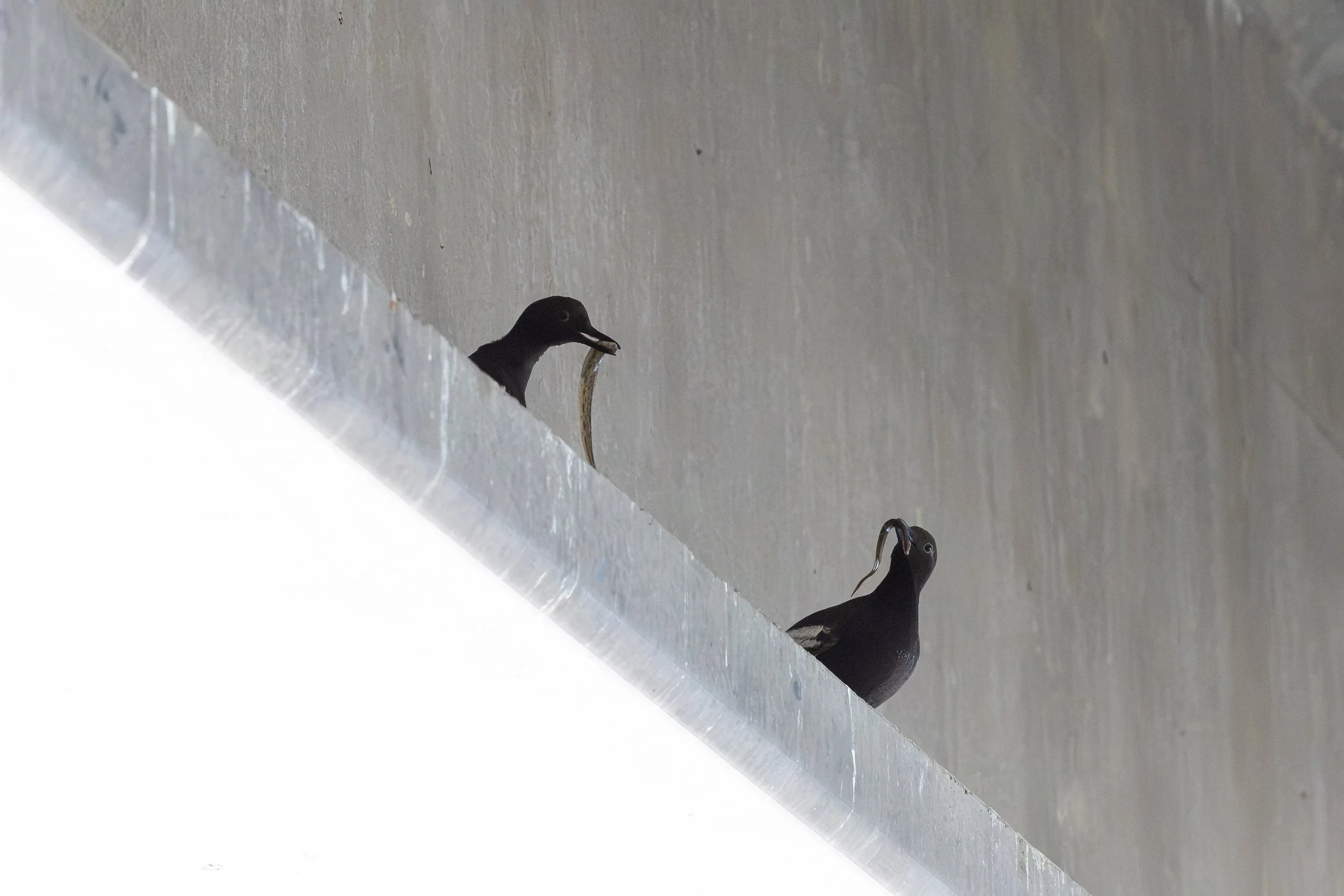
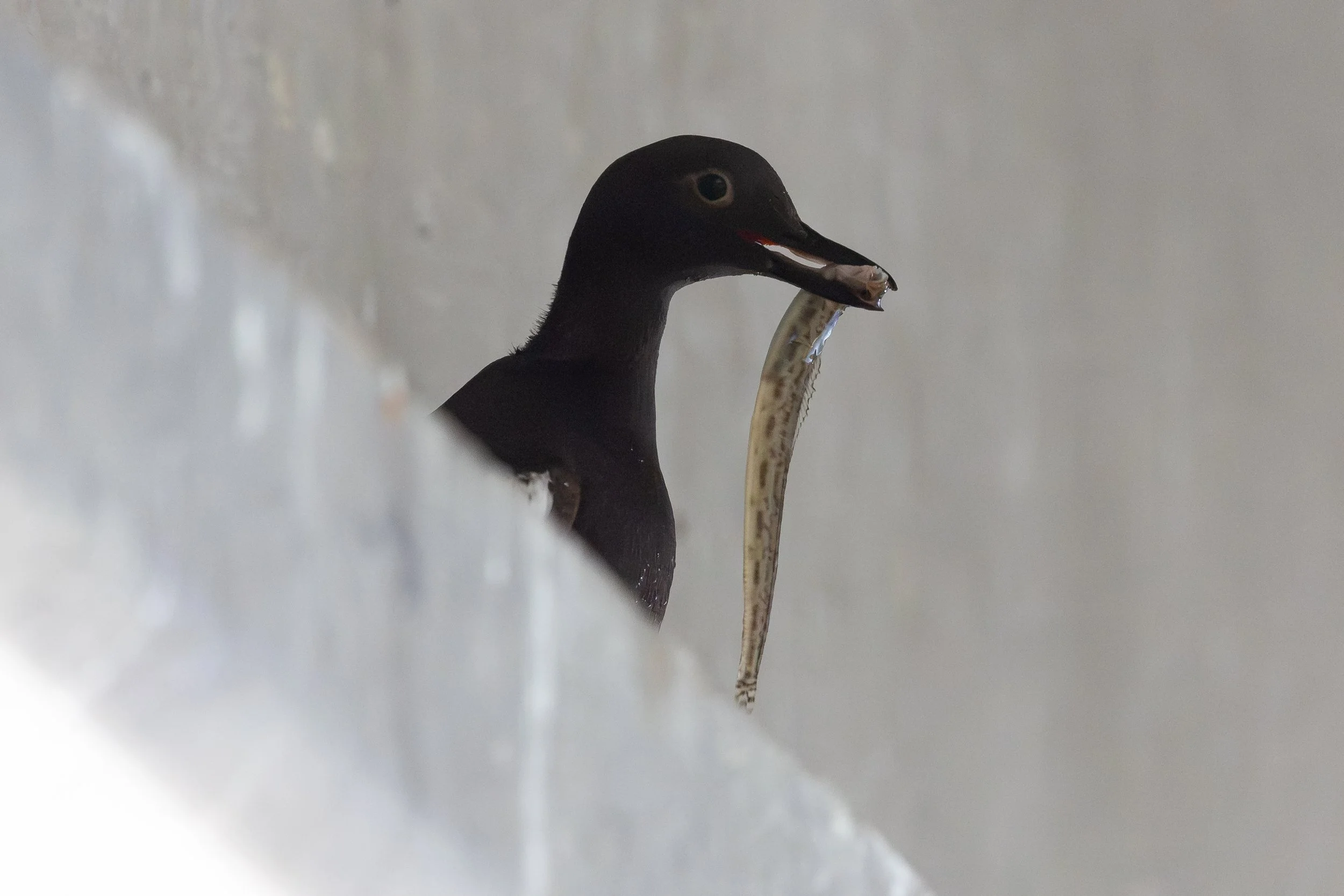
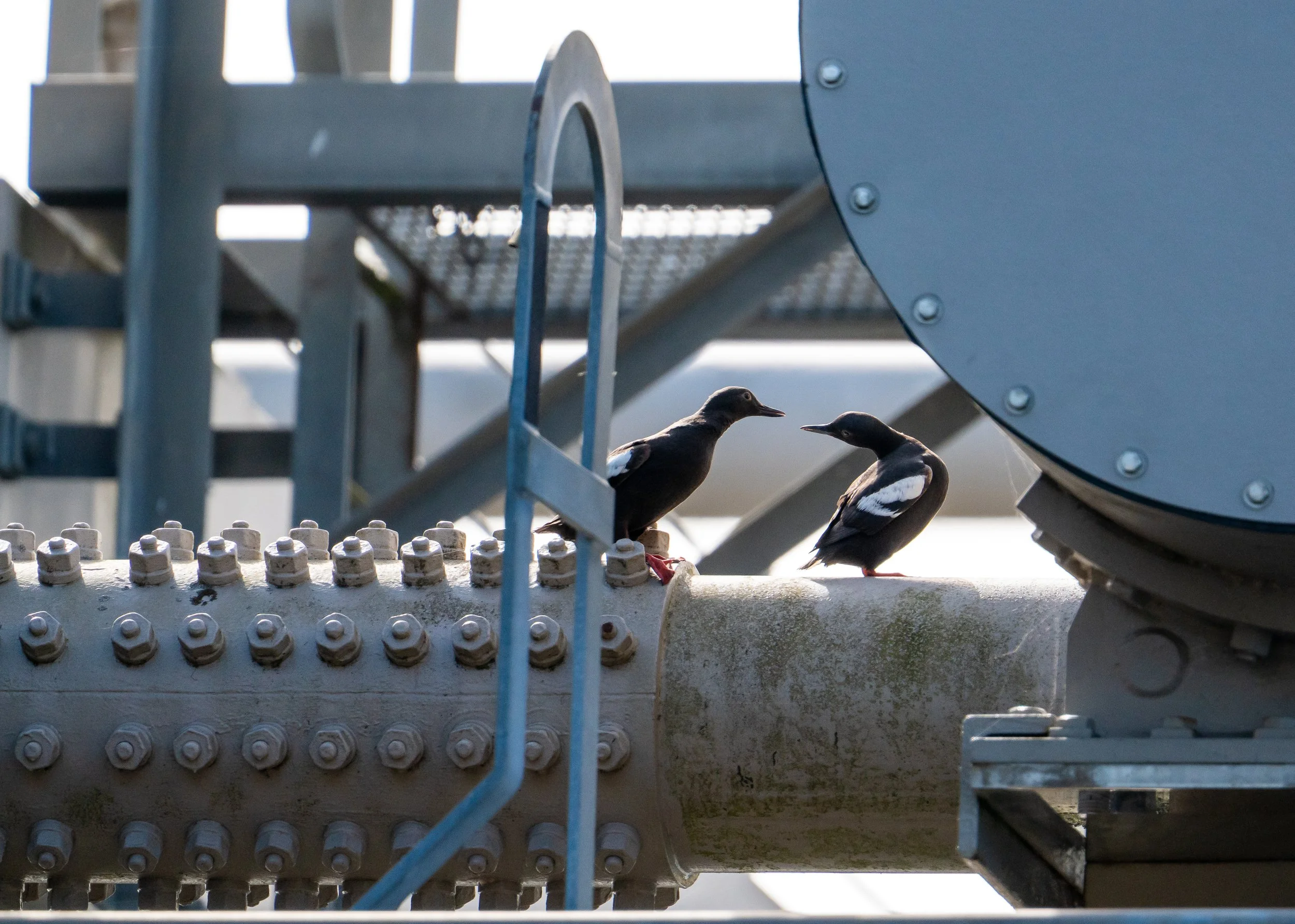
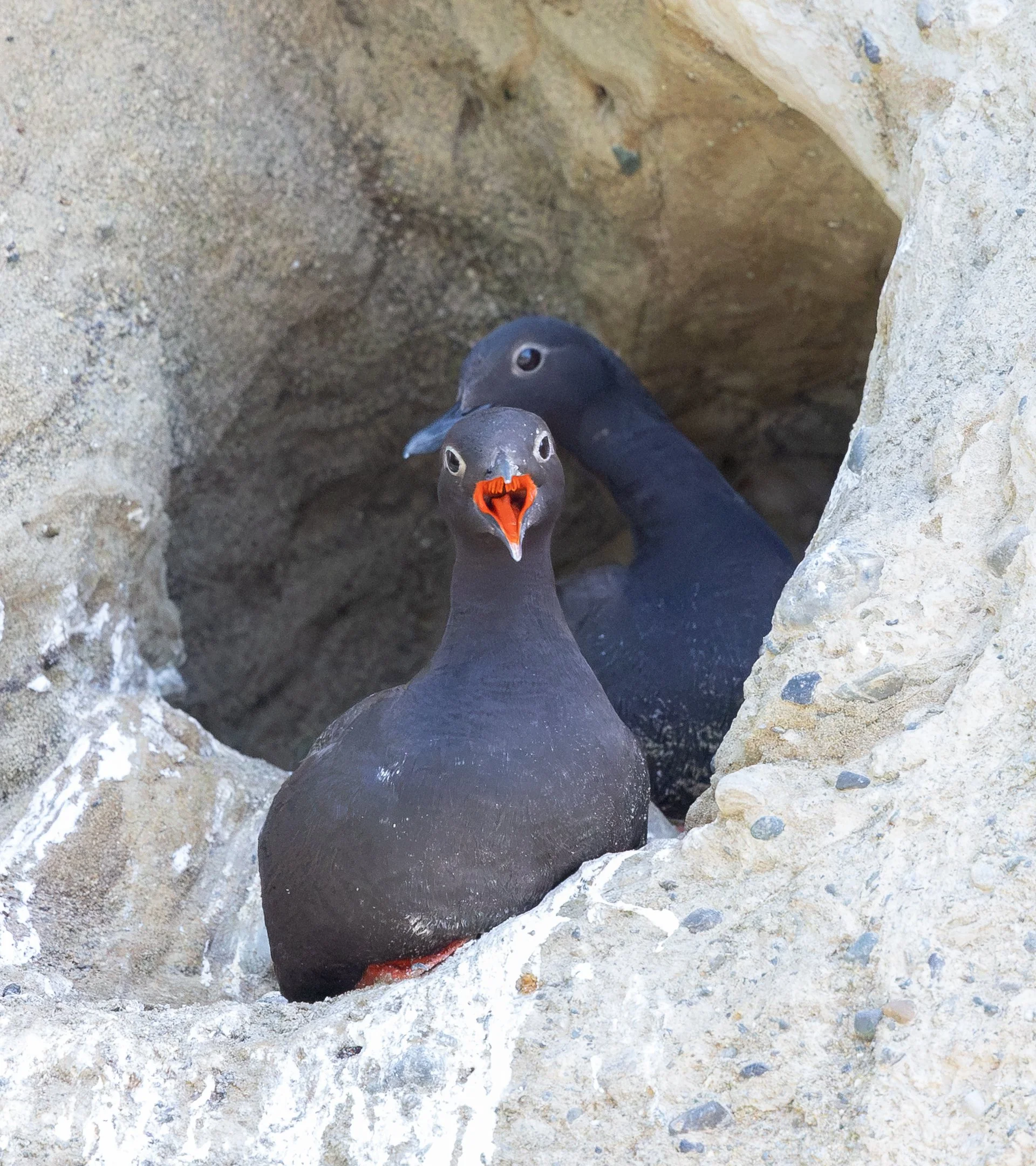
During the breeding season, Hood Canal Bridge supports a bustling colony of over 100 Pigeon Guillemots, on the west end alone! PIGU are raising and feeding chicks in nooks and crannies all along the length of it, and ledge sitting wherever there is space for a guillemot (or two or three) to fit! The activity here is enough to make your head spin! Karin, Brenda, and surveyor Nancy (not pictured) have been surveying the guillemots here for several years, and it’s amazing how well they are able to follow the movements of the birds.
If you would like to experience this colony for yourself, you’re in luck. The boat launch at Shine Tidelands State Park (where we are standing in the photo) is accessible to the public and it’s easy to find right off of the main highway (SR 104). If you’re not able to get out before activity slows, put it on your list for next season! Here are some more photos from the day, including one from Isthmus Beach (all photos by me, except as noted).
As we head into week 8, I anticipate that population numbers will decrease and provisioning activity will begin to slow dramatically at some colonies, especially those that saw prey deliveries within their first few surveys. Chicks might also start to fledge, if they haven’t already! We know this because studies have shown that chicks fledge between 5-6 weeks of age, on average, and within a range of 4-7 weeks. At colonies where burrows recently became active, prey deliveries could continue through August and into September. Bear in mind, we don’t always observe the first and last weeks of prey deliveries, so if you can count 3-4 weeks of prey deliveries at a given burrow, you are likely within reach of this sudden decline in breeding activity.
A word about fledglings: many of you already know that fledglings are a bit elusive, and we don’t often see them fledge or out on the water in front of our colonies. They almost always fledge under cover of darkness, either near or after dusk, or very early in the morning. Once fledged, they do not linger or socialize with their parents or other birds in the colony; instead, they simply drift away. They are unable to fly well for the first 2-3 weeks, but they are capable of diving and feeding themselves right from the start! If you’re lucky, you’ll spot one in the nearshore over the next few weeks, but don’t expect them to stick around!
Two season’s ago, one of our South Sound surveyors, Susan Morgan, from the Edgewater colony staked out a burrow with two chicks in it for several evenings in the late season. She sat in a tree and waited, until one evening, both chicks took the leap to independence (one at 8:24 pm and the second at 9:03 pm). Unlike previous accounts in the literature which stated that chicks leapt or tumbled to the ground and stumbled across cobble to reach the water, she observed them gliding straight out over the beach and into the water. There were no other PIGU about, and both chicks immediately started diving. They were not seen at the colony in subsequent days! If you would like to read more about this exciting account, it was submitted by Maria Ruth and Susan Morgan, and published here, by the Pacific Seabird Group.
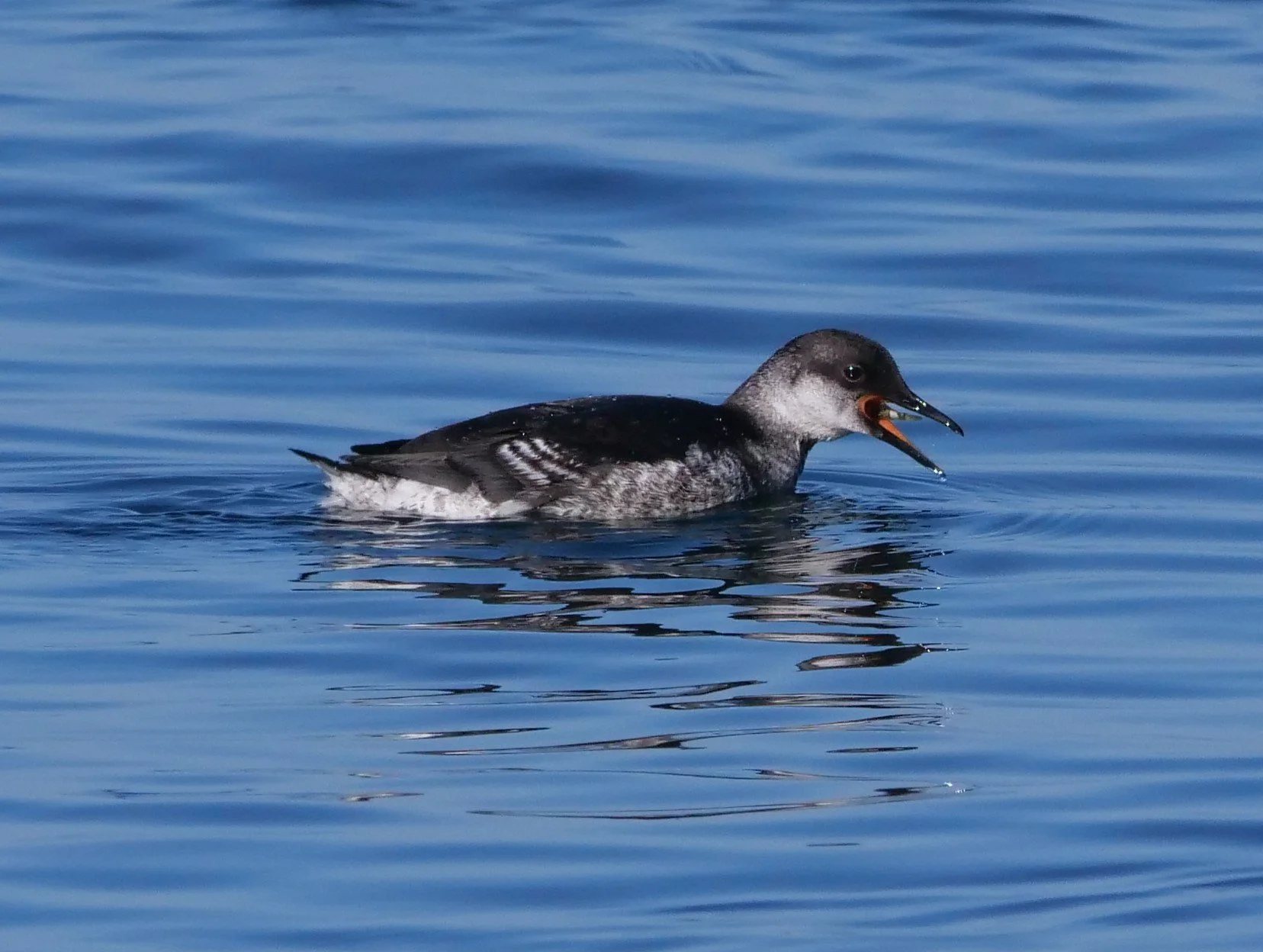
Below are some newbies, so you know what to keep an eye out for! Notice the dark cap and wings, mottled or sooty white belly, and very non-distinct wing patches. Let me know if you see any of these guys floating about!
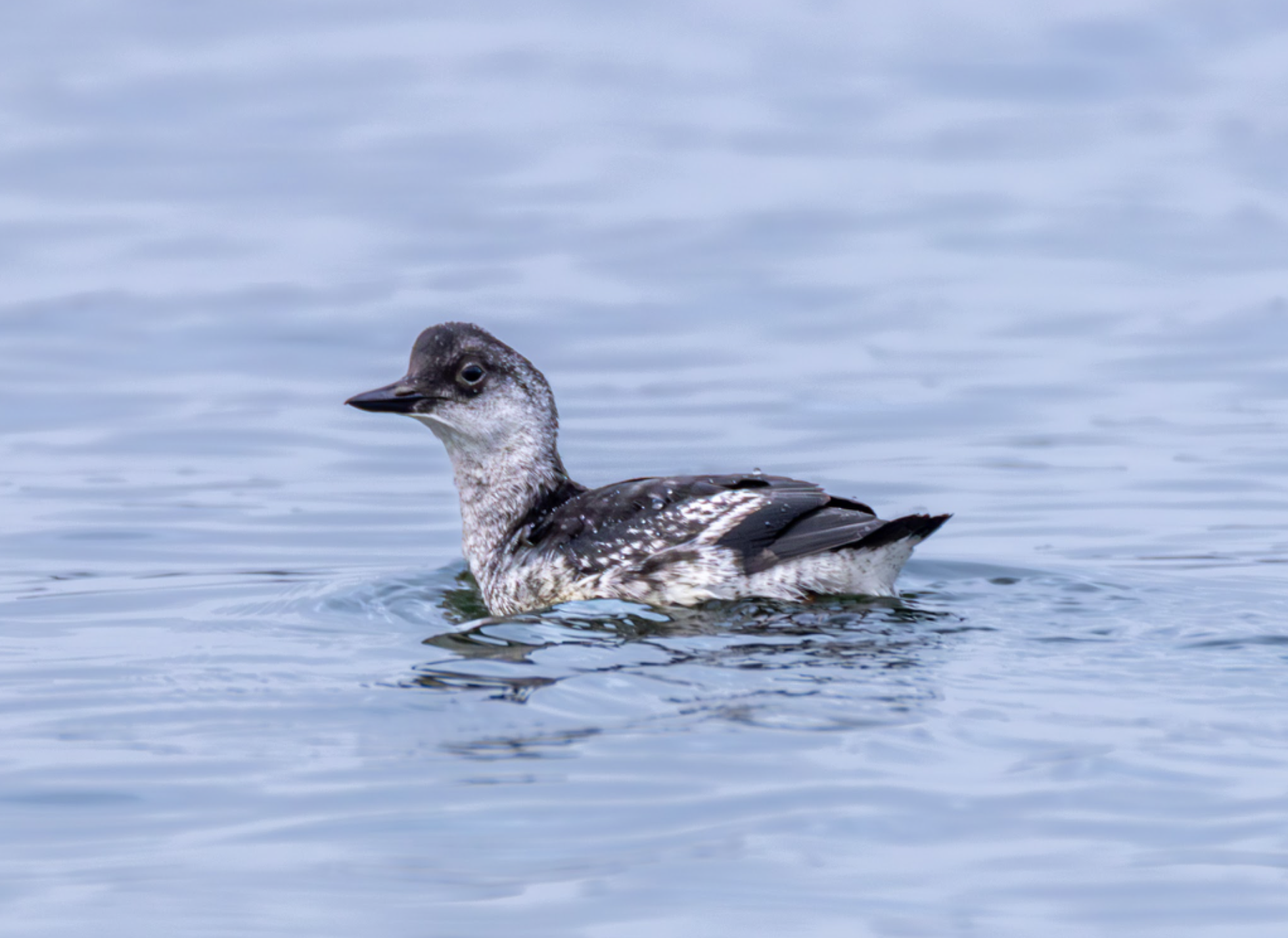
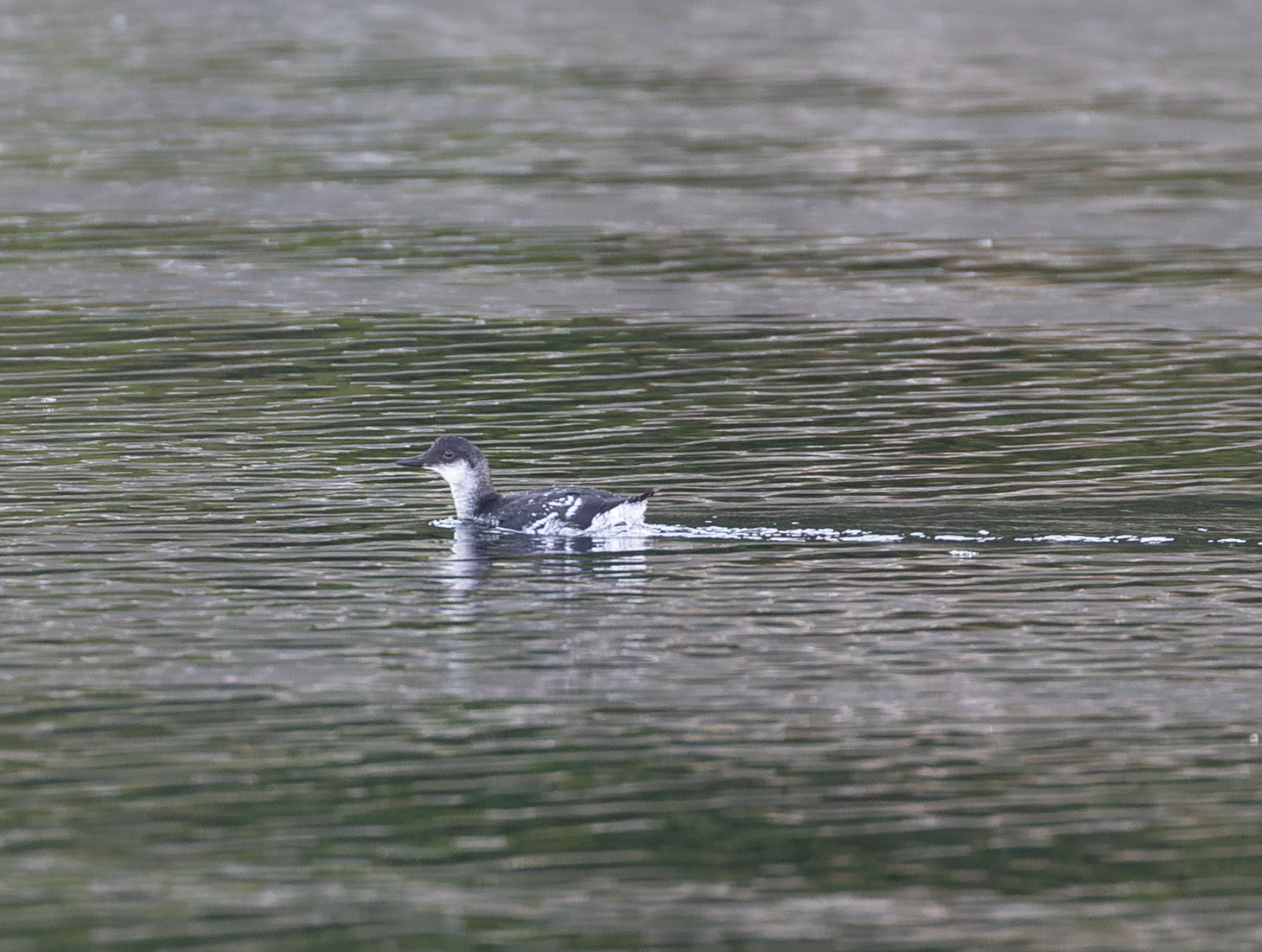
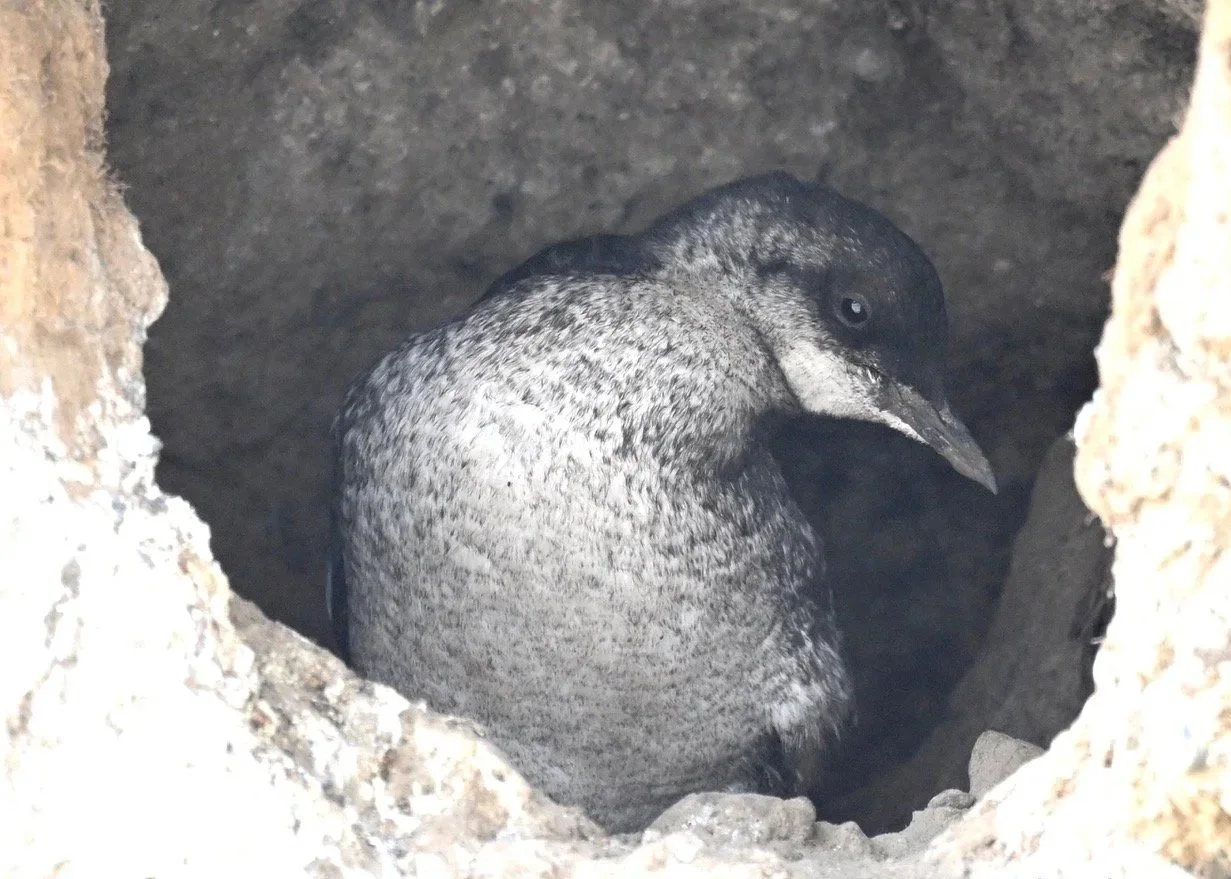
If you suspect that your colony chicks have fledged and your colony activity is dropping off, just remember that our protocol dictates that we must survey for a minimum of 10 weeks or until we reach two consecutive weeks with no activity (at the end), whichever is longer. This is to make sure that we haven’t missed any late burrows or activity. You just never know! I have seen a burrow become active with its first prey delivery in Week 10!
We define activity as PIGU that are still holding prey on the water, visiting burrows, congregating in large groups in the nearshore, or interacting with the bluff. Even if you aren’t able to record an actual prey delivery during a survey, birds holding fish are an indication that chicks are still in the burrow. If this situation happens, it’s important to make a note that PIGU are holding fish or any other behavior you observe that suggests ongoing breeding activity. This will tell your regional leads/coordinators that your survey should continue for at least two more weeks. It’s also a good idea to be in touch with your coordinator during this time to discuss when you should close down your colony for the season.
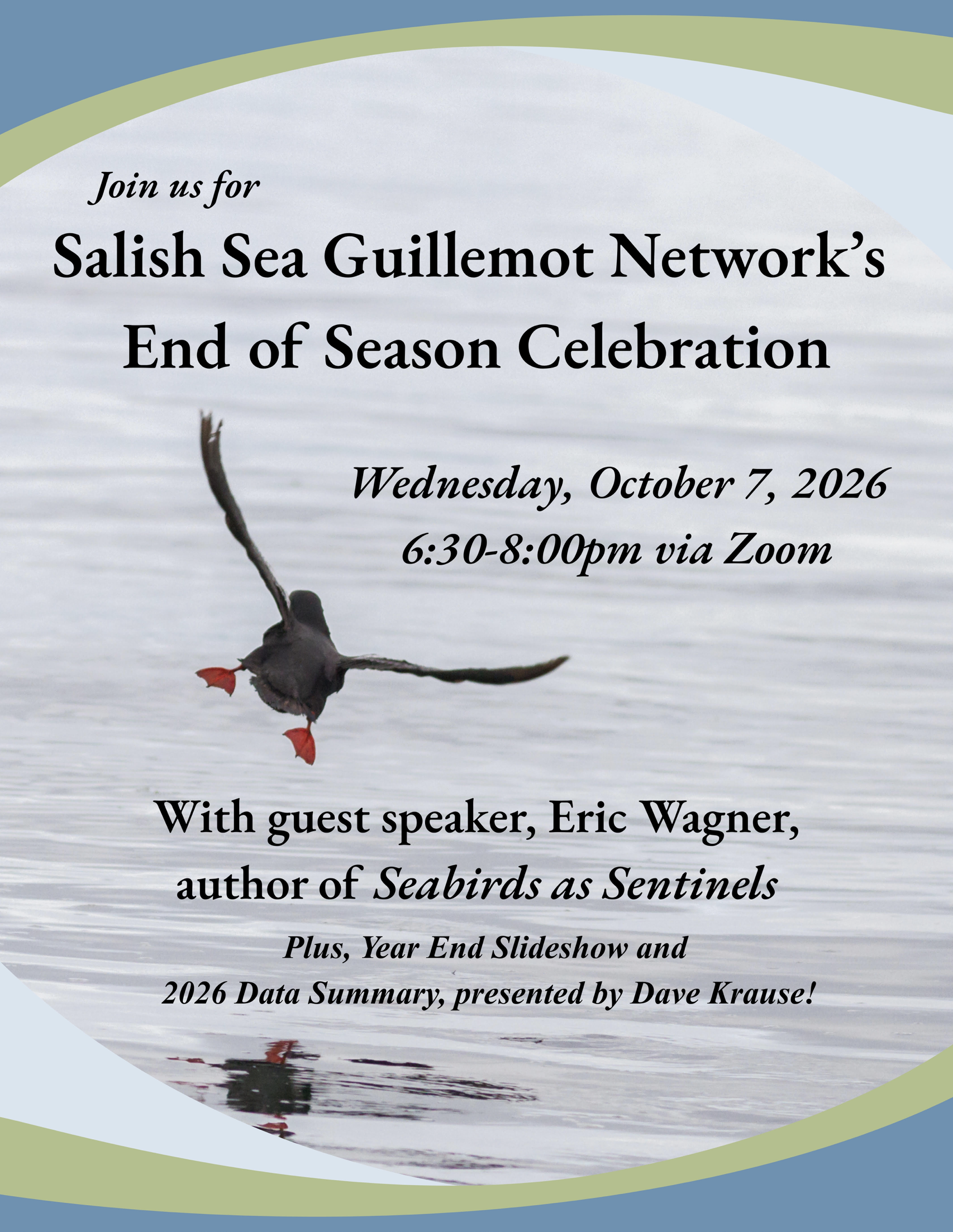
On that note, I’ll leave you with a Save the Date for our End of Season Celebration, which will occur on Wednesday, October 7, 2026 at 6:30pm. I am really excited to announce that Eric Wagner, author of the book Seabirds as Sentinels, and writer for the University of Washington’s Encyclopedia of Puget Sound, will join us as our guest speaker. We will also feature our 2026 Data Summary, presented by Dave Krause, and our year in review slideshow. Don't forget to send me your survey team selfies in front of your colony bluffs!! You can send them to shannon@pigeonguillemot.org
Have a wonderful week, all! Thanks for all you do!
Shannon