

Week 13: August 30th - September 5th
Hello steadfast guillemoteers and happy Sunday!
It’s another beautiful late-summer day as we head into week 13 of our 2026 PIGU breeding season. This last month of cool, peaceful mornings has been most welcome, providing the perfect backdrop as we watch our colonies wind down in both bird numbers and breeding activity. I know I’m not alone in feeling grateful for the opportunity to witness nature’s magic week after week and to spend the summer working together with fellow friends and guillemoteers. You all are awesome! Thank you so much for the love, curiosity, and enthusiasm you show for the birds, the commitment you make to collecting good data, and, of course, the fun you bring to this project!
This survey, these birds, all the wildlife we get to observe, even the weather—it all feels like a gift. Each survey becomes a chance to reground and reconnect, and to remember our place as stewards of the natural world. The responsibility doesn’t feel like a burden; rather, it leaves us feeling fortunate simply to be in this place, fulfilling this important role. For all of these reasons, the end of the season leaves me a bit wistful. I feel the tug of missing the routine, our lovable little birds, and the camaraderie between surveyors. One thing I am certain of, however: they—and we—will be back at it before we know it!
It looks like each region has at least one colony still surveying this coming week and potentially beyond. The vast majority though are ready to hang up their binoculars and call it a season. I will continue to keep in touch with regional leads and follow those who are still looking after the remaining active burrows, but this will be my last “official” survey update of the season.
I do have a few fun things to share before I sign off. I hope you don’t mind photos, because this update is heavy with them. I found so many of these interesting and I had a hard time choosing! (Thank you to everyone who sent me photos and stories this season—you make this update possible!)
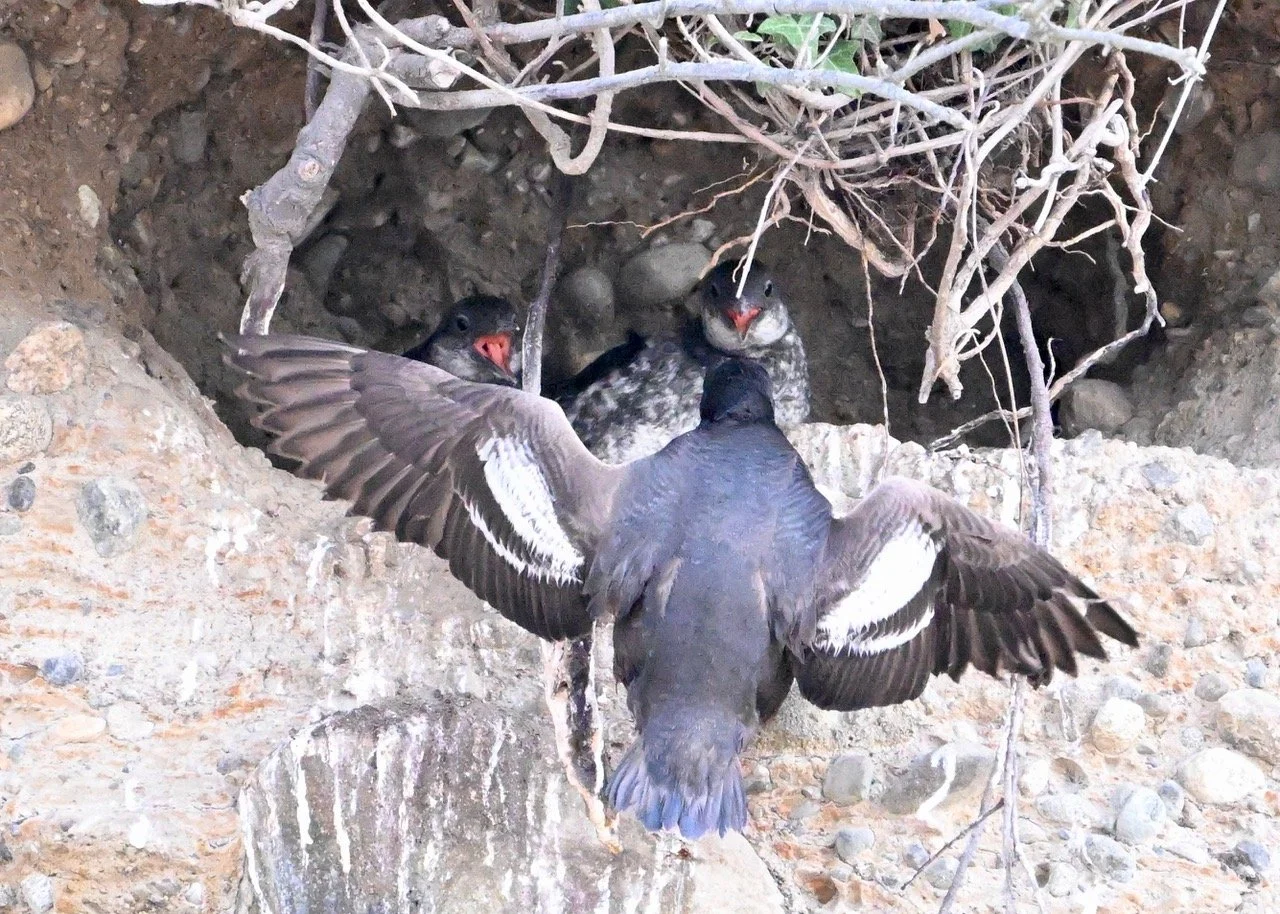
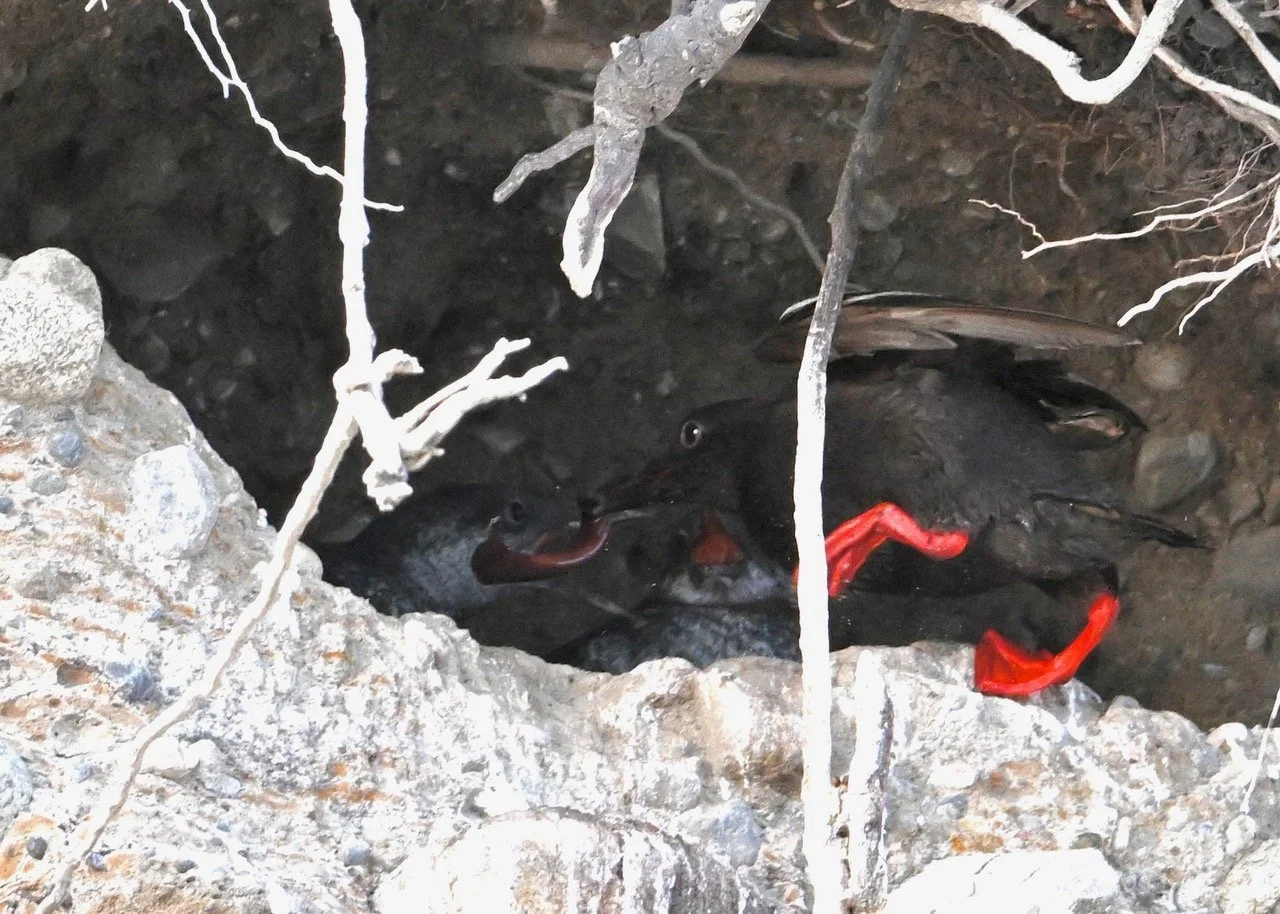
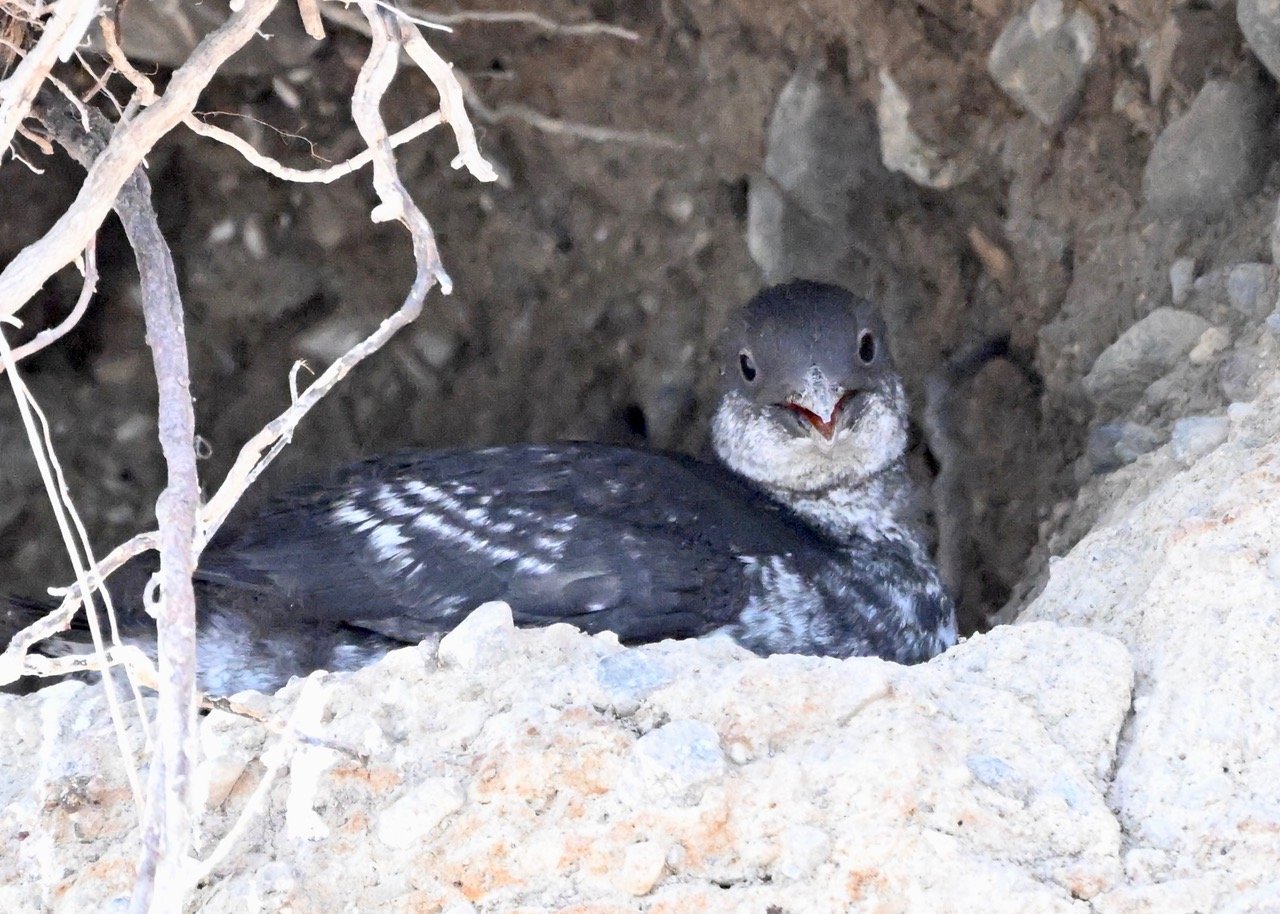
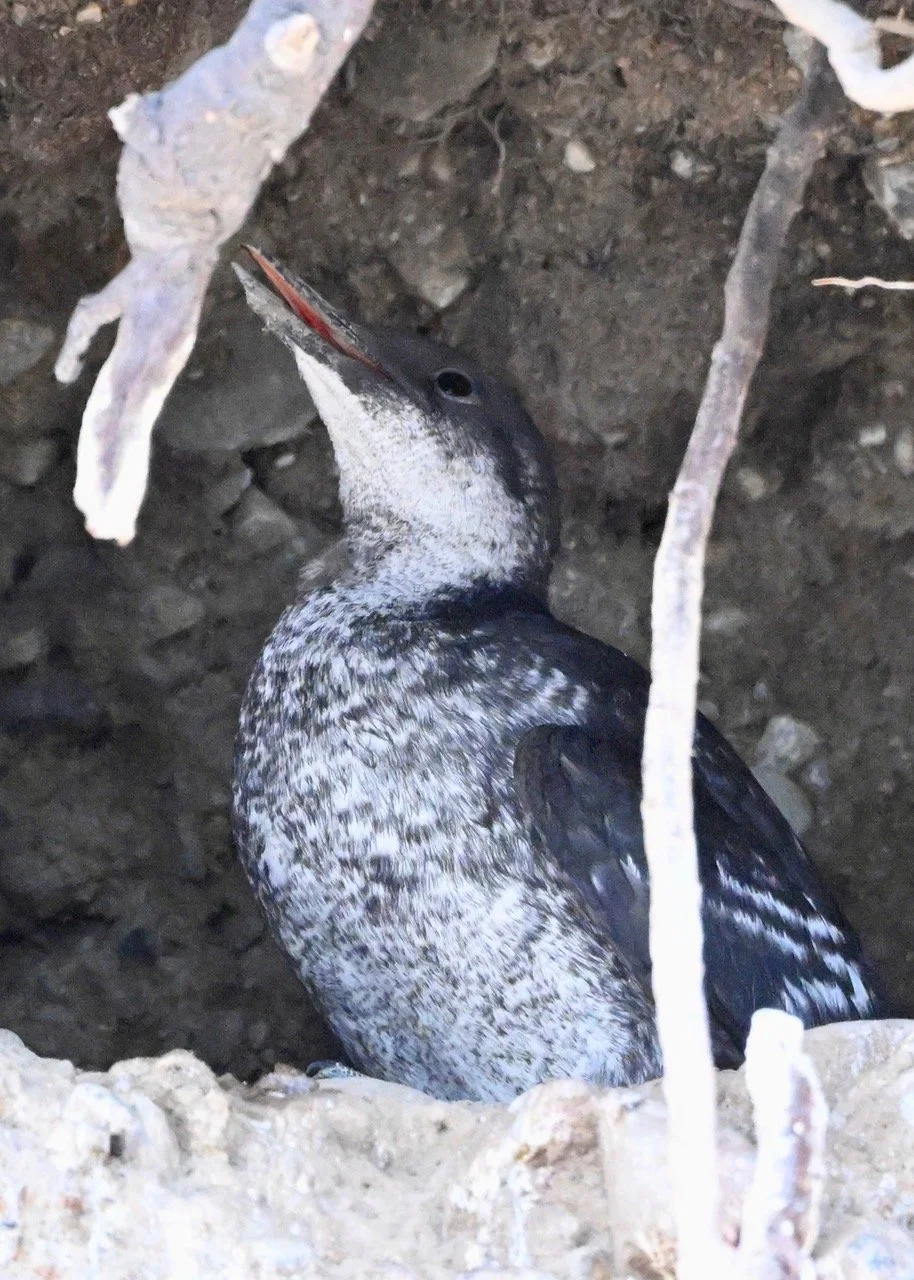
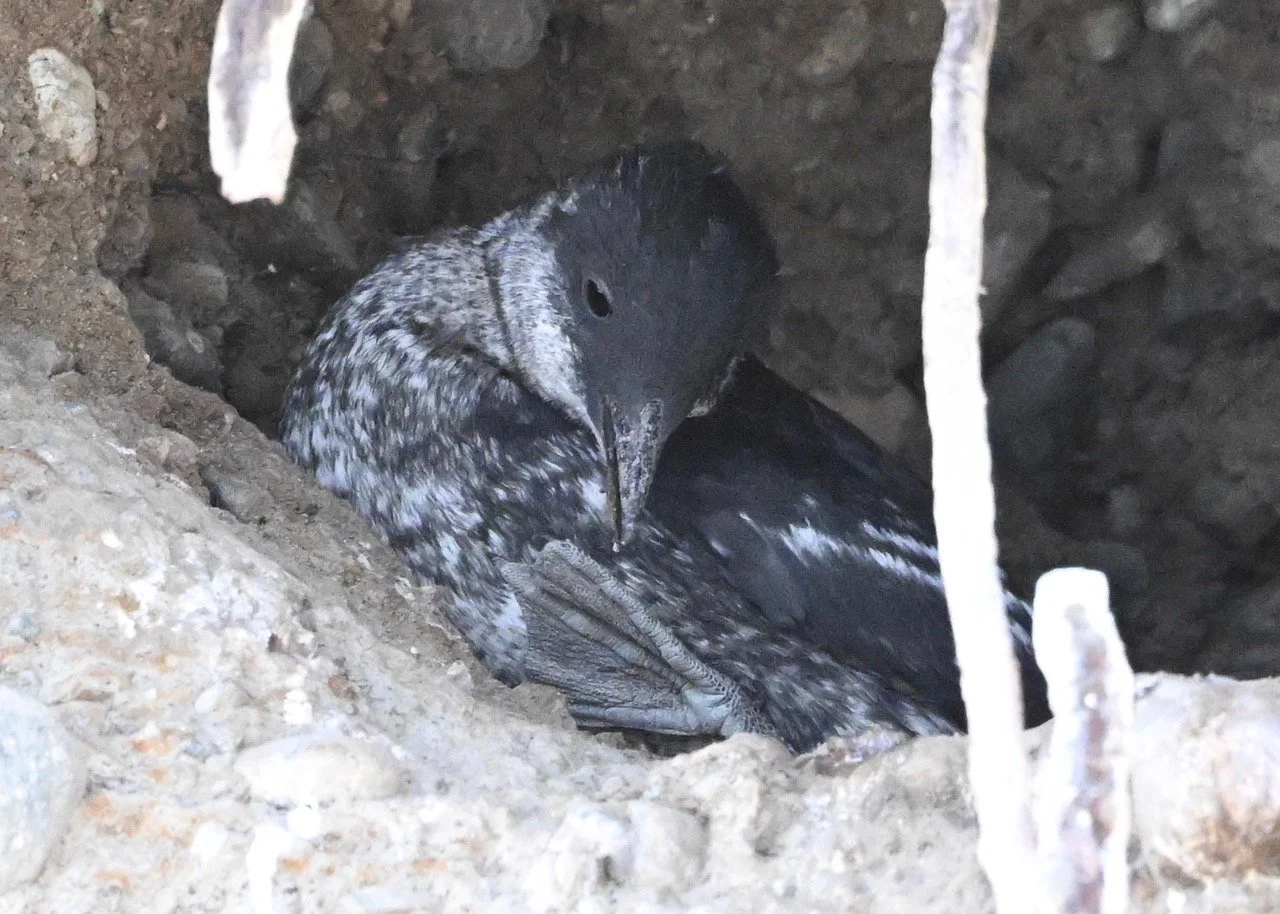
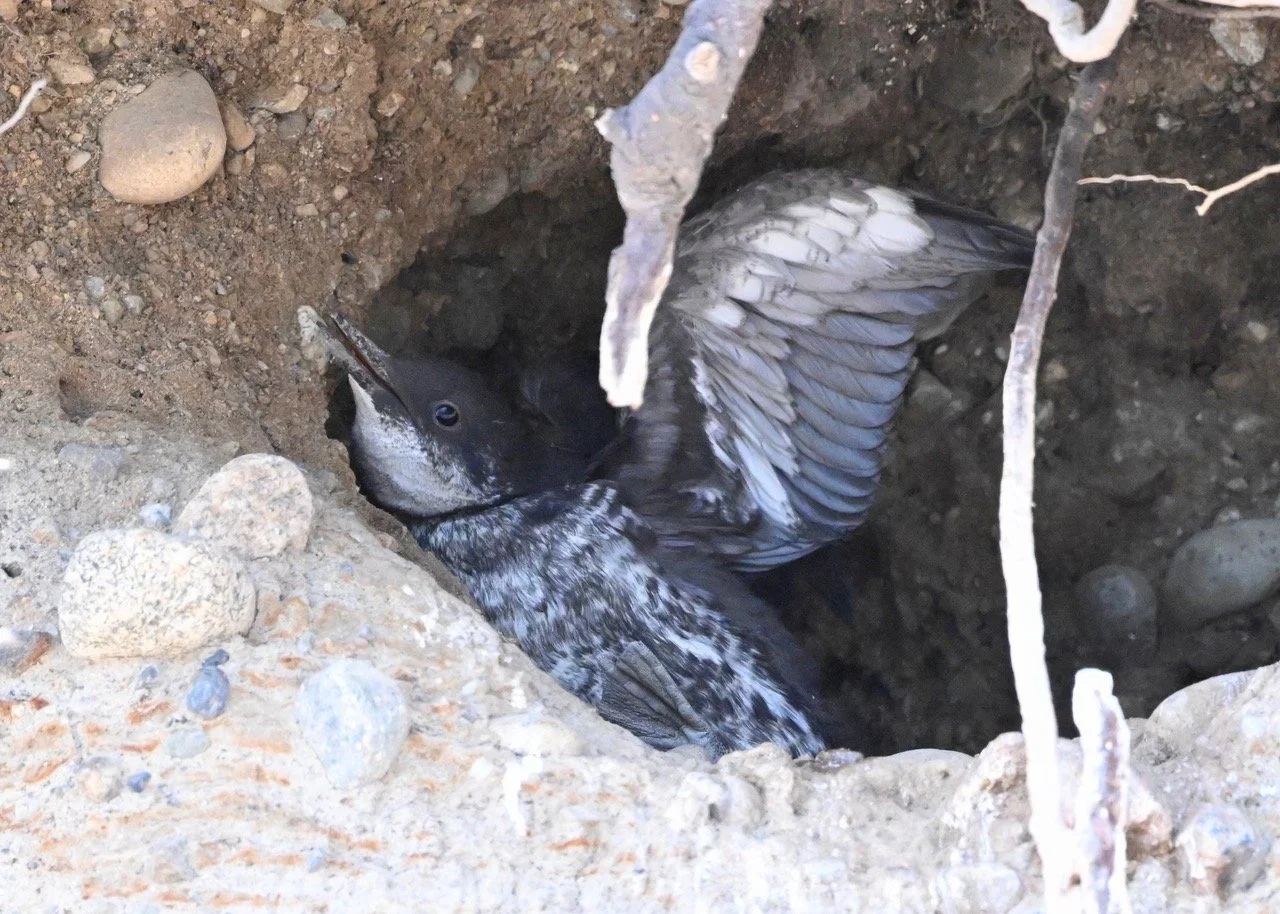
At a colony on Whidbey Island last week, two chicks could be seen at the mouth of a burrow. When Lac Pope got the word, he ran over to see if he could find them and snap some pics. Not only did he find them, Lac said that the chicks were very active, “lots of pacing, wing flapping and stretching, and preening. Seems like they're ready to take the plunge anytime. Adults still coming by regularly with food.” What an amazing photo documentation of chicks being fed by a parent! Lac’s photos give us a good look at the chick’s feet too. It’s hard to imagine those black feet will become “flaming red” within a year or two!
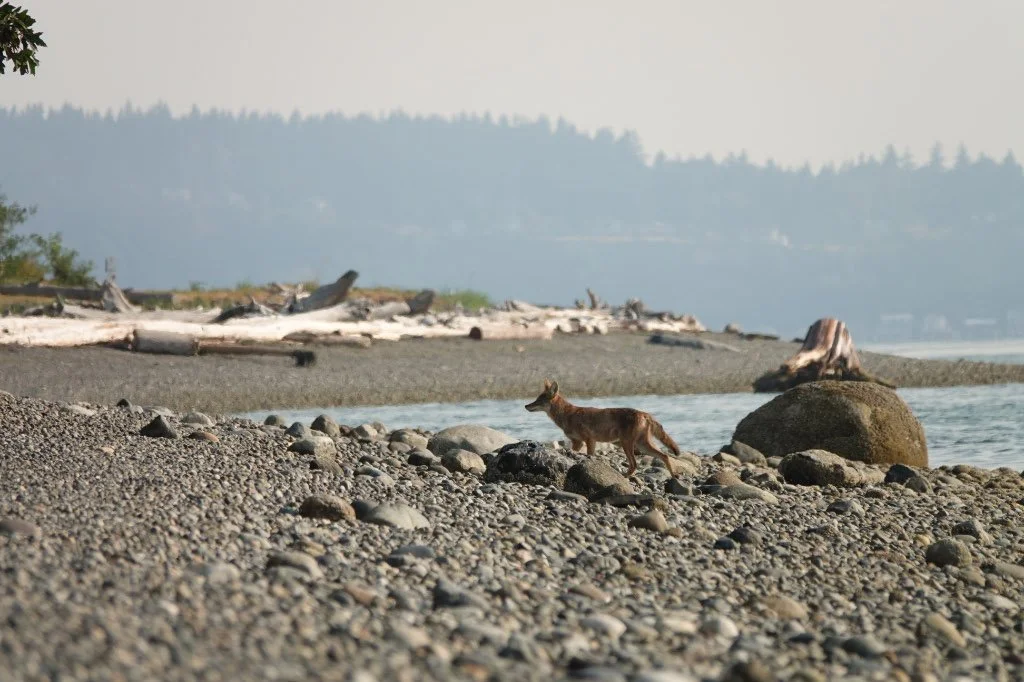
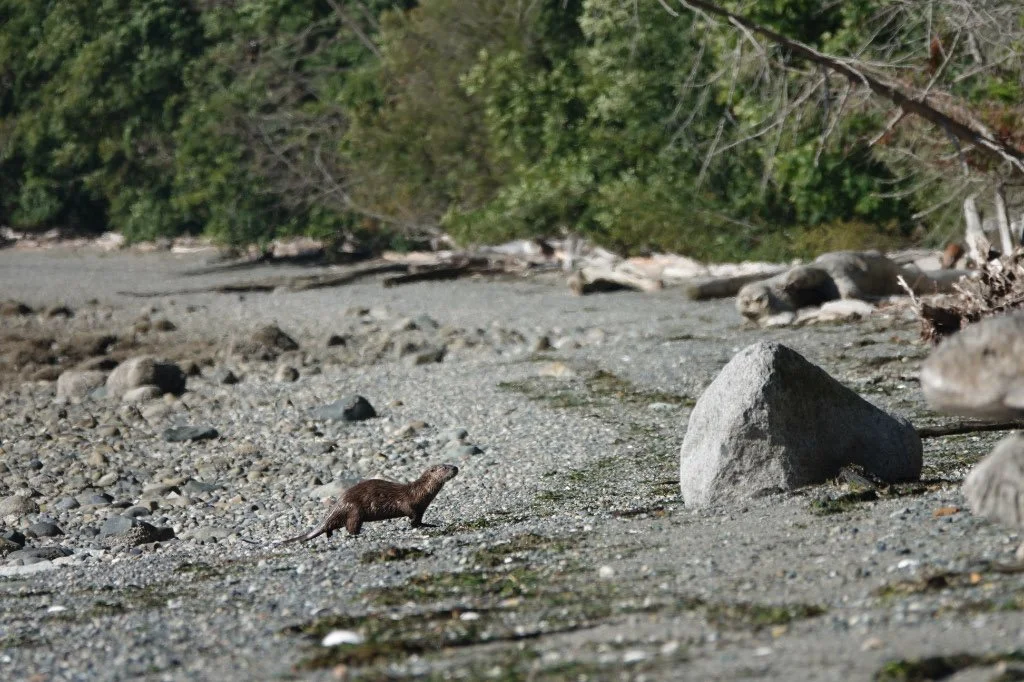
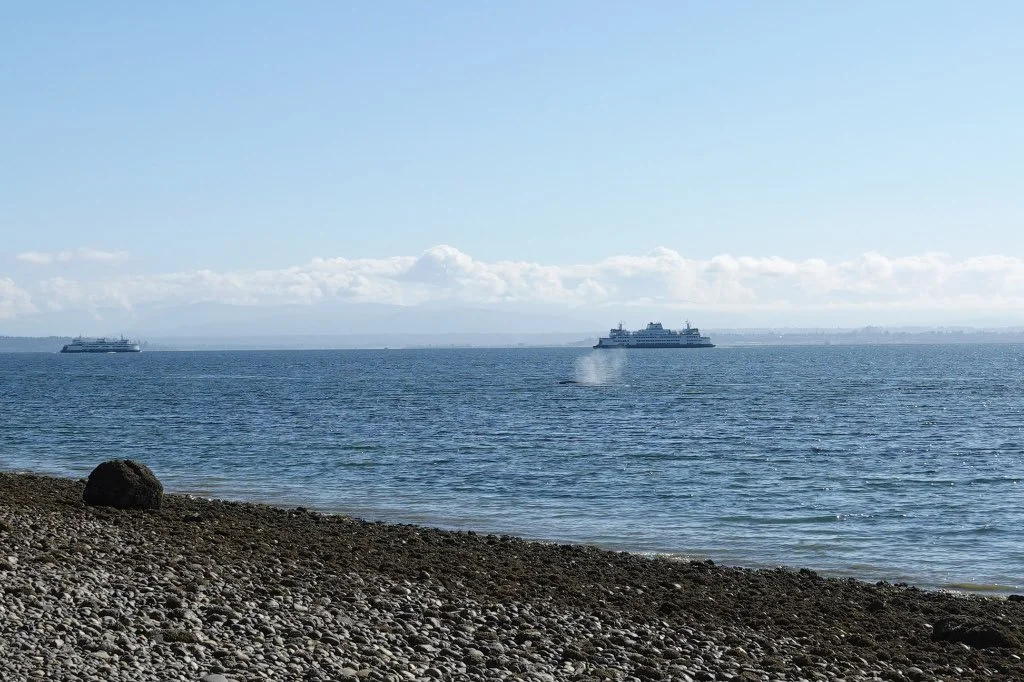
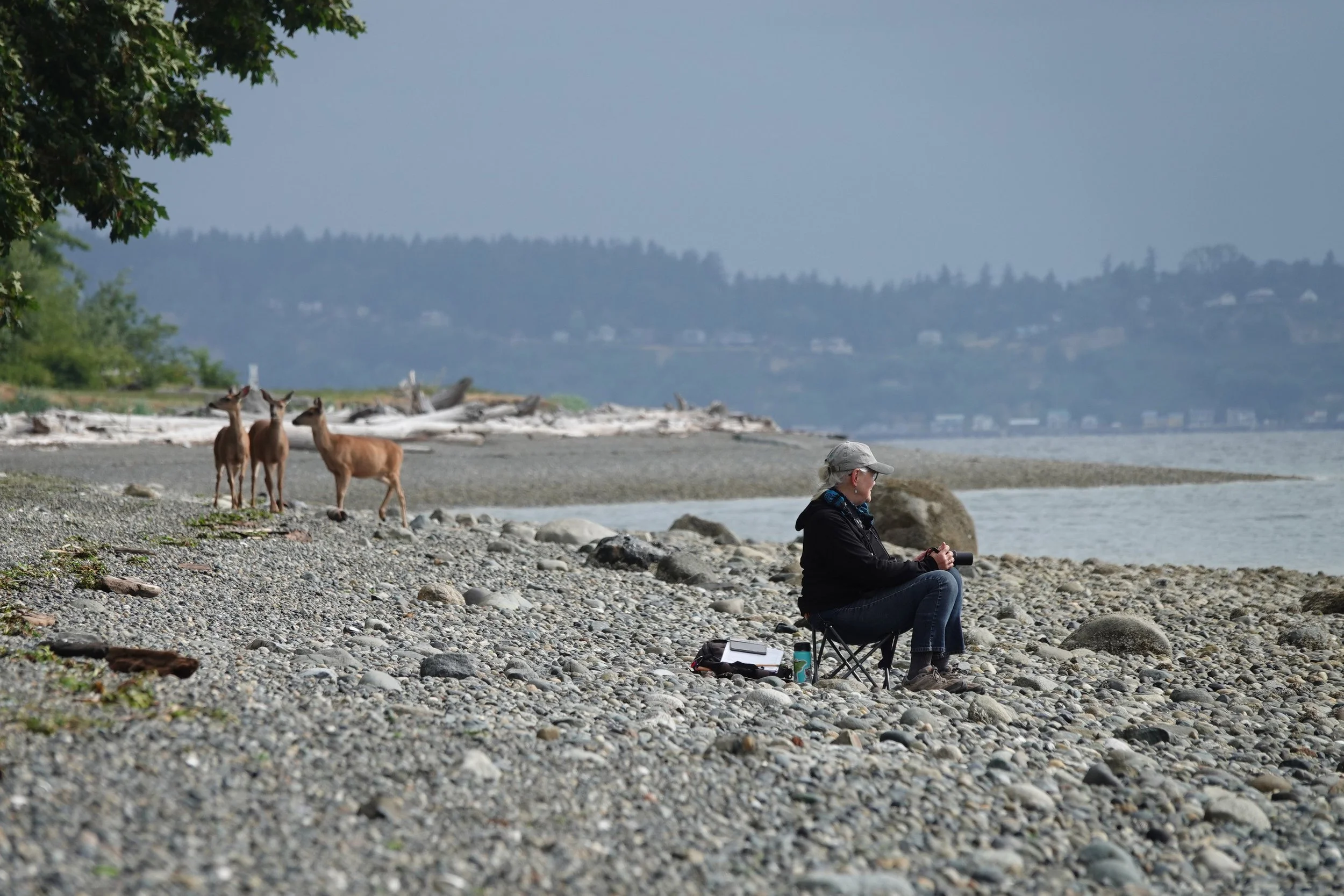
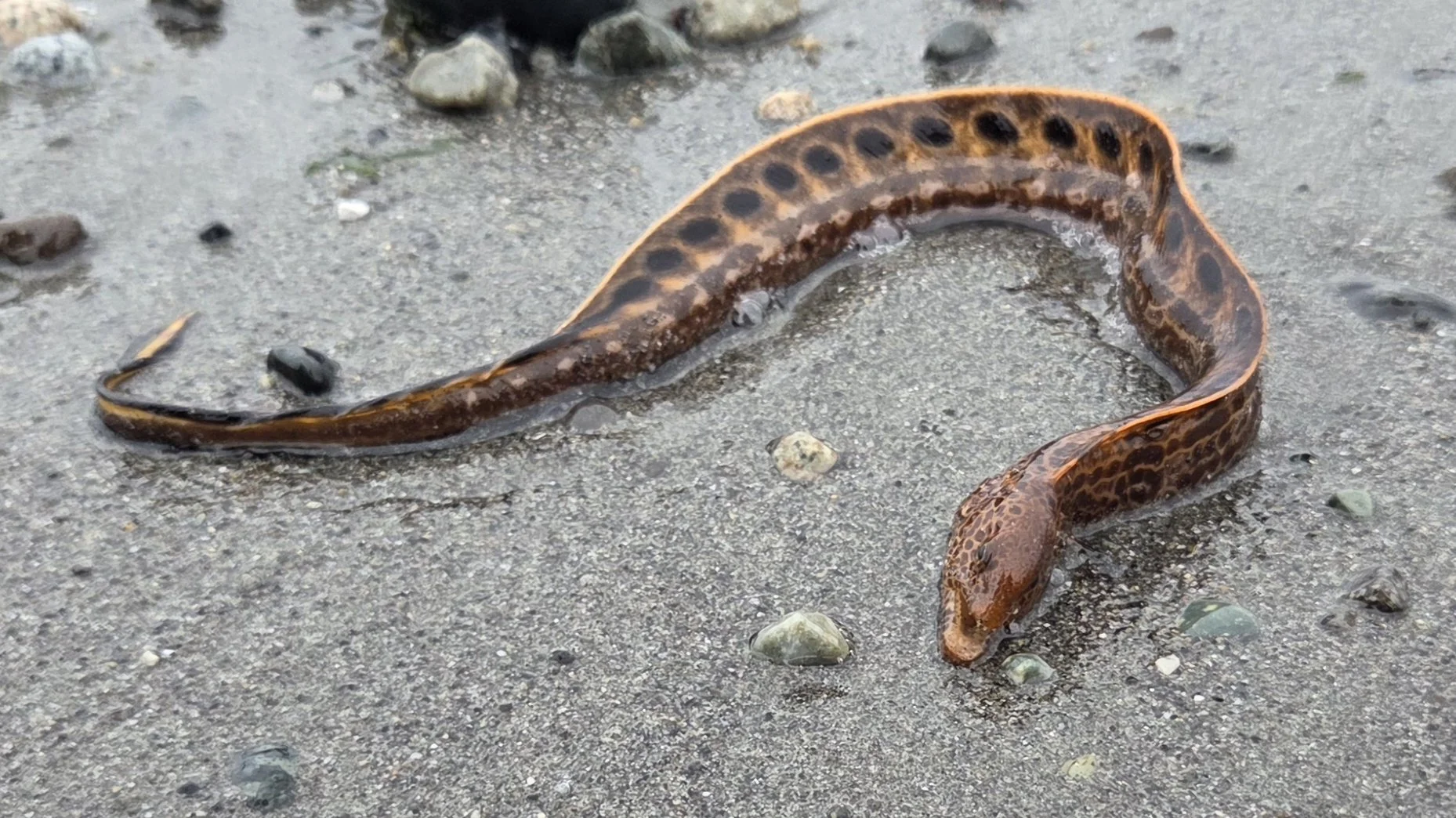
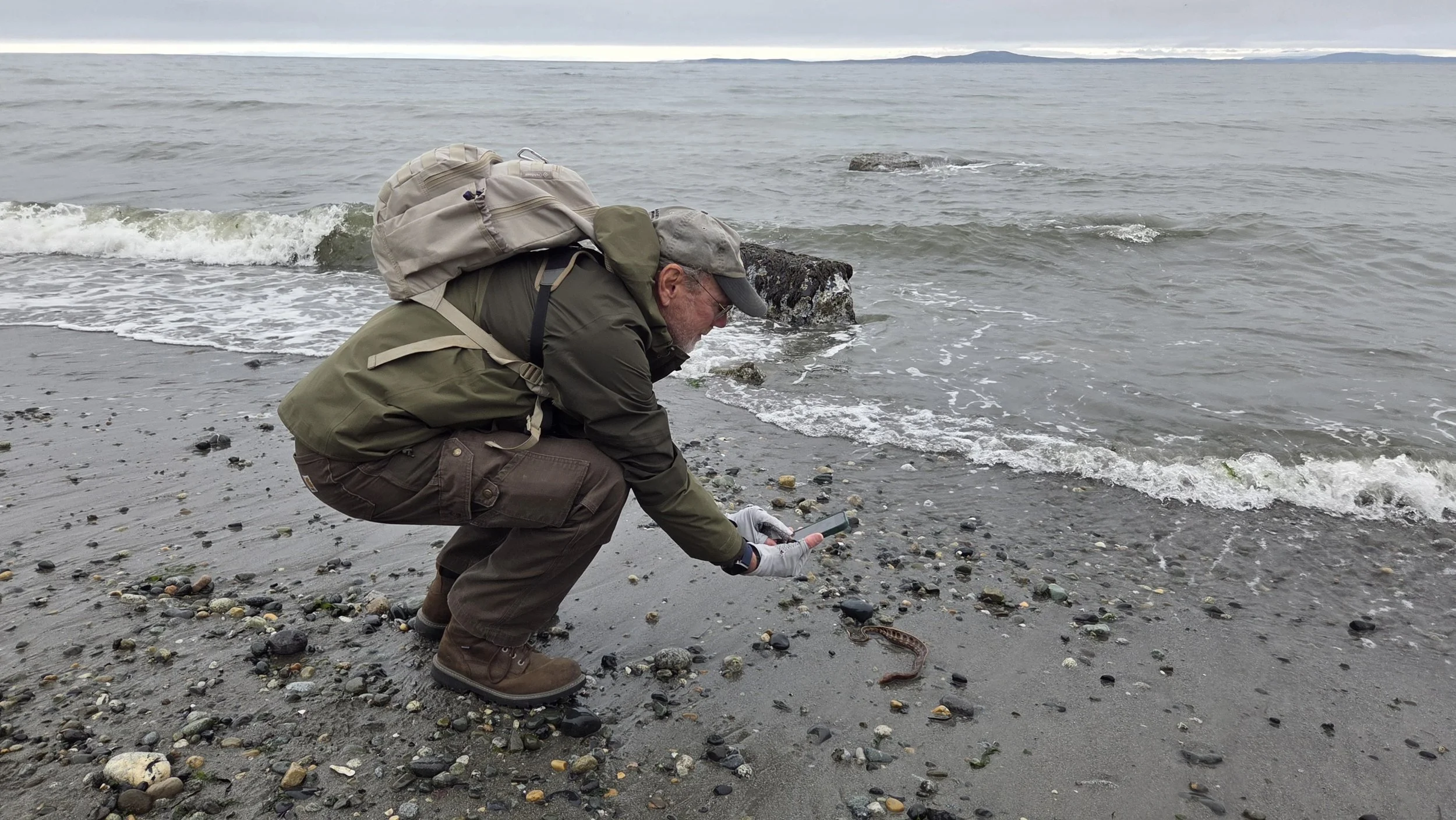
Cathi Bower sent me some really cool photos of wildlife encounters seen at her Glendale colony (Whidbey Island), to include a coyote, river otter, gray whale, deer, and a juvenile wolf eel! I’m just a little jealous!! (Sidenote: the wolf eel was safely transported back to the water and was able to swim away!)
Cathi also sent in this silly series, showcasing one of the guillemots favorite games, “how many PIGU can fit on the log?”
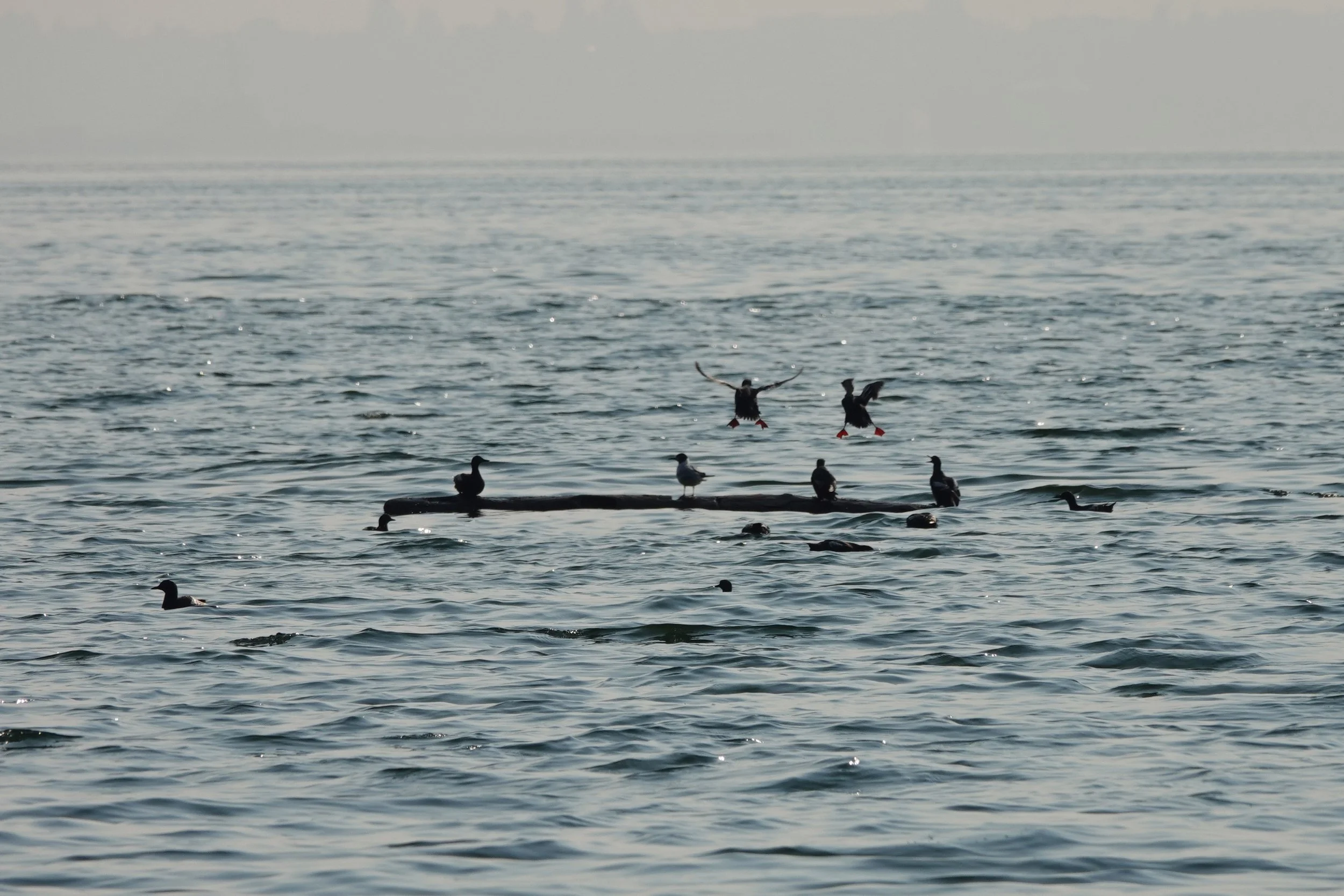
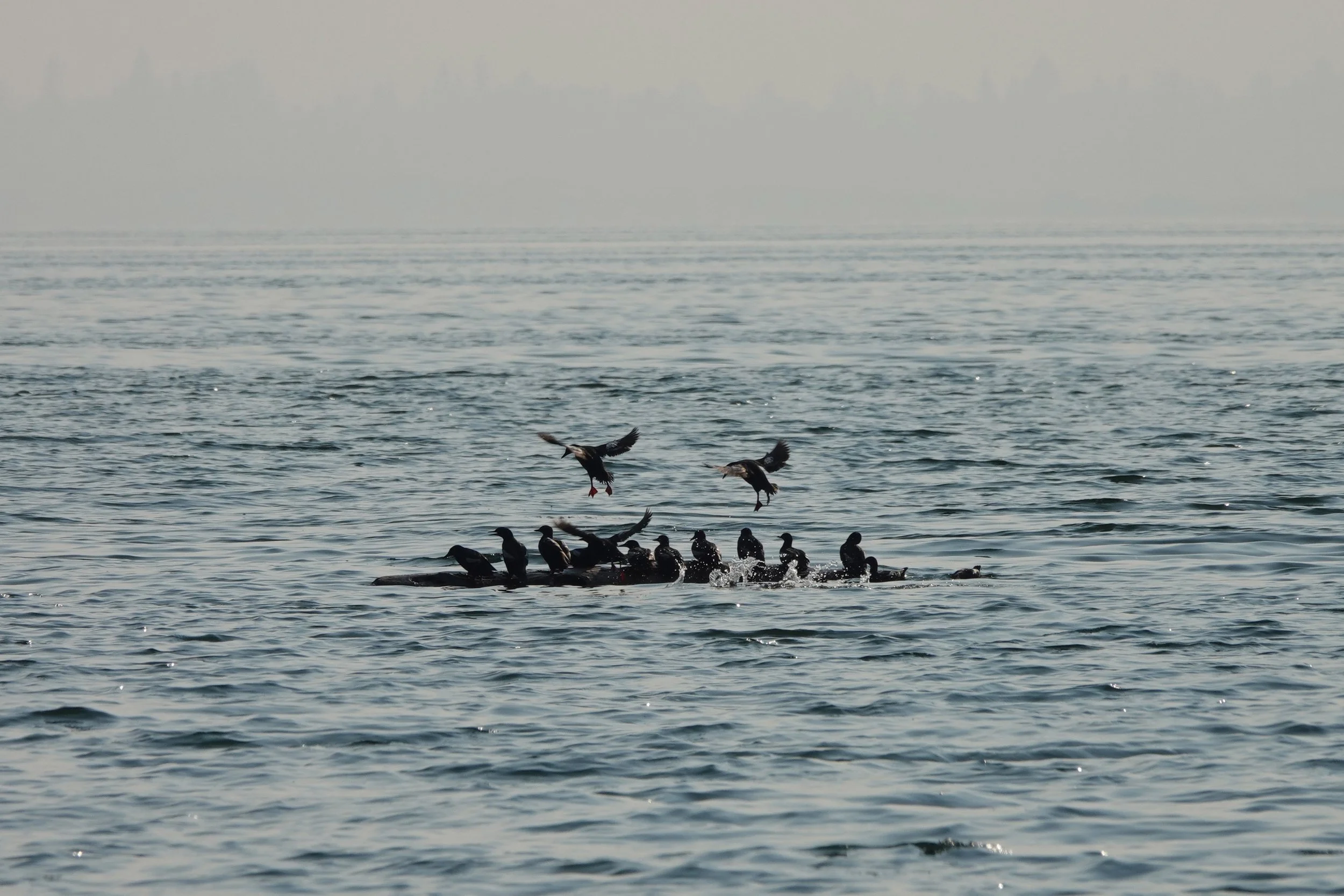
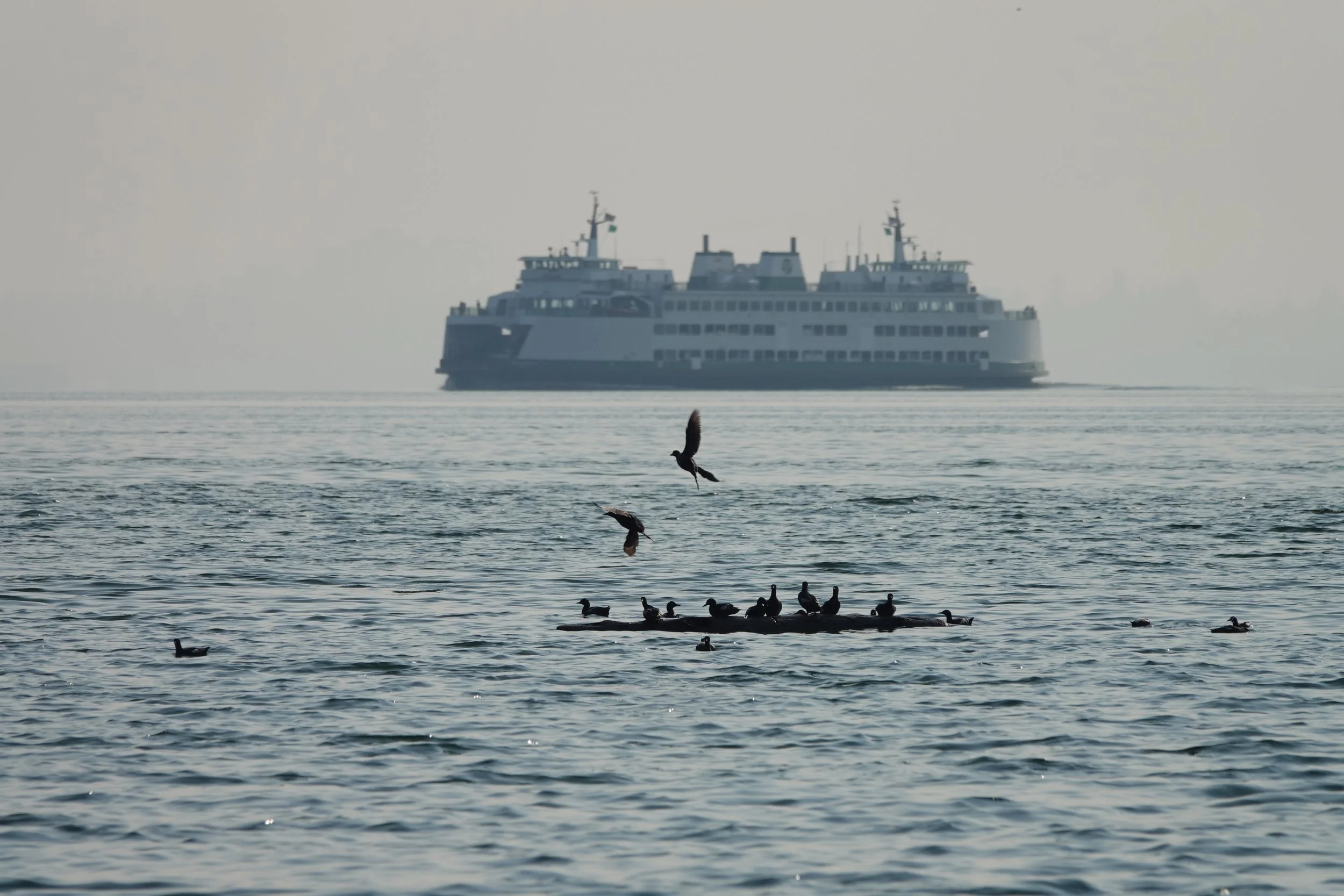
Sue Larkin shared these beautiful photos from her Rolling Bay colony (Bainbridge Island).
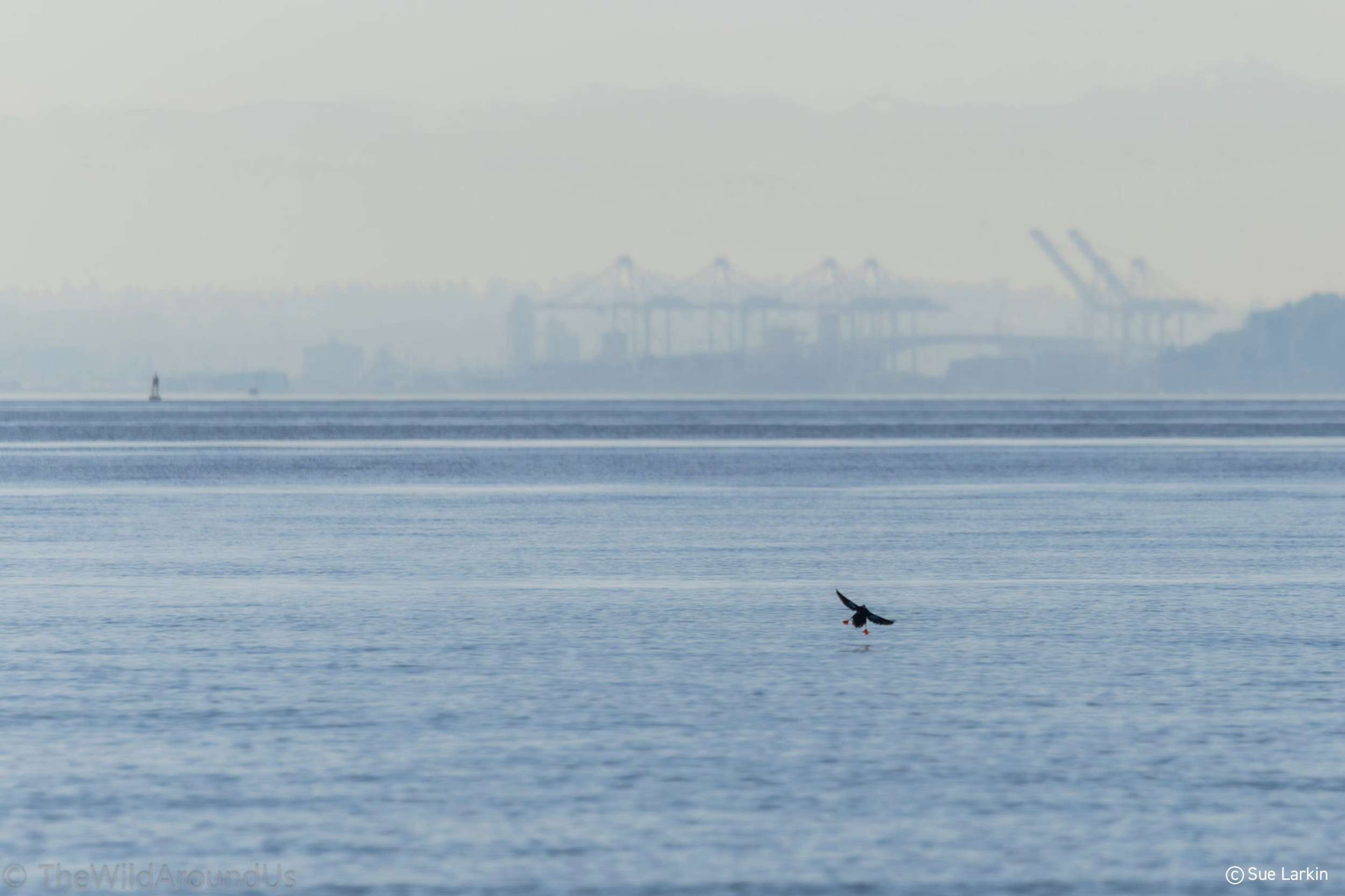
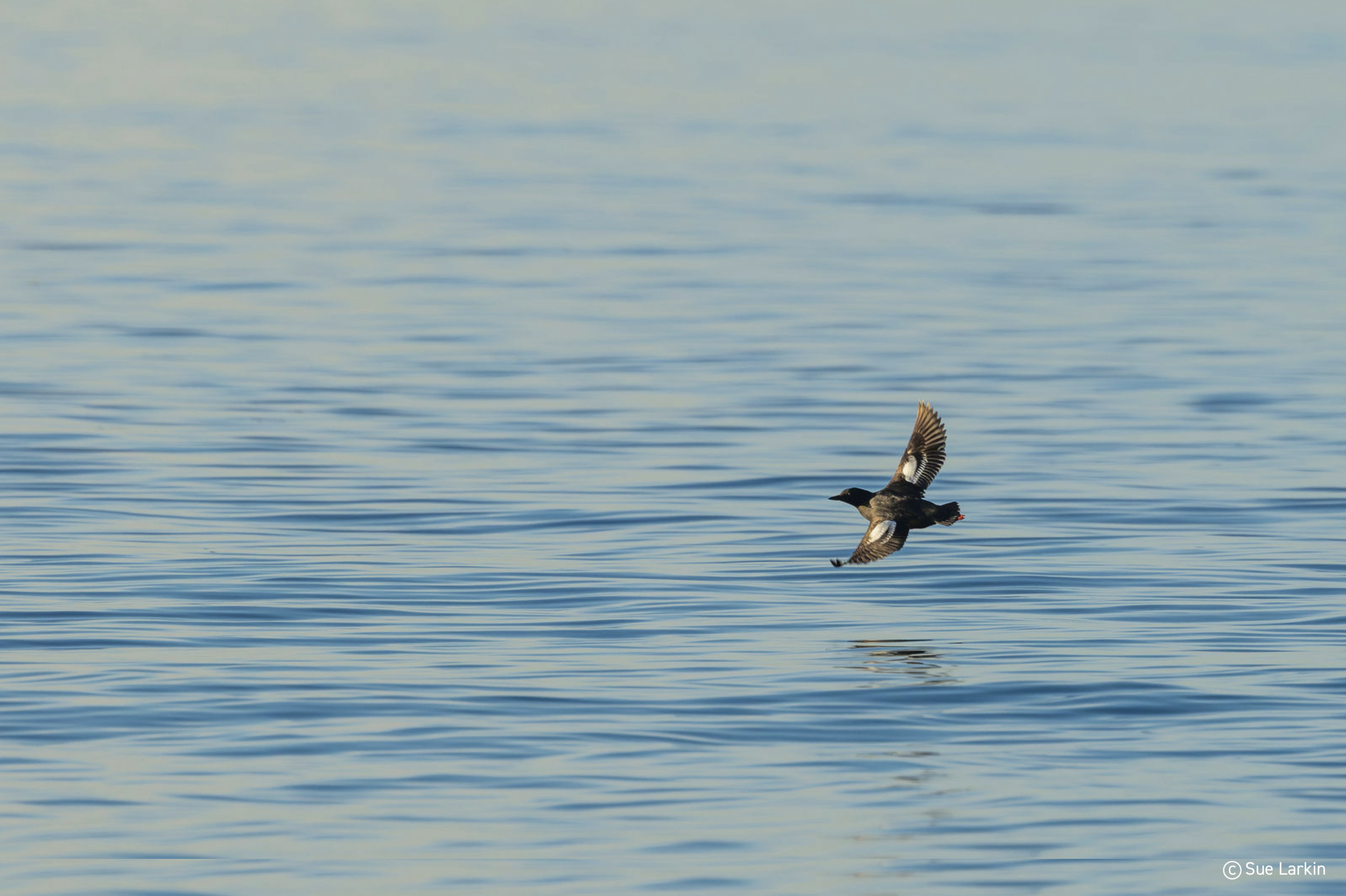
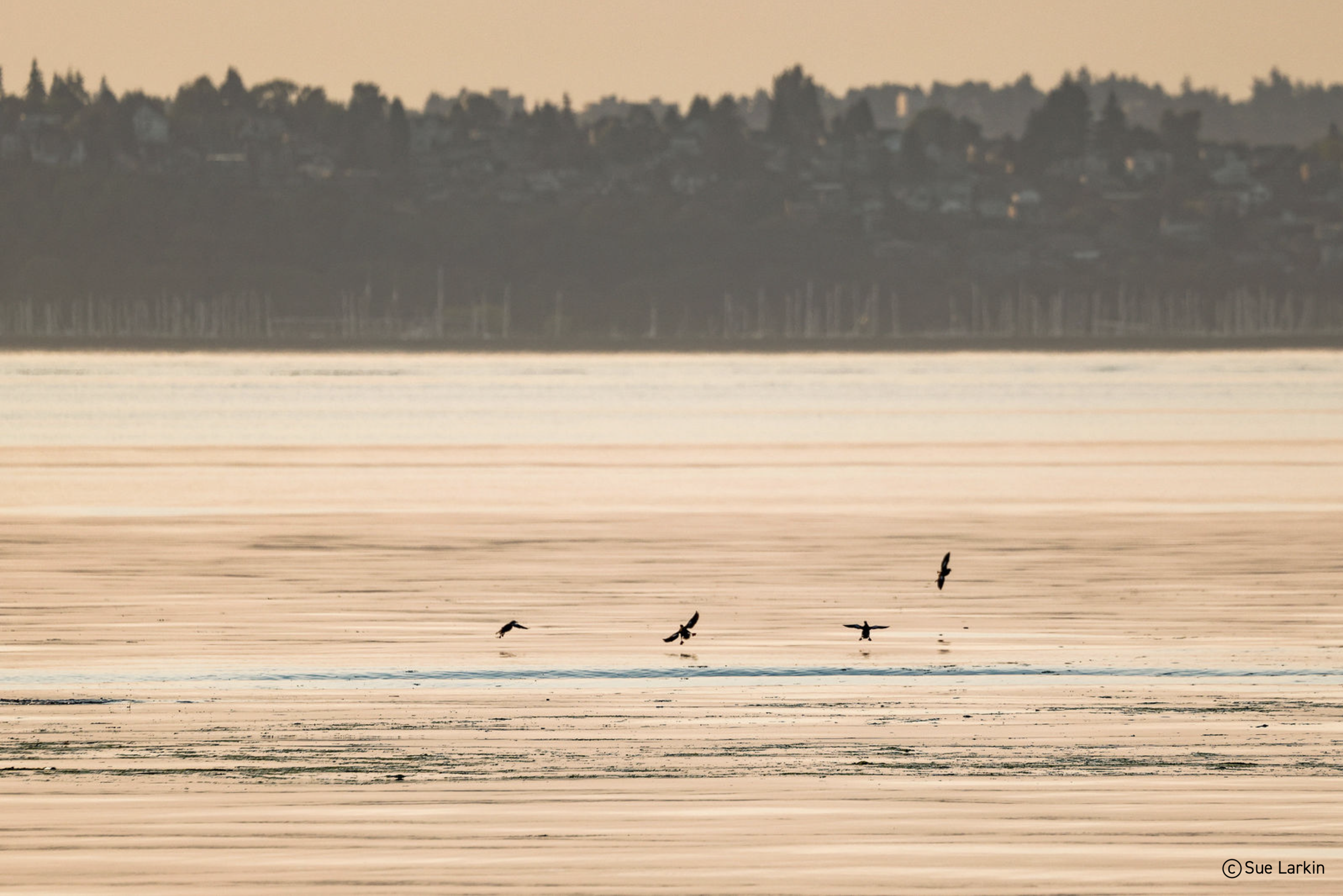
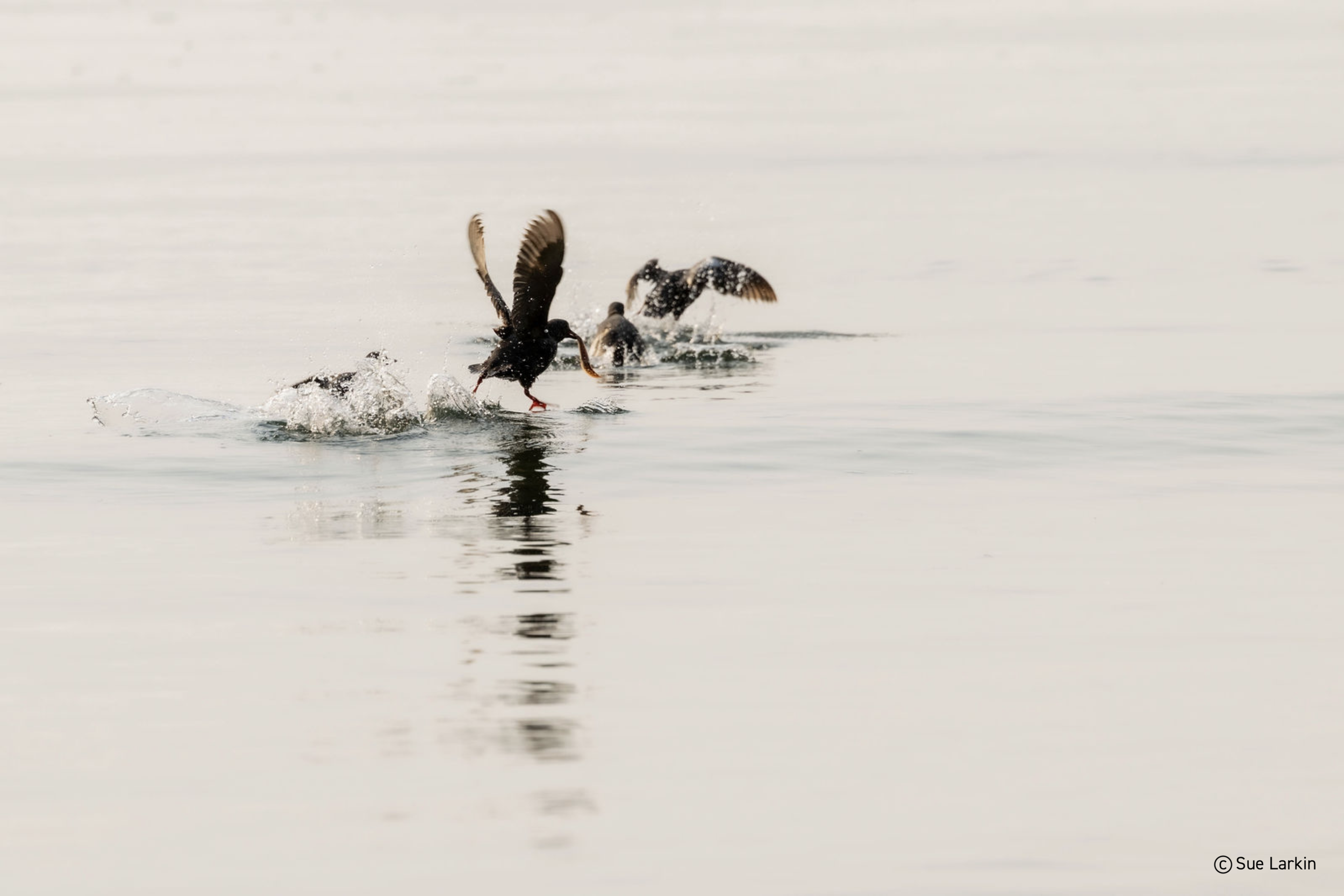
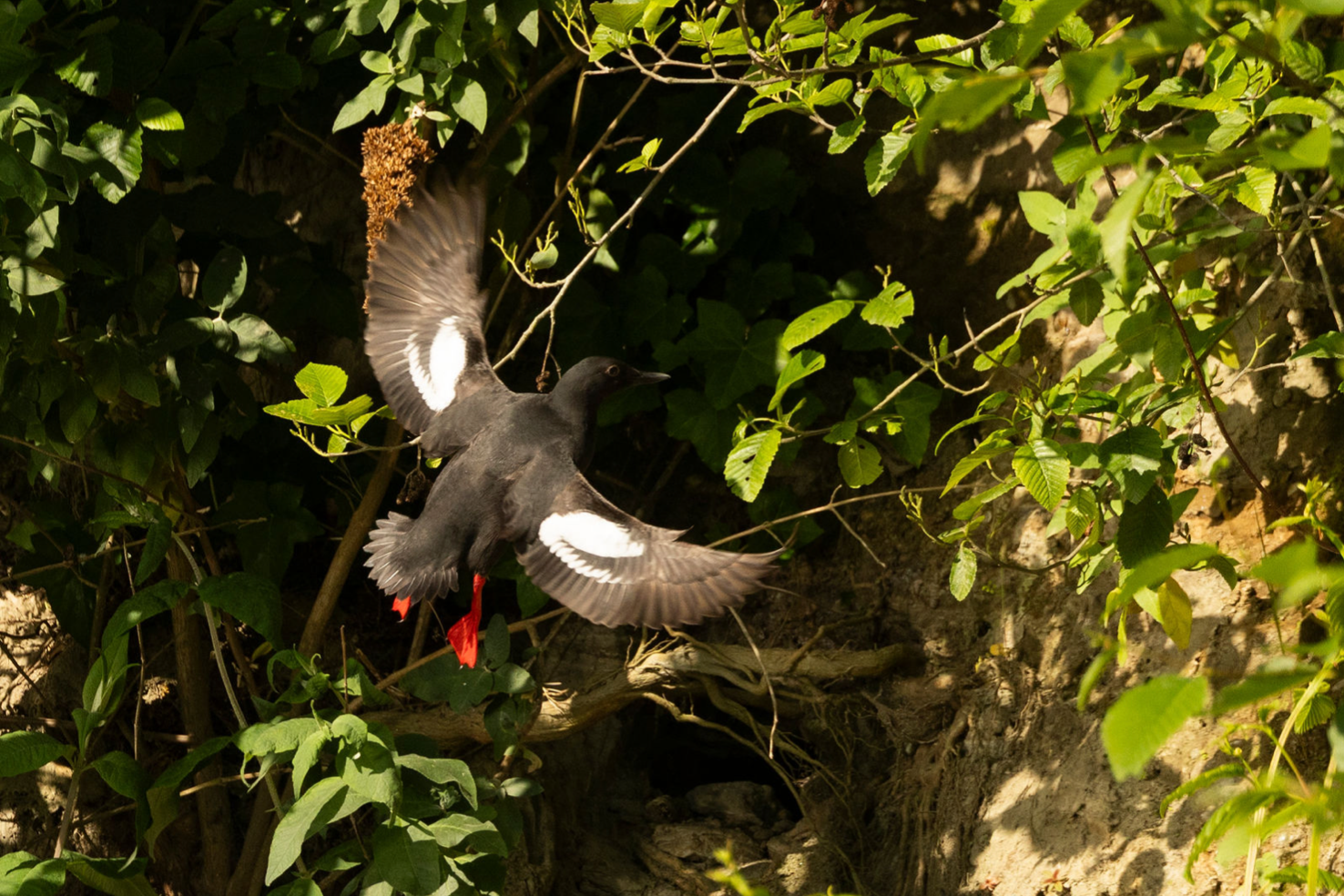
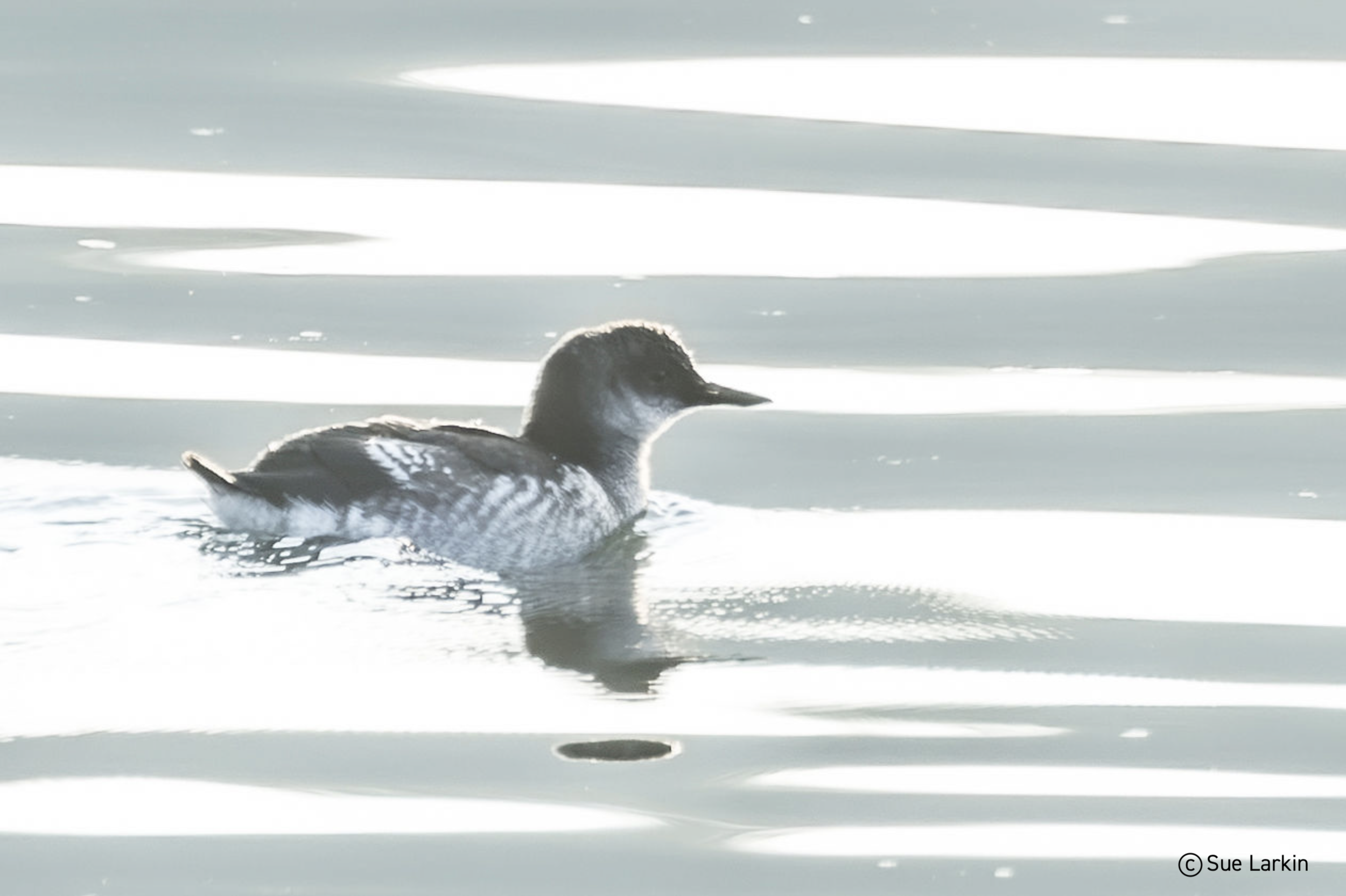
I cannot get over the stunning scenery some of you gaze upon during your surveys!! I find the juxtaposition of the natural world playing out against an urban one quite hauntingly beautiful as well. It shows both what our little birds are up against and how determined they are to persist.
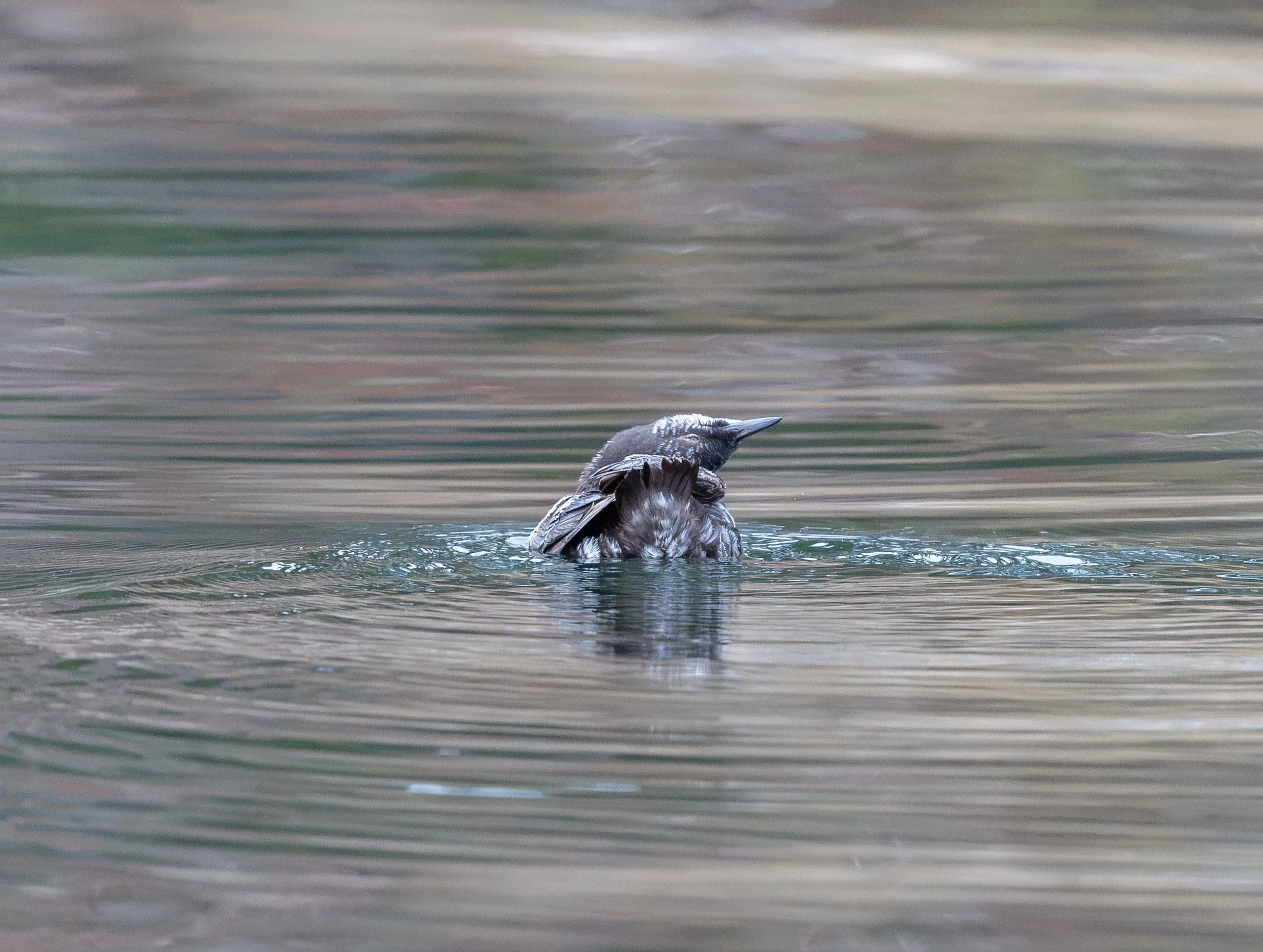
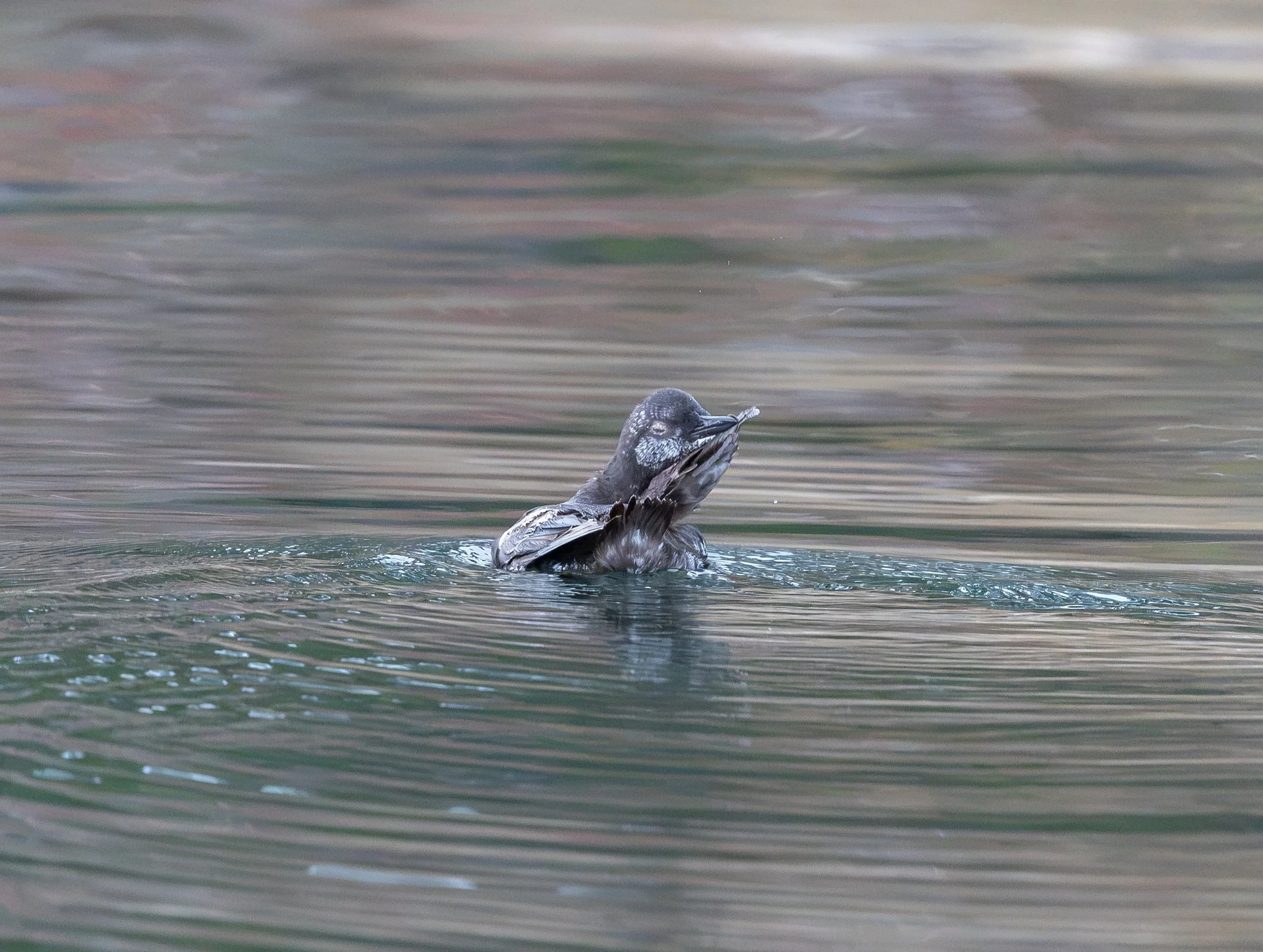
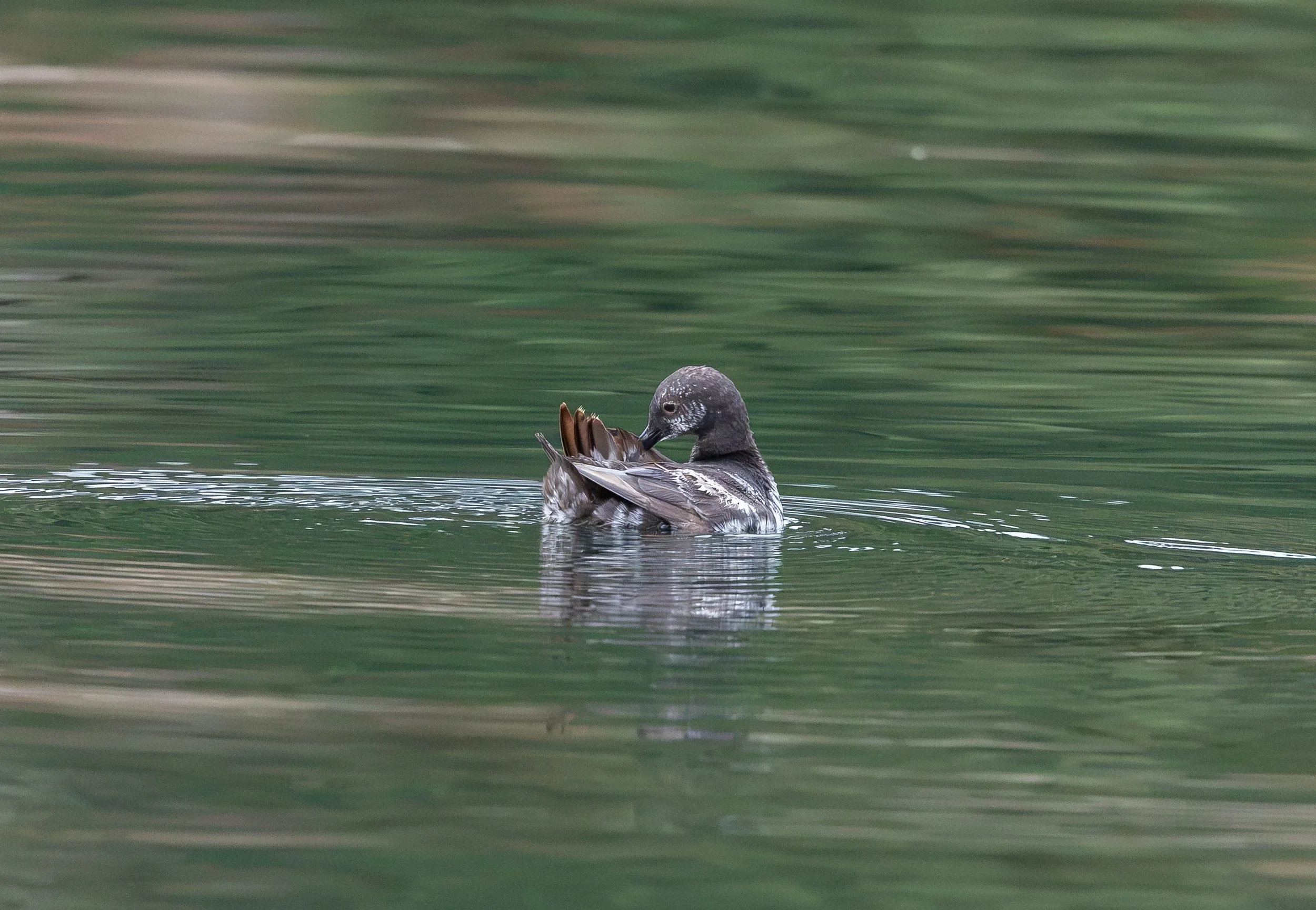
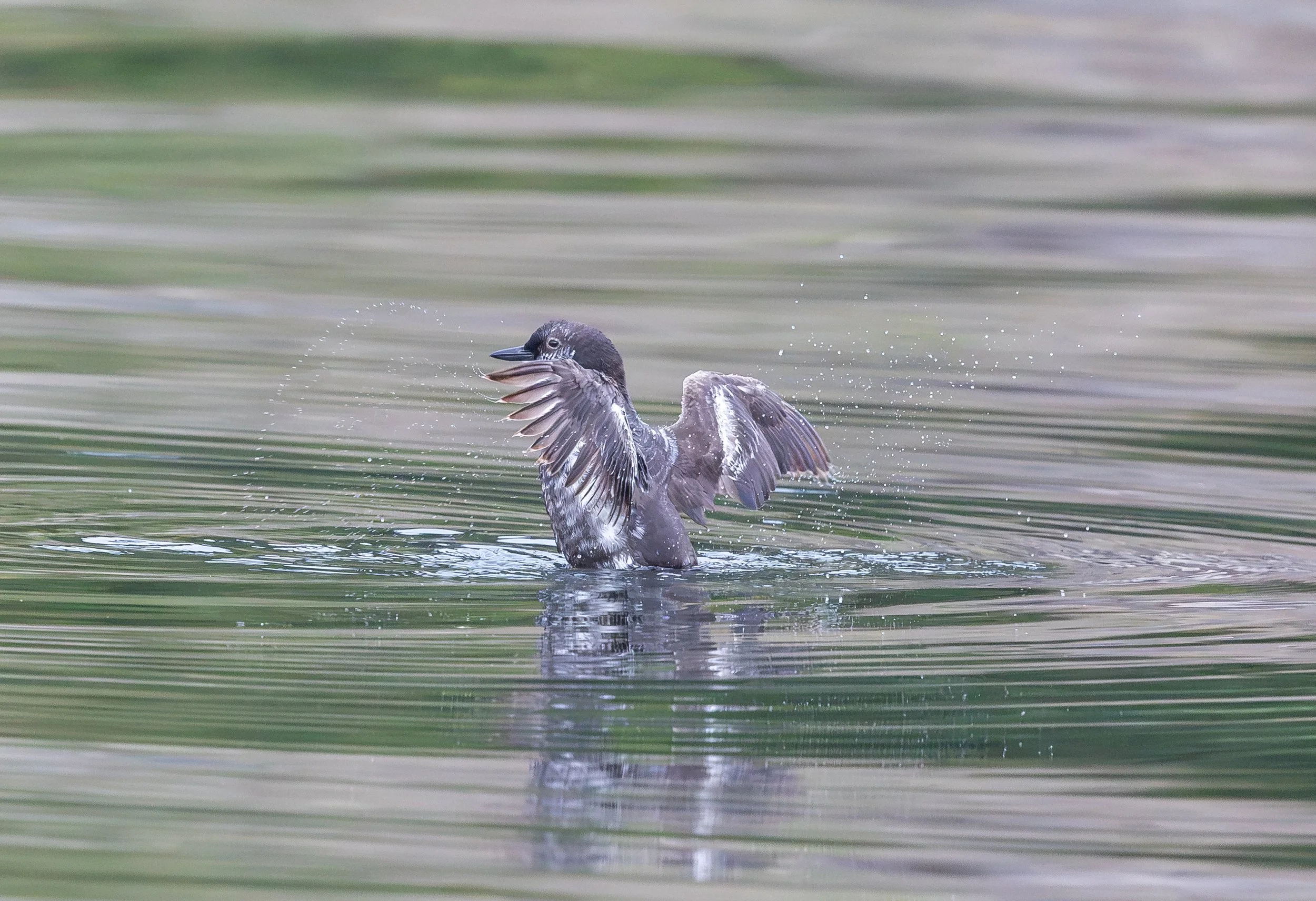
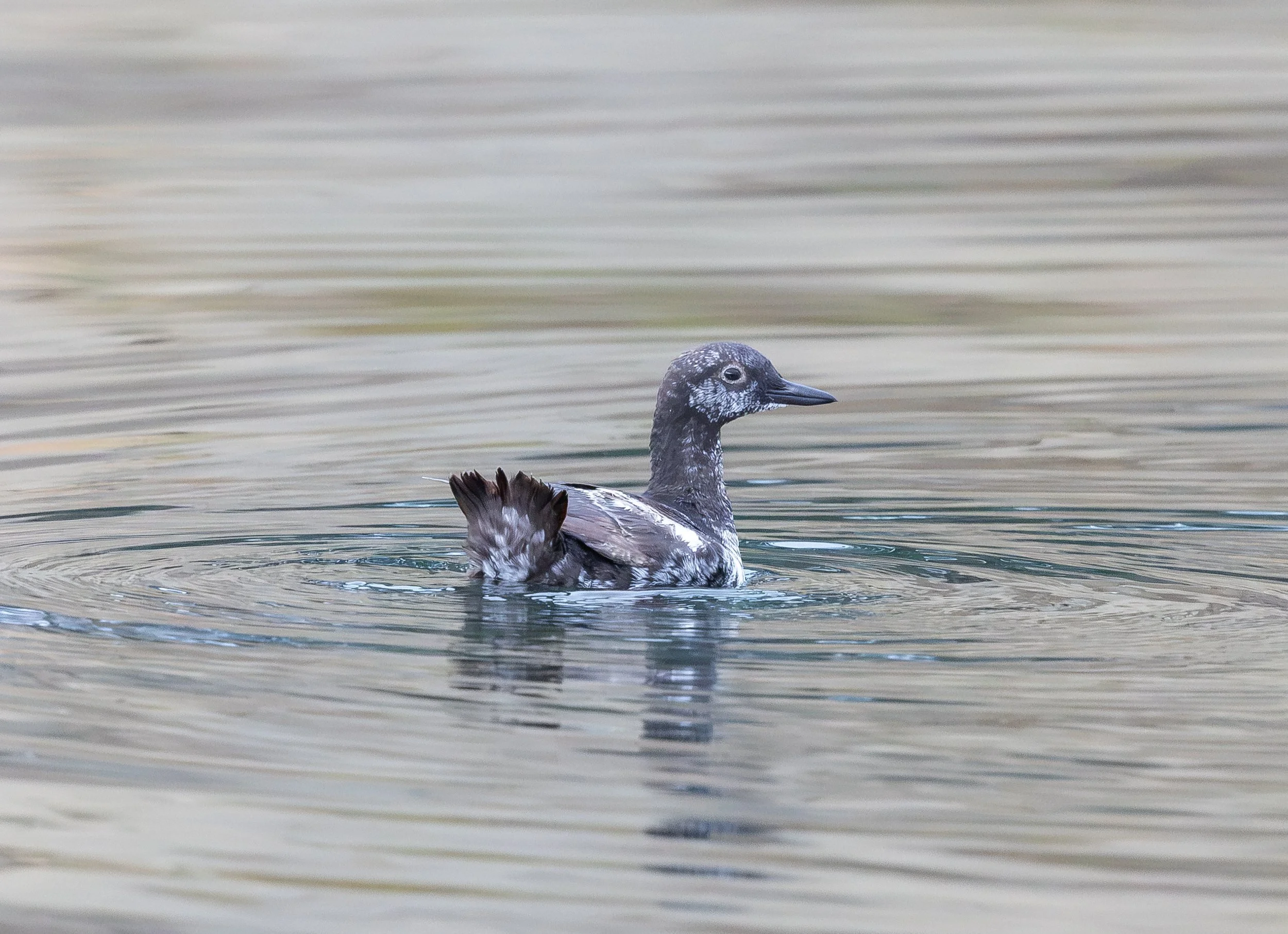
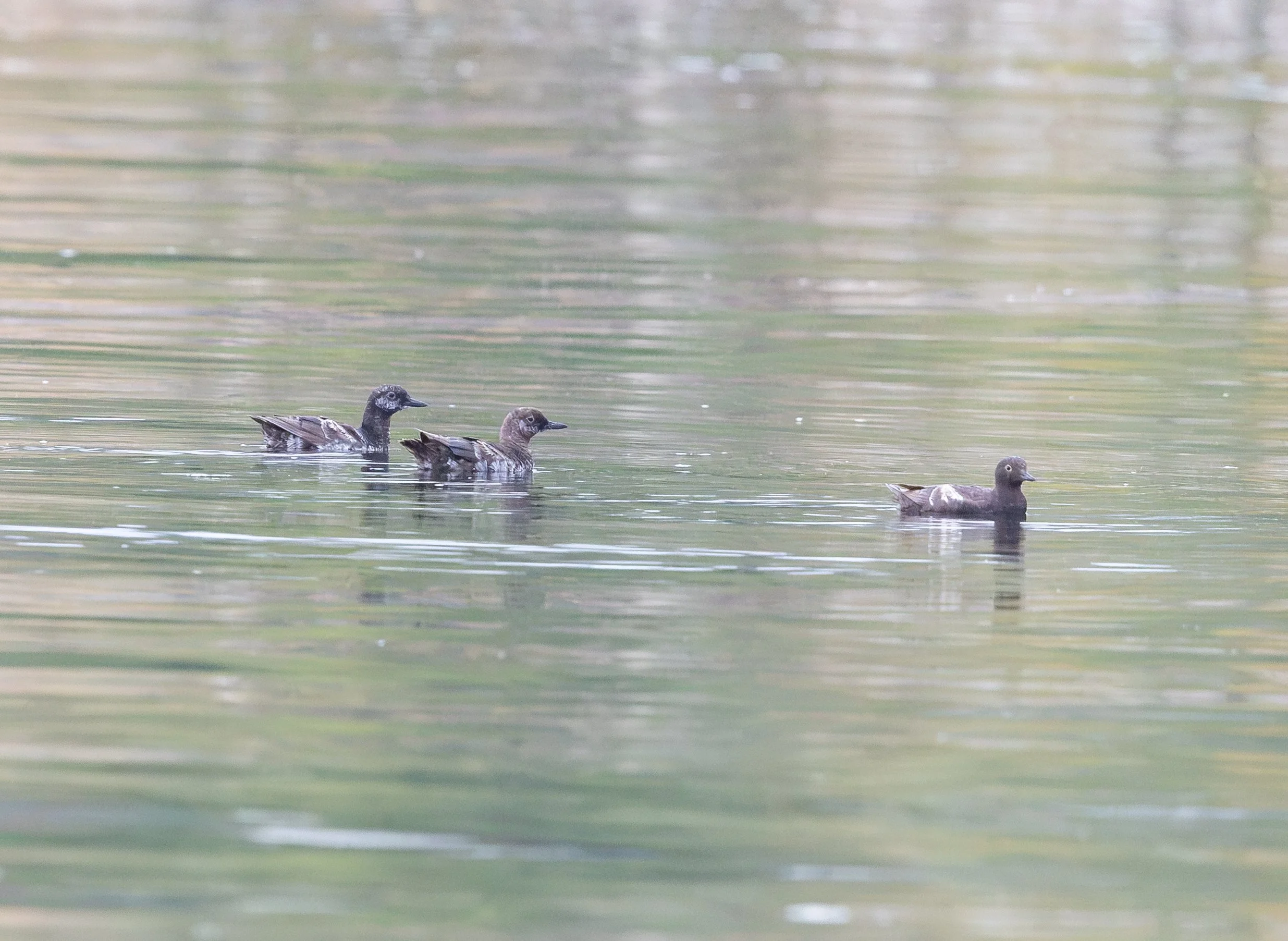
I’ll finish out the photos with a few of my own. These are from last week, which was also my last survey of 2026. We had one, then two, then three PIGU hanging out in the deeper waters of our colony. They didn’t seem very interested in the shore or bluff anymore, but they happily dove and foraged, sometimes coming up with fish, only to eat or drop them. When the third one flew in, the two others swam right over to greet it.
They looked pretty worn and mottled, and spent quite a bit of time preening. Seabirds preen not only to clean and keep their feathers zipped tight and waterproof, they also do it to help aid the molting process. Preening can help remove old, loose feathers, break the keratin sheath around emerging feathers, and align new feathers after they have come in.
One last thing…I wanted to share something written by one of our South Sound science interns, Eliza Street. Eliza has been helping out with Pigeon Guillemot and seal surveys for the last several months, and this was her takeaway:
“My time working with the Nisqually Reach Nature Center has been very rewarding, showing me how different types of work connect to create meaningful data. After participating in pigeon guillemot and harbor seal surveys organized by members of the Nature Center, I gained a greater appreciation for the effort that goes into long-term monitoring of wildlife species. It has been especially interesting to experience both the fieldwork and data entry sides of these monitoring programs, allowing me to see how carefully collected observations in the field become organized datasets that can be used to understand species populations and support future conservation efforts.
What has stood out to me most, though, is the passionate community behind it all. Whether it’s the volunteers, staff, or supporters, everyone consistently shows up and pours so much of their time and energy into protecting these species. The enthusiasm for conservation that I've seen in everyone I have met so far has been contagious and has made a lasting impression on me. This experience has reminded me why this kind of work really matters and how even being a small part of the process is important and contributes to a much bigger picture.”
I love this because it so perfectly sums up why we do what we do, why it’s important, and how amazing our growing community of guillemoteers is. Thank you, Eliza, for your thoughtful words and your support this season!
On that note, thank you again to each of you for the part you play in our survey! A successful survey season takes a tremendous collective effort—from coordination, training, data entry, quality control, and analysis to the commitment to showing up for early-morning surveys week after week, intently observing our guillemots, and consistently recording their activities. Together, these efforts allow us to cover great distances and achieve a level of monitoring and consistent data collection that would not otherwise be possible. Through all of your observations, we learn more about the guillemots every year and add critical information to the understanding of their population dynamics. I am deeply grateful for the love and dedication you bring to the birds and to our project.
I hope you all have had a wonderful time observing your guillemots this season and enjoy your time off! I hope to see many of you at our End of Season Event on October 7th. You can keep sending me photos for the slideshow until Wednesday, September 23rd.
Take care,
Shannon