

Hello Salish Sea Guillemoteers!
It’s officially Week 12 of the Pigeon Guillemot Breeding Survey, though many of you are now entering your 13th—or even 14th—week of monitoring. I haven’t had many activity updates recently, except to hear from several folks that the next survey may be their last of the season.
To be sure, there are still a handful of colony teams diligently watching the remaining few chick burrows. Kudos to everyone for hanging on and heading out to survey until the last of our PIGU are done feeding growing and hungry offspring! Every bit of information we can collect, will help answer research questions. In this case, late burrows can help us understand not only shifts in timing, but also the impact of early or late timing on reproductive success.
Here is a PIGU dutifully delivering a sculpin to a burrow at Brisco Point just this morning!
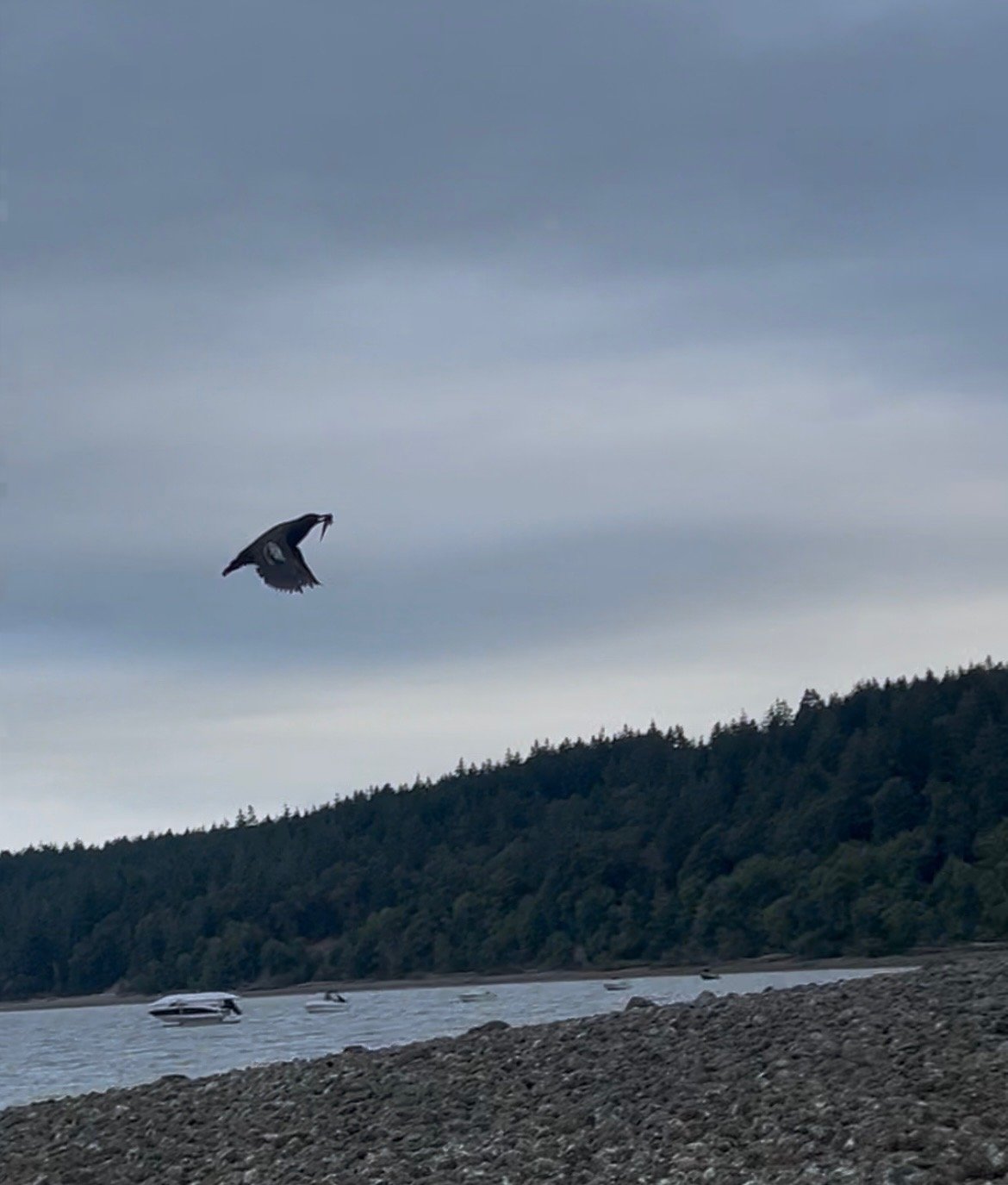
Brisco Point sculpin delivery. Photo credit: Josie McKillop
Remember last week I said that things were about to get really confusing when it comes to id’ing fledglings, subadults, and adults via their plumage?? Well, I think we have entered that phase! Check out these scruffy characters who have been foraging around the buoys near my house (South Sound) over the last few days:
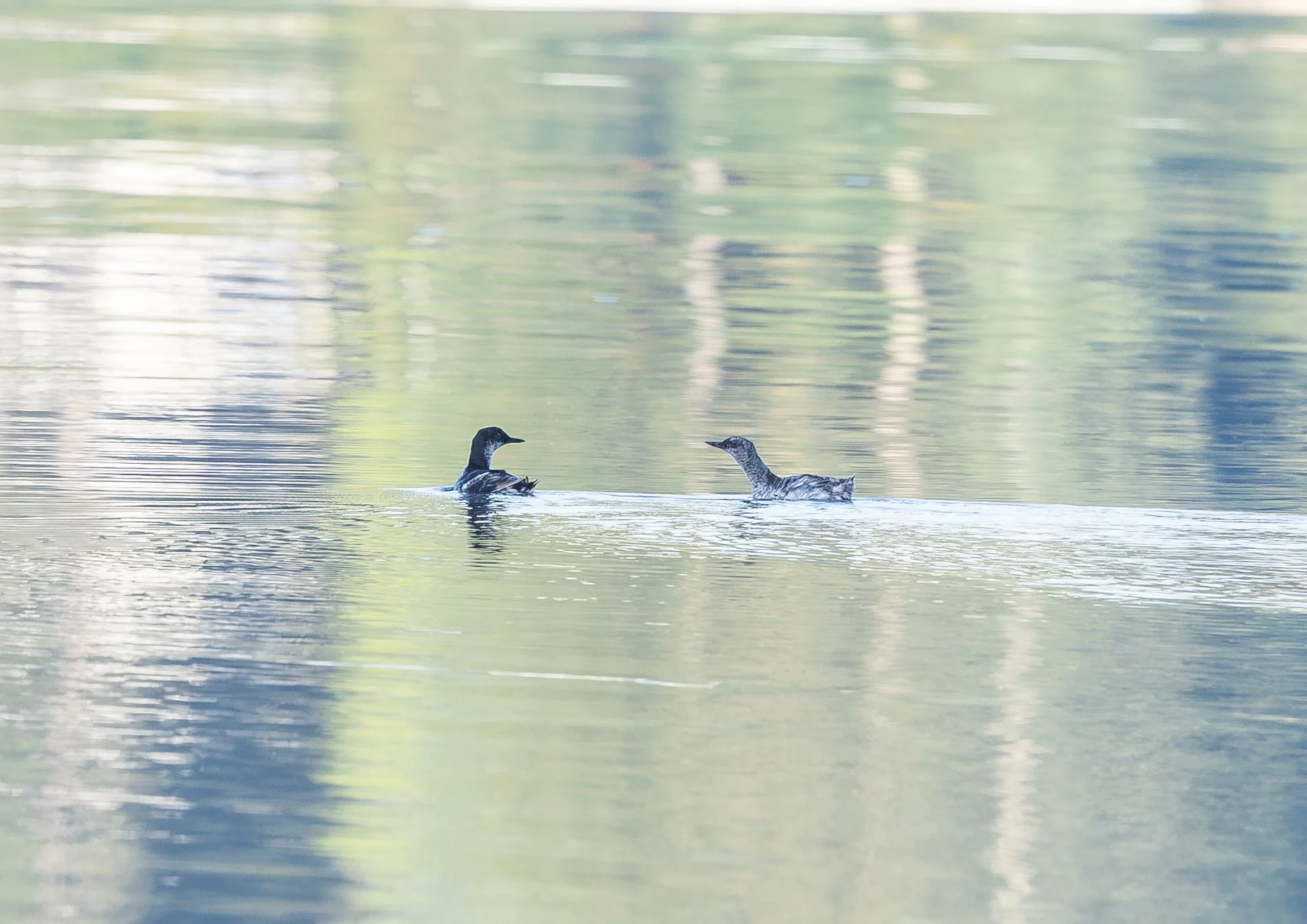
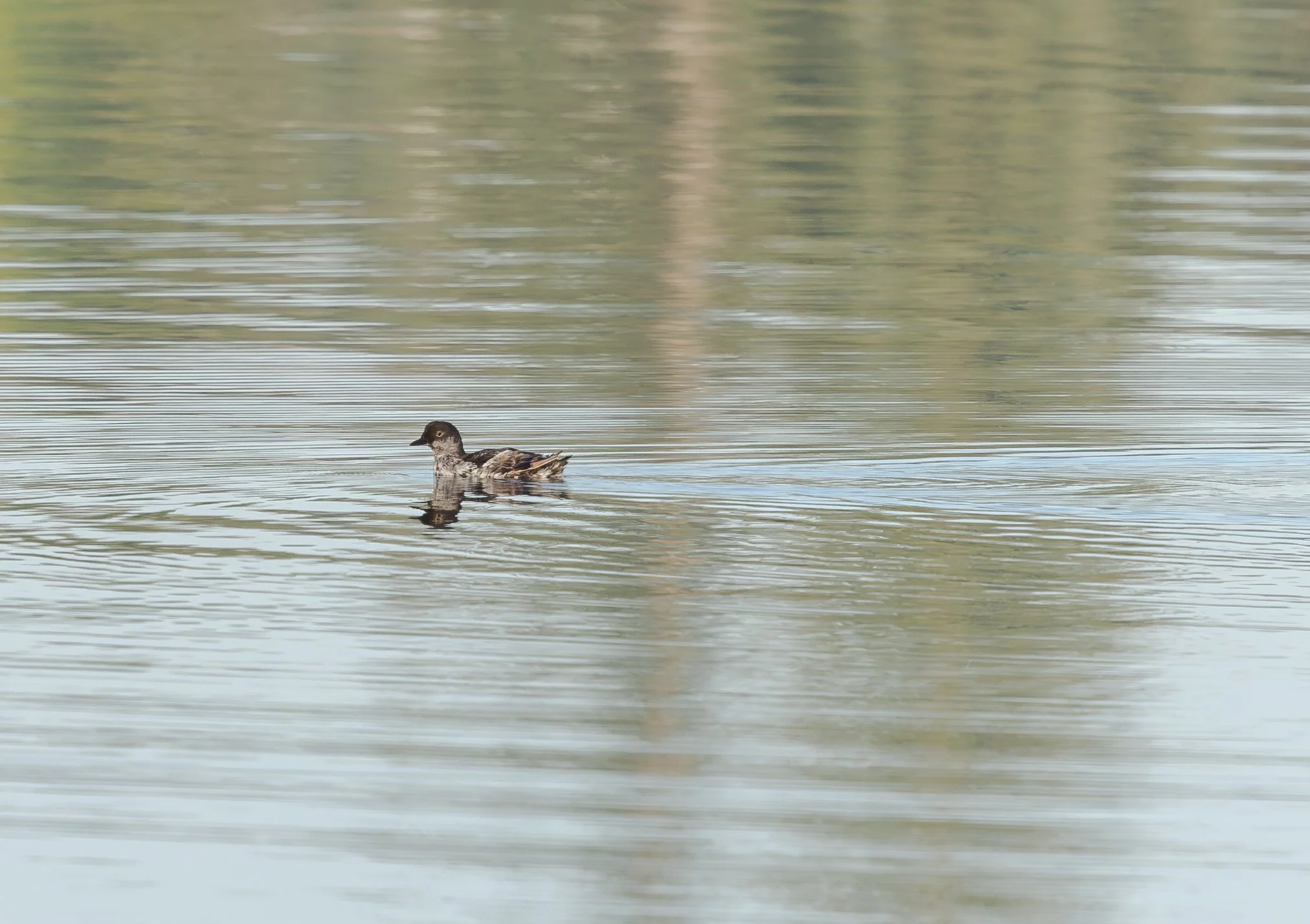
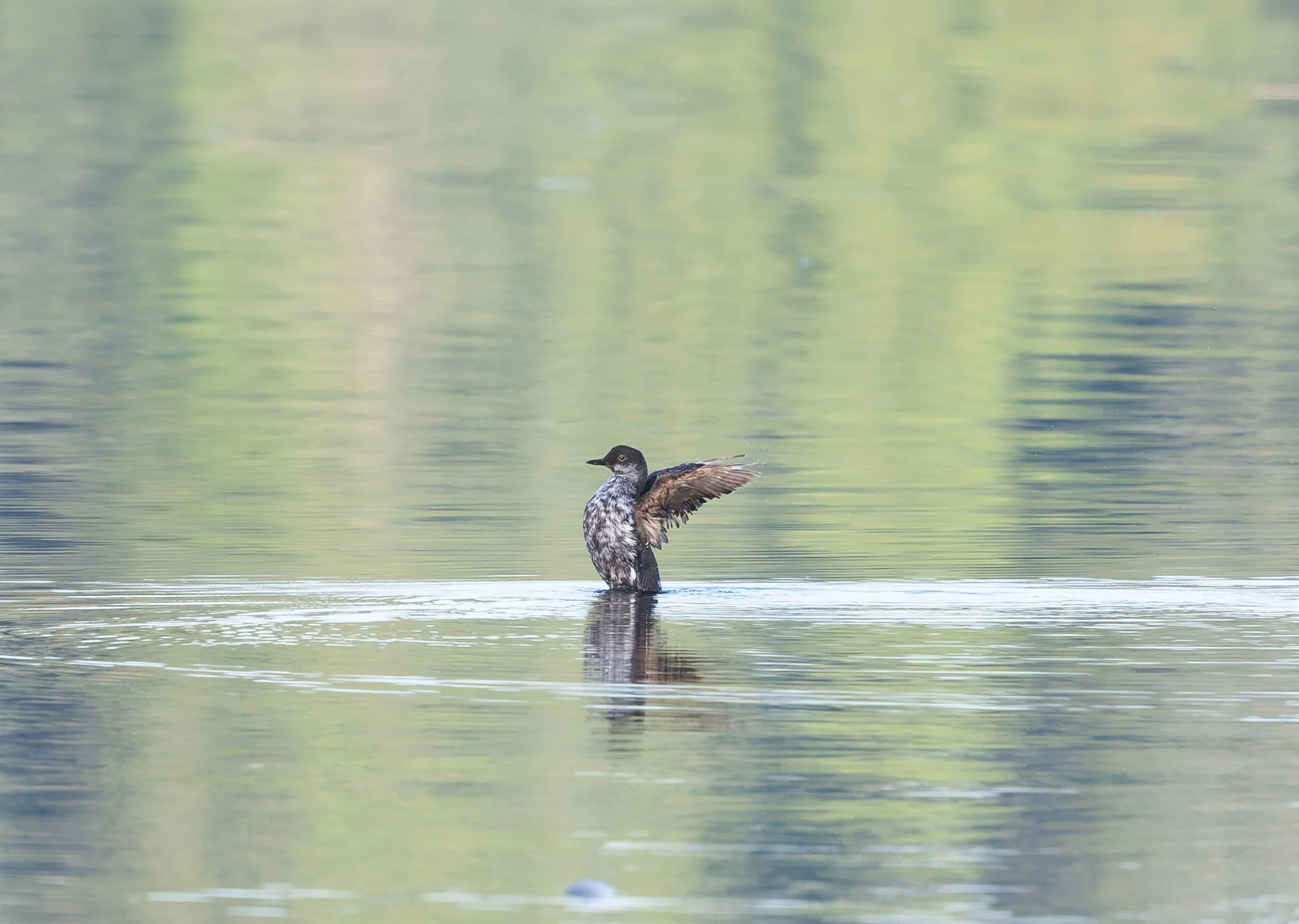
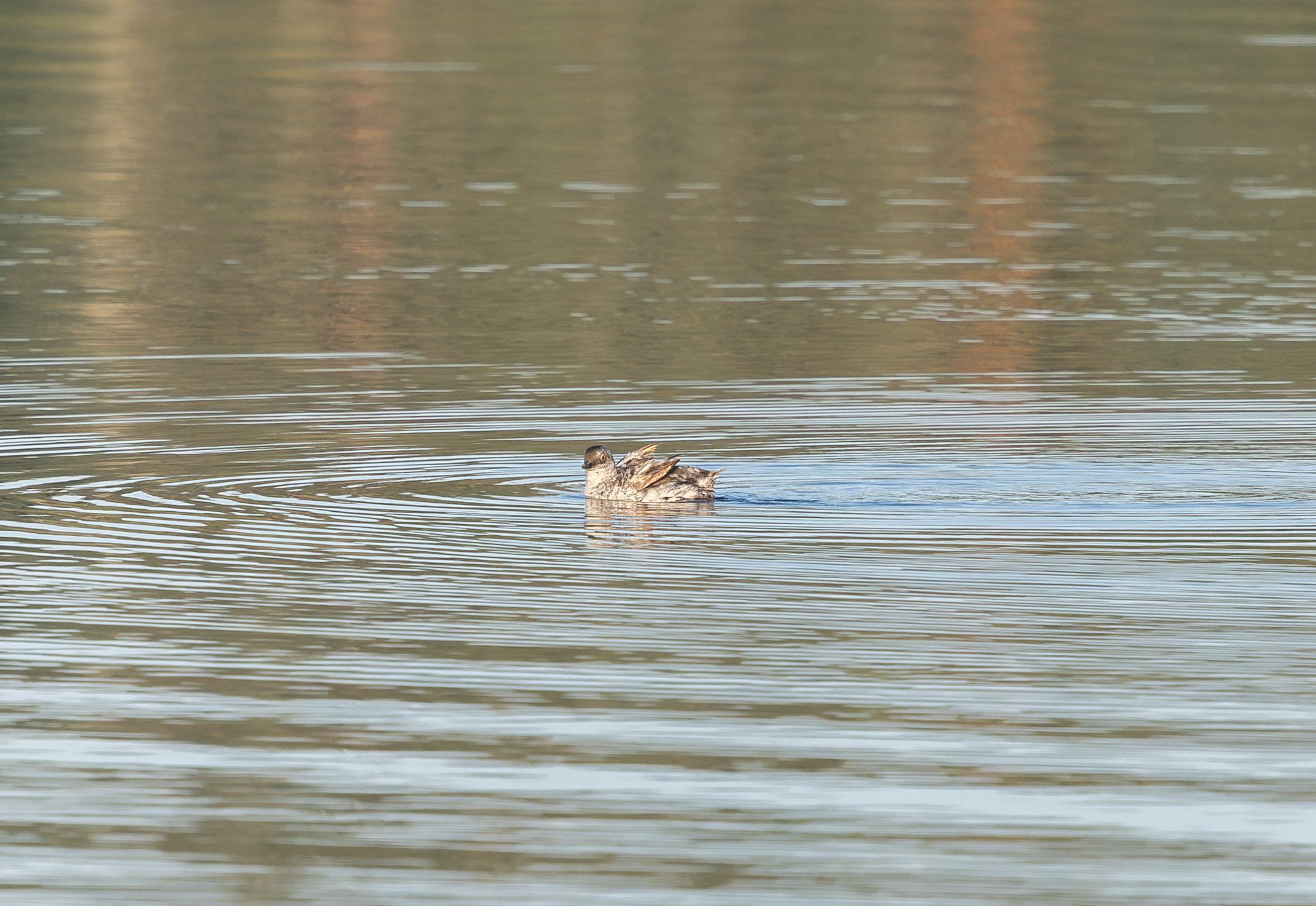
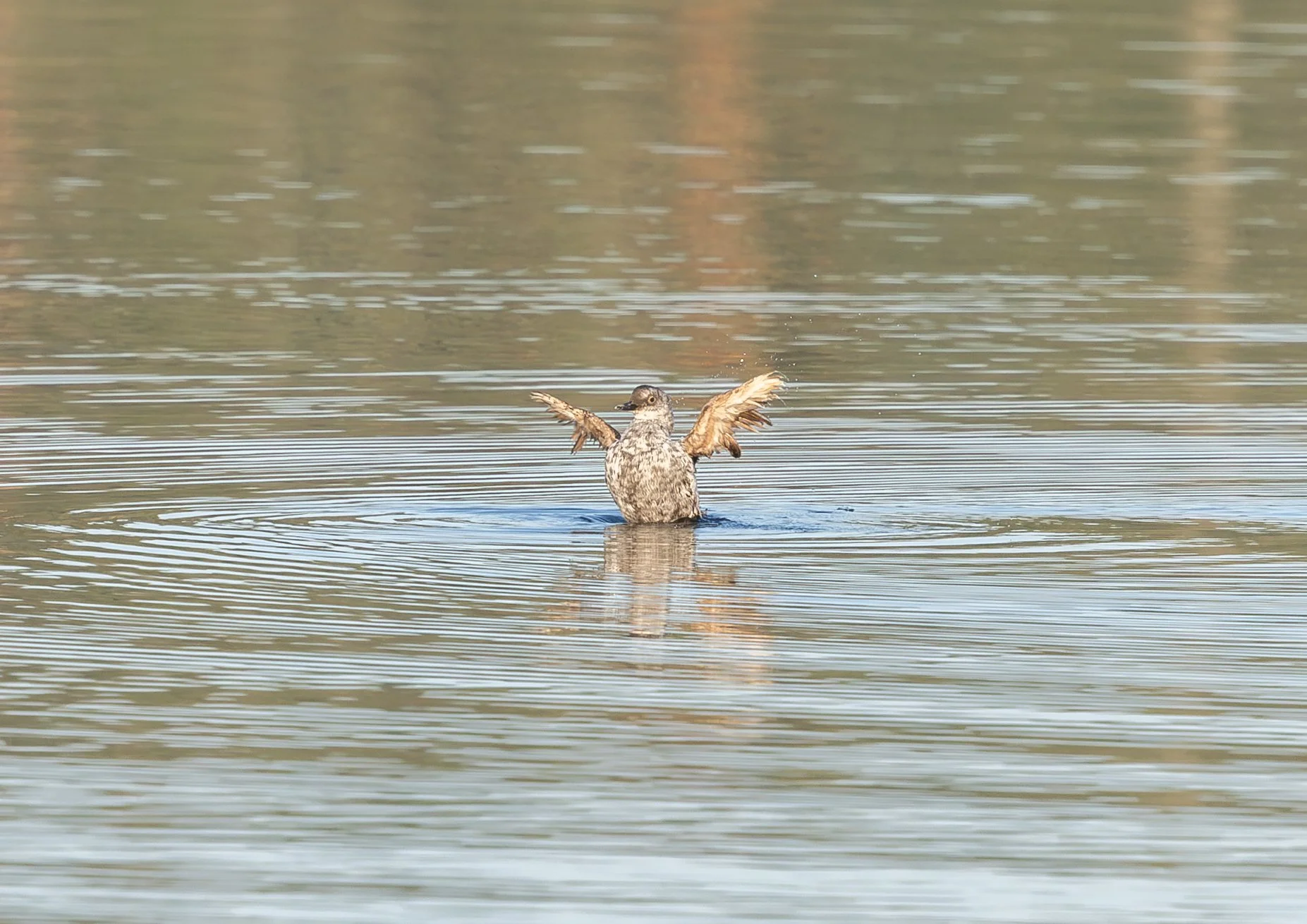
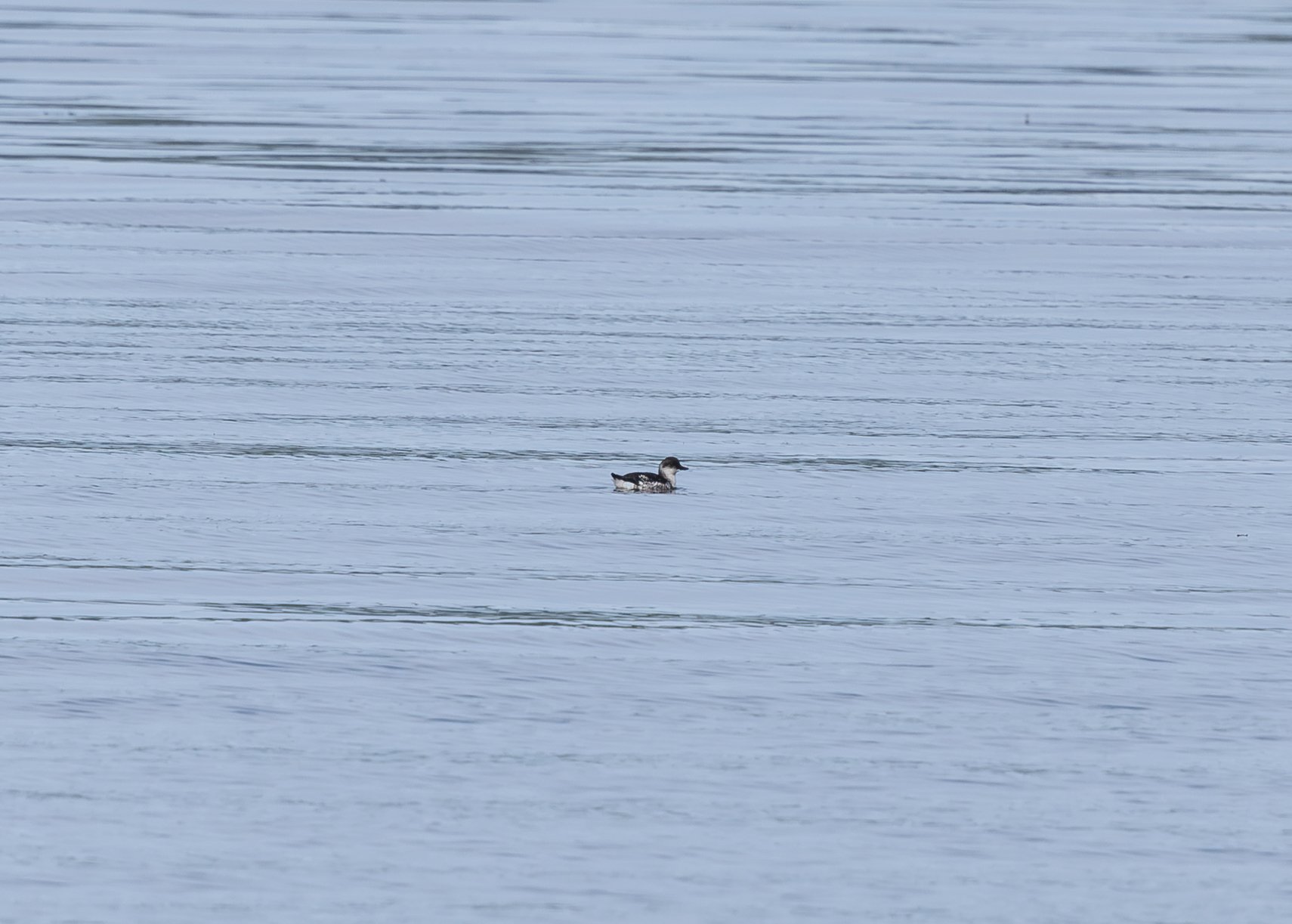
I thought the first two guillemots were recently fledged until I got a closer look, now I’m not so sure! Look at the chicken wings on the lighter one! (All of the photos except for the last one, are the same two birds—just the lighting is different.) I question whether these are adults who I just happened to catch in a very awkward stage of transition? Their mottled chests could indicate that they are transitioning from a darker overall color, and perhaps one is just a little farther ahead in the process than the other.
Their wing patches don’t look very distinct, but they also seem to be missing quite a few wing feathers due to their heavy state of molt. They could be yearlings who haven’t developed really clear white patches yet. They were displaying behavior that might suggest a familiarity with one another, so there is that too. The last little guy to float in (last photo) kept to itself and more closely fit the plumage pattern that I would associate with a newly fledged bird, which is dark on the upper half and very light on the bottom, with small white hashes or bars on the wing.
What are your guesses?? I would love to hear any other takes you all might have on this messy plumage scenario.
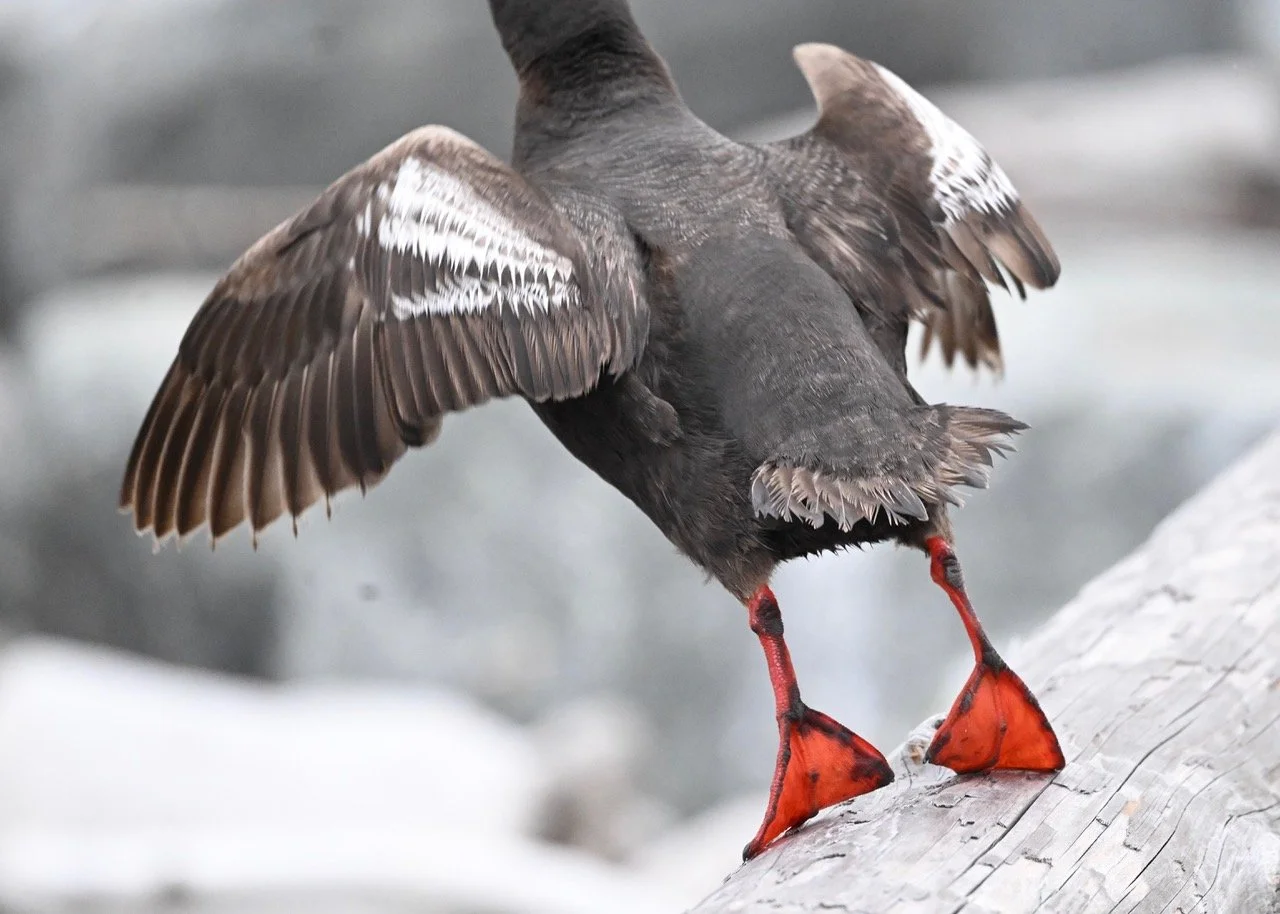
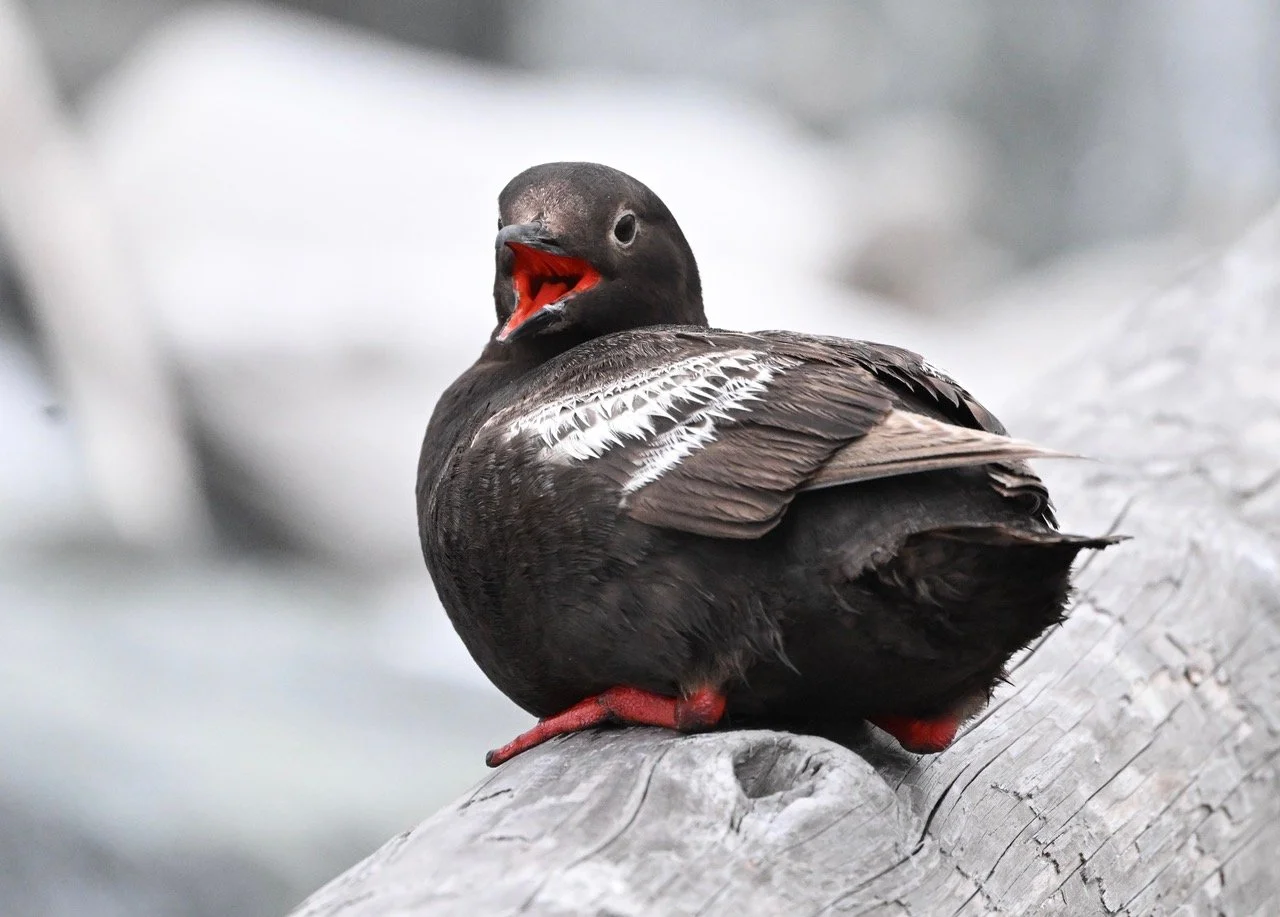
I also received these wonderful photos from Lac Pope, taken on Whidbey Island. You can see how the edges of the guillemots’ feathers are really starting to look rough and worn. I can’t tell you how happy it makes me to see the detail of the tail feathers and red feet in the first photo. It’s hard to stay serious and science minded when looking at such an adorable little rump! I could look at these photos all day!
Brenda W. of the Brisco East colony in the South Sound (Harstine Island), sent me this sweet video the other day. I always joke with people that guillemots have a fear of missing out—when one jumps on the log, they all have to jump on the log. Brenda’s crew proves my point nicely.
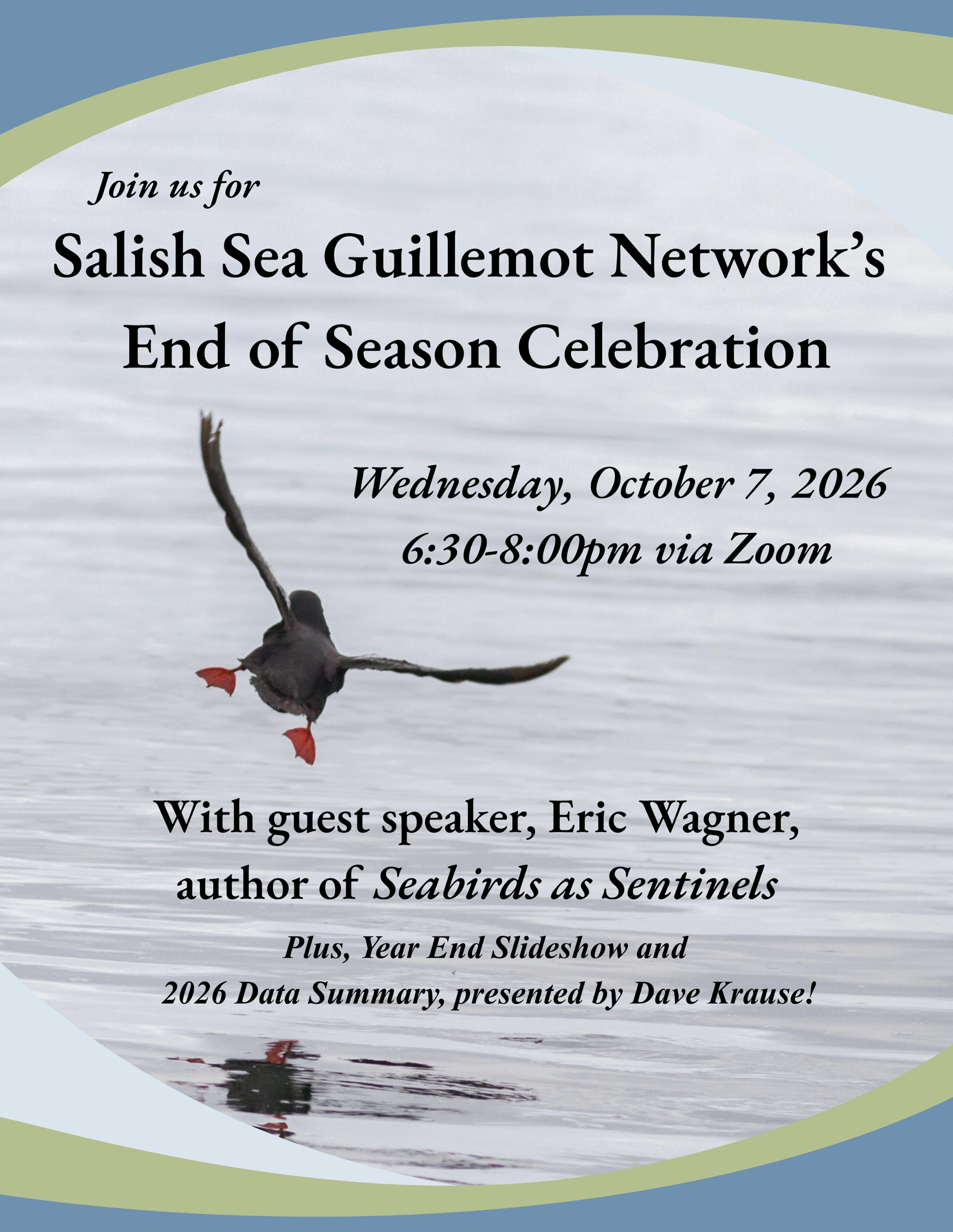
Lastly, I want to remind everyone that we will have our End of Season Celebration on Wednesday, October 7th at 6:30pm! Please make sure to put it on your calendars! It’s a wonderful time to reflect on the season and see our data summary for the year.
So many surveyors have relayed to me that this year felt different. Some colonies seemed slower than usual, some had fewer chick burrows, some perceived a shift in prey types, and others experienced an uptick in breeding activity. The data is sure to tell—so you won’t want to miss it!!
Please continue to send me any photos you might have, whether colony selfie photos or PIGU photos! We cannot have enough for the slideshow!
Given the significant slow down in activity, I am currently planning to give one more survey update next weekend, plus a bonus post to address potential impacts from the heat blob forming in the Pacific Ocean and this year’s forecasted El Nino. I know that warmer sea surface temperature is something a lot of folks are worried about, so I’ve been doing some digging and have put together a summary of what I’ve found. Stay tuned…
Have a wonderful week, everyone, and thank you as always for your dedication and care.
Shannon