

Given the growing concern about warming ocean temps and the forecasted “super El Niño”, I decided to do some research on the subject..
Heat blobs are large marine heat waves--unusually warm patches of surface water that can develop when persistent high-pressure systems or shifting weather patterns weaken winds, reducing ocean mixing and allowing heat to accumulate. Changing weather patterns can also alter ocean currents and reduce coastal upwelling—the movement of cold, nutrient-rich water from the depths toward the surface, where it facilitates essential cooling. Warm ocean conditions can contribute to and intensify climate patterns such as El Niño, creating a feedback cycle that further disrupts winds and ocean circulation, and extends the time it takes for cooler temperatures to return.
Marine heat waves can significantly impact marine organisms in the following ways:
1) Many marine organisms are adapted to a limited range of water temperatures. When water remains unusually warm for an extended period—even by as little as 2–3°F—some species move deeper or farther north in search of cooler conditions. These shifts impact animals that are higher up in the food chain, such as seabirds, which may have to work harder to find prey and depend on the reliable presence of food sources in their usual locations, e.g. migration stopping points or breeding areas.
2) Reduced nutrient availability from stalled upwelling leads to decreased phytoplankton productivity and creates a ripple effect of food shortages throughout the marine food web, from zooplankton to fish to birds and other marine animals. This can lead to mass die offs, especially during migration or in preparation for breeding, times in which animals require additional energy. A loss of prey can cause animals to starve before reaching their breeding grounds or arrive in a state of poor nutrition, potentially resulting in failed or skipped breeding seasons.
3) Warm waters can favor the occurrence of harmful algal blooms, which have potential to kill or sicken many marine species, including sea lions, dolphins, and seabirds.
Since May 2025, scientists have been closely monitoring a marine heat wave off the central and southern California coast, where surface temperatures have reached approximately 3–4°F above normal. As of August 2026, unusually warm conditions had not spread into Oregon or Washington coastal waters. However, with NOAA predicting a greater than 90% chance of a very strong El Niño during fall and winter 2026–27, warm conditions could intensify and affect marine ecosystems farther north along the West Coast.
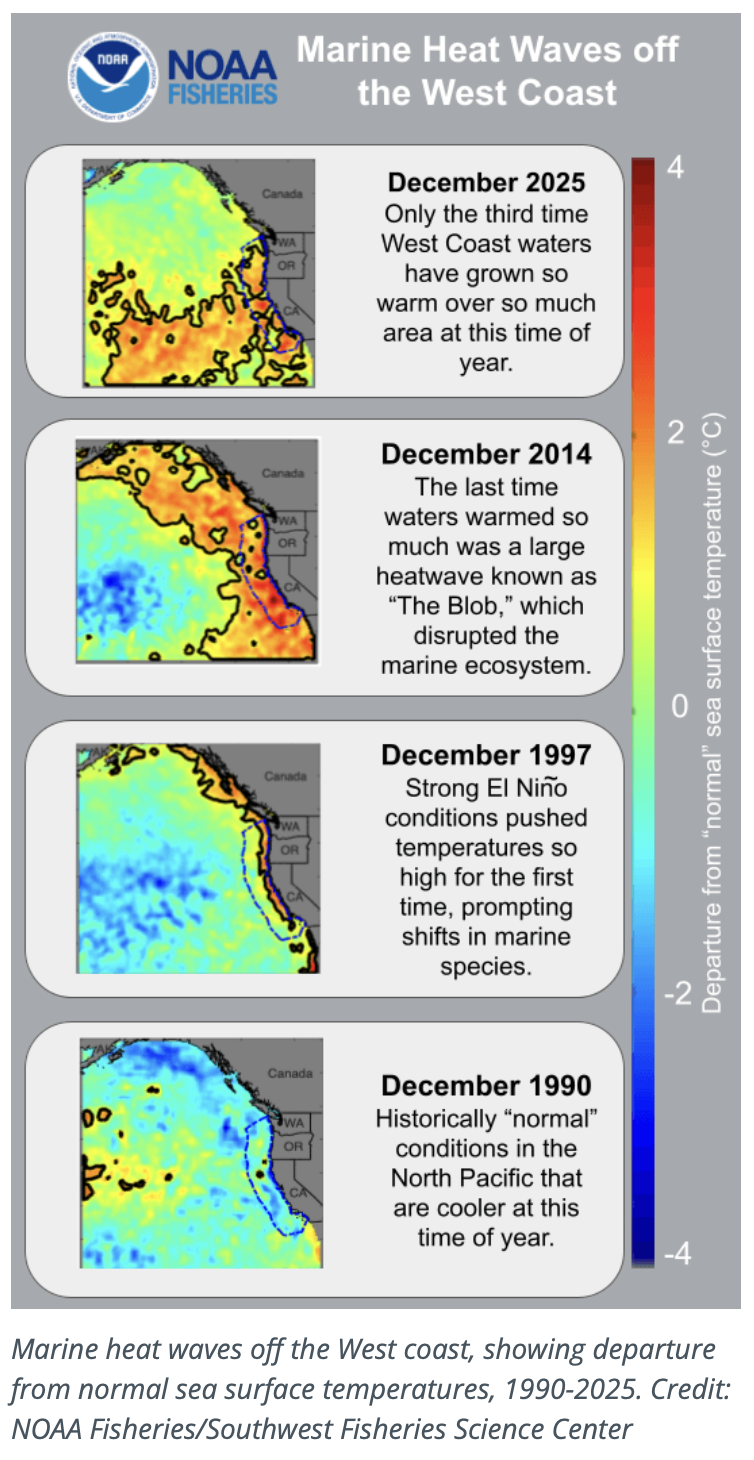
The possibility that these conditions could strengthen and expand over the next several months—is understandably concerning. The last major event, nicknamed “the Blob,” persisted from late 2013 through 2016 and caused widespread disruption throughout the marine ecosystem. Among its most devastating effects was the starvation and death of millions of common murres, along with substantial harm to other marine wildlife.
This is where the work of our network and dedicated survey volunteers becomes especially valuable!
As you know, Pigeon Guillemots feed their chicks fish collected from nearby waters, often gunnels, sculpins, and other nearshore species. By recording their prey, feeding activity, and colony populations, we can detect changes in prey composition, guillemot numbers, and breeding activities that may reflect shifting ocean conditions. A single observation may not tell us much, but consistent data collected across many colonies and years create a record against which change can be recognized.
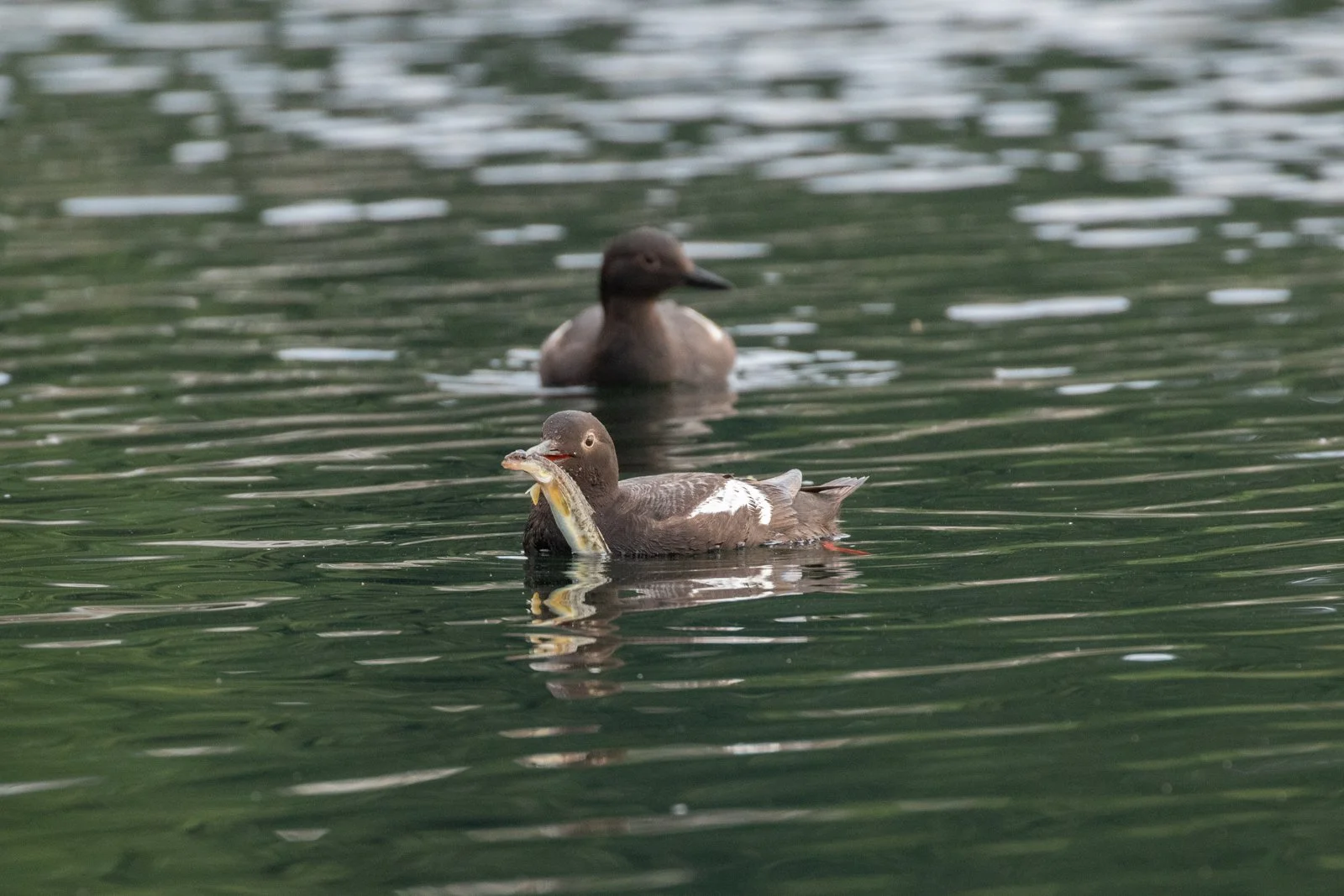
Pigeon Guillemot with a Pacific Snake Prickleback, photo by S. Boldt.
While we remain concerned and cautious about the potential effects of a marine heat wave and El Niño on all marine organisms, we also have reason for optimism. Pigeon Guillemots are considered generalists, or “flexible foragers”, capable of adapting to changes in available prey. This adaptability may help them withstand warmer conditions, while our surveys can reveal how changes in the prey they bring to their chicks relate to reproductive success. In addition, although we can’t say for sure how far they do travel, we believe that Salish Sea guillemots do not go far during the fall and winter, with many staying to overwinter in our waters. This could also bode well, as they will not need to expend as much energy to move between foraging and breeding areas.
Even so, Pigeon Guillemots are not immune to changing climate conditions. Following a strong El Niño event in the fall/winter of 1982-1983, PIGU experienced a die off prior to arriving at their breeding colonies on the Oregon Coast. Once there however, the ones that did breed did so successfully, and the population rebounded quickly (see Hodder & Graybill, 1985 below). One thing is for sure, we will be watching our guillemots closely when they return to their Salish Sea breeding colonies next season.
This topic is especially timely as we prepare to welcome University of Washington science writer Eric Wagner, as our guest speaker at our End of Season Celebration in October. His new book, Seabirds as Sentinels, explores how seabirds can signal changes throughout the marine ecosystem—a theme closely connected to our work. If you have a chance, I encourage you to read it before joining our event on October 7th!
I’ll leave you with a quote from the book:
“Before we can know whether [seabird] numbers are rising or stable or falling, before we can try to understand the reasons why, before we can begin, perhaps, to do something to arrest those declines, before we can beseech on the birds’ behalf, we first have to pay attention to them.”
Eric Wagner, from “Seabirds as Sentinels”
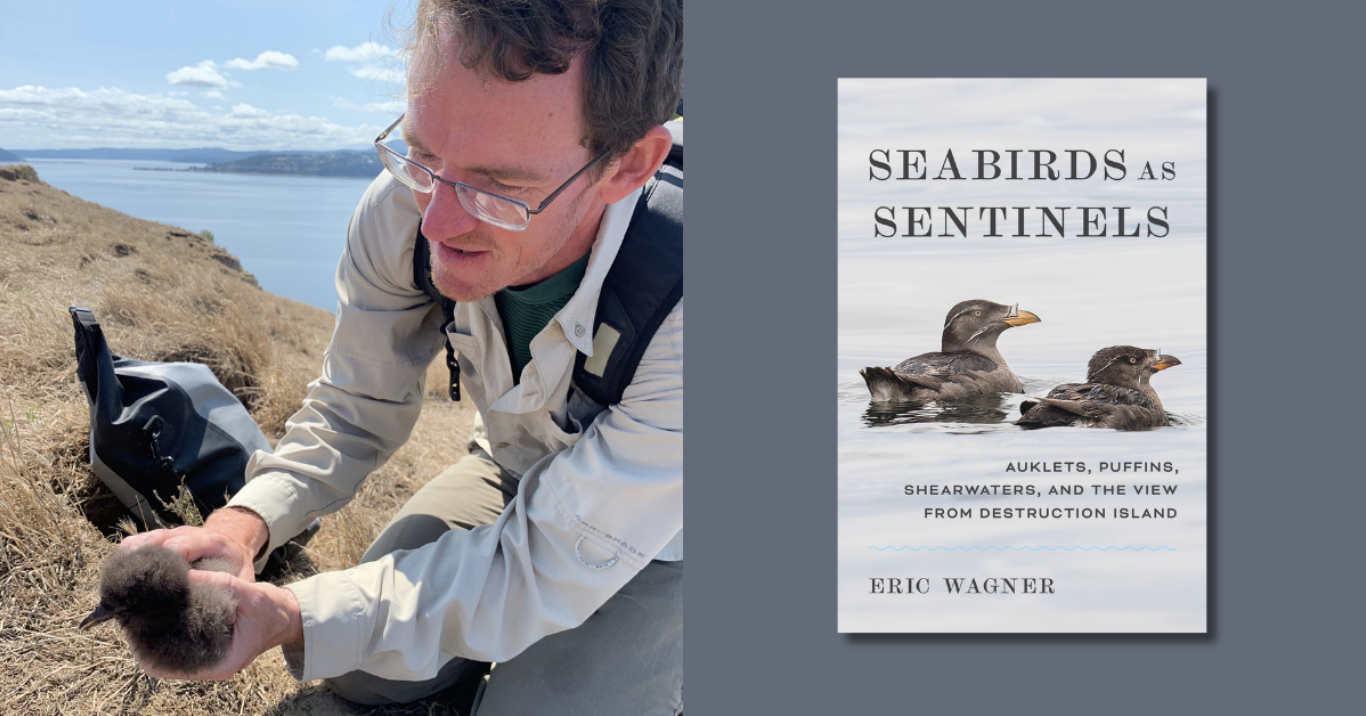
Clicking image will take you to the book’s page at the University of Washington Press. Image from: https://uwpressblog.com/2026/04/22/seabirds-as-sentinels-a-conversation-with-science-writer-eric-wagner/
For more detailed information regarding marine heat waves and El Niño, and their effects on marine ecosystems, seabirds, and the Salish Sea, check out the following resources:
Bellamy Pailthorp. (2026, March 30). El Niño, marine heat will likely make Washington’s warm year even warmer. OPB. https://www.opb.org/article/2026/03/30/el-nino-marine-heat-wave-washington-fish-ocean/
Bernardi Bif, M., & Tuchen, F. P. (2026, May 30). How a monster ocean heatwave could fuel a super El Niño. Bulletin of the Atomic Scientists. https://thebulletin.org/2026/05/how-a-monster-ocean-heatwave-could-fuel-a-super-el-nino/
Hodder, J., & Graybill, M. R. (1985). Reproduction and survival of seabirds in Oregon during the 1982-1983 El niño. The Condor, 87(4), 535–541. https://doi.org/10.2307/1367954
Holthaus, E. (2026, May 22). Why an immense marine heatwave off the US west coast has alarmed scientists. The Guardian. https://www.theguardian.com/us-news/2026/may/22/marine-heatwave-west-coast
NOAA Fisheries. (2026). West coast waters experiencing another large marine heatwave. NOAA. https://www.fisheries.noaa.gov/feature-story/west-coast-waters-experiencing-another-large-marine-heatwave
Rice, J. (2021, December 17). Modeling “the blob” in the Salish Sea. Puget Sound Institute. https://www.pugetsoundinstitute.org/modeling-the-blob-in-the-salish-sea/
Rott, N. (2026, May 19). A pacific marine heat wave is wreaking havoc on sea birds. NPR. https://www.npr.org/2026/05/19/nx-s1-5808311/a-pacific-marine-heat-wave-is-wreaking-havoc-on-sea-birds
The California current marine heatwave tracker - blobtracker | integrated ecosystem assessment. (2026). NOAA Fisheries. https://www.integratedecosystemassessment.noaa.gov/regions/california-current/california-current-marine-heatwave-tracker-blobtracker
Wagner, E. (2020, July 15). “The blob” revisited: Marine heat waves and the salish sea. University of Washington. Encyclopedia of Puget Sound. https://www.eopugetsound.org/magazine/IS/marine-heat-wave