

Week 1: June 7th - 13th
Hello faithful Guillemoteers!
I hope you all stayed dry this last week, or at least found yourselves prepared—especially those who were out surveying PGs in the rain yesterday. Thank you for your dedication to our birds, even when conditions aren’t exactly ideal. Regardless, I hope your time out on the beach was magical! If you’re just heading out this week to survey, the same goes!
We’re finally heading into our first “official” week of the 2026 Pigeon Guillemot breeding season, and guess what…we have prey deliveries!! Brenda reported that her team observed three gunnel deliveries to a burrow at the Snake Rock Estates colony on Friday, June 5th! Woot! It’s always exciting to know that there is a chick in the burrow and that the breeding cycle has indeed started again.
Please know that prey deliveries now, while normal, are considered on the early side. Many of us observed guillemots mating at our colonies over the last two weeks, which means that prey deliveries to some burrows are still 4-5 weeks away. We are not sure why some colonies or burrows seem to be so far ahead of others, but it happens this way every year. When we look for trends, we will look for a general shifting of prey deliveries overall or differences between regions, and not focus too much on the early timing of some burrows. It is an exciting way to kick off the new season, nonetheless, and we should begin to see an increase in prey deliveries across the network.
Signs that more chicks are on the way (and PGs aren’t terribly shy!)…
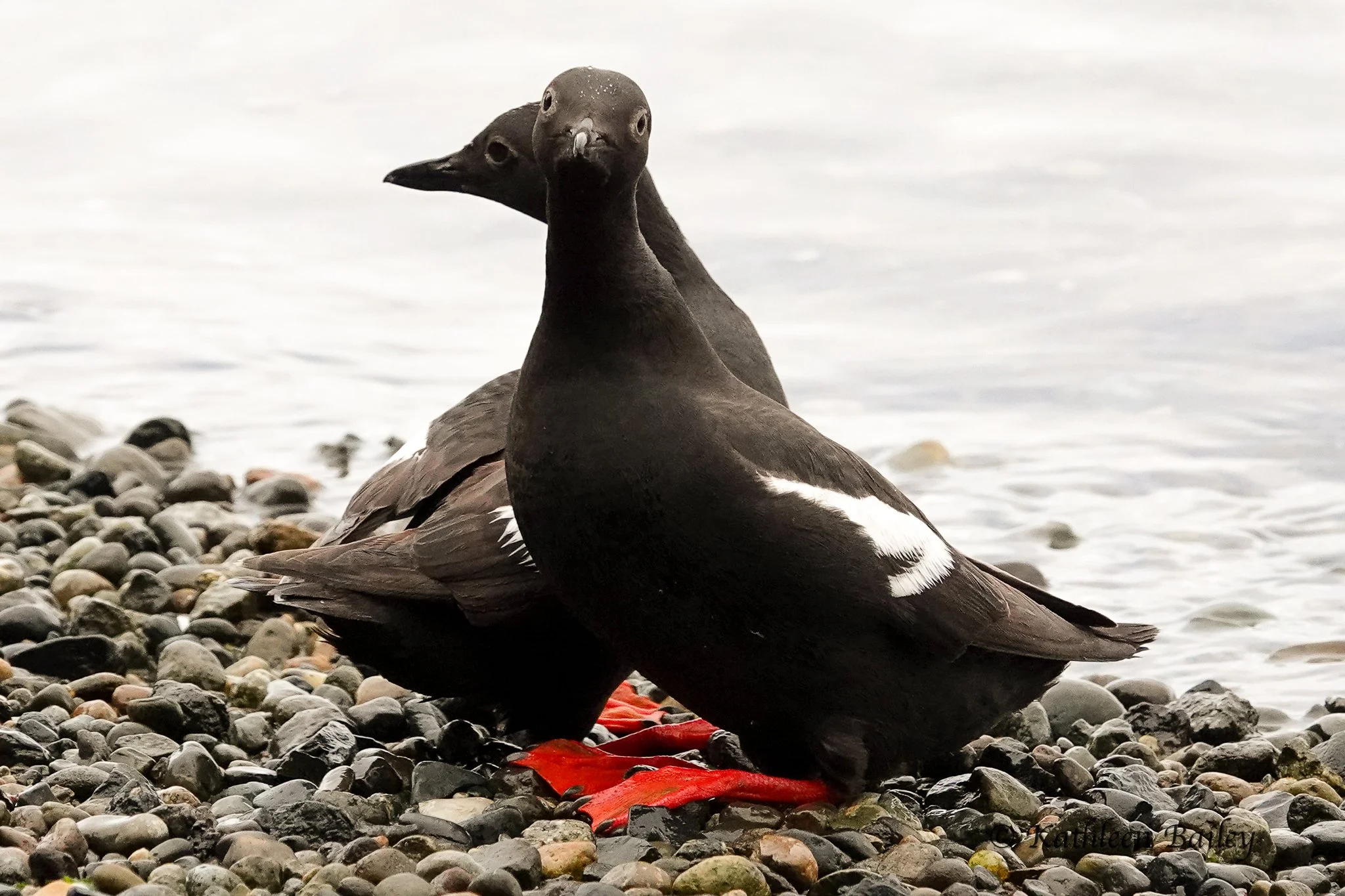
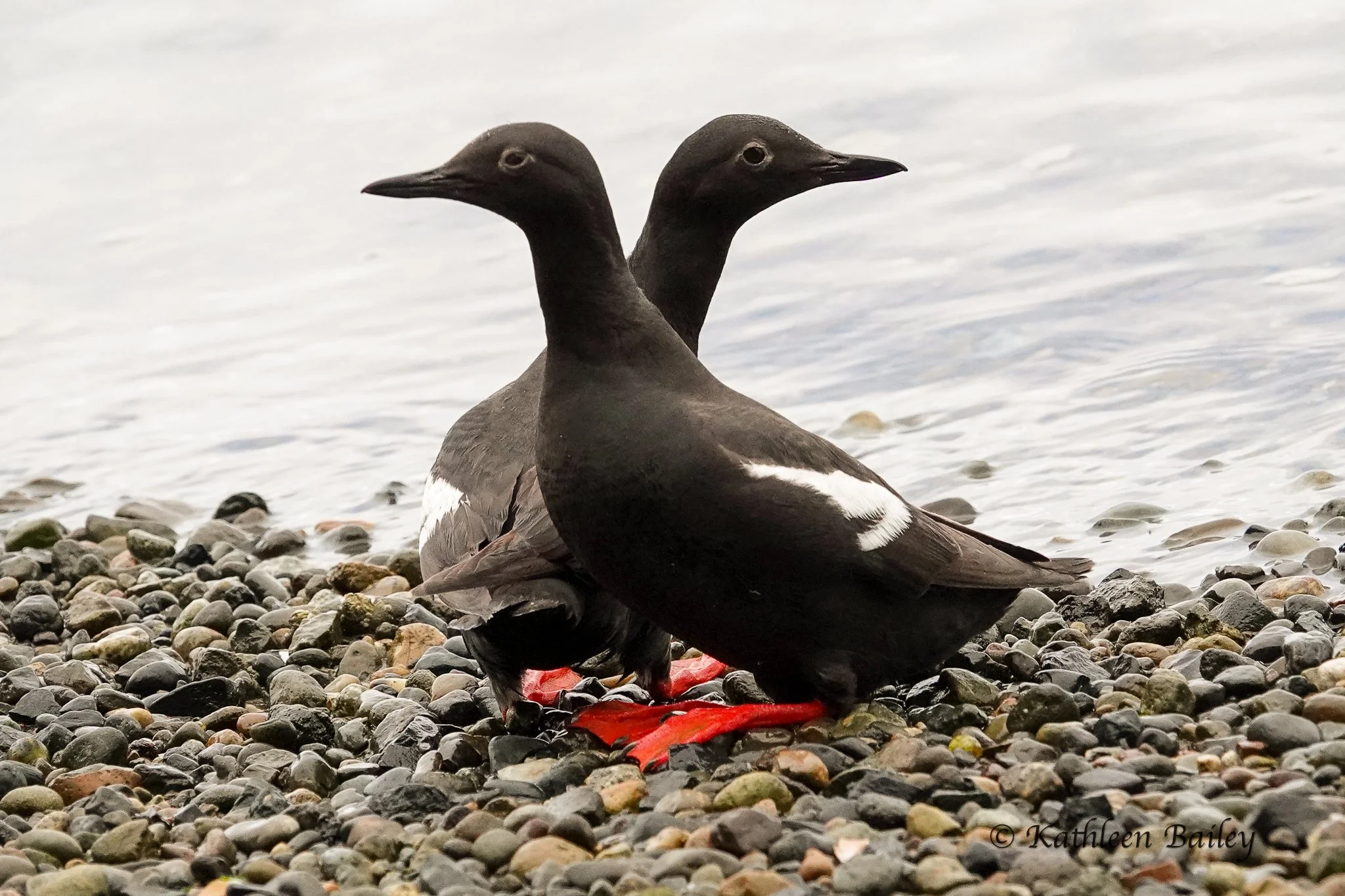
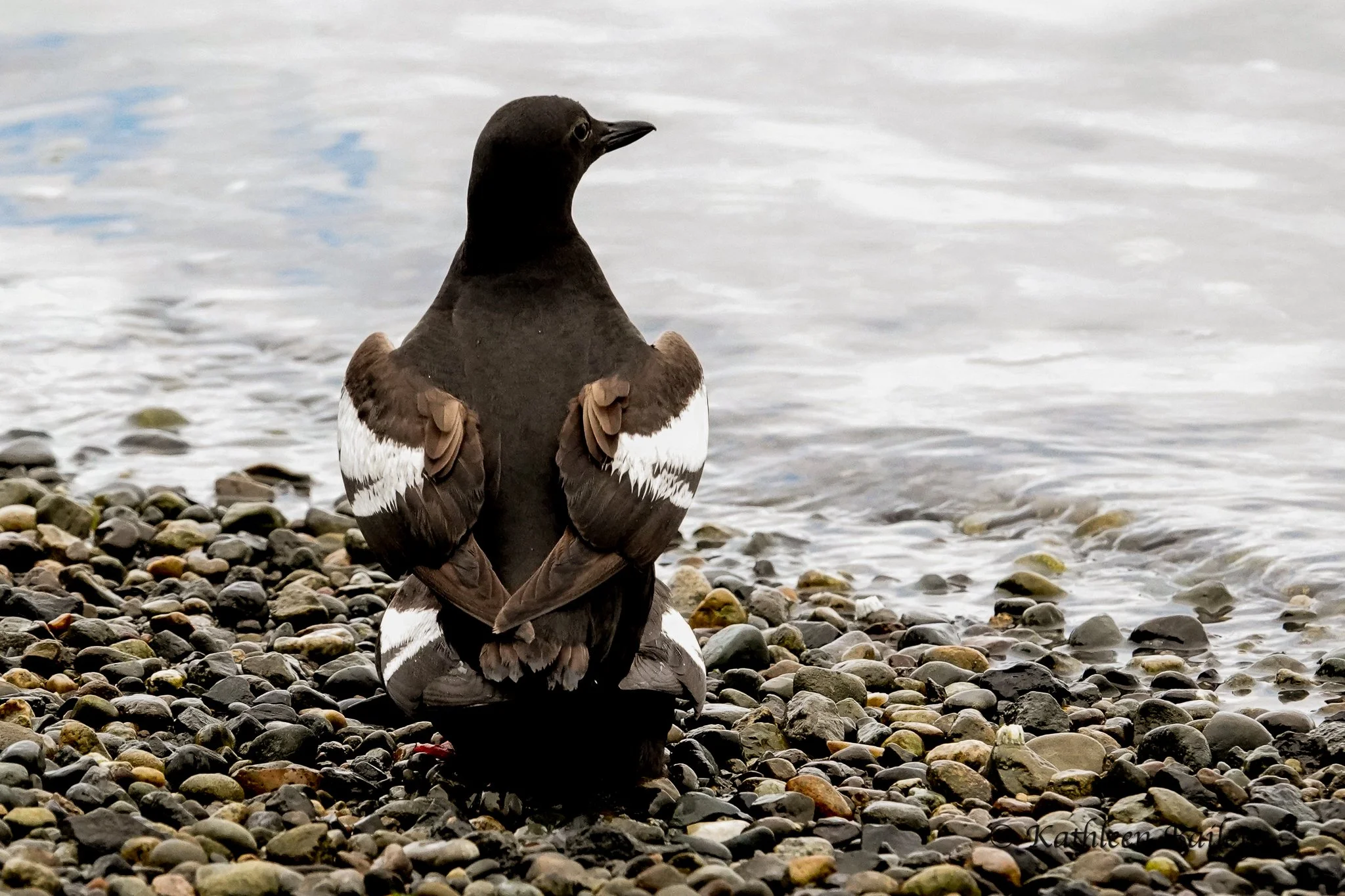
Kathleen captured these beautiful photos of a pair bonding and mating right in front of her at the Beachcrest colony (South Sound) last week.
This week, I want to talk a little bit about recording “no prey” visits to burrows and what to do when you’re not exactly sure where a PIGU has gone when it flies up to the bluff. This came up for a few of you last week, so it seems like a good time to revisit it.
Some colony bluffs are more complex than others. They may be long, heavily vegetated, or shaped in ways that make it difficult to see all potential burrow areas. Add in a large number of active birds, and surveying can suddenly become much more challenging.
It may also be early in the season and you’re still learning a new site, or the guillemots may be using a part of the bluff you weren’t expecting. Whatever the situation, “no prey” visits to burrows are not always as clear-cut as we’d like them to be.
When thinking about what to do, it can be helpful to understand why we record no prey visits in the first place. No prey visits serve two important functions. From a data standpoint, they can help identify burrows where PIGU have attempted to breed, in other words, where they have laid a clutch of eggs. From a surveyor standpoint, they help us identify burrows or areas of the bluff that deserve closer attention during future surveys.
It’s important to record these visits, but we also want to avoid recording them incorrectly, since that can affect analyses of reproductive success. With that in mind, here are some tips for documenting no prey visits:
Do record no prey visits when:
You clearly see a bird enter and disappear into a burrow
A bird flies directly into the vegetation (or behind a land form) in front of a known, distinct burrow
You can’t see the burrow, but the PGs have flown directly into the same spot more than once, and you can circle that spot on the map (often they wear a hole into the vegetation)
You only have a defined number of geographically separated burrows and it could have only flown into the one you identify
Do not record no prey visits when:
You couldn’t quite tell where a PG was flying into the bluff and/or you are not even sure if there are burrows in that area
You think the PG(s) could just be ledge sitting
You are familiar with burrow locations, but the PG could have flown into any number of them because you didn’t see exactly where it went in
The general rule is to record what you can confidently observe, and not record when there is too much uncertainty. One thing you can do is make a note of the visit time and check out the area where you observed activity once the survey is over. Sometimes you can put the mystery to rest by standing under a spot and looking up behind vegetation for evidence of a burrow. If you find one, then it’s safe to transfer your suspected visit from notes to the burrow visits box.
If you’re still not sure, keep an eye on the location in question and consider shifting your observation point in future surveys to better see what’s happening. As always, feel free to reach out and ask questions. I’m here to help!
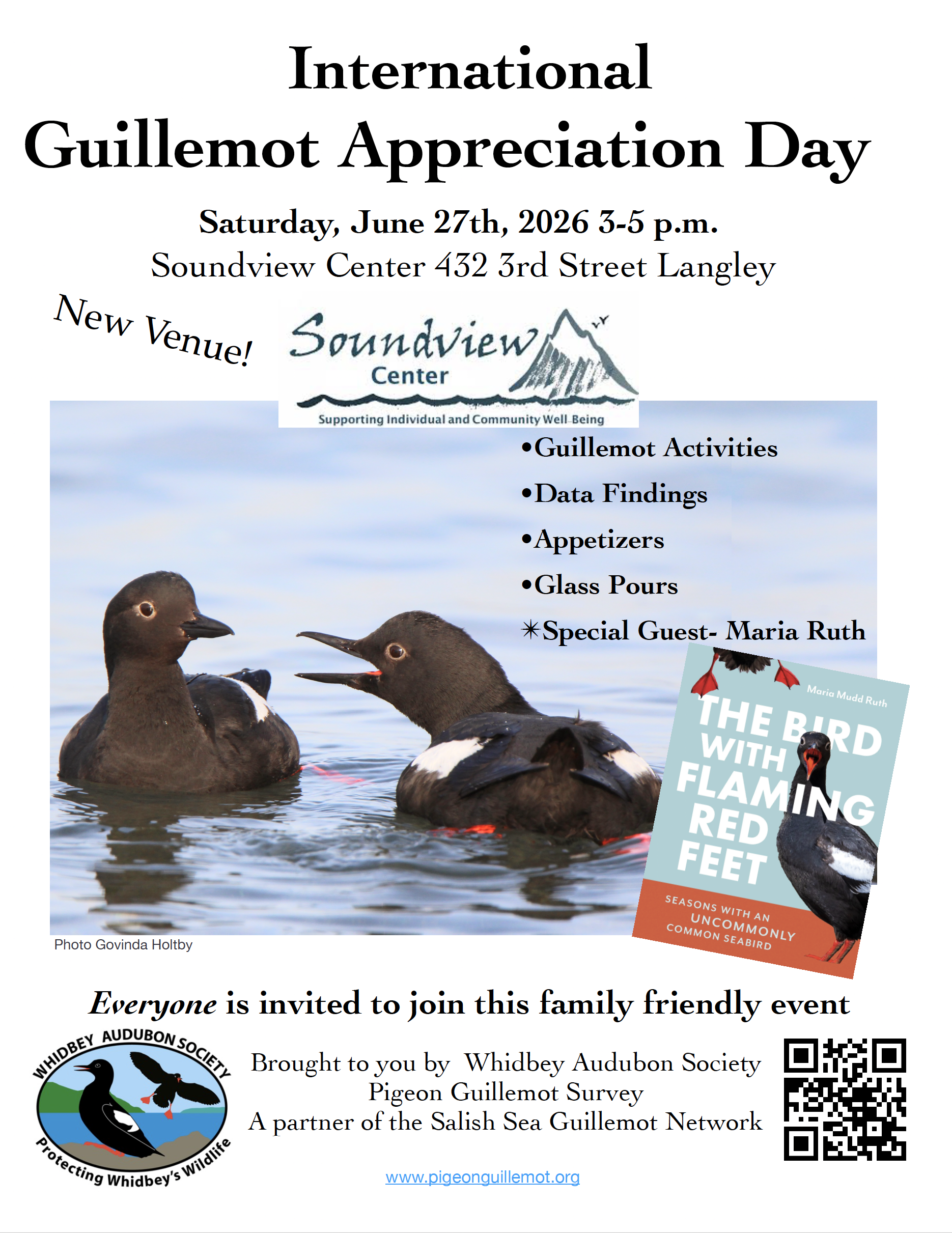
One last thing before I wrap up! The Whidbey coordination team is putting on their annual Guillemot Appreciation Day celebration on June 27th from 3:00-5:00pm and all are invited!! This year it will be held at the Sound View Center in Langley. See the flyer below:
Have fun out there and enjoy your time with the guillemots! Thank you all for the time, care, and effort you’ve put into training and getting ready for the season. We’re so grateful for you!
Shannon