

Week -1: May 31st - June 6th
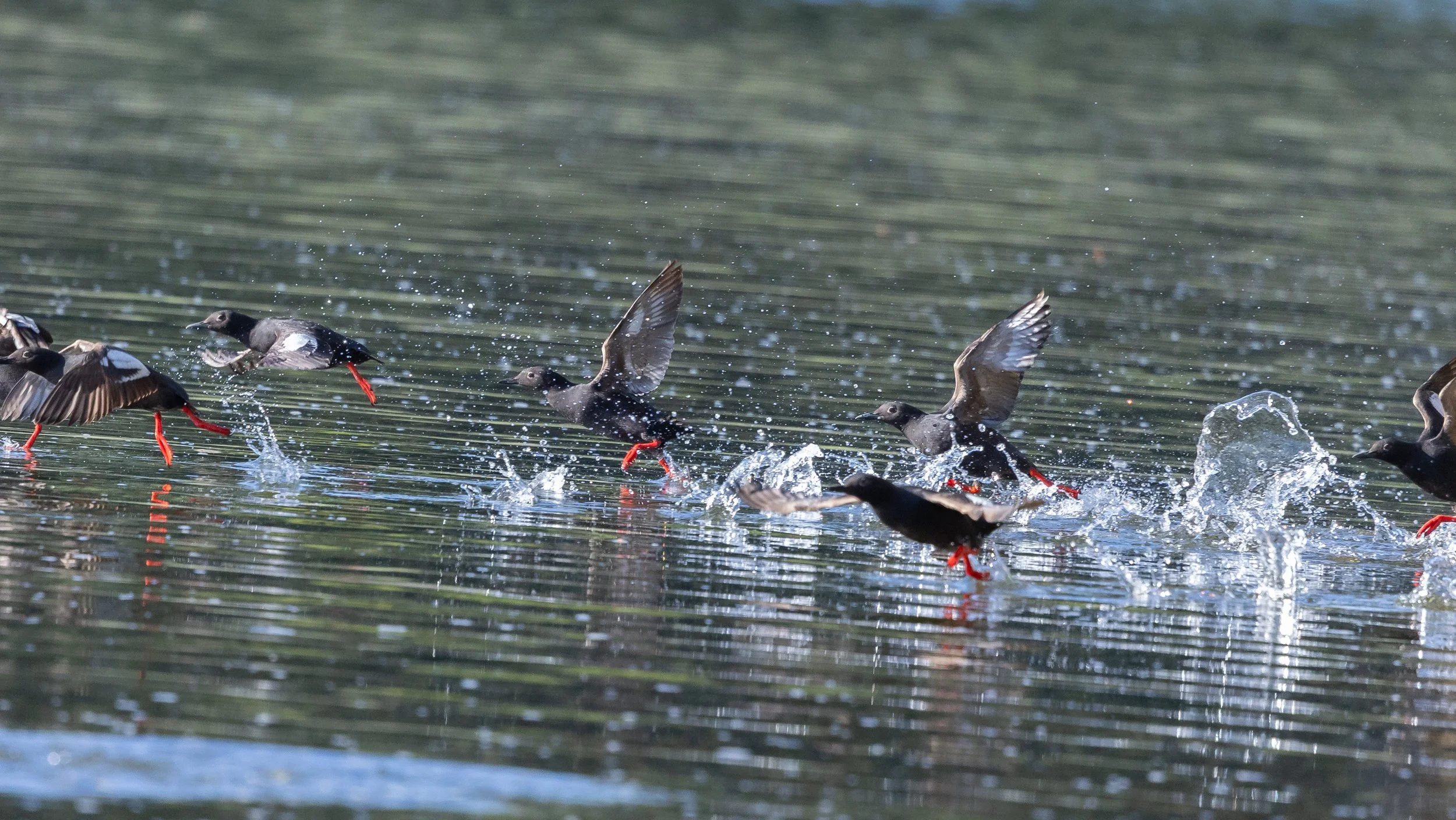
Good afternoon, Guillemot devotees!
I would like to officially kick off our weekly survey updates this beautiful 1st day of June! Next week marks the official start of our survey season, but with many guillemoteers heading out to their colonies already, it feels like we’re well underway. Or maybe I’m just eager to start! Either way, I’m calling this Survey Week -1.
A warm welcome to all of our new volunteers this season! We are so happy to have you join our dedicated crew and experience the magic that is surveying Pigeon Guillemots! I hope you have a fun season connecting with the birds and the beach!
I'd also like to send a special shout out to our new B.C. teams, who will be piloting surveys at three large, dynamic colonies in Canadian waters this year. We are thrilled to expand the area we survey and gain a more complete picture of what’s happening with PIGU populations across the Salish Sea. That’s the power of community science and collaboration. It’s also a testament to how deeply we all value this precious marine ecosystem and the creatures who depend on it. Our shared connection to this place and our birds, knows no border.
If you haven’t yet experienced the Canadian Salish Sea nearshore, the bluffs are jaw dropping and SO different from the ones we see in Puget Sound. They are typical of the kind of habitat that PIGU commonly nest in across their range, which is rocky cliffs. Surveying the birds in this habitat is a challenge (there is NO beach!) but our friends to the north are motivated and up for it. Check out this beautiful PIGU nesting colony bluff at Fearney Point on the Sunshine Coast:
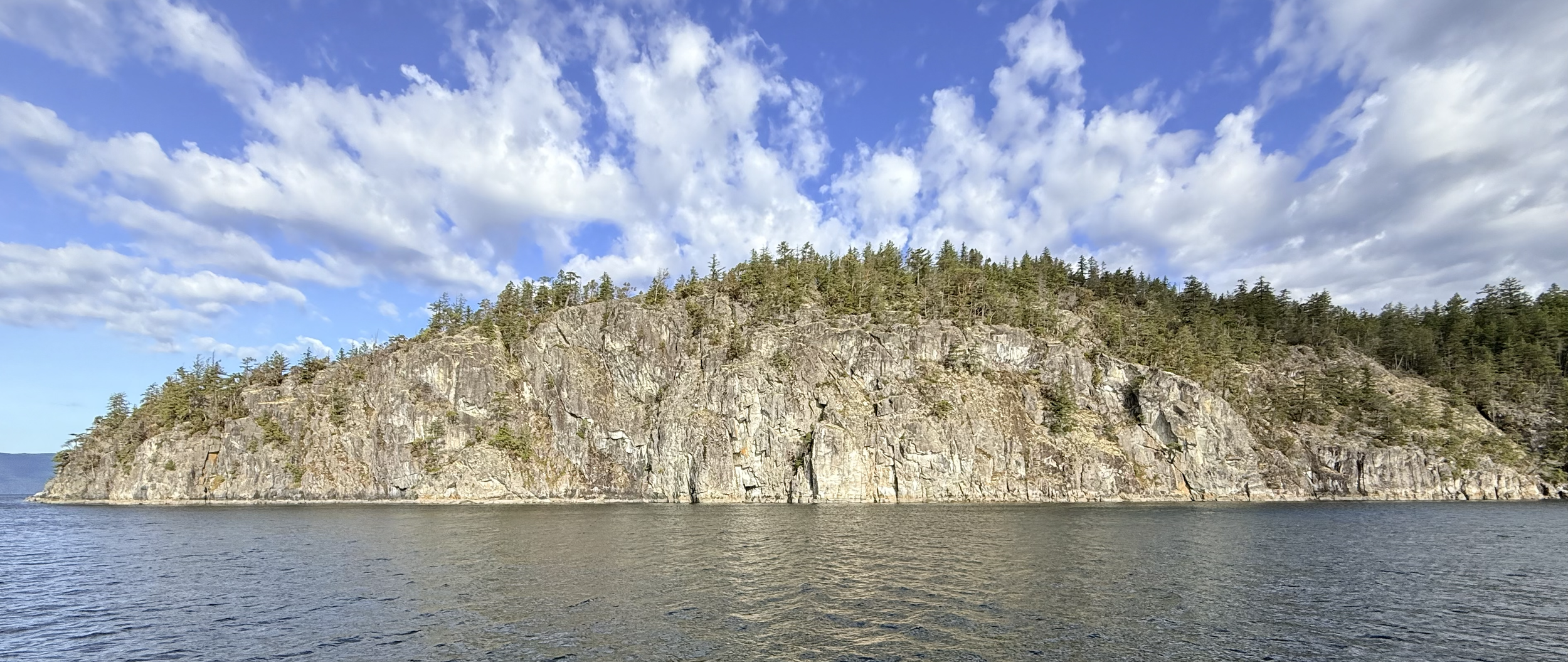
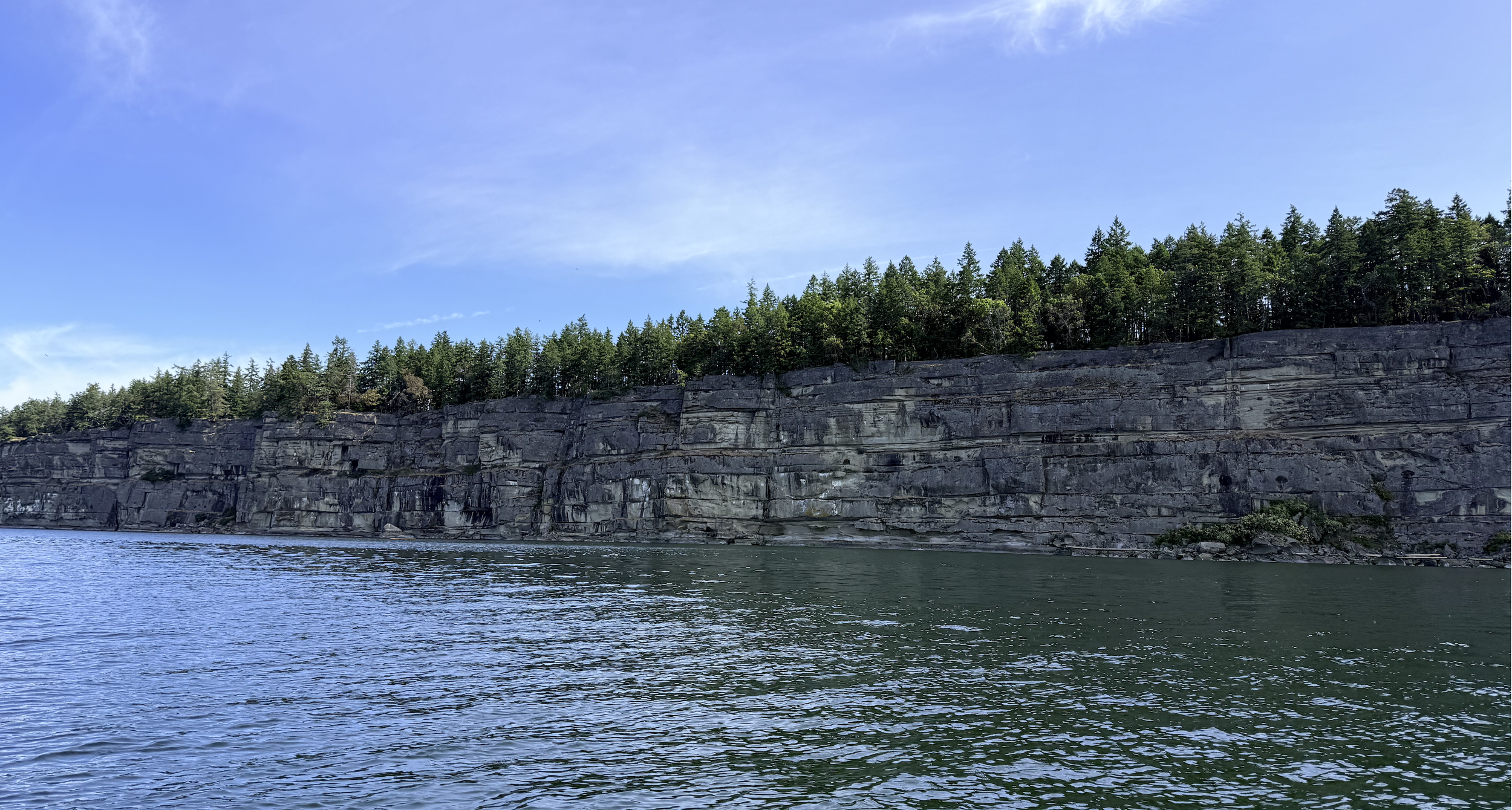
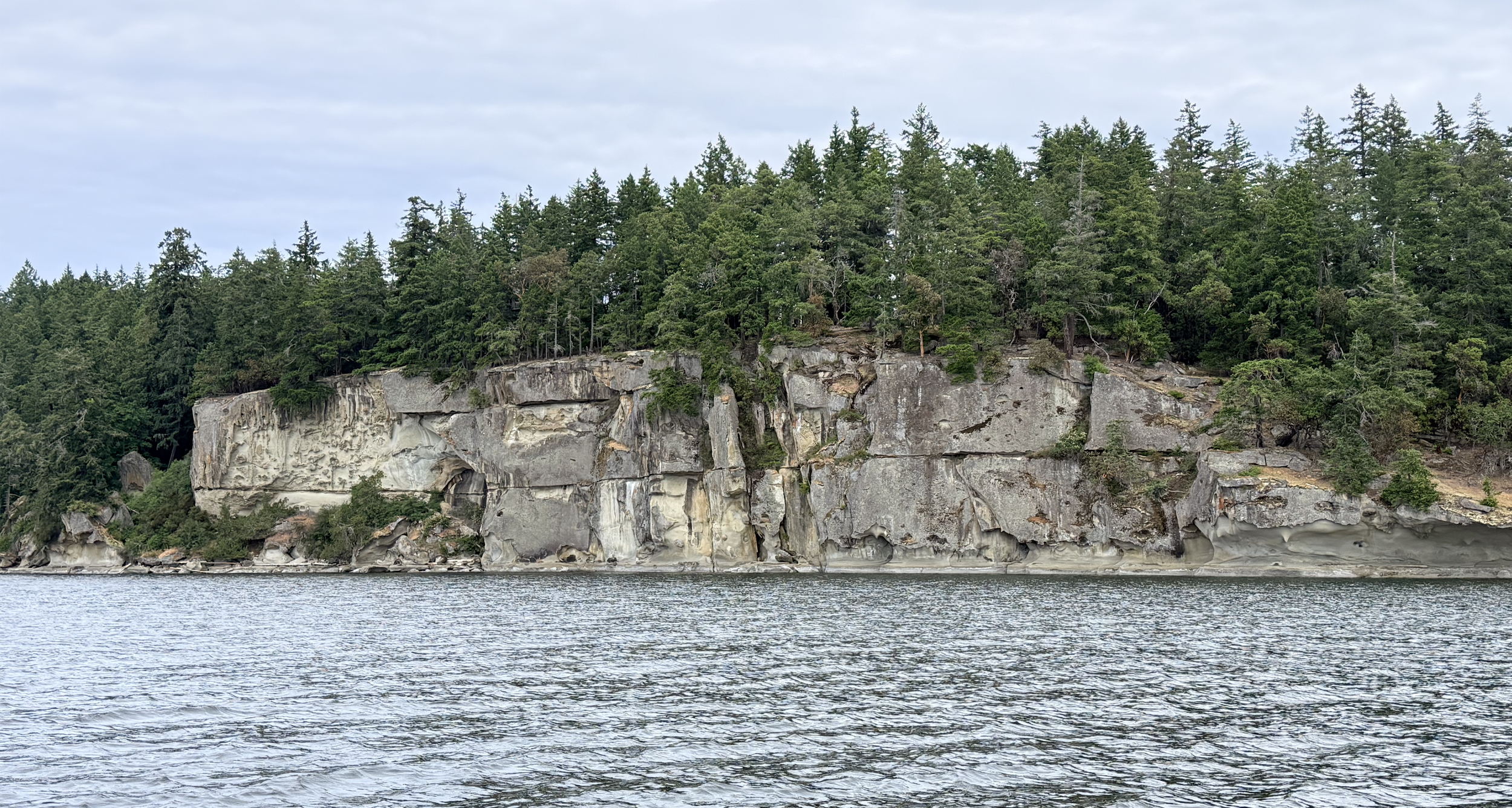


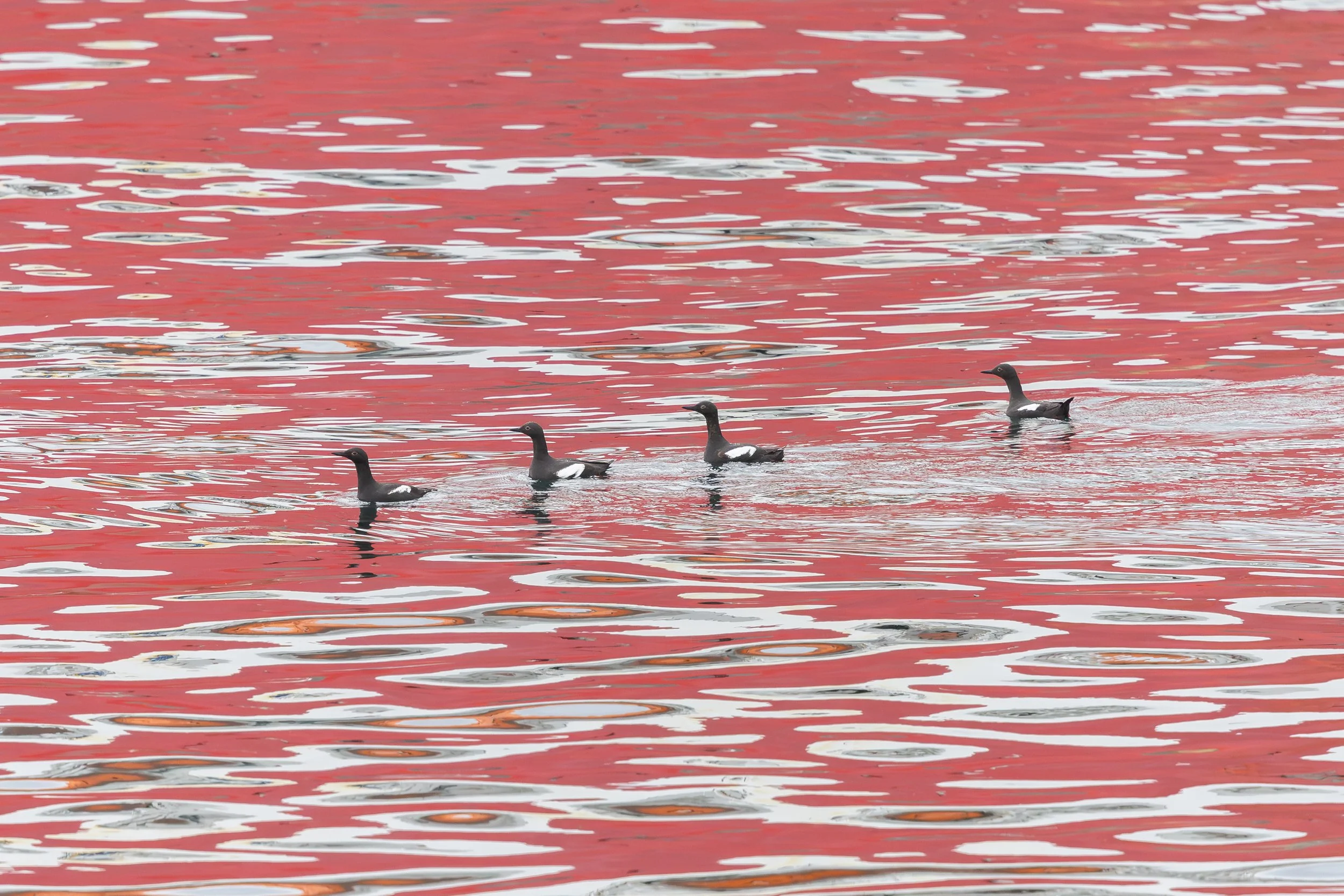
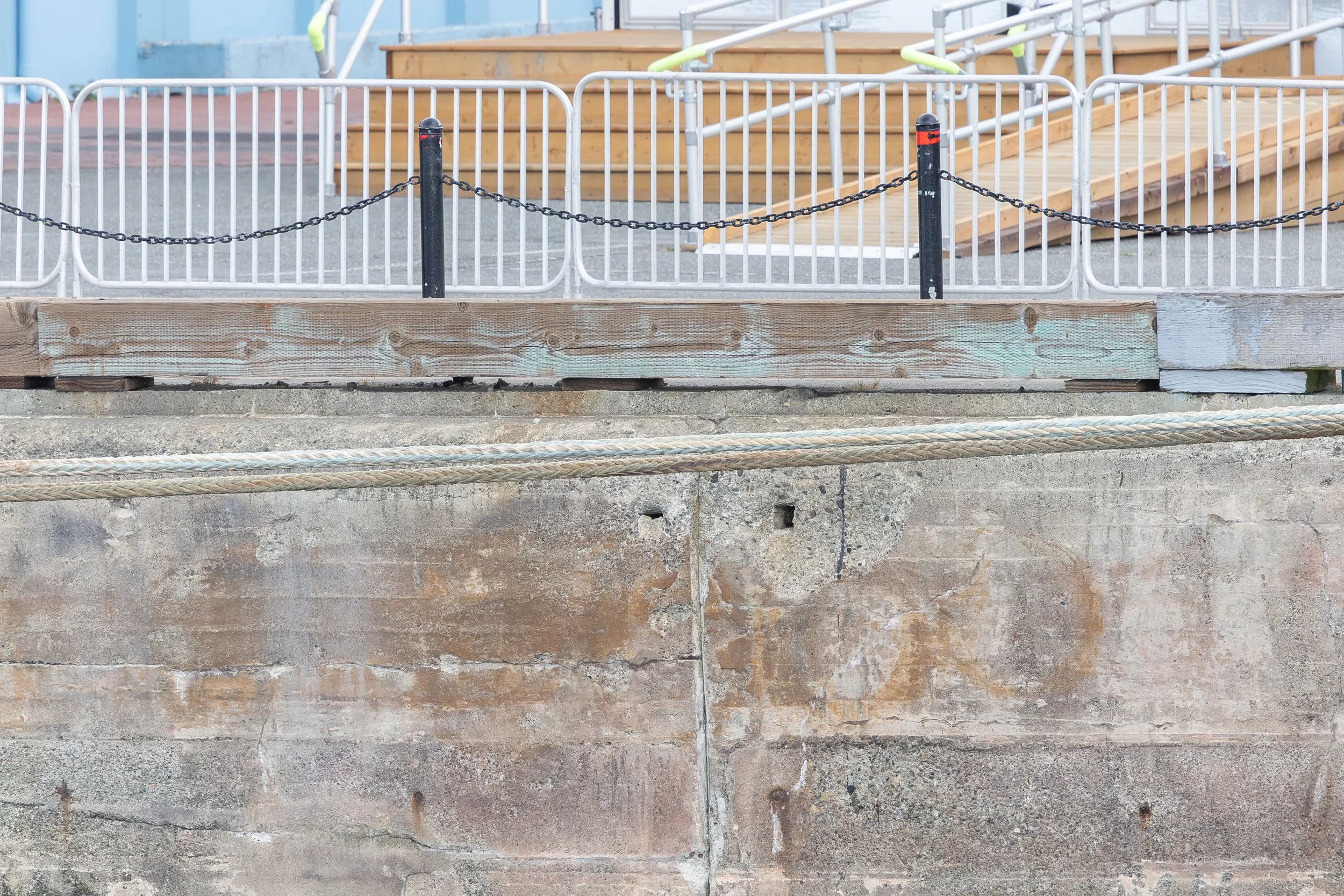
We counted 40+ PIGU socializing in the nearshore, ledge sitting, and visiting cracks and crevices in the bluff at Fearney Point. You can also see the incredible colony bluffs on Valdes Island and at the Ogden Point shipping terminal, in Victoria. While the large, red ship was docked and blocking their “burrows”, the PIGU kept flying up to sit inside the holes on the ship! I can’t wait to see how the season goes in B.C.!
If you’ve been out to your colonies recently, either to check on your birds or to complete a survey, then you know that the PIGU have arrived at their bluffs and are busy getting ready to bring up the next generation. I’ve heard reports, and have seen with my own eyes, guillemots pair bonding, hopping up on rocks, playing water games, engaging in synchronized flying, skirmishing, apartment shopping, mating, and vocalizing. They are a flurry of social activity!
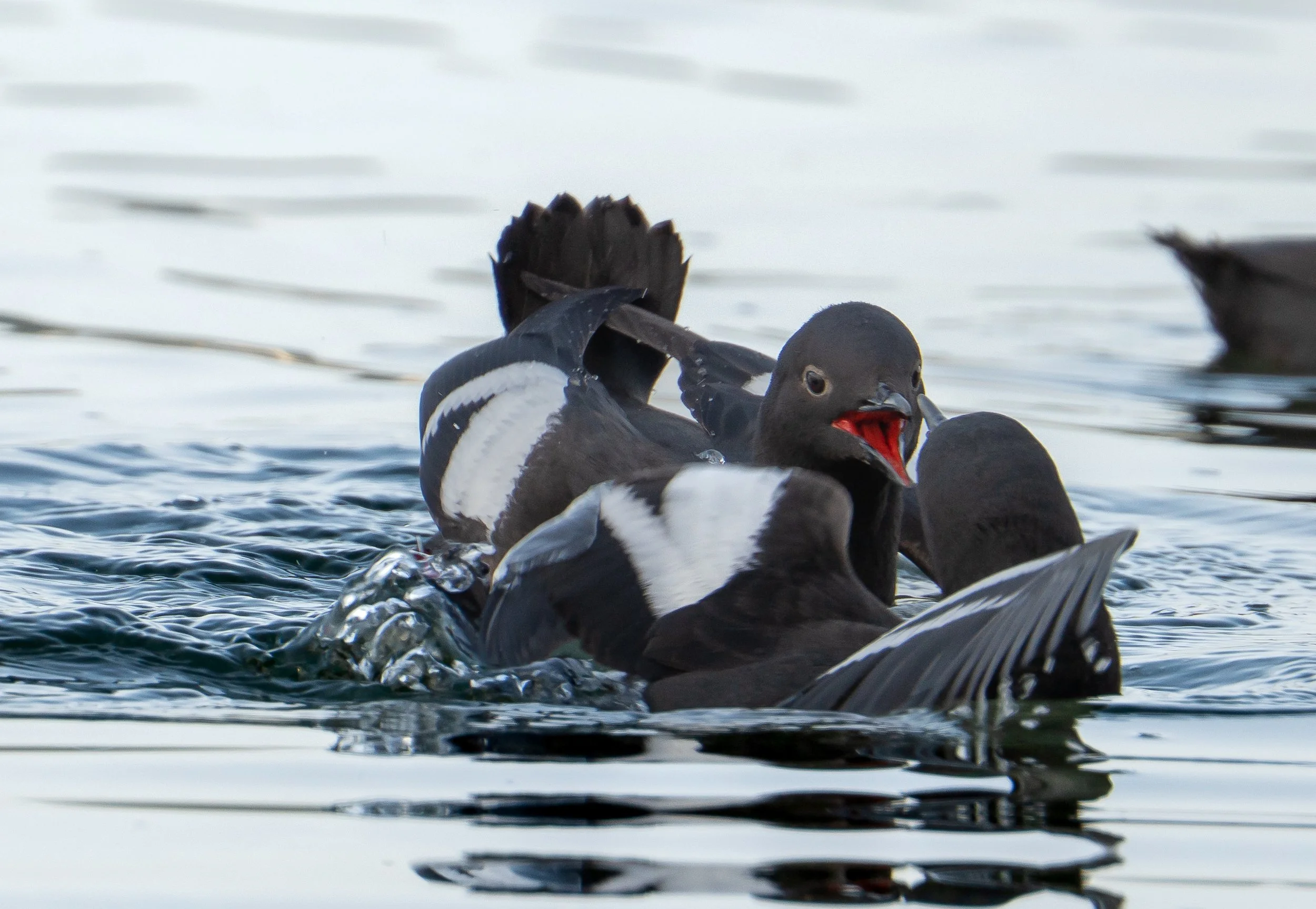
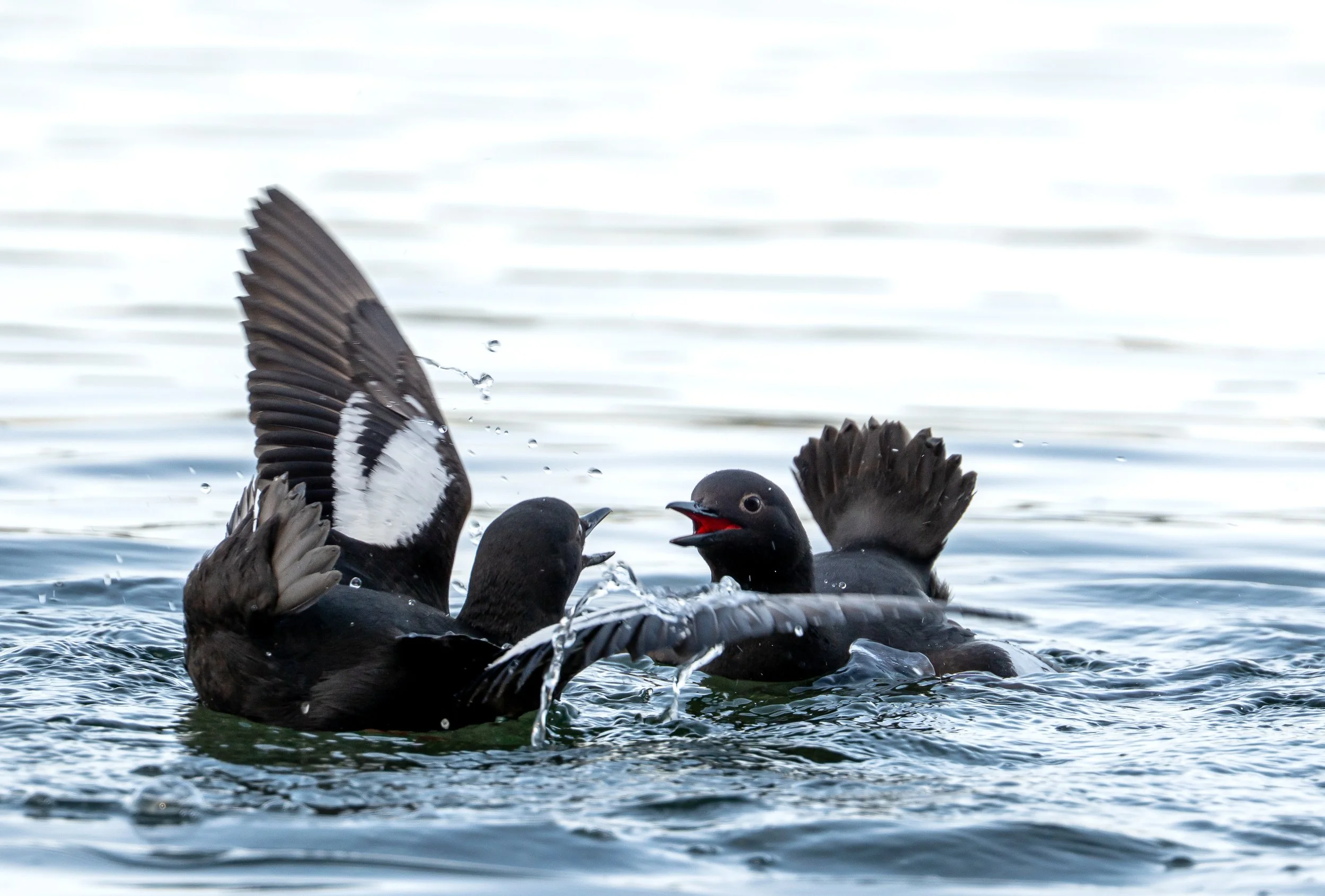
The following are a few amazing photos of a dispute caught last month by Hillary Smith at the Isthmus Beach colony (E. Jefferson region), along with a fun photo of another colony PIGU coming up with a flatfish and a bunch of bubbles!
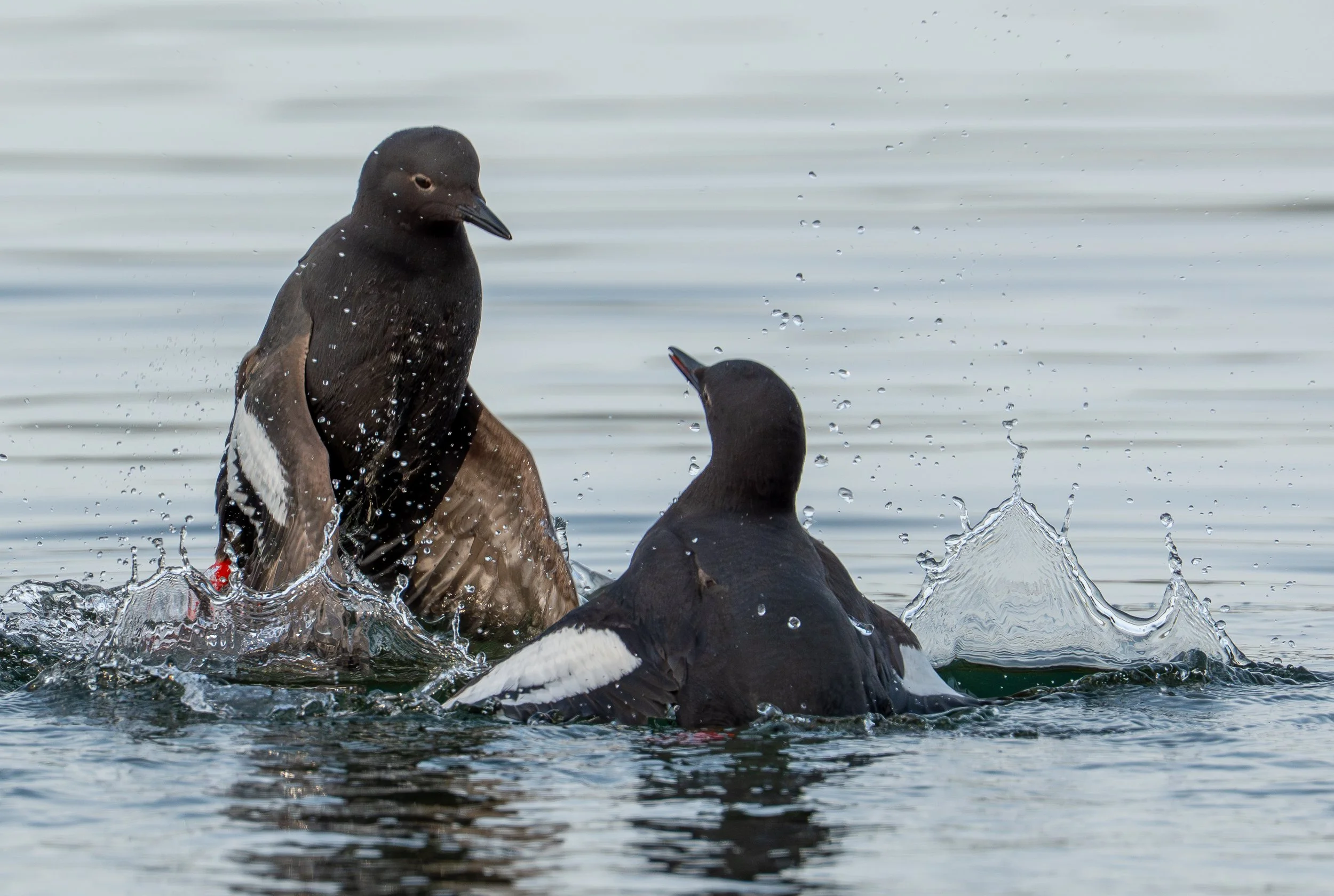
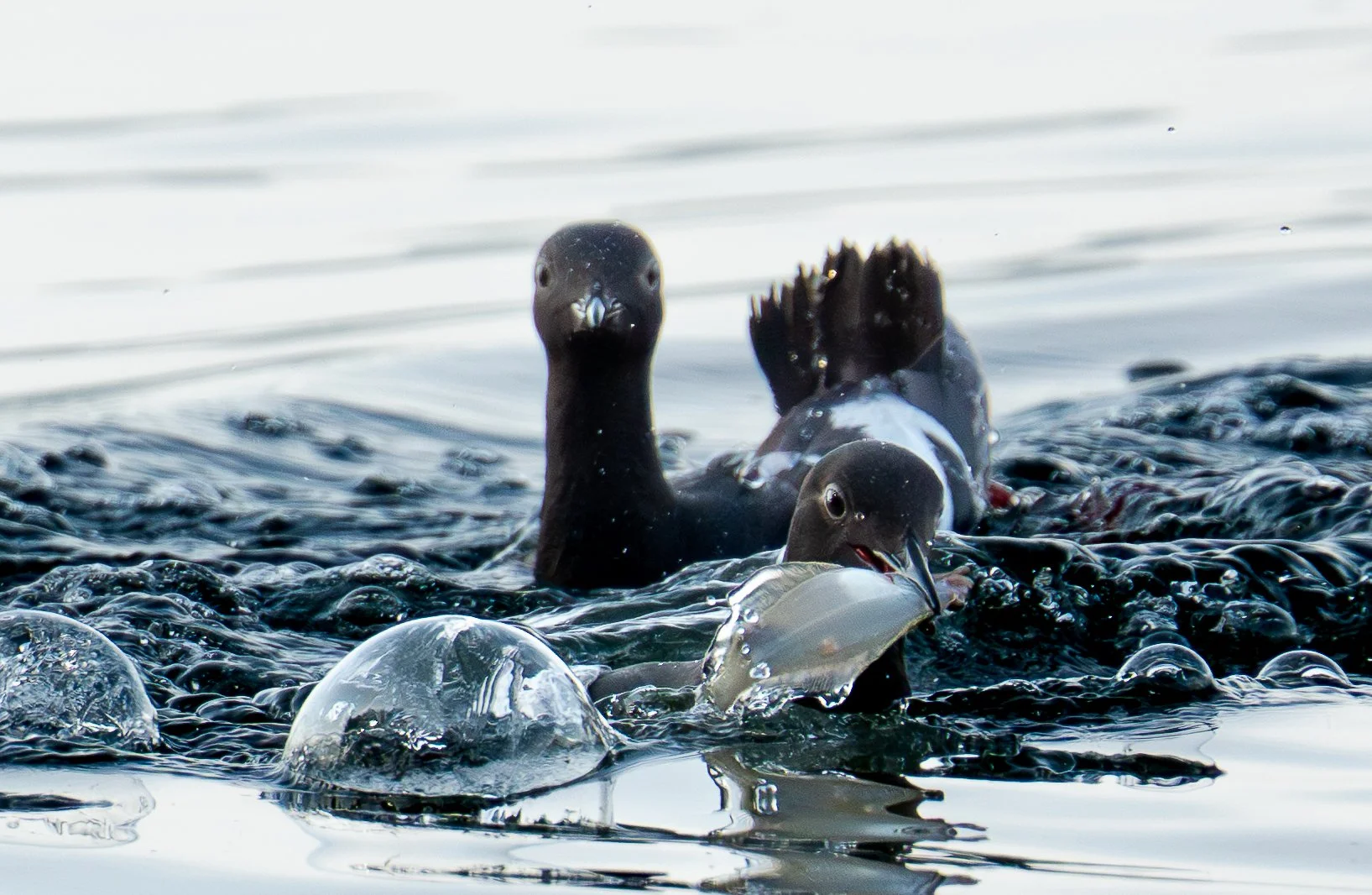
One thing to remember about the early season, it is common to see this initial flurry of intense social interactions and bluff visits, as the birds bond, mate, and stake out their burrows. Once eggs have been laid (this usually occurs around ~10 days after copulation), however, you might experience a lull at the colony that lasts for several weeks. This is because guillemots may be quietly incubating in their burrows, only switching out every few hours with their mate, for a span of four weeks. Also remember that burrow activity is often staggered, with some pairs laying eggs and incubating early in the season, and others, starting their cycle several weeks later. Once chicks have hatched, the activity will pick up again, as breeding pairs begin the task of foraging and feeding chicks in the burrow. So, do not despair if your colony feels a bit slow at first. If there are birds hanging out in the nearshore, chances are there is something “cooking” at the colony and activity will come soon enough.
A few more things:
If the PIGU seem overly anxious and disturbed, consider where you are positioned on the beach and whether you can move further away or back. The goal is not to be perceived as a barrier to the burrows. I experienced some aggressive guillemot behavior last week, when a group of 3-4 PIGU swooped down in formation right over my and my partner’s heads during our settling period! It was clear that they were not happy about our presence. When they flew out of range, we took the opportunity to scoot down beach a bit until we could just still see the burrows, and that did the trick! On return, the PIGU resumed their usual behavior and even made a burrow visit!
If you feel that the PIGU are active, but suspect you are missing breeding behaviors, consider starting your survey earlier in the morning, such as 6:00am. We know that guillemots are most active early and wind down as the morning passes, which is why we ask everyone to finish surveying by 9:00am. Arriving earlier may increase your chances of catching them at the height of their morning activities.
Don’t forget your hat and sunscreen and don’t wait to apply sunscreen on the beach! You’ll realize pretty quickly that you’ve forgotten these things once the sun is beating down on your face during a survey. This was me yesterday, so I speak from experience! :)
Most importantly, enjoy the morning and take it all in: the sounds of the waves, the birds, and the sediment beneath you (does your beach snap, crackle, and pop?), the breeze and smell of fresh, salt air, the sight of nearshore wildlife. Feel the peace that comes with early mornings in nature, the delight of observing PIGU and their antics, and the excitement of seeing that first (and every!) burrow visit. Have fun!!
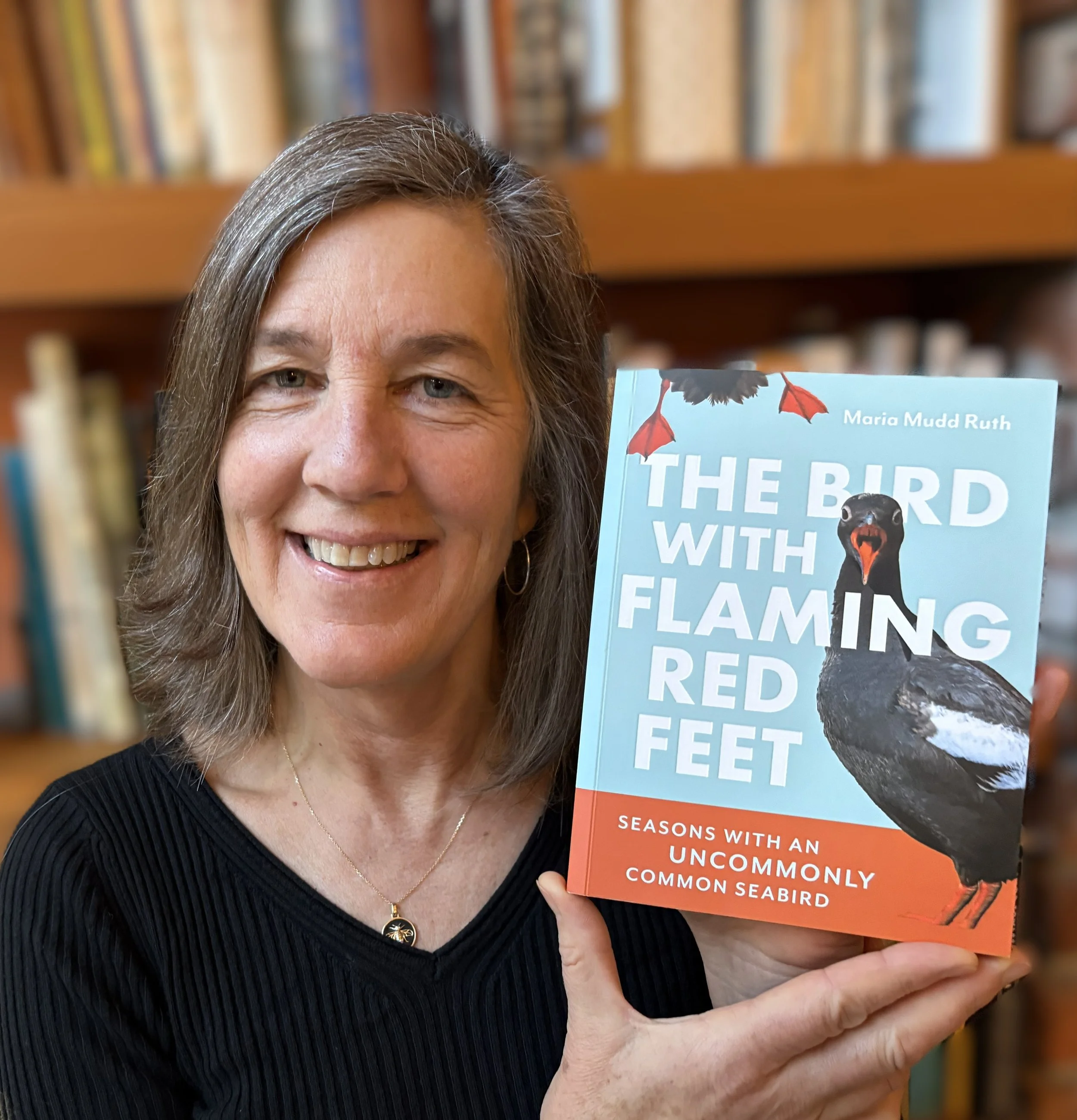
I also want to share that I’ll be speaking at the Puget Sound Birdfest this Saturday at 1:30pm, and tabling outside of my talk, from 9:30am-5:00pm. The event is hosted by the Pilchuck Audubon Society and will be held at Frances Anderson Center in Edmonds (700 Main Street Edmonds, WA 98020). Maria Mudd Ruth will also be there and signing books at the Edmonds Bookshop table from 11:30-1:30pm and 2:30-4:00pm. If you have a chance, swing by—we would LOVE to see you!

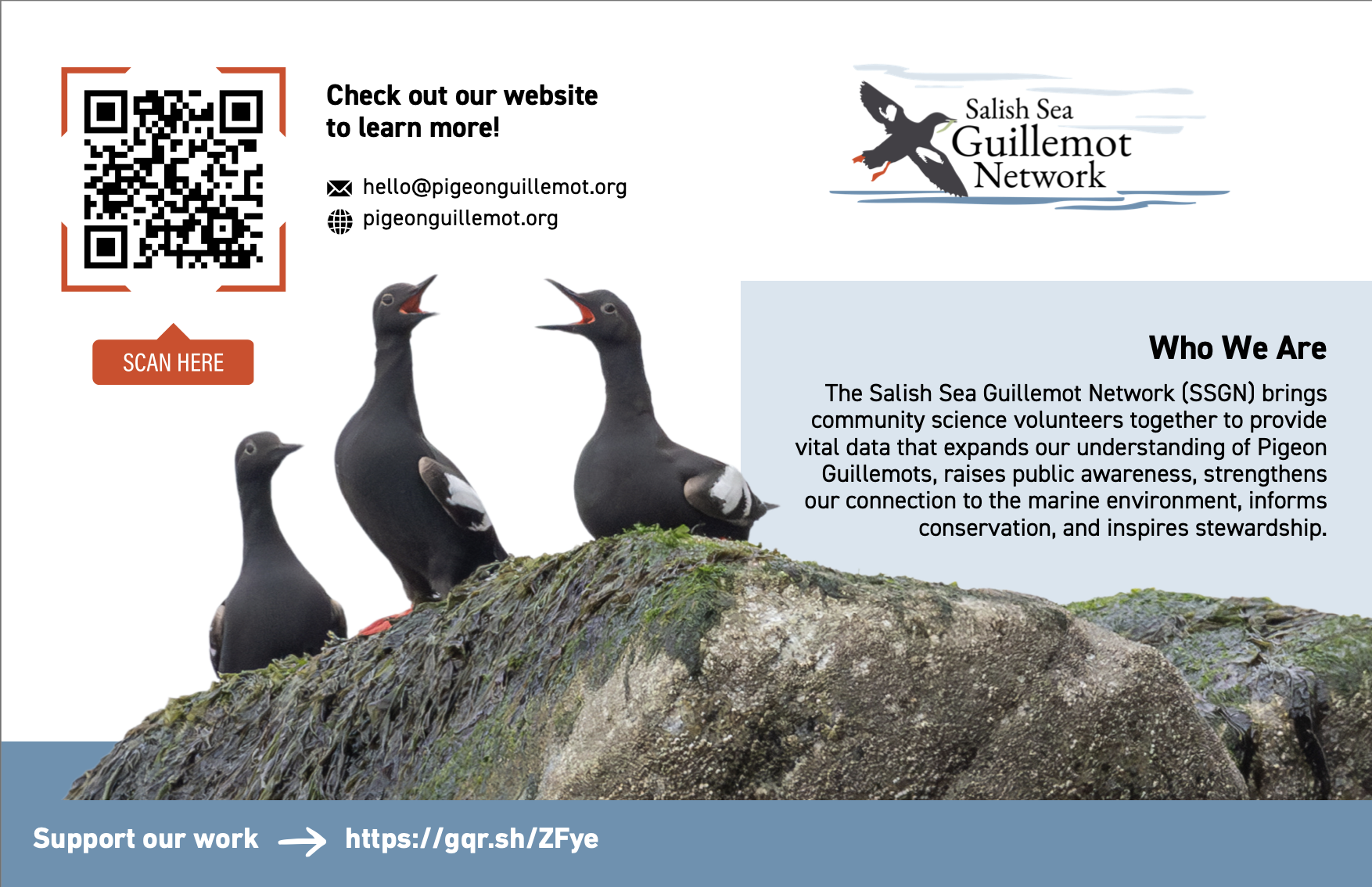
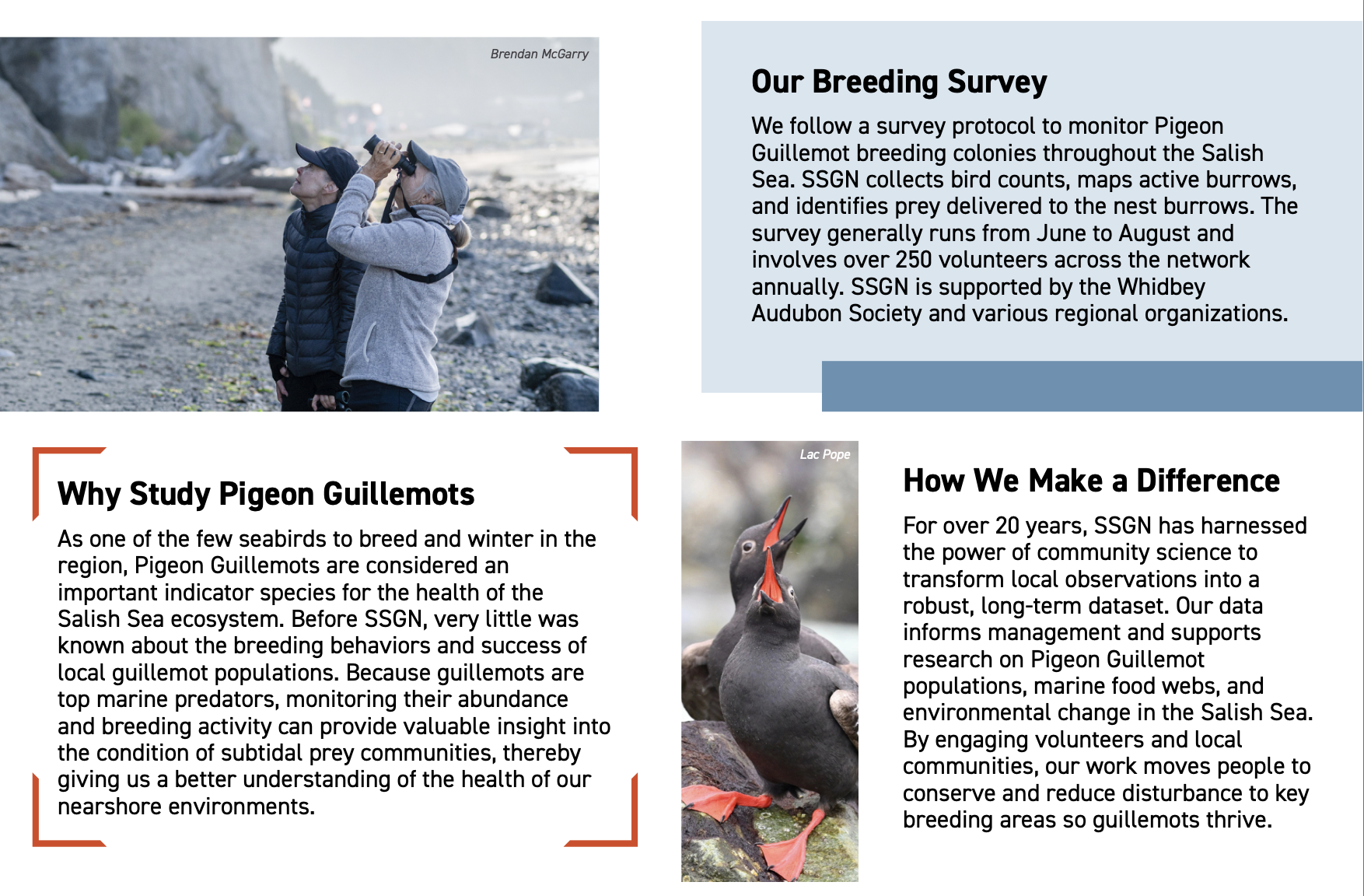
In other news, we have a new SSGN downloadable, printable half-sheet informational flyer on our website! These are designed to be printed double-sided and then cut in half. The flyer can then either be kept flat, or folded like a book, for easy stowing in your notebook or bag. These are great to keep on hand to give to curious or interested folks while you are at your colony beach or even just out and about. The QR code leads to our website where people can learn more about the guillemots and our survey. The downloadable PDF file can be found in our Survey Toolbox under “Additional Pigeon Guillemot Survey Resources”.
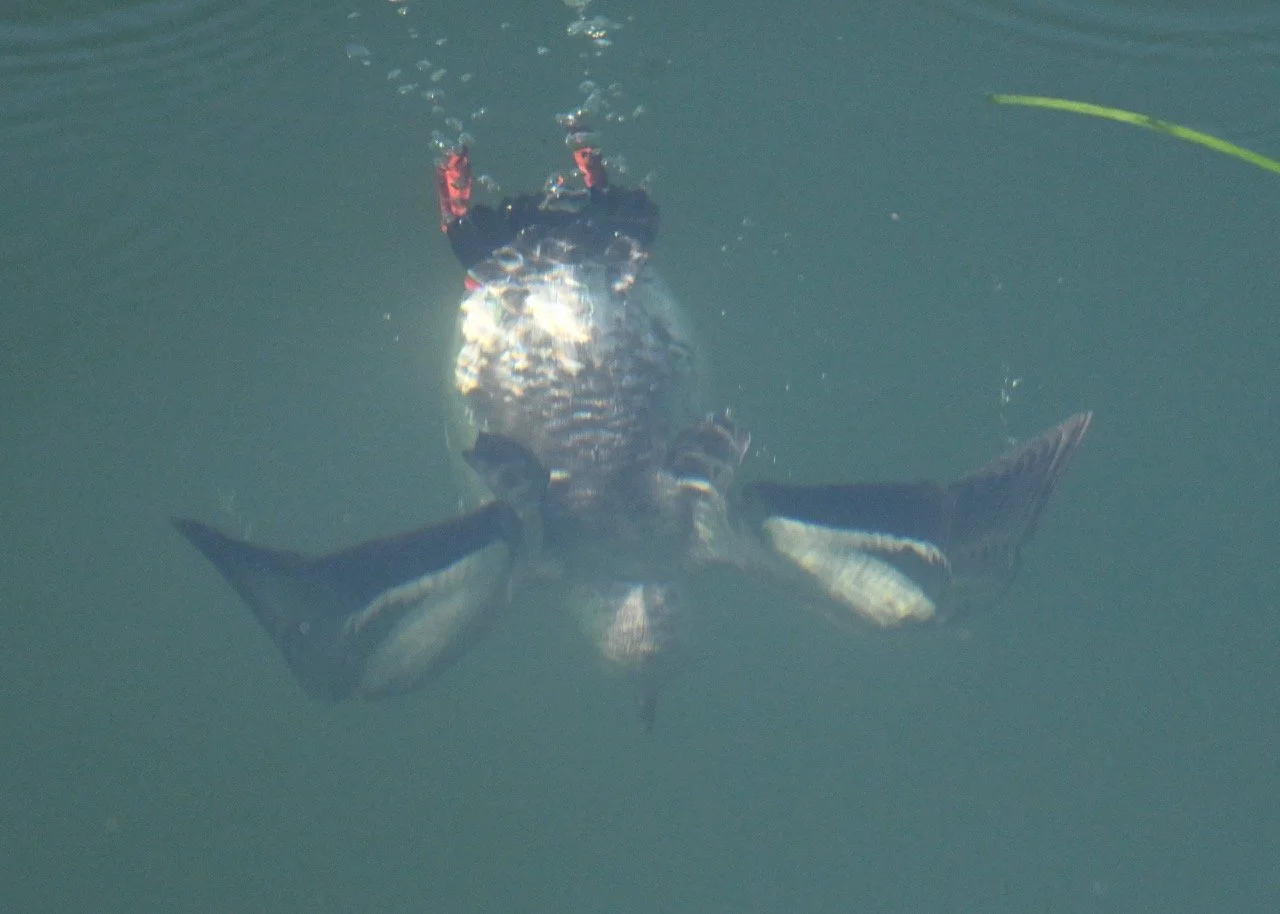
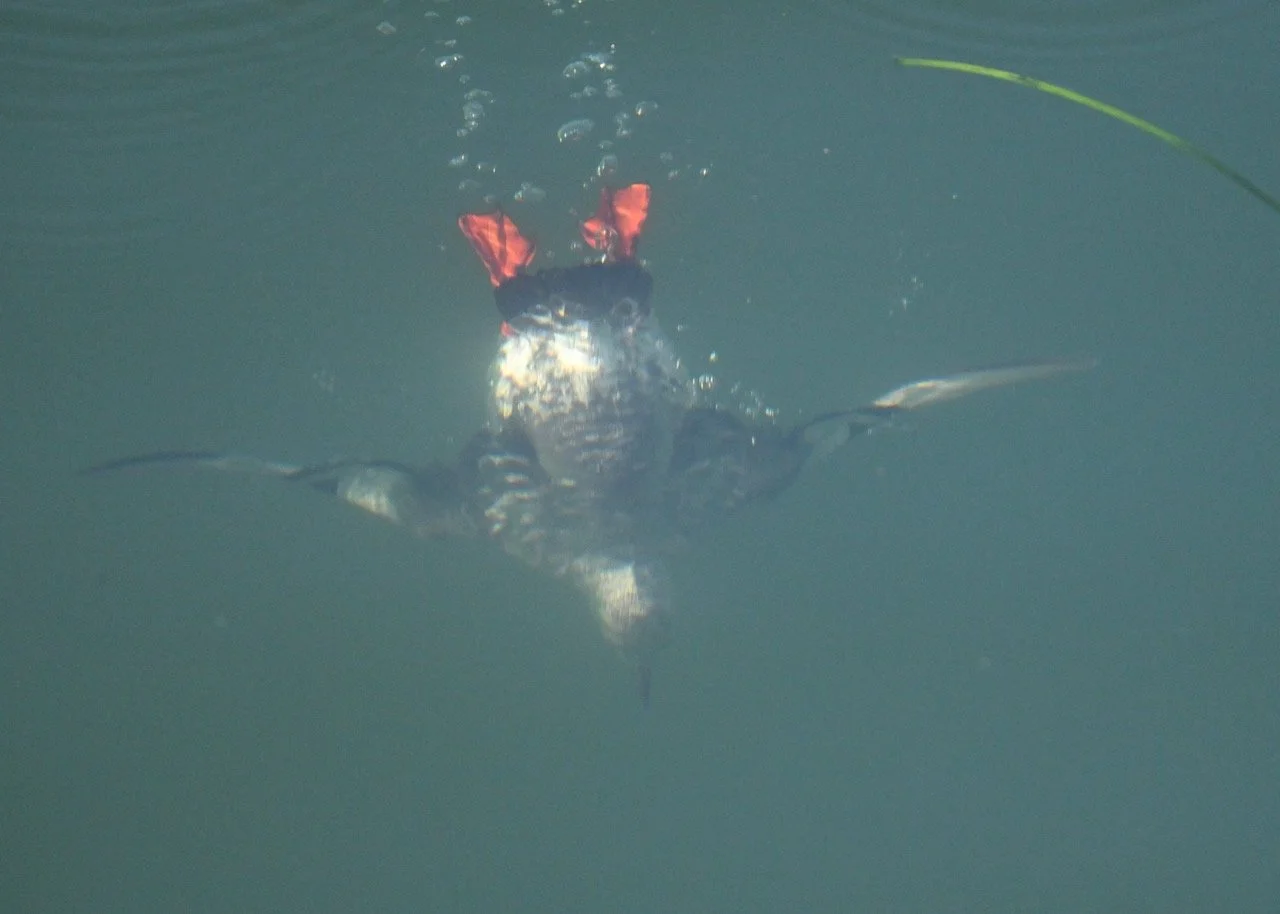
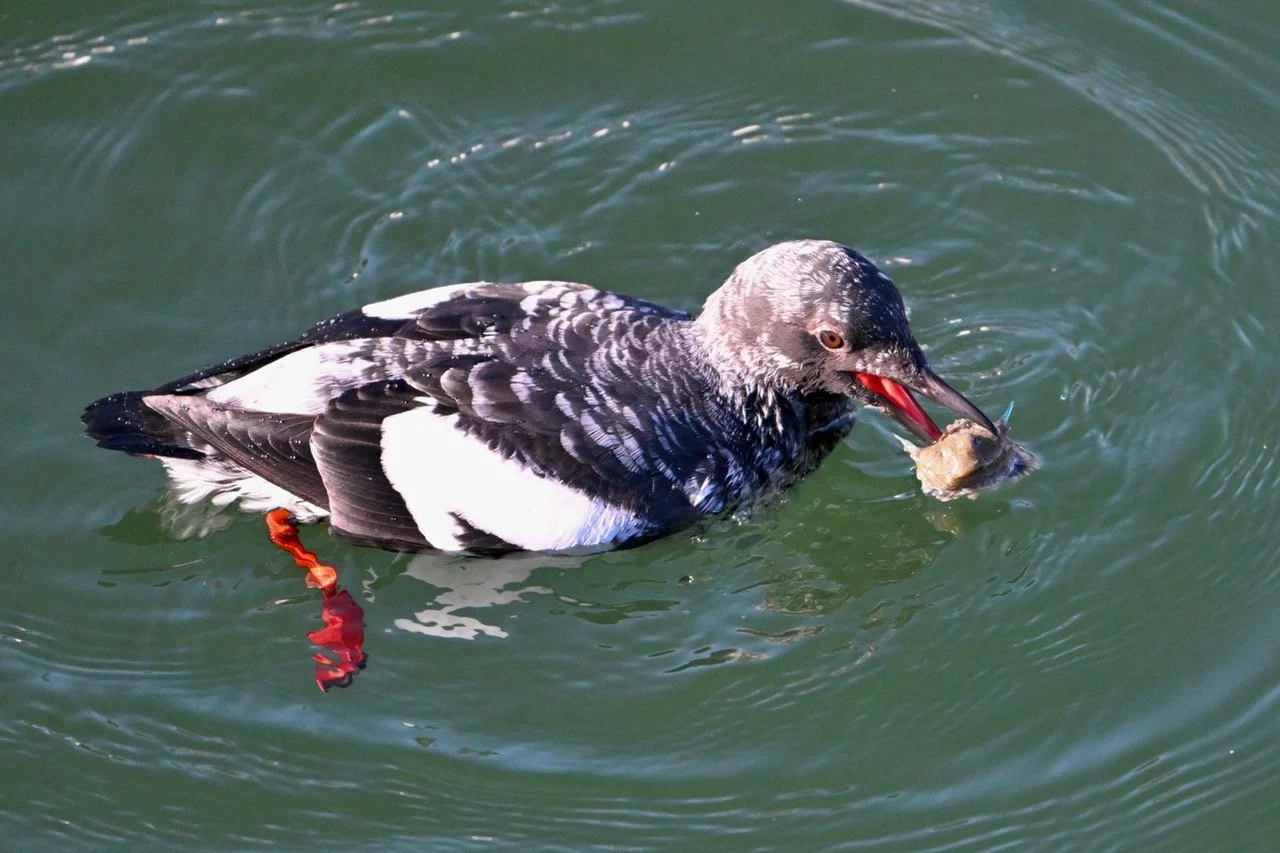
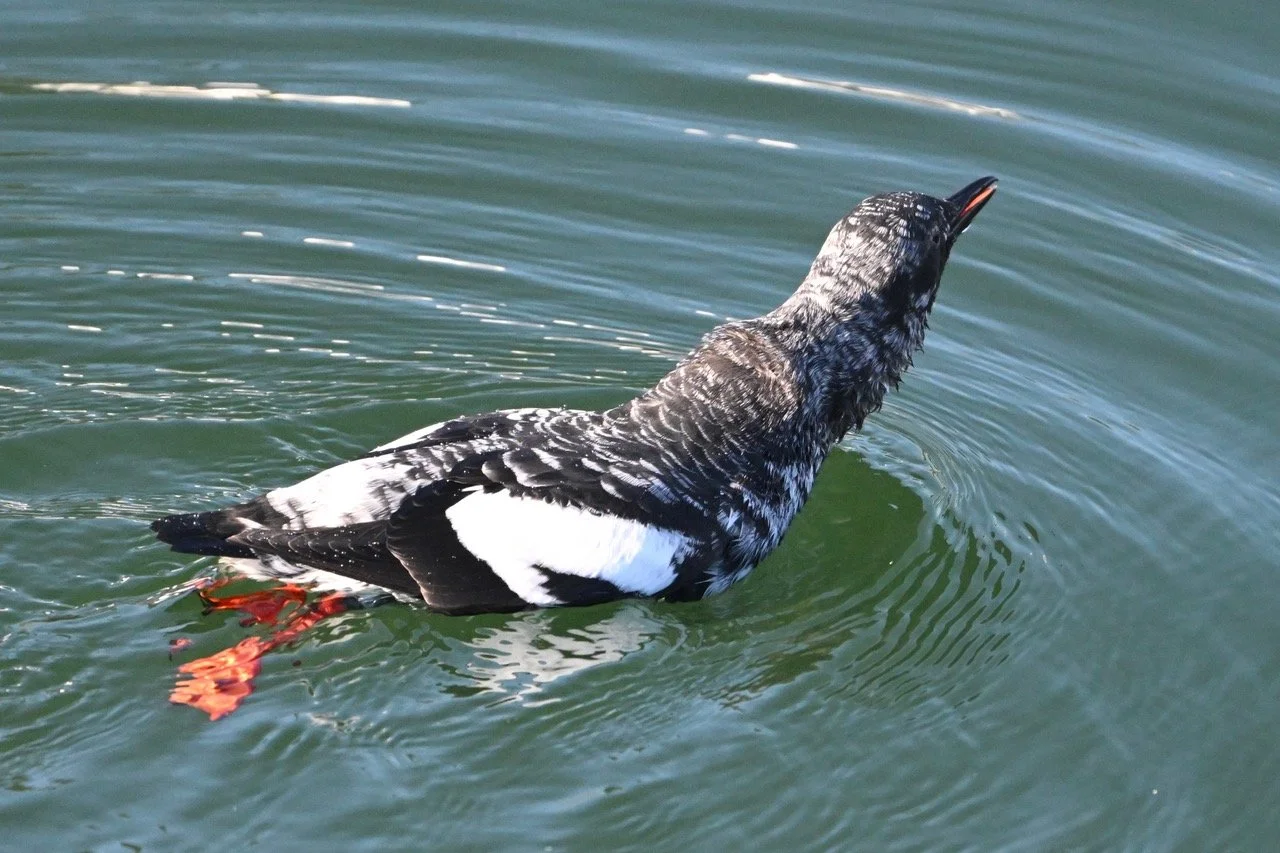
I will leave you with this sweet photo montage, taken back in February by Lac Pope. This PIGU overwintered at the Langley marina and Lac was able to get a perfect birdseye view from the dock, as it foraged and ate. We don’t have too many photos of guillemots swimming underwater, so these are especially cool! I just love the big gulp at the end! What a cutie. Nice work, Lac!!
Have a wonderful week, all! If you have any questions, please don’t hesitate to reach out to your regional coordinator or myself. I would also love to hear any interesting survey stories you have to share from week to week and see photos you’ve taken (fair warning, they may end up here!). Send those to shannon@pigeonguillemot.org.
Until next week!
Shannon