

Week 2: June 14th - 20th
It’s toasty out there, folks!! Thank goodness we are surveying in the early morning hours and out of the blazing sun before it gets too hot. Even so, make sure to wear your sunscreen and hats this week! It’s easy to get burned, especially if you’re sitting in direct sun.
Week one was pretty quiet, although it looks like we now have prey deliveries occurring at two network colonies. Brisco East, in the South Sound, saw a single gunnel delivery to a burrow last week. Upon peeking at our most recent data, a handful of our larger colonies experienced a large number of “no prey” visits to burrows—some of those surveys looked to be real head spinners! Several of our smaller colonies though, had very few to no interactions with the bluff. I anticipate that many PIGU are still incubating in their burrows or have yet to start, so the rush is yet to come.
I was at one such “sleepy” colony last week. We survey by boat, and at the end of the survey, a single PIGU ventured over to check us out. It seemed to think we were okay, and very slowly paddled its way back to the larger group. We are used to being inspected by small groups of guillemots—they really aren’t terribly shy unless they feel startled or threatened. They never cease to amaze me!
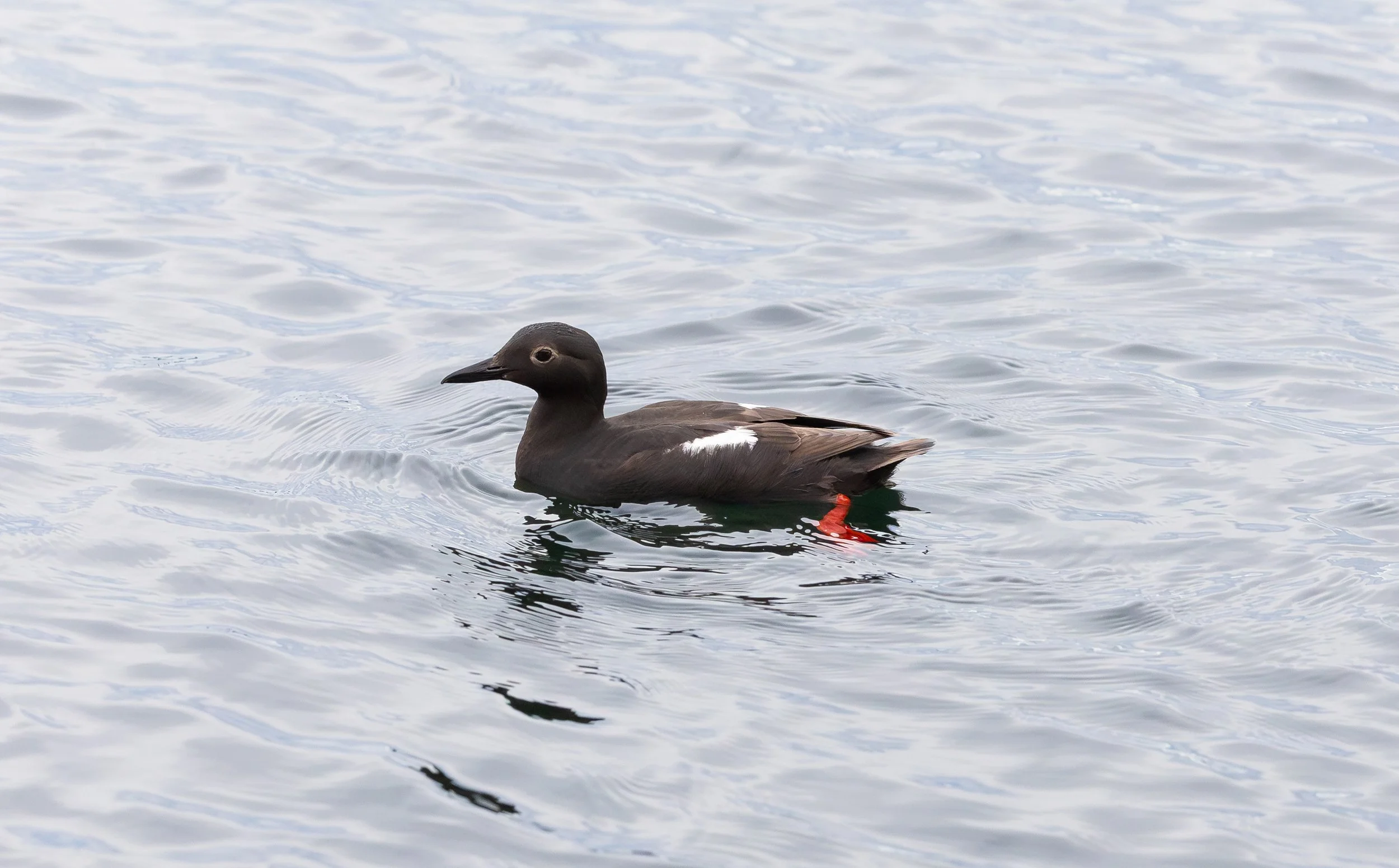
Curious Amsterdam Bay PIGU, checking out the surveyors! I think we passed muster.
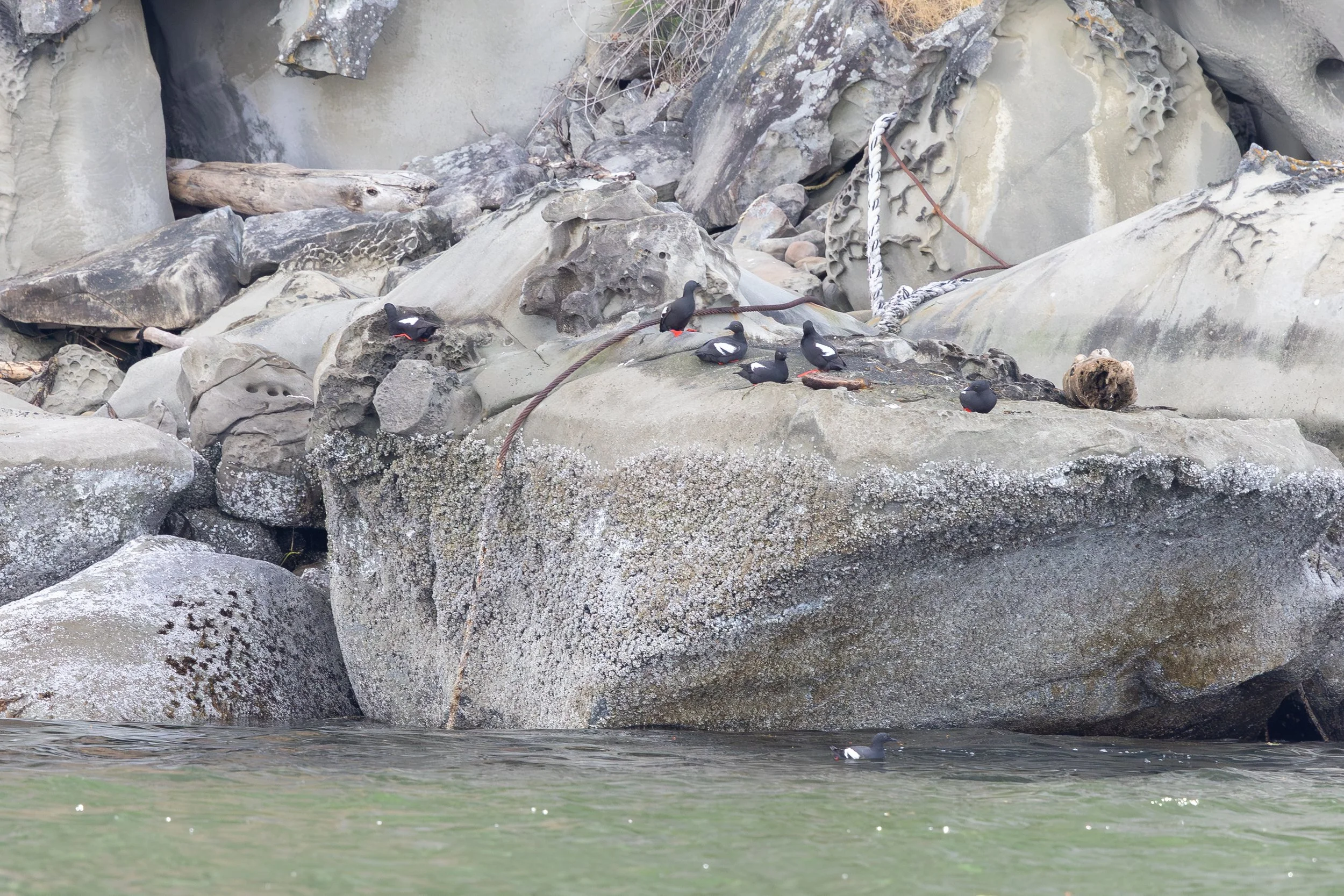
We often talk about the social nature of PIGU, and you may have noticed that guillemots don’t like to be left out. If one hops up on a rock, or log, or waddles up onto the beach, a handful will follow. After all, where one ventures, that must be the cool place to be! Here is a photo I took of PIGU rock sitting on Valdes Island. They sure have some enviable rocks up there!
I have some interesting PIGU findings to share with you from a recent study of PIGU breeding on Southeast Farallon Island, off the coast of California. Authors Solasz et al. (2026) tracked tagged guillemots as they traveled to their foraging sites and recorded prey types as they returned to deliver to chicks. They found that PIGU traveled up to ~2km and dove to average depths of 19 m (± 11.4 m) to obtain their prey. The max dive depth logged was 54 m (177 feet!) and the longest duration, nearly 3 minutes! They also found that females traveled farther and dove deeper than males to find prey. The maximum number of trips in a day by a single guillemot was 18!
Most foraging occurred in the hours between 6:00-10:00am, with another, smaller uptick happening in the afternoon, from 2:00-6:00pm. This reinforces why our protocol has us survey before 9:00am, as feeding declines significantly later in the morning and through midday. In the Farallones, the primary prey types are juvenile rockfish and sculpin, with a small number feeding flatfish, gunnels, shrimp, and crustaceans. I always find it fascinating to see details like this illuminated. There are still so many questions surrounding guillemot and bird behavior, in general, so anything we can glean helps us piece the puzzle together. It’s also interesting how different the diets can be between geographically separated populations of PIGU. This is something to watch closely as our oceans warm and prey abundance and composition changes from region to region.
If you’d like to read the full article, titled Fine-scale foraging behavior of chick-provisioning pigeon guillemots Cepphus columba, you can find it here.
I’ll leave you with one more photo of Lac Pope’s diving PIGU from the Langley Marina (two others were posted in Week -1). I felt inspired by the talk of foraging and diving in Stella Solasz’s article! These guys really excel at diving!
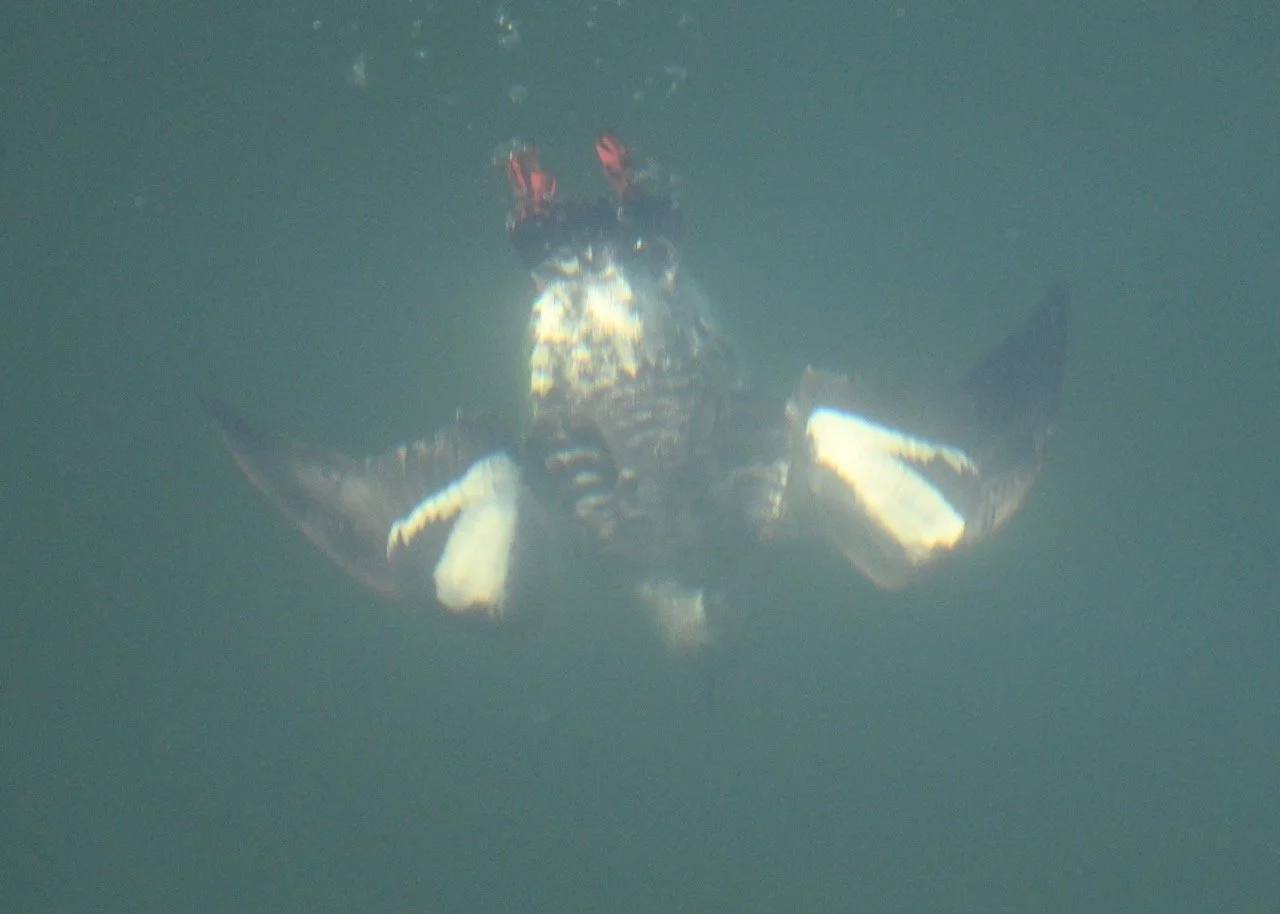
Photo: Lac Pope
I hope you all have a wonderful week and enjoy your time with the PIGU! Thank you, as always, for your dedication and care!
Shannon