

Week 13: August 25th - 31st
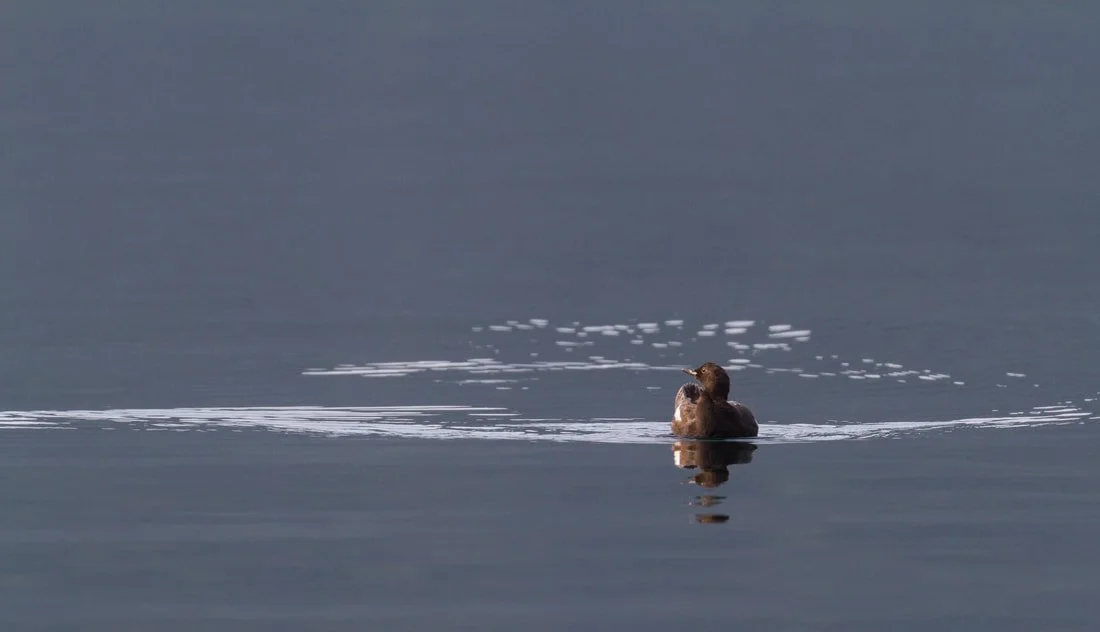
Hello dedicated Guillemoteers!
In talking to many of you over the last week, it's clear that the season is winding down quickly, as it tends to do. We have a handful of colonies that are still active and looking to survey into September, but many have either closed down or are in their two week period with no activity. And so, this is not farewell, but it will be the last official Weekly Update of the 2024 PIGU Breeding season. I promise though, if I hear any interesting stories or have any important information to share over the next month, I will pass those along!!
This time in the season always gives me mixed feelings. I'm sad to see our PIGU go farther from shore, but I also find myself reflecting on our season and feeling thankful for our connection to each other, to the birds, and to this place. We truly are a team and your dedication and effort do not go unnoticed. It's not always easy to get out every week in the early morning, but we do it time and again because we know how important it is to continue monitoring this special bird. I've done three presentations to outside groups so far this season, and I have to say, when I've talked about our volunteers and our amazing network, I've felt so much pride. I recognize how much we are able to do by banding together like this, and it really is an incredible thing! I hope you feel this way too!
I had a request last week to give some side by side comparisons of adult non-breeding birds and juvenile birds, just to give an idea what to look for. I should preemptively say that I'm not even close to an expert, but I do know that we can generally tell juveniles from adults by looking for a distinct, white wing patch in adults. In juveniles, the wing patch takes on a more "barred" appearance. Even this can be tricky though, as molting adult PGs often look mottled, with their wing patches rough and worn, and it really can be hard to tell one from the other! So this is a fun guessing game for me. :)
In the following pic, I would call both PGs adults in non-breeding (aka basic) plumage. The one on left looks a bit darker and it may still be in a transitional stage. There are technical terms for all of these stages, but it gets complicated, so I'll keep it simple! (When the next Cornell Birds of the World PIGU species account update finally comes out, there will be some wonderful descriptions of the different plumage stages, so stay tuned for that!)
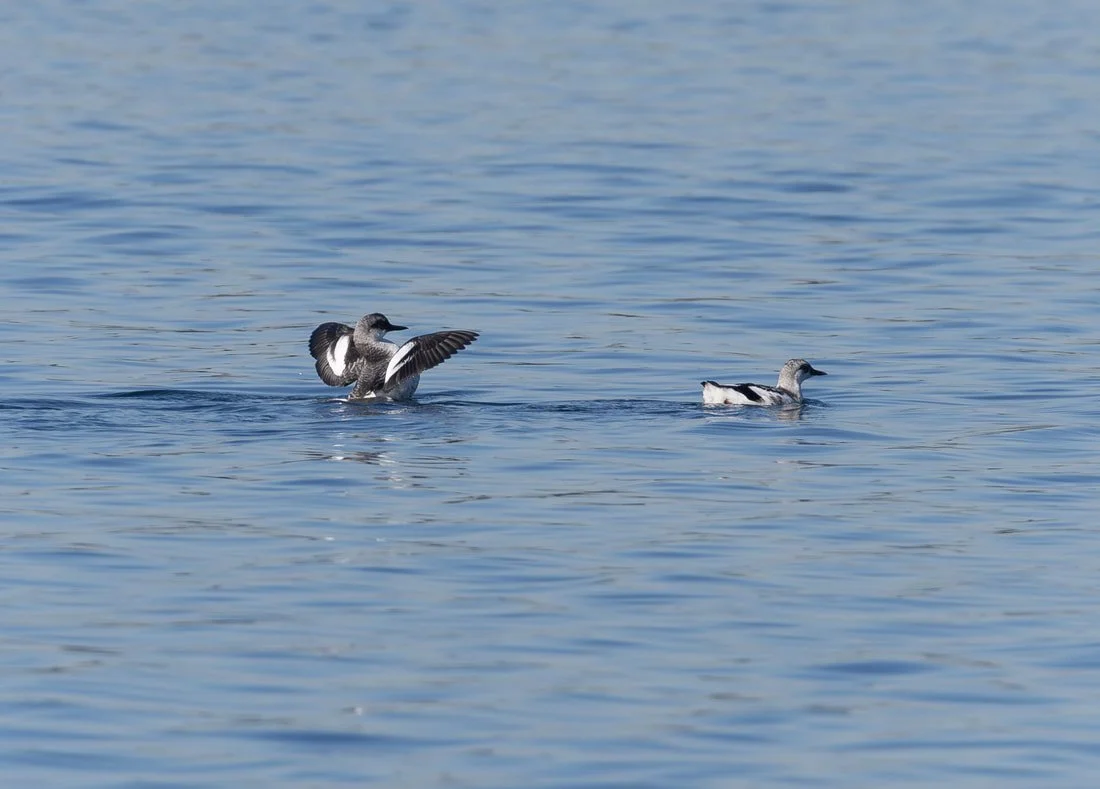
In the next photo, I would say the PG on the left is a juvenile and the one on the right is likely an adult, based on the juvie's non distinct wing patch. From what I can tell, the right hand bird has distinct wing patches, but I could be wrong.
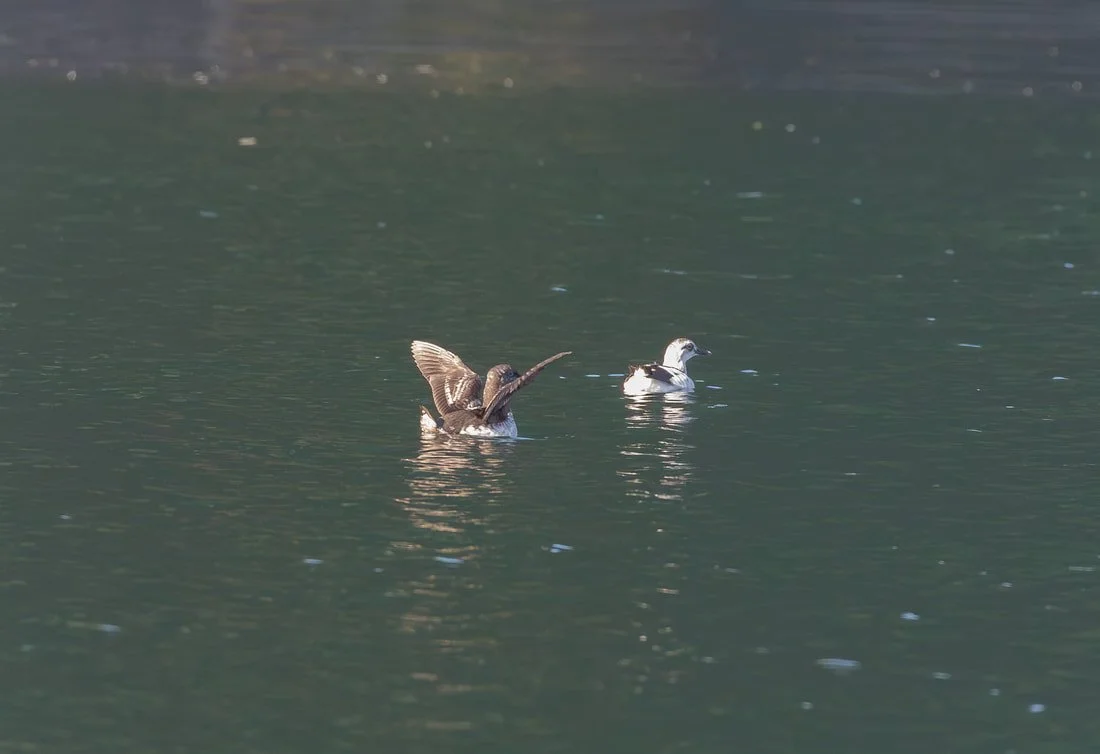
Looking at the bird below, my guess would be another transitional adult, going into basic plumage (nearly there!)
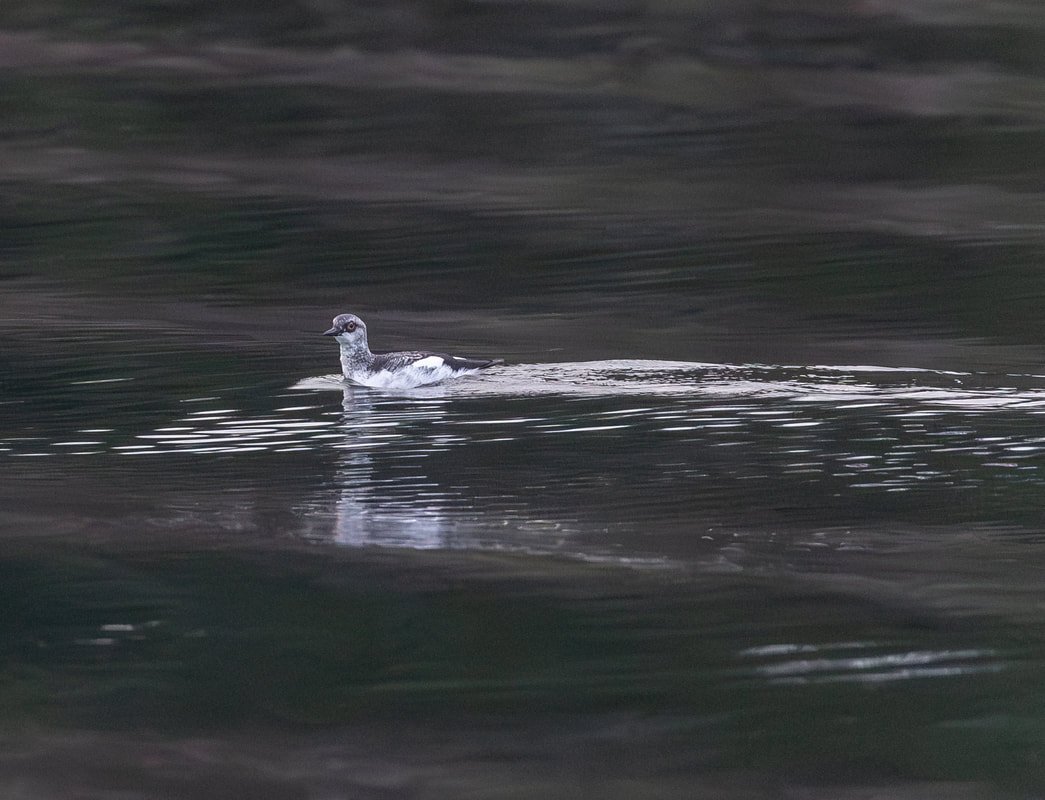
I would guess this one is a juvenile based on the dark forehead and barred wing patch.
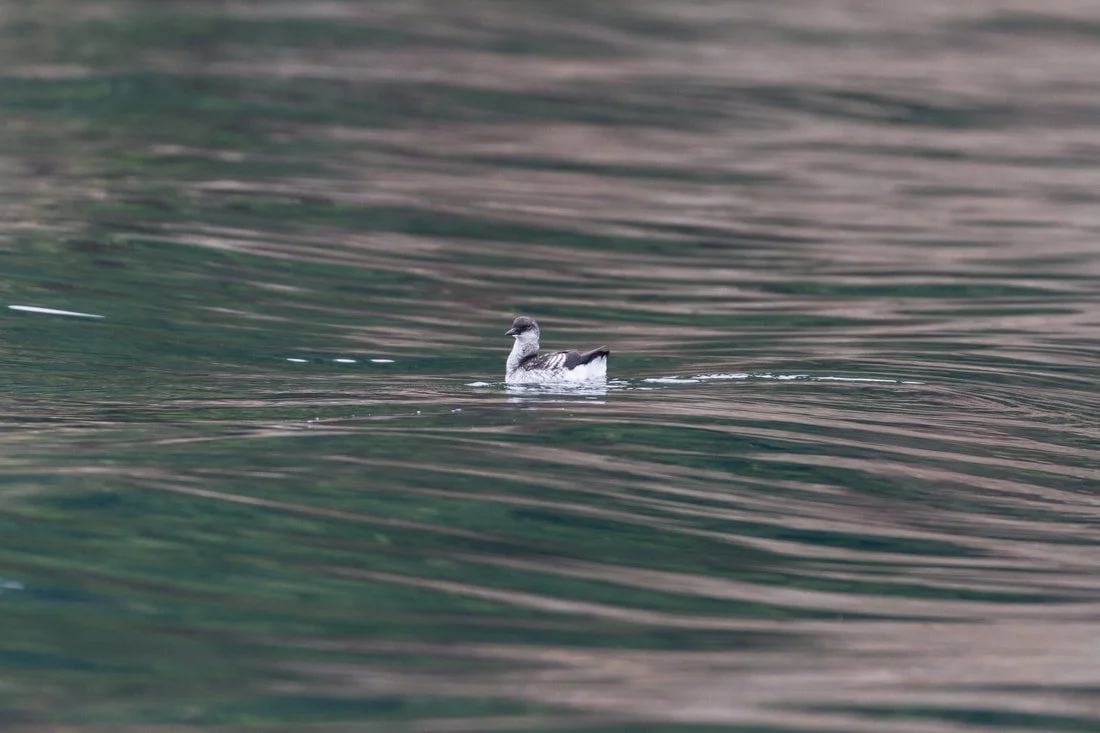
This group is a little tougher, but I believe it to be a mix of adult and "juvenile", or at least, immature PIGU. This was taken later in the winter, so the juveniles no longer look as much like fledglings. The one in the middle, and just to the right of it, particularly strike me as a younger birds because of the non-distinct wing patches. It would really help if they would all flap their wings at once! :D
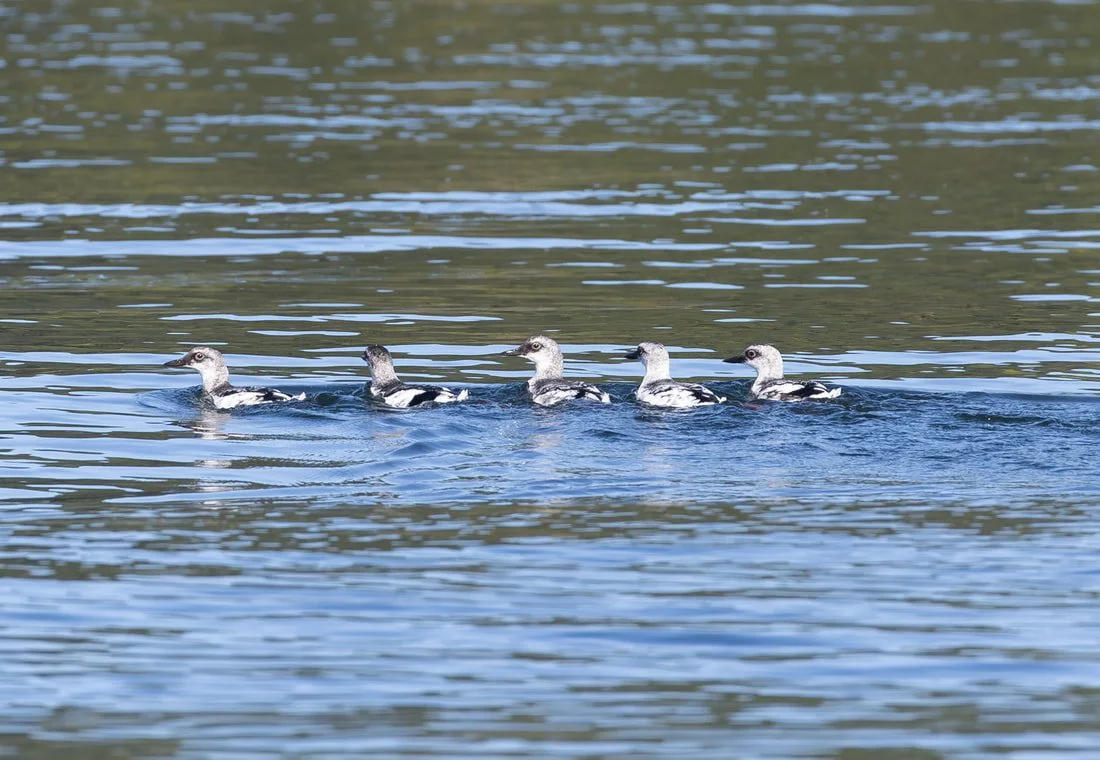
If you have your own guesses, please do let me know! Monitoring PIGU is a journey of learning, and there really is something new to learn every day!
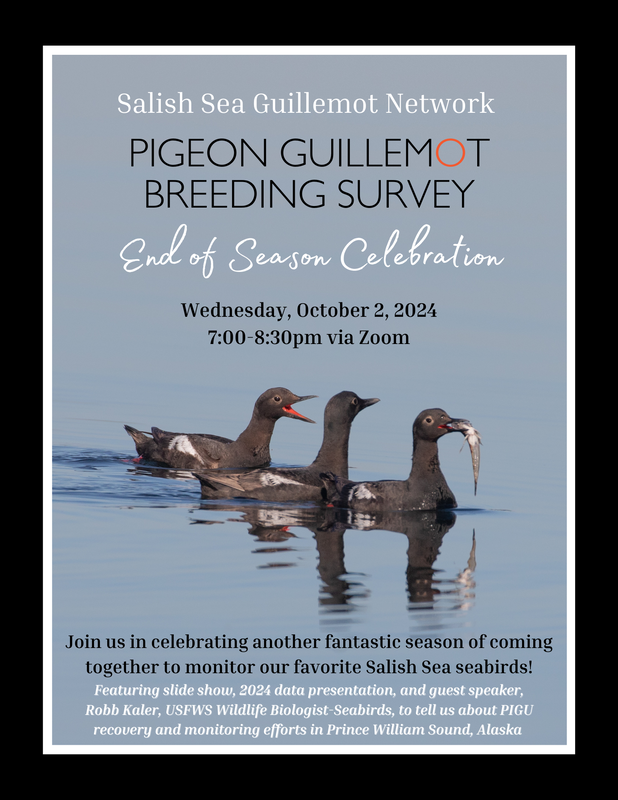
One last thing...Our End of Season Celebration will be held on Wednesday, October 2nd, at 7:00pm via Zoom. You should be receiving the link from your regional coordinator, but if you can't find it or didn't receive one, just shoot me a message (guillemotresearch@gmail.com) and I can send it to you. I am excited for our slideshow, data presentation, and guest speaker, and of course, I look forward to seeing you all!
As always, have a wonderful week! If you have any questions as we close out the season, don't hesitate to reach out!
Take care,
Shannon
P.S. All photos by me this week. :)