Week 1: June 2nd - 8th
Wahoo!! We made it to Week 1, Day 1! Is everybody ready to survey?
First off, a huge thank you to all of our surveyors, regional admins, colony leads, and regional leads for all of the work you've put into getting ready for the season. It's a heavy lift, but everyone has put so much positive energy into getting this off the ground, and it hasn't gone unnoticed!! I hope you're feeling good and excited to get out there and watch the birds!
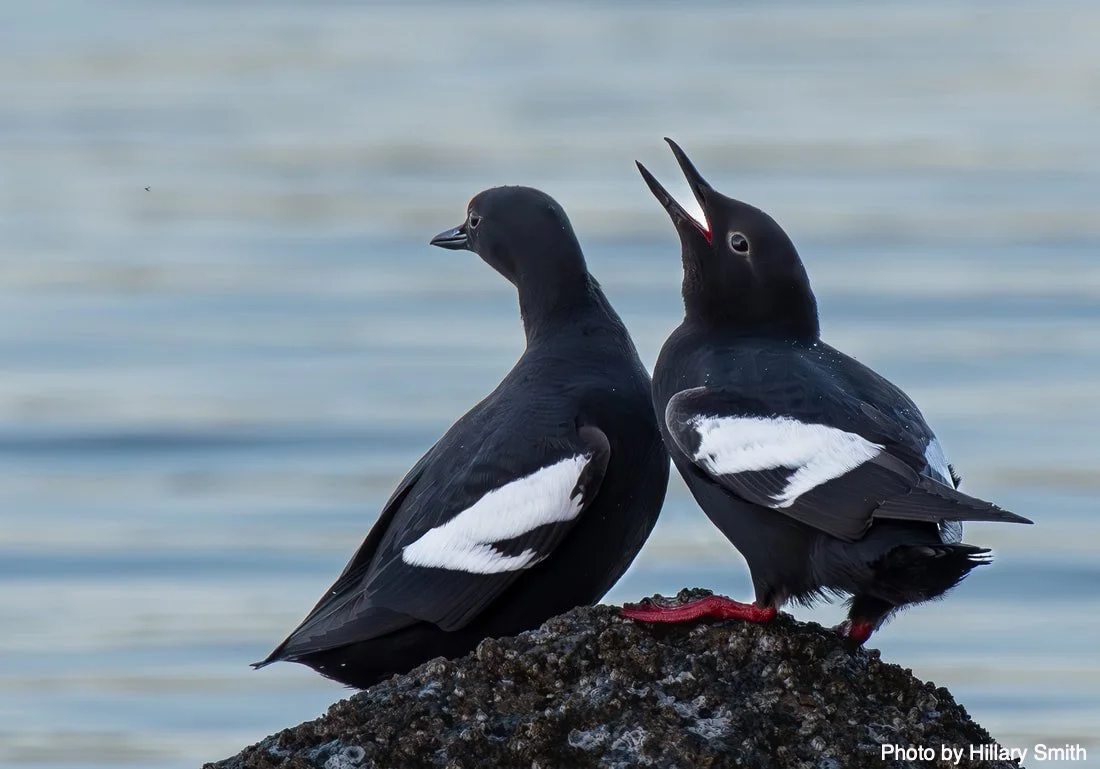
Has anyone been out at their colonies in the preseason to see what kind of activity is happening? Hillary Smith reported on activity at her Isthmus Beach colony--and I think it's safe to say, she's going to see some prey deliveries soon! She also sent me some fabulous pics. Do you recognize this "hunch whistle"?
I managed to catch some synchronized flying and water games down here in the South Sound! :D
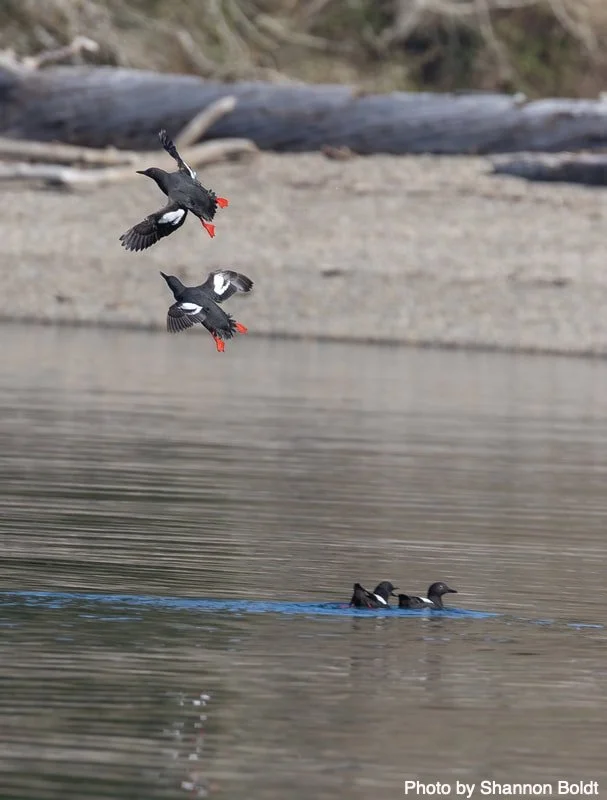
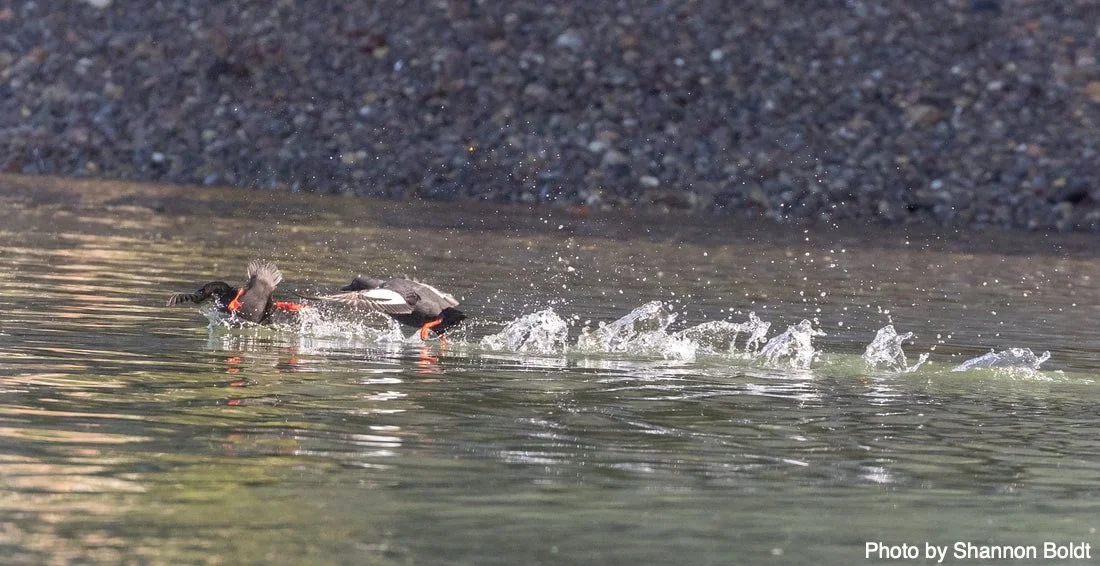
Watching these guys in action never gets old! They may be just following their seasonal instincts, but it's so much fun to witness.
I'd like to encourage everyone to keep in touch and send me any interesting stories, observations, or pics you might have--you never know, they could make the weekly update! I love sharing stories from across the regions. Not only is it fun to hear about everything PIGU, I love that it connects us all as part of a larger group. It's also interesting to experience the unique aspects of each region through pics and anecdotes.
Before I sign out, let's talk about disturbances. I've had a few folks from different regions reach out to clarify, as this aspect of the survey can sometimes feel like a bit of a gray area--so I thought it might be a good topic to address for everyone here. The key to determining what constitutes a disturbance, and therefore an instance you should record on the datasheet, is whether or not the event causes most PIGU to change their behavior (e.g. fleeing from the bluff or nearshore, diving, etc). Sometimes what we perceive as a disturbance doesn't result in a reaction from the PIGU, and in that case, we should not record it as such. The start time of the disturbance is the time at which the birds begin to react, and the end time is the time at which a majority return to normal PIGU behavior. This is a bit subjective, but I think you'll get a pretty good feel just by being in tune with your birds.
If you survey at a long, extended bluff with multiple observation points, a disturbance at one end may not impact the birds at the other. In this case, you can still document a disturbance if most of the birds at your observation point react. On the combined datasheet, this distinction can be added in the disturbance description note. For example, you could record the disturbance start and stop times and a note such as, "Eagle landed in a tree and all birds at site A flew from shore." I hope this helps! If you have any other questions or have a tricky situation come up, feel free to email me, and we can work through it together.
That's all for now! I hope everyone has a wonderful week surveying out there. I can't wait to hear what's happening around the Salish Sea in Week 1!!
— Shannon
P.S. Make sure to save the date for Whidbey's 2024 International Guillemot Appreciation Day Celebration!! All are welcome to attend and we'd love the chance to catch up with folks from across the regions!