

Week 9: July 28th - August 3rd
In Week 9, we bid farewell to July and say hello to August. This next month will see most colonies close down for the season, and in fact for some, weeks 9 and 10 will be the last two of surveying. So let's start off the update with a few words about closing down colonies.
According to our protocol, we need to survey for a minimum of 10 weeks. We say minimum because you may close down after 10 weeks only if you've observed two consecutive weeks of no activity at your colony. If in week 9 you still observe evidence of breeding activities, continue surveying until you have those 2 weeks of no activity behind you. This means if you see any of the following, keep on keeping on!
Burrow visits of any kind or ledge sitting
Groups of PIGU still congregating and socializing in front of the bluff
PIGU on the water holding fish (even if they don't deliver)
Visual confirmation of chick(s) in the burrow
It's a good idea to check in with your coordinators before deciding to stop surveying for the season, as this will ensure that a colony isn't shut down prematurely. If you're not sure, feel free to reach out for clarifications.
Speaking of chicks in burrows, Lac Pope spied a chick who appeared to be building up confidence to take its leap into the world! You can imagine I gave out a squee when I saw these incredible photos. These are from the Rolling Hills Colony on Whidbey Island. Thank you for sharing, Lac!
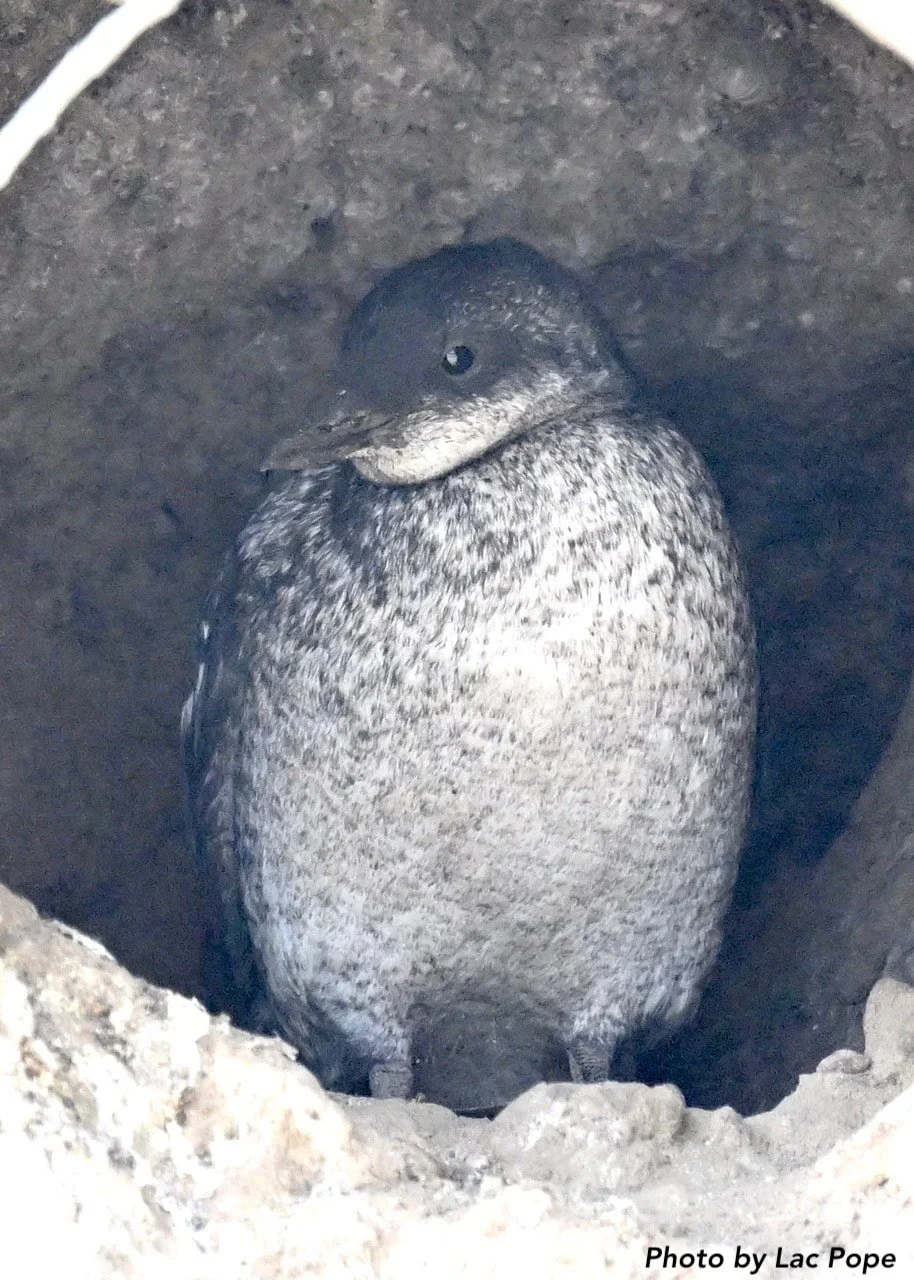
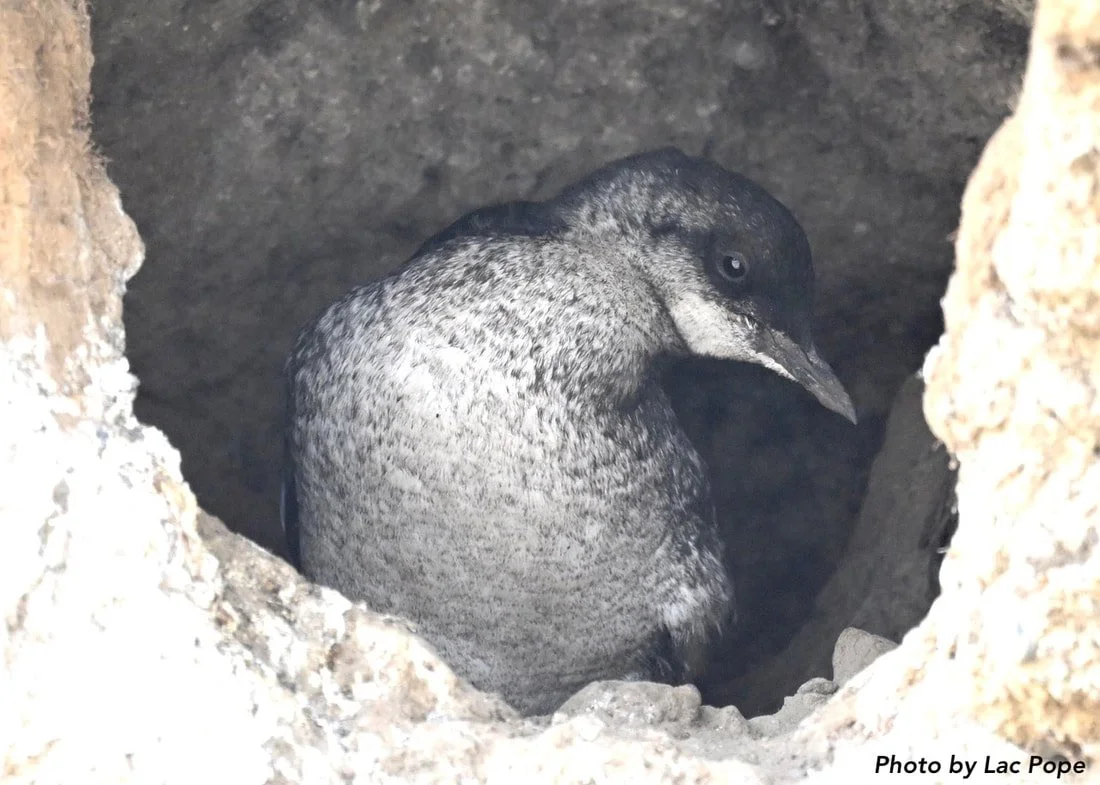
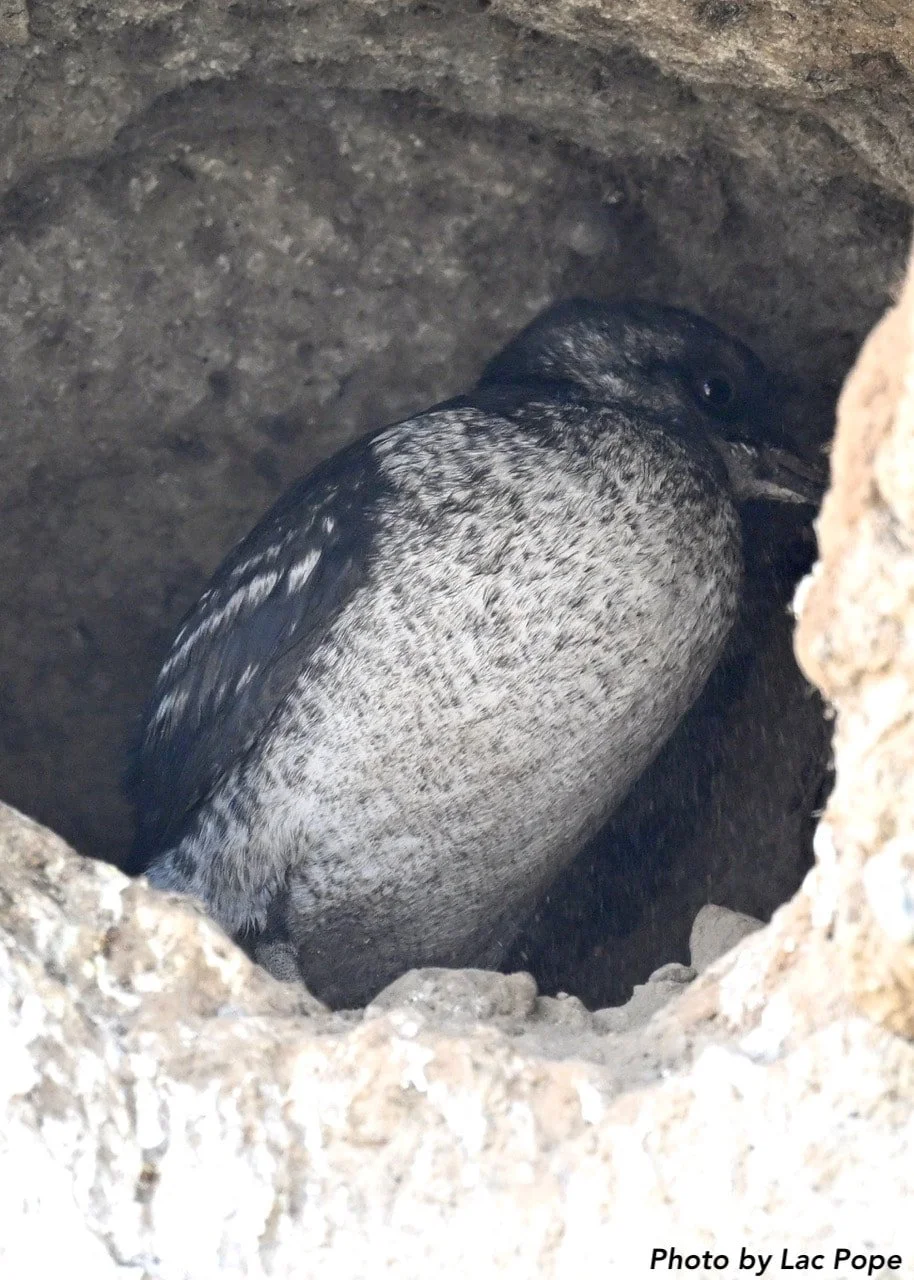
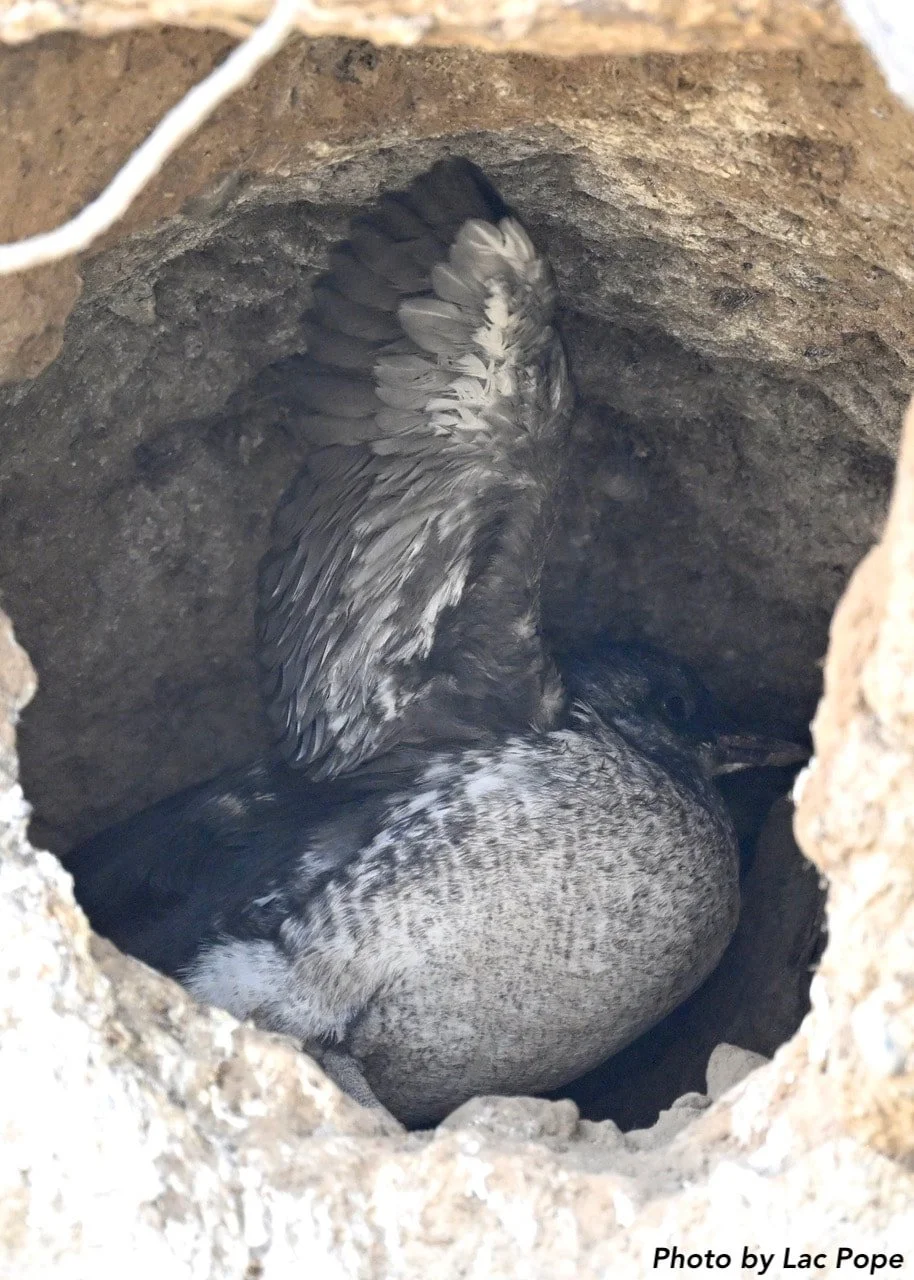
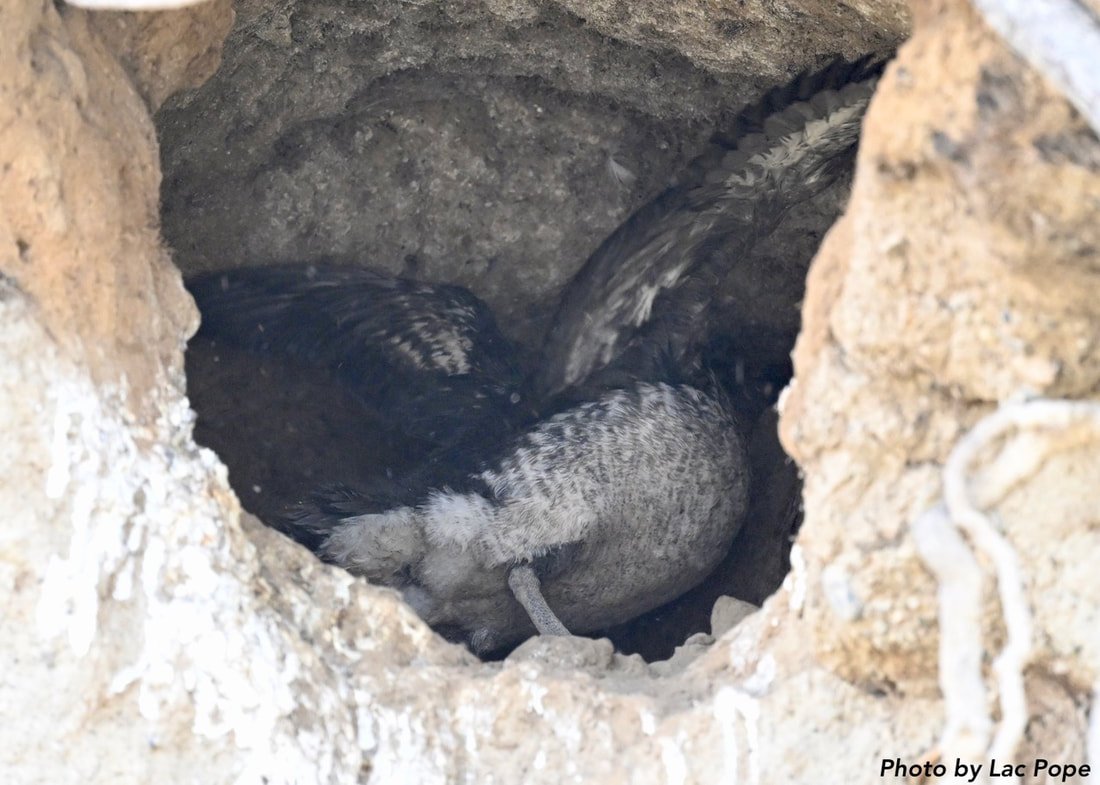
If you're hoping to catch a chick fledge, know that they usually do so in the evening under the cover of dusk or dark. In a study done on Alcatraz, by Victoria Seher, cameras were used to observe all breeding activity, including chicks fledging! It was found that 73% of chicks fledged in the evening, sometime between 8:00-10:00pm. The remaining chicks fledged in the very early morning. At the time of fledging, none of the parent PIGU were present. In fact, in most cases the parents returned in the morning with prey to find the burrows empty.
PIGU chicks can swim and catch fish for themselves as soon as they're safe on the water. They can't fly, however, and tend to drift and swim with the tides and currents for the first 2-3 weeks. There have been very few reports of PIGU chicks begging from adults on the water, but most of the time they seem to simply float away from the colony shortly after leaving the burrow.
Here is the bibliography reference to the Alcatraz study, in case you'd like to read more. By using cameras, Ms. Seher was able to collect some amazingly detailed data that we aren't able to gather from down on the beach!
Sehrer, V. (2016). Breeding Ecology of Pigeon Guillemots (Cepphus Columba) on Alcatraz Island, California (pp. 1–72). https://scholarworks.calstate.edu/downloads/41687k16j
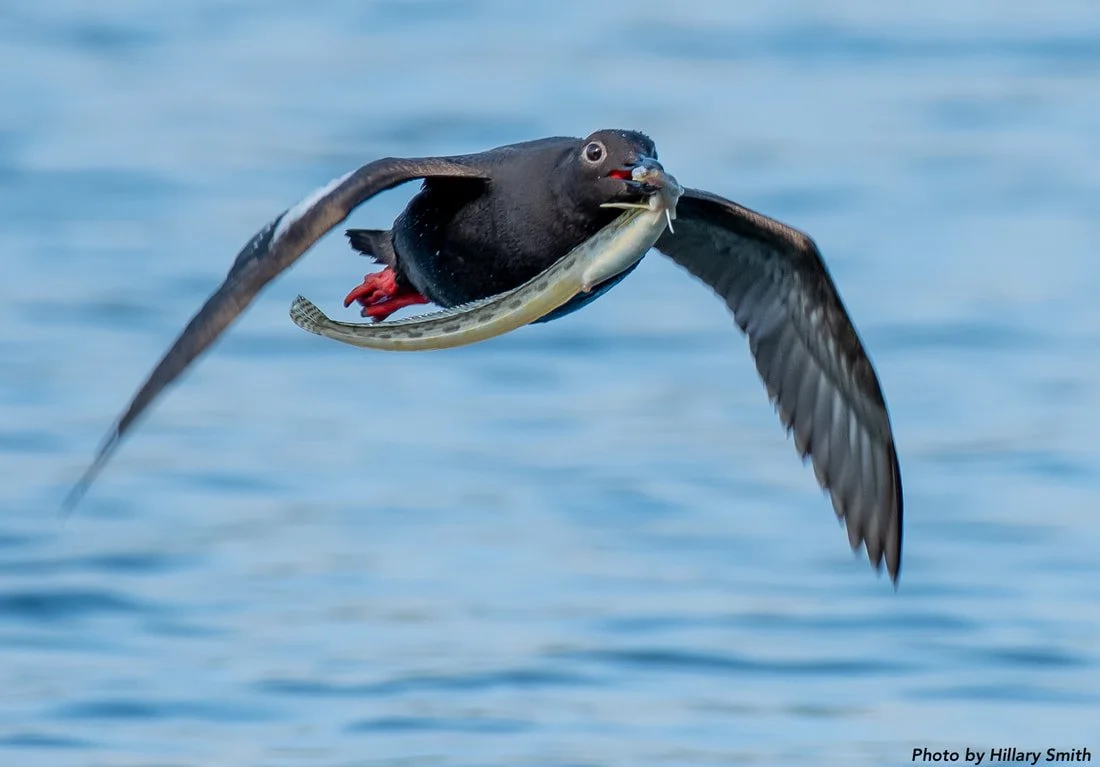
And last week I talked about prey getting bigger and bigger--and wondering, how in the world a chick was going to wolf those down...well, this is what I was talking about! Hillary Smith captured a PIGU with a very LARGE Snake Prickleback out for delivery. The fish looks longer than the bird!! Eek!
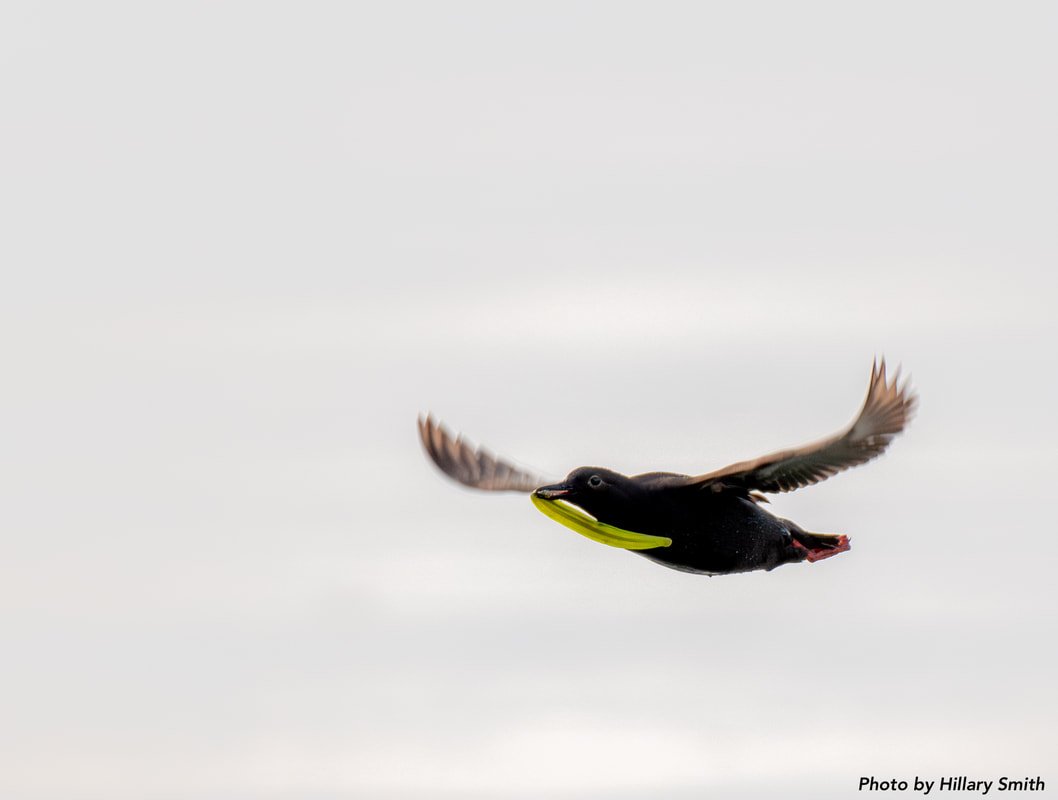
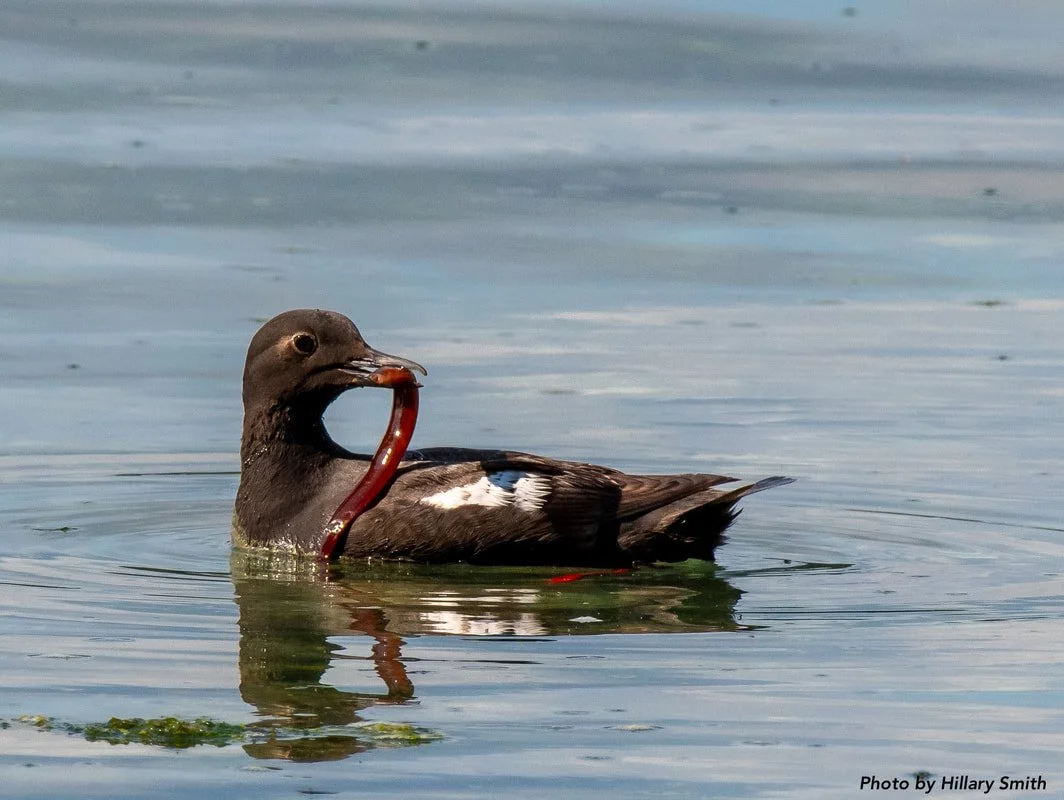
She also caught some of the cool color variations we sometimes see in gunnels destined for the mouths of chicks--red and green!
And just a reminder, if you haven't already, don't forget to send me your colony team selfies and videos! Our season is winding down, and I'd love to have as many colonies submit photos as possible, before everything wraps up.
That's it for now! Here's to a wonderful week ahead!
— Shannon