

Week 11: August 11th - 27th
At this point in the season, it often feels as if time has both flown by and started to run long--especially as burrow activity begins to slow. Does anyone else feel this too? Looking at the data, I can see that indeed, we have put in many hours--over 3147 in fact. Wow, seeing our collective effort quantified in numbers like this leaves me awestruck and beaming with appreciation at what we've accomplished thus far, working together. And we're not done yet!!
At our SSGN meeting last week, we learned that many, if not most, colonies are still going strong. Some of you even talked of new burrows becoming active in the last week or two. It appears that several colonies may once again run into the first week or two of September. With that being said, thank you to everyone for putting in these hours and showing up every week to see this season through! In the end, this will help us get the best picture we can of what is happening at PIGU colonies throughout the Salish Sea!
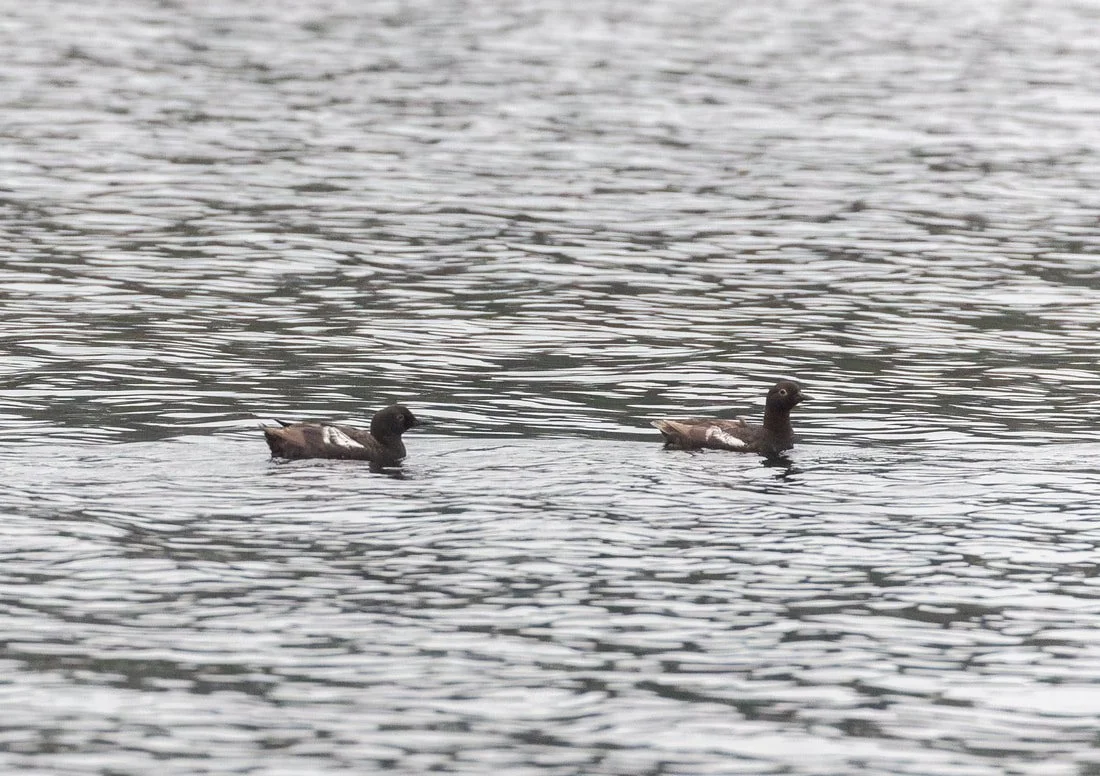
Don't be surprised if over the next few weeks your PIGU begin to look different. Their feathers may start to take on a lighter tint, more of a brown than black, and the edges may look worn. This is because they will molt into their "basic" plumage soon, which is their non-breeding plumage. In a few more weeks, they'll take on an even more mottled appearance, and before we know it, they will be mostly white and sooty, with black accents. I noticed that the PIGU at my colony were noticeably lighter last week, even as they were still delivering prey to burrows. This isn't the best pic--it was taken Saturday in early morning low light and cropped, but hopefully you'll see what I mean. Changes are coming soon!
We've had two more bird mortality findings on the beach on Whidbey Island last week. They were not PIGU this time, but a gull and a crow. One appeared to be a predation event. Surveyors collected the crow that they suspected may have had a virus, and following Katie Haman's instructions, they double bagged it, put it on ice, and contacted Katie. While this was an understandably sad and disturbing experience for those involved, they also felt better in knowing what to do and how to proceed, while protecting themselves. It makes Katie's guidance to us feel even more timely. Unfortunately, Katie was not able to take the bird (it was too far decayed), but she was able to pass along that they've had many reports of crows suspected to have reovirus. So, if you do come across a dead crow or other bird, please make sure to wear gloves and handle with care. Also, it's good to remind surveyors to do beach checks following their surveys, if they have time, particularly directly under the burrows. Two of the dead chicks reported this season were found during these post survey checks.
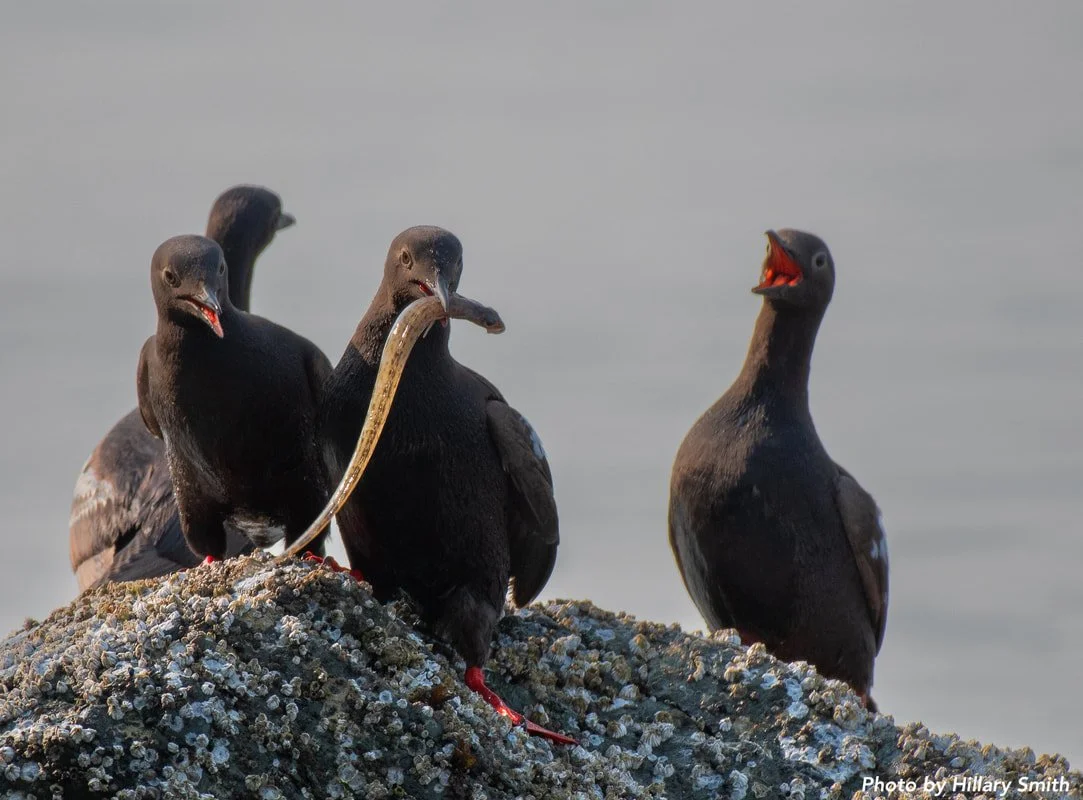
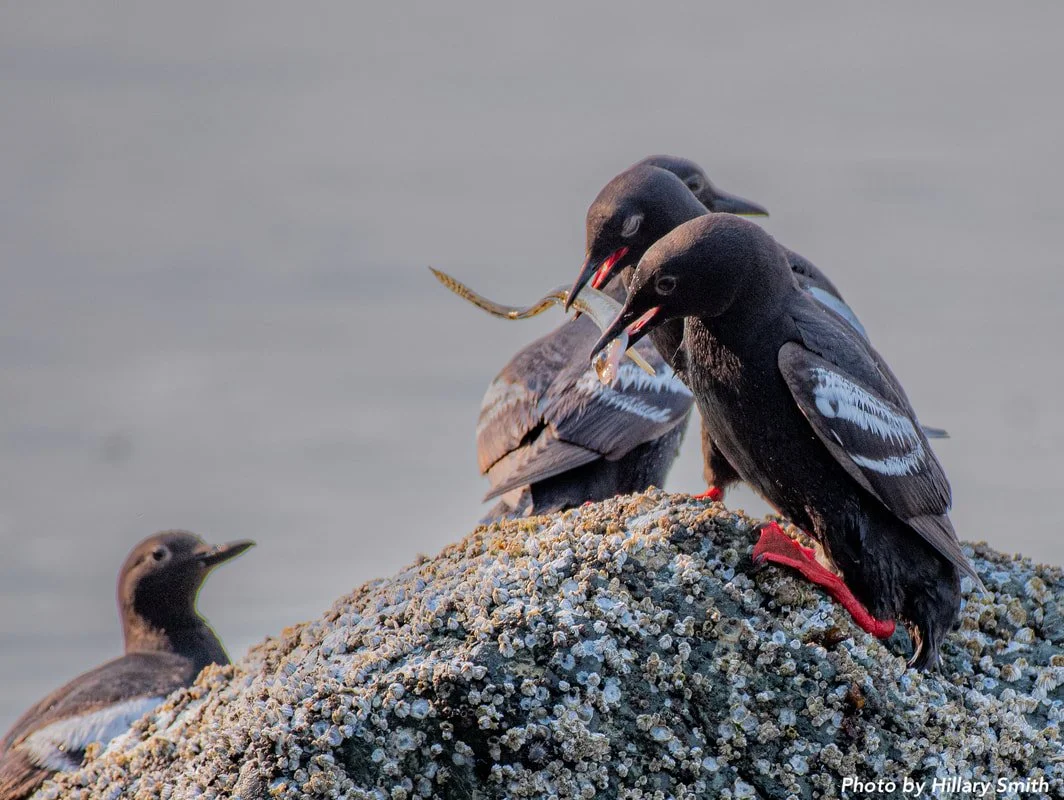
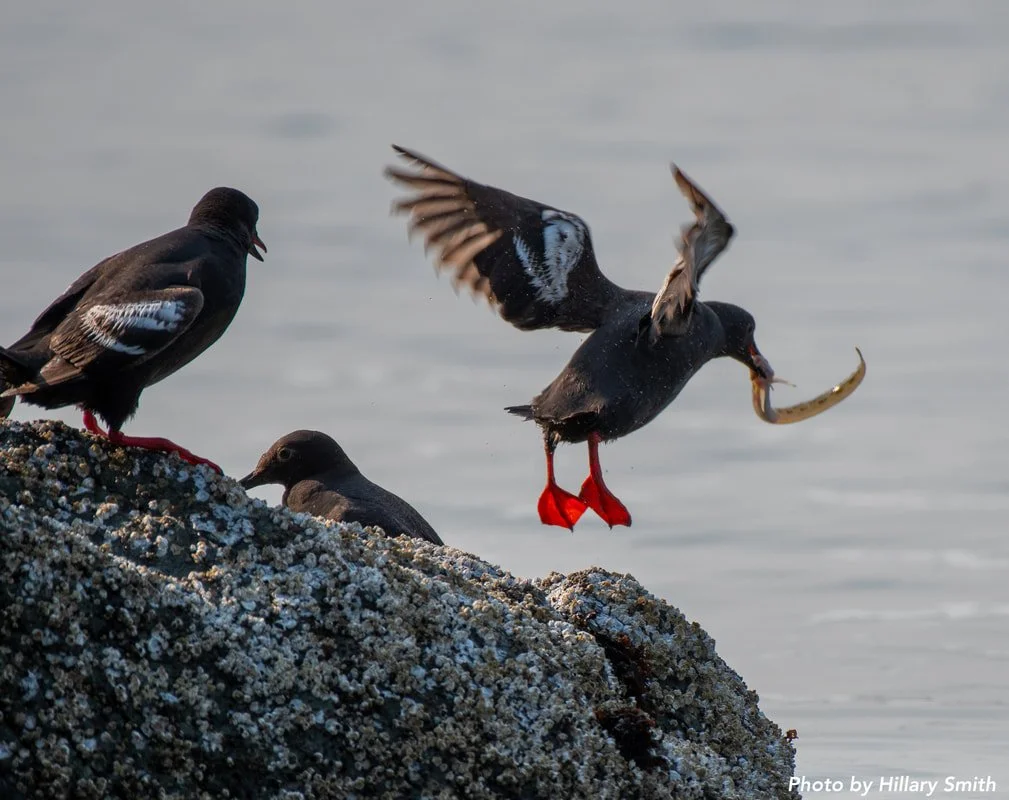
So, let's leave this on a happy note--or maybe more like a tickled note...Hillary Smith relayed a story to me about a PIGU at her colony that her team likes to call "Nervous Nelly". NN will often sit nervously and hold a fish for the entire survey hour. It also makes many attempts to deliver, only to abort time and again, once even dropping the fish. Fortunately, Nelly has a mate that gets the job done. The last time Hillary went out to observe her colony, Nelly was holding a snake prickleback, and eventually, another PIGU stole the fish and ate it! At least it didn't go to waste. Perhaps this is a first time PIGU parent who is still getting the hang of things? If only we knew! :)
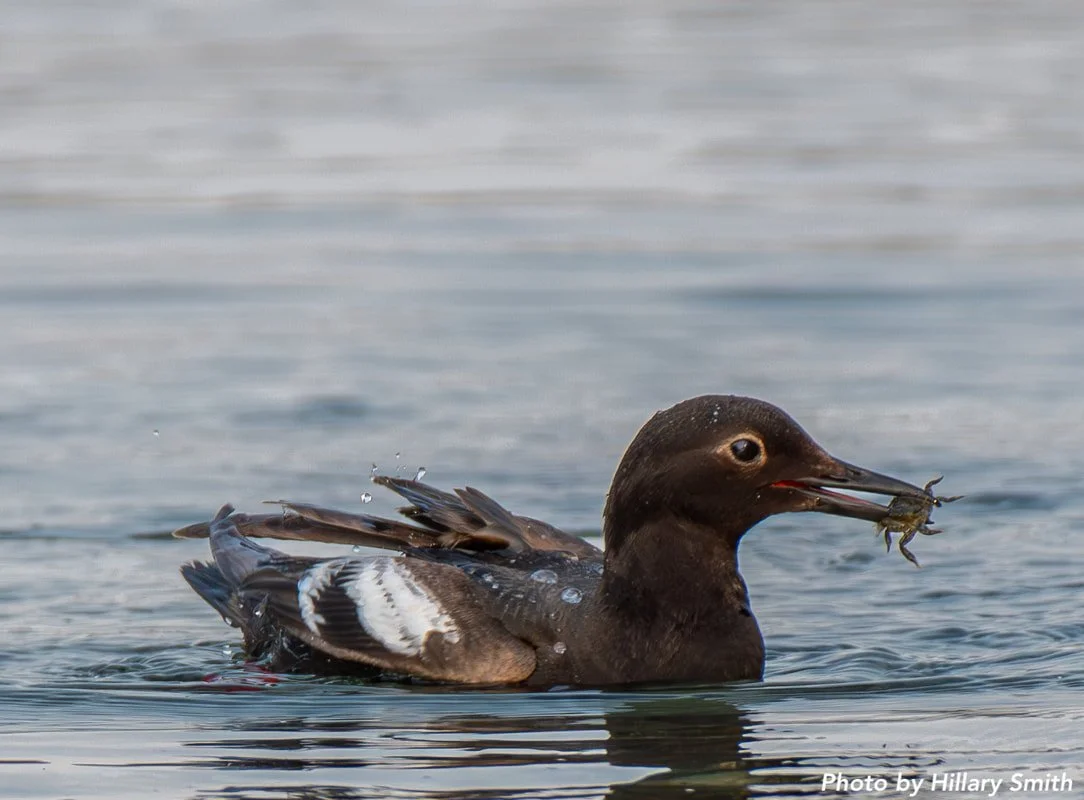
And did you know that PIGU will eat crabs? Yep, got to get a little crunchy snack from time to time. :)
I hope you all are well! You know what to do if you have a fun or interesting story to tell...send it my way!
Take care,
Shannon