

Week 10: August 6th - 12th
We've made it to week 10! This week brought with it some cooler, wetter weather, and I don't know about you, but I'm in heaven. It's always nice to have a little fresh air and respite from the sun.
I’m curious to know if there are any colonies closing down this week? I imagine some are very close! I’m always amazed when we get to this point in the season, how quickly it flies by. It really does feel like we just began!
PIGU Breeding in the Strangest of Places
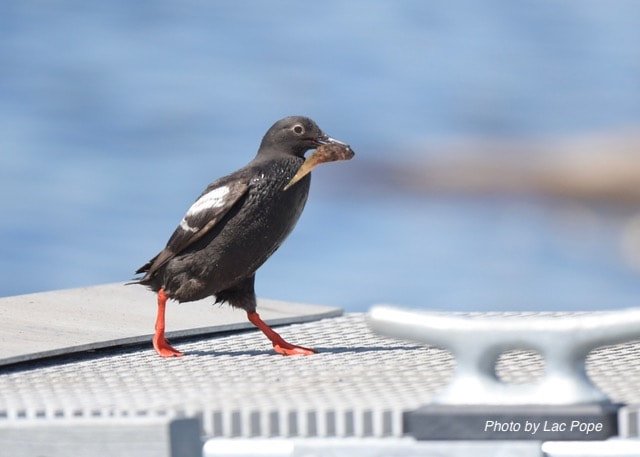
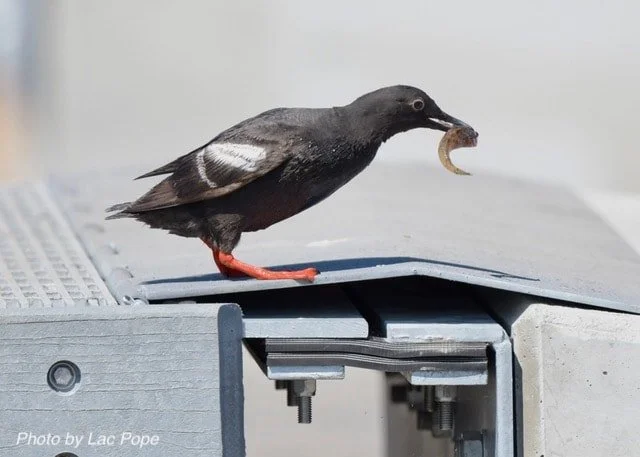
I’ll start off by sharing some photos that I promised at our last SSGN meeting. Following our presentation by Claire Molina about the impacts of human disturbance on “pre-delivery pause” (thank you Claire, for the new term!), we were sharing our wonder at some of the places PIGU will choose to breed and rear chicks within high traffic areas. That discussion brought these photos to mind. Bets alerted us to PIGU feeding chicks at the Keystone Jetty and dolphin, and Lac went out later to capture these. I just love the one of the PG strutting across the dock with a sculpin! This is determination!
Time of Day vs. Tide Level
Another hot topic of recent weeks is the discussion surrounding the correlation of PIGU abundance and activity with tide levels. I have received several questions recently from surveyors who observed that there are noticeably more PIGU present at their colonies on high tides than low tides, and they are not wrong.
We discussed this topic at our SSGN meeting as well, and everyone wants to know:
Is the correlation to tide level stronger than time of day?
Have we considered surveying at the high tides instead of between sunrise and 9:00am?
So, I did some digging and I have answers!
Firstly, yes, scientific evidence supports a correlation between the tide level and PIGU presence at the colony. It also supports the theory that guillemots are present in greater numbers from the first morning light until around 8:30-9:00am. Whether one is stronger than the other is site dependent, however, and seems to relate to the extent of the tidal range. At sites with greater tidal fluctuation, the tide height was the greatest predictor of abundance, while at sites with a lower range of fluctuation, time after sunrise was the only significant factor. Vermeer et al. (1993) recommended taking standardized population counts only during the high tide and only during the morning. If we were to follow this guidance, however, we would miss entire weeks’ worth of breeding data.
Secondly, I asked Frances if she could answer the question about our rule to survey according to time of day. The answer stems from guidance we received from WDFW while establishing our protocol. They were firm in specifying that we complete our surveys before 9:00am, as is standard in their own protocols. This is critical, as doing so ensures that our data can be compared to WDFW seabird survey data.
She also reminded me that the goal of our study is not to aim for ever higher numbers of PIGU or burrow visits, but rather to be consistent in how we are observing and measuring survey components. Though we may have weeks with lower activity, as long as we survey every week, we should capture a good snapshot of what is going on and encompass an entire breeding cycle. This enables us to collect and compare data from year to year and through all of the different tide levels.
This is all great information, and I hope it answers many of the questions floating around out there. I love that this community is so curious and always asking questions! I suspect there is a high correlation between our inquiring minds and our participation in this survey! :D So, keep sending the questions along, and we will continue to ponder and put the puzzle pieces together, when we can.
Here are two great references if you’d like to read further into the studies related to this topic. Unfortunately, copyright law does not allow me to share the full PDF directly.
Drent, R. H. (1965). Breeding biology of the pigeon Guillemot, Cepphus columba. Brill.
Vermeer, K., Morgan, K. H., & Smith, G. E. J. (1993a). Colony Attendance of Pigeon Guillemots as Related to Tide Height and Time of Day. Colonial Waterbirds, 16(1), 1. https://doi.org/10.2307/1521550
More Photos!
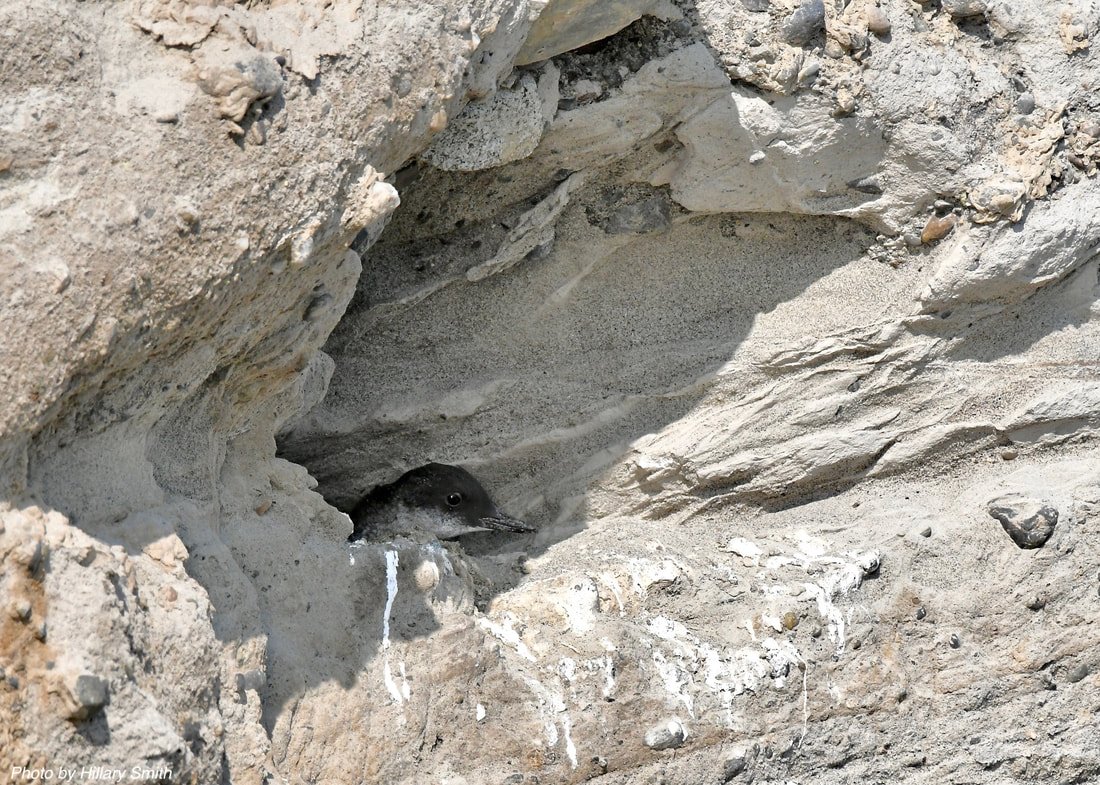
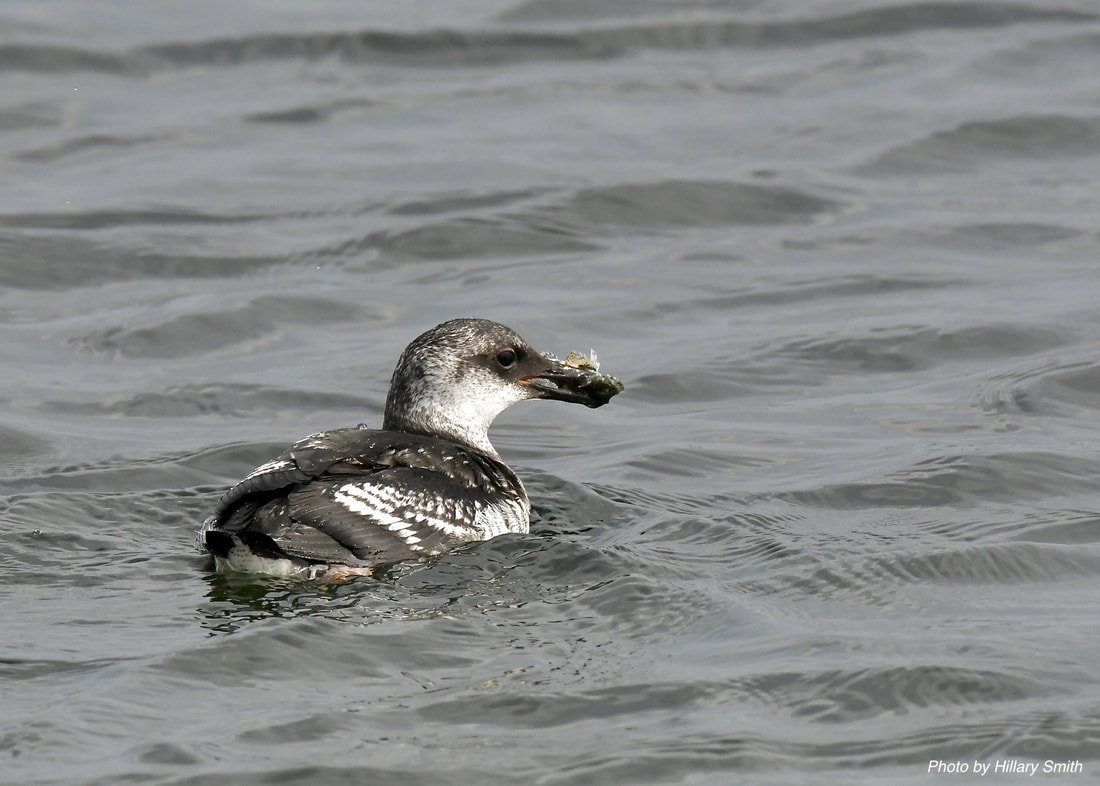
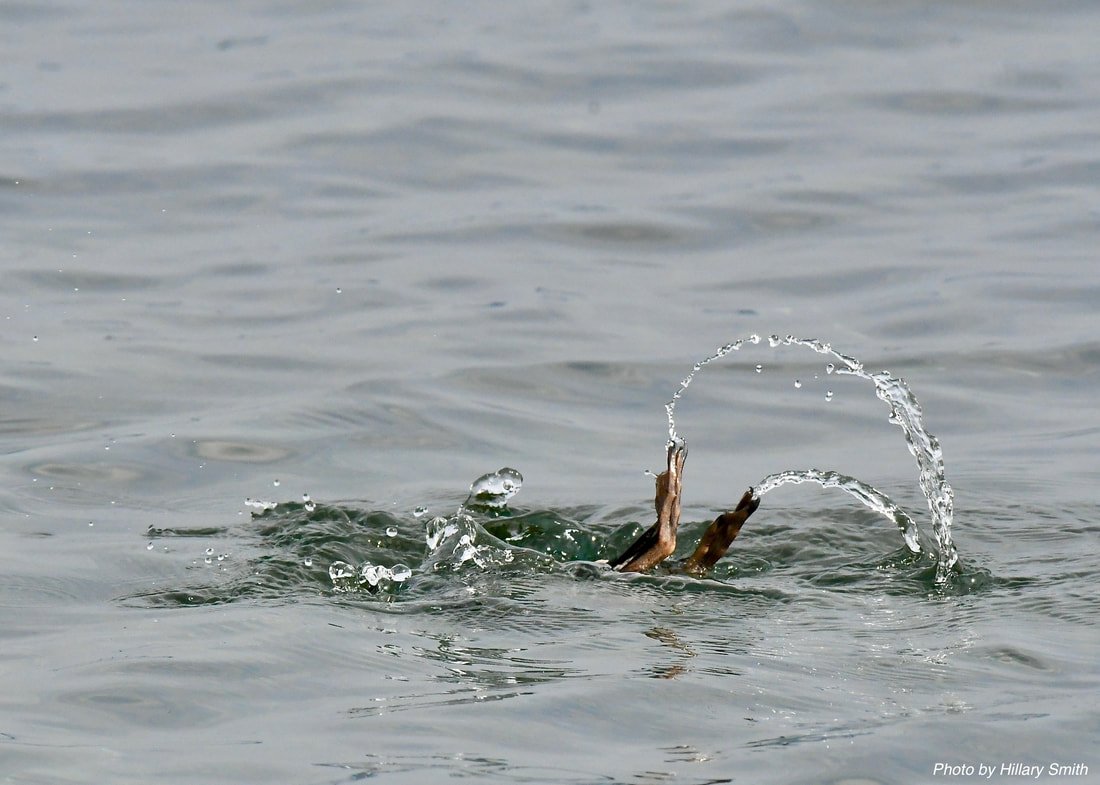
And now, I’ll leave you with some more fabulous chick/juvenile PIGU photos, taken last season by Hillary Smith. These are too fun not to share!
Take care, all, and have a great week!