

Week 10: August 9th - August 15th
Wow, we’ve made it to Week 10!! It’s hard to imagine that this will be the last week of surveys for some colonies! I’m always amazed at how quickly we get here. In some regards, it feels as though we have just blinked, but come 7:00am on survey days, my sleepy brain now tells me it is decidedly the late season.
Still, many of us press on—we have hungry chicks in the burrows, and many prey deliveries yet to record! Jane J. asked me if I had ever heard of a chick burrow becoming active this late in the season, after this happened at her Manzanita colony on Bainbridge Island last week. I answered that while it is unusual, it is not unheard of. I've personally experienced this scenario before. I received an update from Erin B. that her team saw a prey delivery to a new burrow at the Valdes Broken Tree colony, just last week as well.
This made me curious, so I decided to look up how many new chick burrows have popped up across the network recently. According to our database, we collectively recorded 16 new chick burrows last week. The week before, we also saw 16 new burrows, which makes 32 total in the last two weeks. These 32 burrows represent 11% of our total chick burrows for the season, which is not an insignificant number! It looks like quite a few of us will be surveying for several more weeks!
We’re not sure why there is such variability, even within colonies, with burrow timing. We just know that every year, we have some “early” colonies and some “late” colonies, and then some early and late burrows within those colonies. We do know that late burrows could be the result of PIGU pairs laying a replacement clutch following a failed clutch. Reproductive timing could also reflect the experience level of the breeding pair, with older, more experienced breeders starting earlier and newer, younger pairs starting later. It makes sense, if you think about it. Experienced pairs have had more time to bond and are more confident in choosing their burrows and going through the reproductive process.
Back to Erin B. of Broken Tree, here are some lovely photos she captured of two PIGU carrying gunnels, shortly prior to delivering to a new chick burrow.
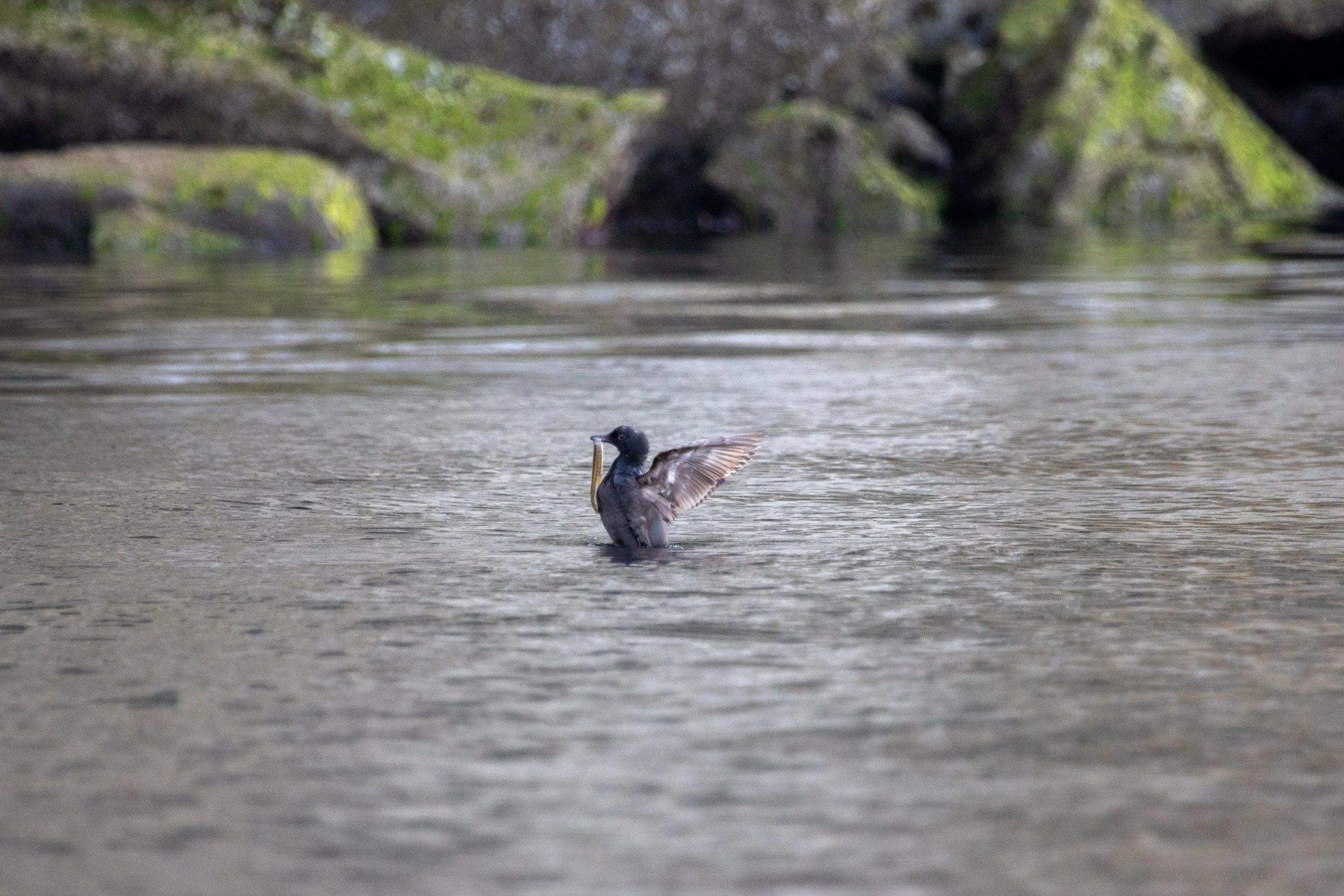
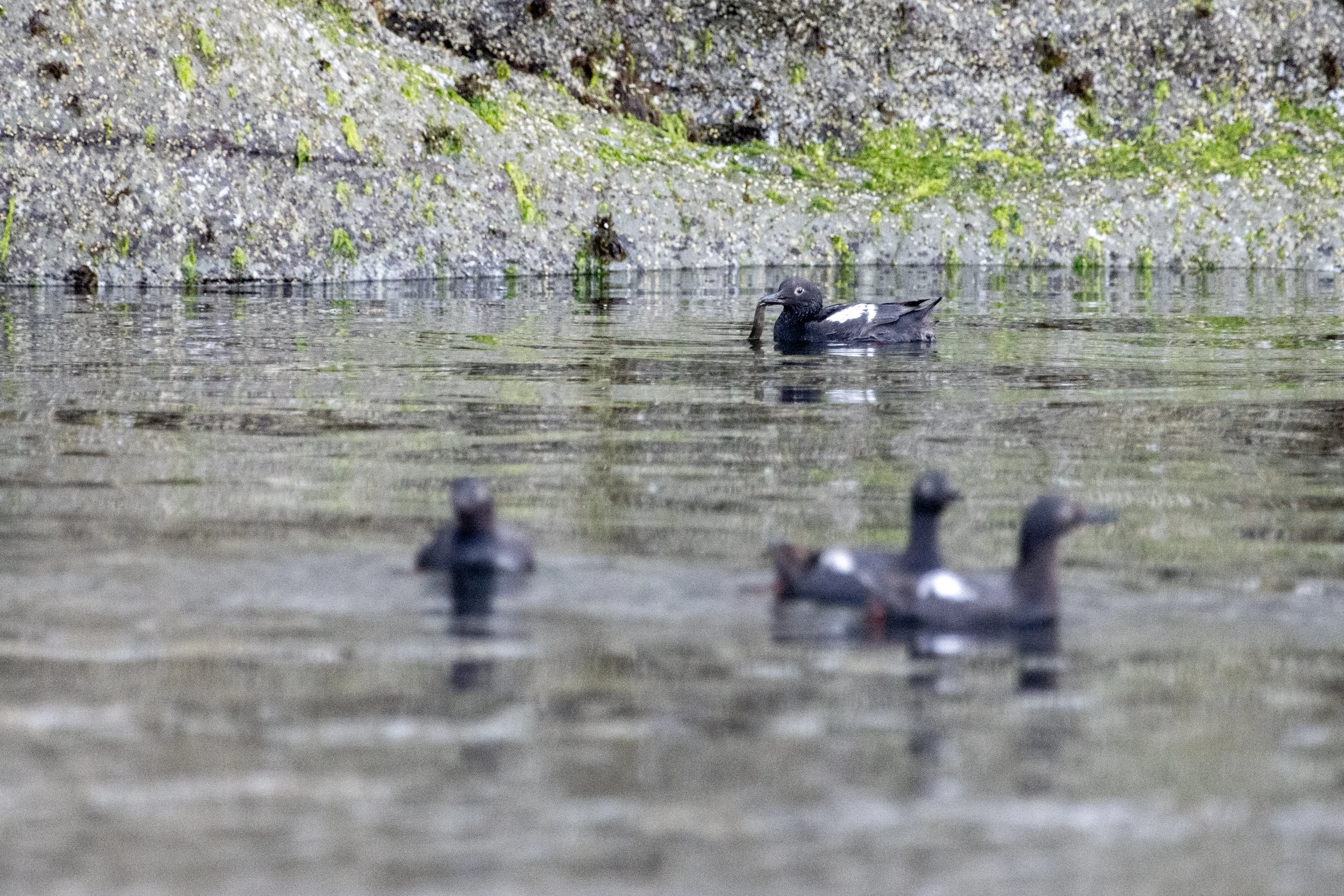
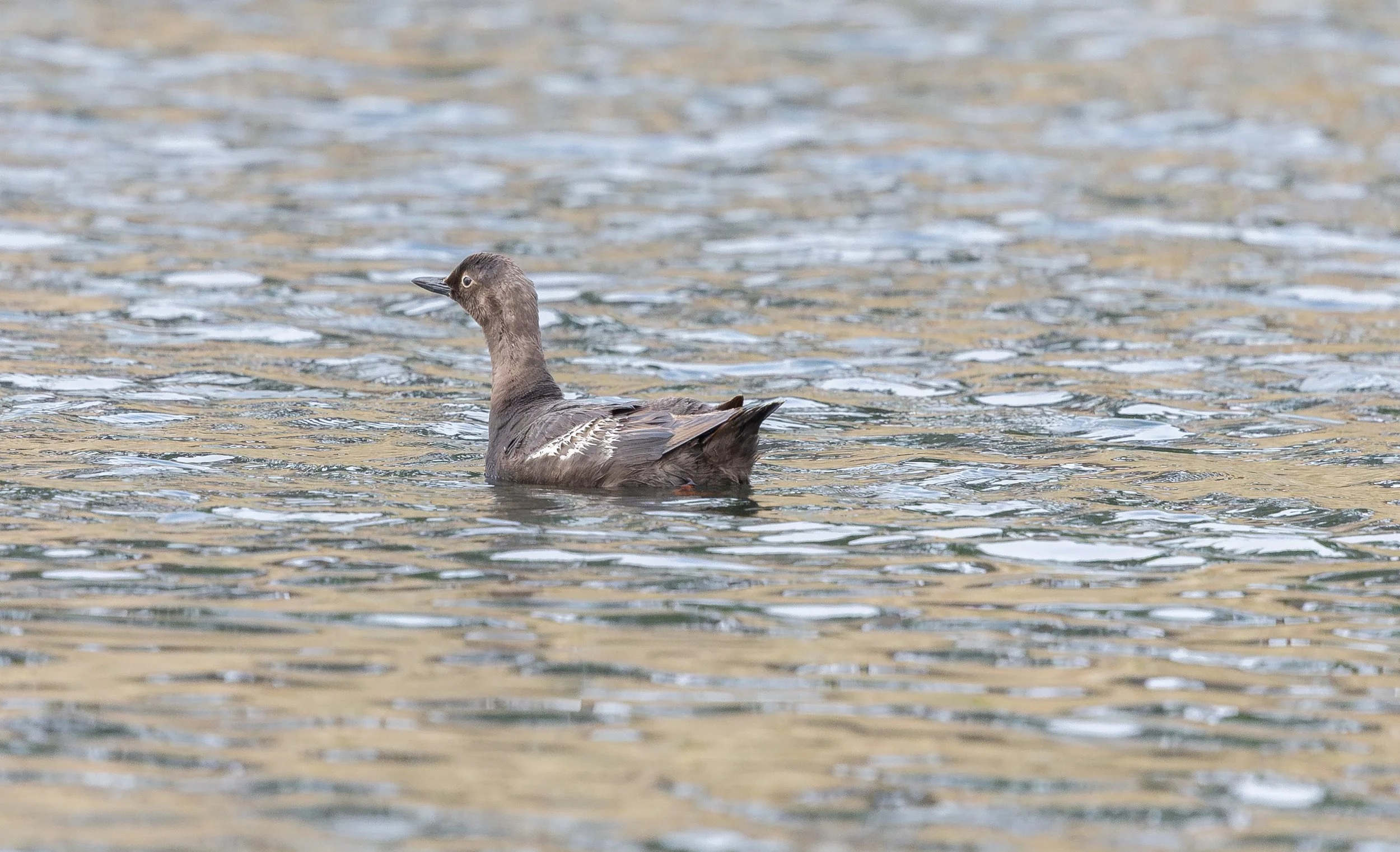
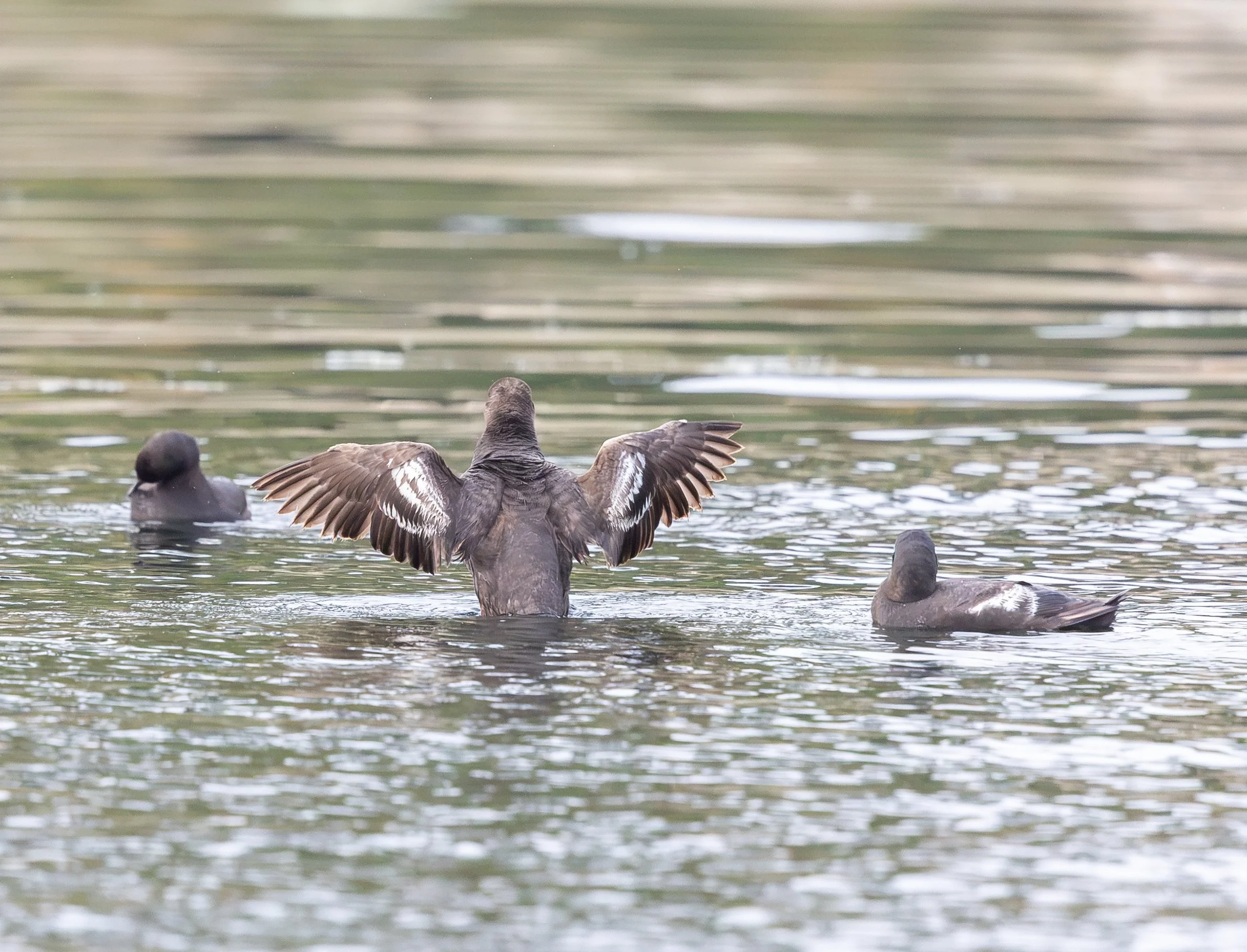
I spy some white feathers on the head and back of the first PIGU! Erin’s guillemots are starting to look a bit mottled and scruffy! You might notice this happening at your colonies as well. As the weeks go on, the guillemots’ feathers will look more worn at the ends, their black will start to look brown, and their bodies will begin to take on a mottled appearance, with white feathers replacing the glossy black we’re used to.
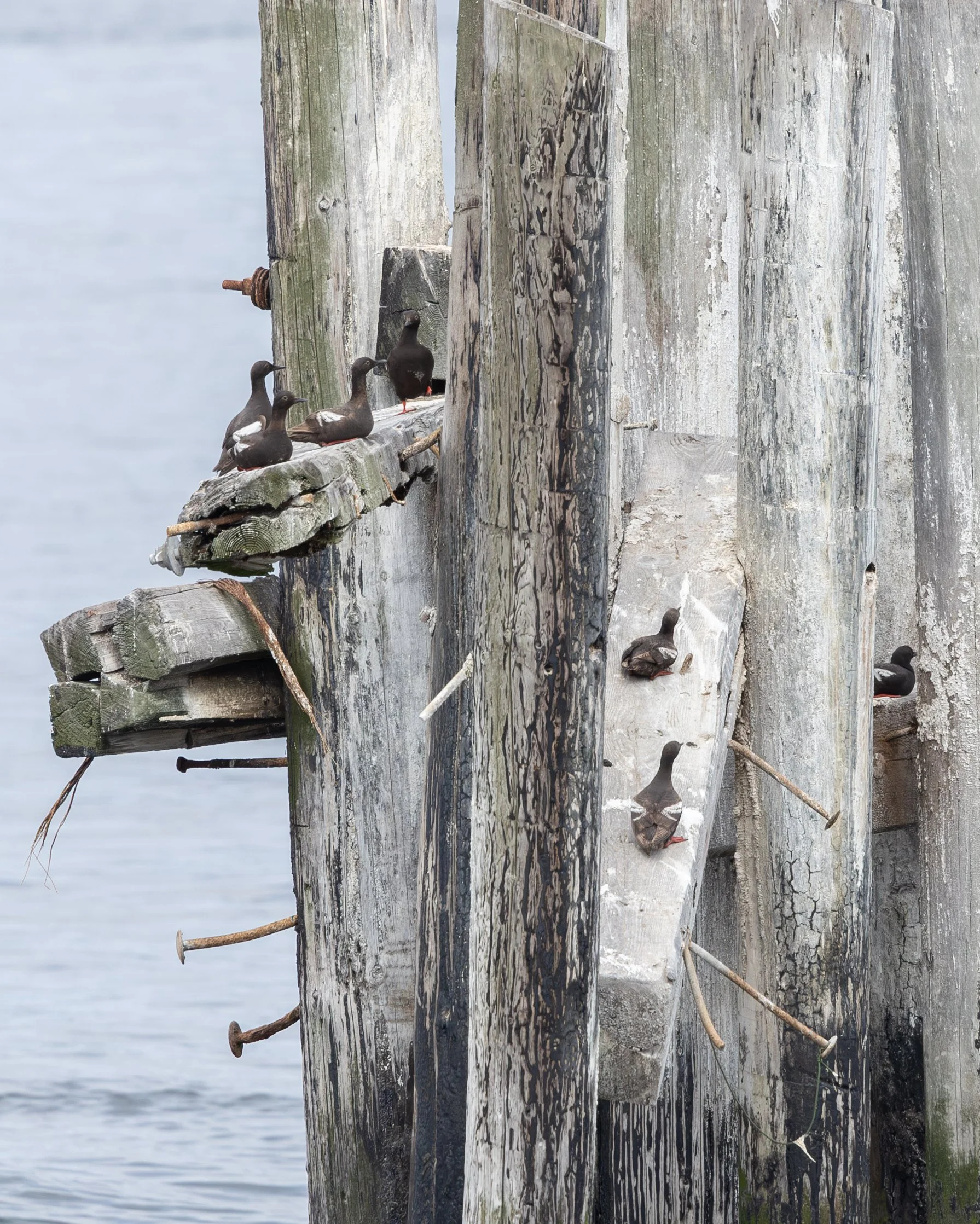
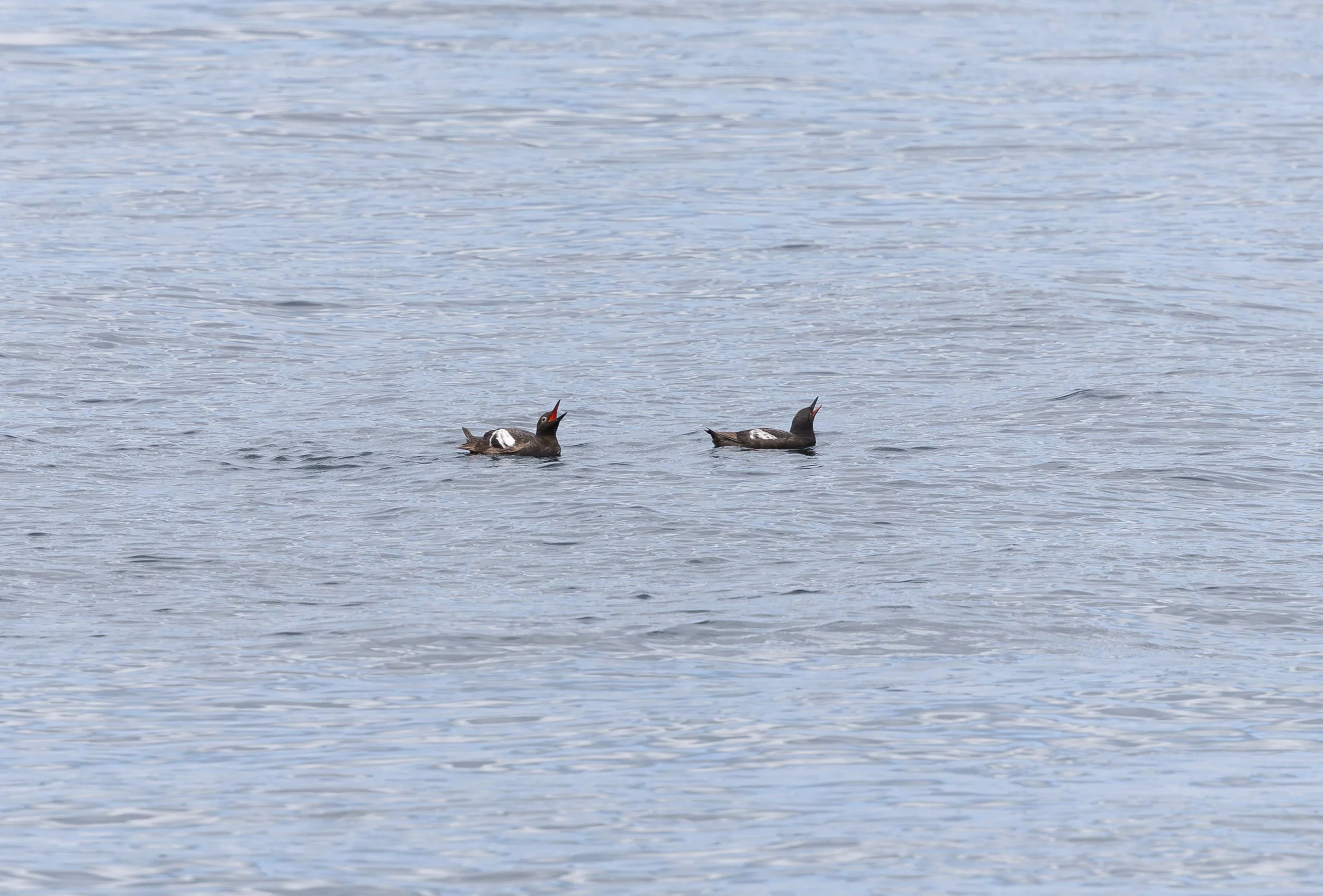
Here are some photos I took last week, where you can also see this plumage change beginning to take hold. The first two photos are from my time with Coffee with the Birds at Titlow Park, in Tacoma. You can see how the ends of the wing feathers are looking lighter and worn. The second set of photos are from a little cutie at my own colony. It is clearly developing some light patches and starting to look mottled. Based on the non-distinct wing patches, I’m guessing this is a sub-adult (maybe a yearling or two-yearling—though I’m not an expert!). Just know, we’re about to see a lot of interesting plumage variations! I love it!
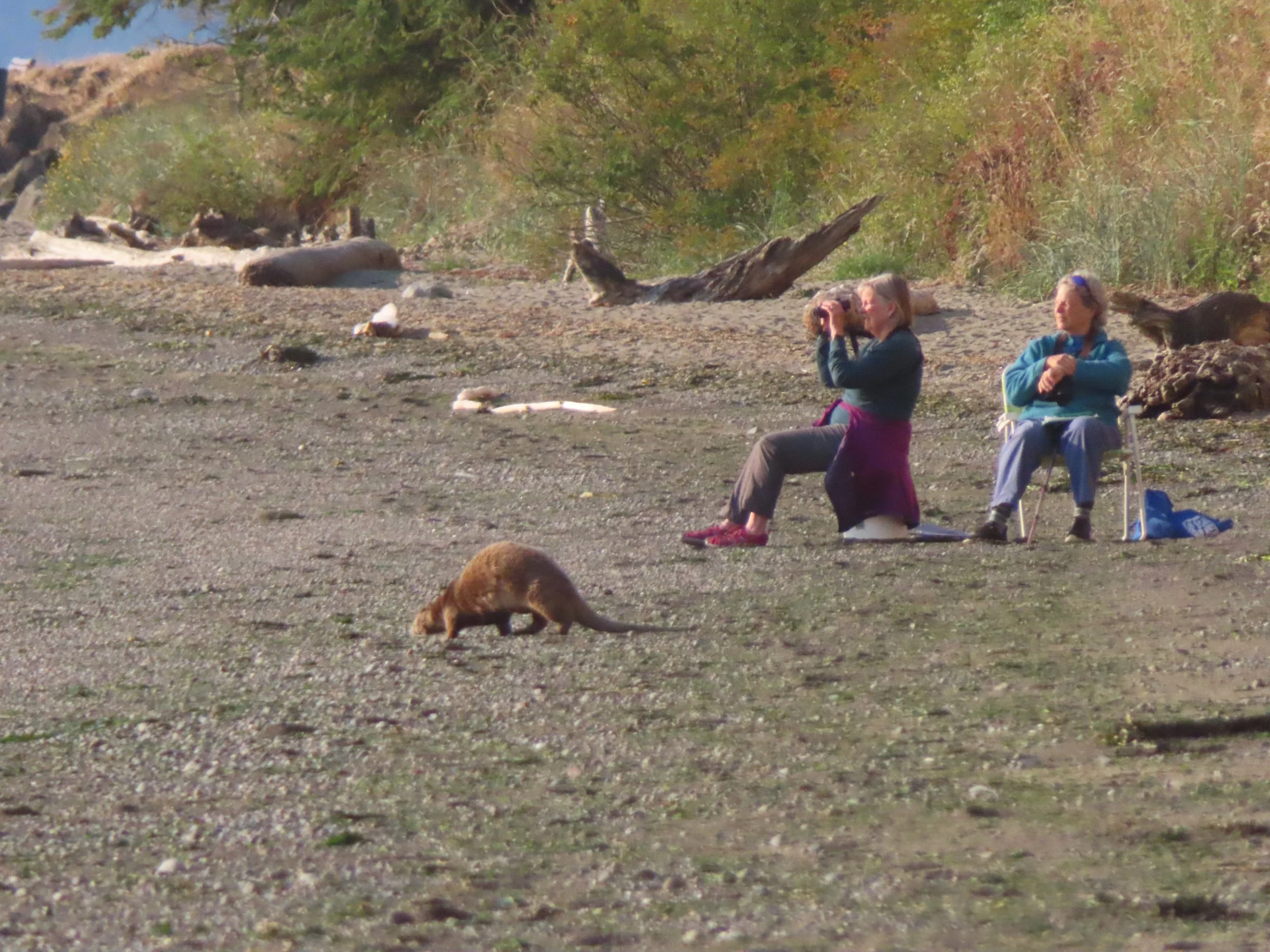
In other news, the surveyors at Port Williams had a very interesting visitor to their beach during a survey! Linda Nakamura and Ed Bowlby (Clallam County survey coordinator), both reported that a river otter swam along the beach and then sauntered up and down, right next to surveyors. At first, the PIGU didn’t seem to pay any mind, but it finally flushed the birds when it came back to the water’s edge. That must have been quite an entertaining survey! I’m impressed with how focused the surveyors stayed throughout the otter’s walkabout. As Linda put it, they didn’t miss a beat!
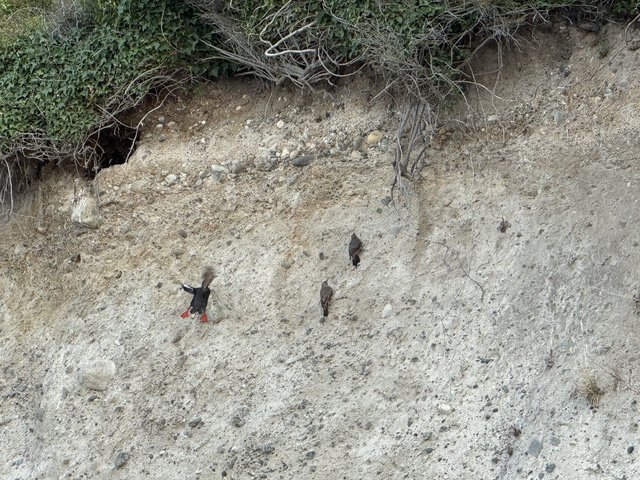
Frances Vandal shared with me a story of some curious flickers that seemed intent on checking out the Shore Meadows bluff and burrows. As you can imagine, the guillemots were not pleased and let them know!
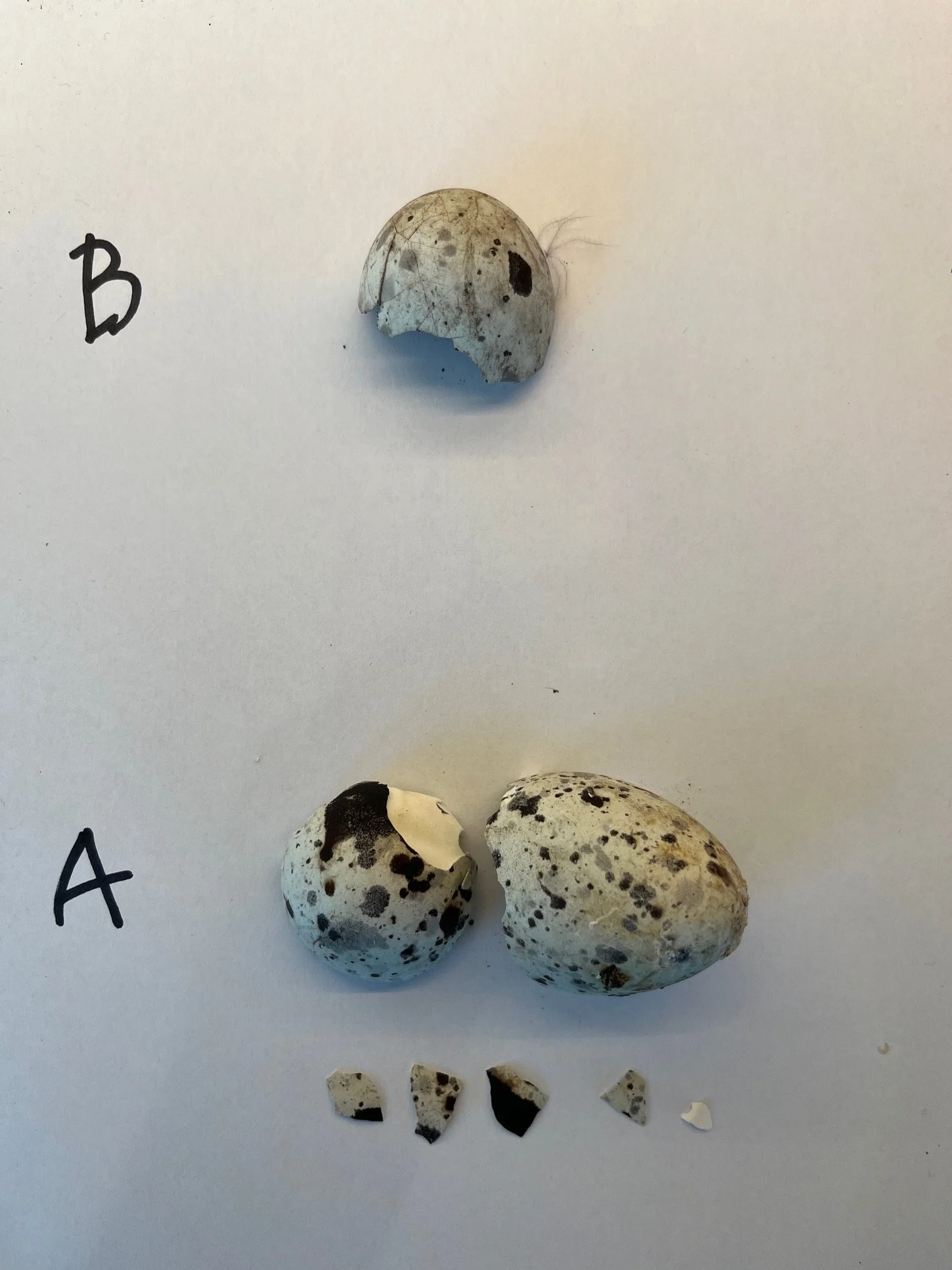
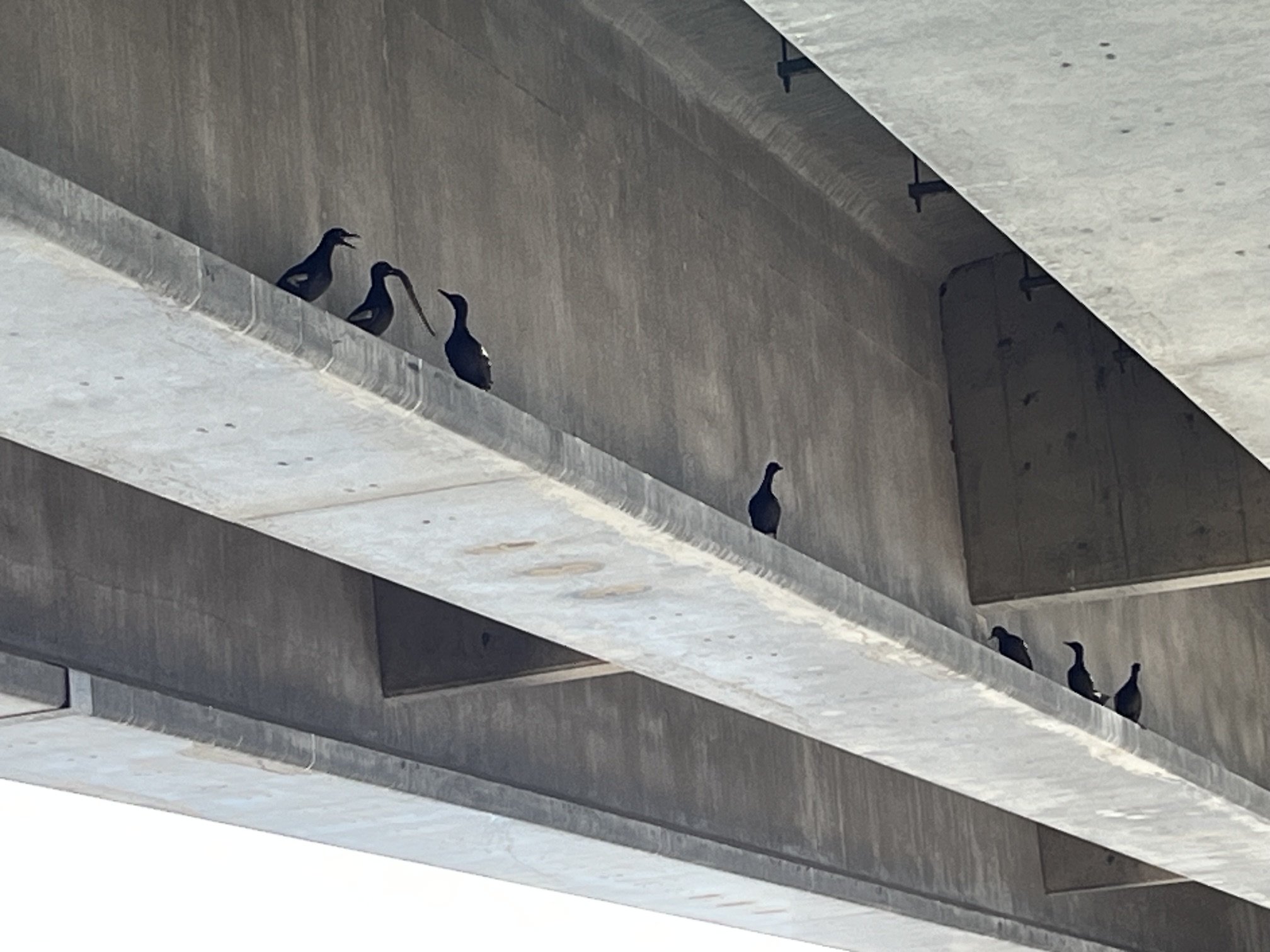
At the Hood Canal Bridge, Regional Coordinator and surveyor, Brenda Johnson, collected eggshells from one of the bridge “cubby” burrows. (Look at those beautiful eggs!) The chicks had already fledged, but even so, a group of PIGU sitting up in the cross beams was not too thrilled and mobbed her. Brenda also shared that during her survey, an eagle perched on the bridge and actively targeted the guillemots, making multiple passes in attempt to catch one. This was the first time they’ve seen an eagle do this at the bridge. The eagle continued hunting for a good 15 minutes, but eventually gave up and was unsuccessful. I can only imagine how stressful (yet exhilarating) that was to watch!! It’s a good thing our little PIGU are such excellent divers!
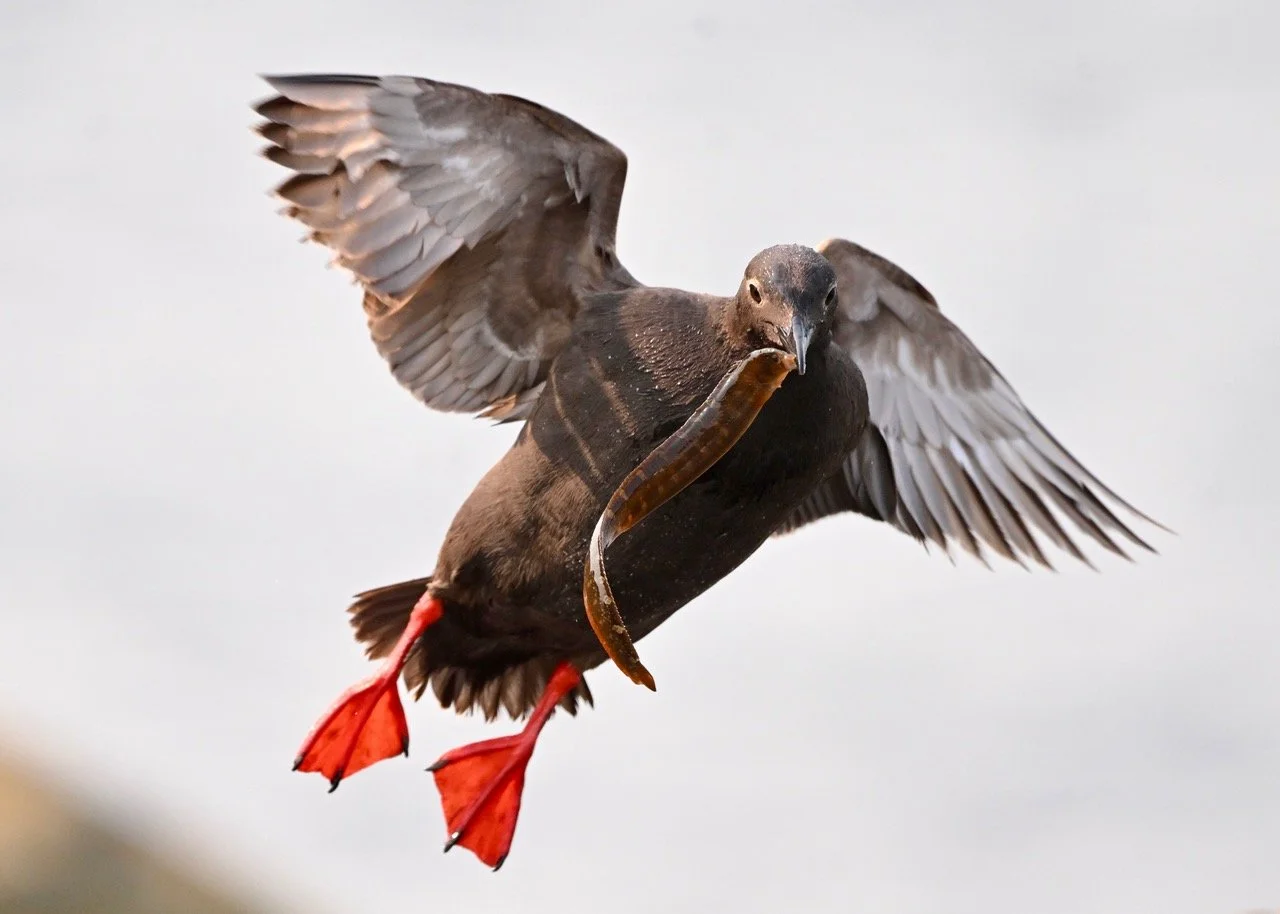
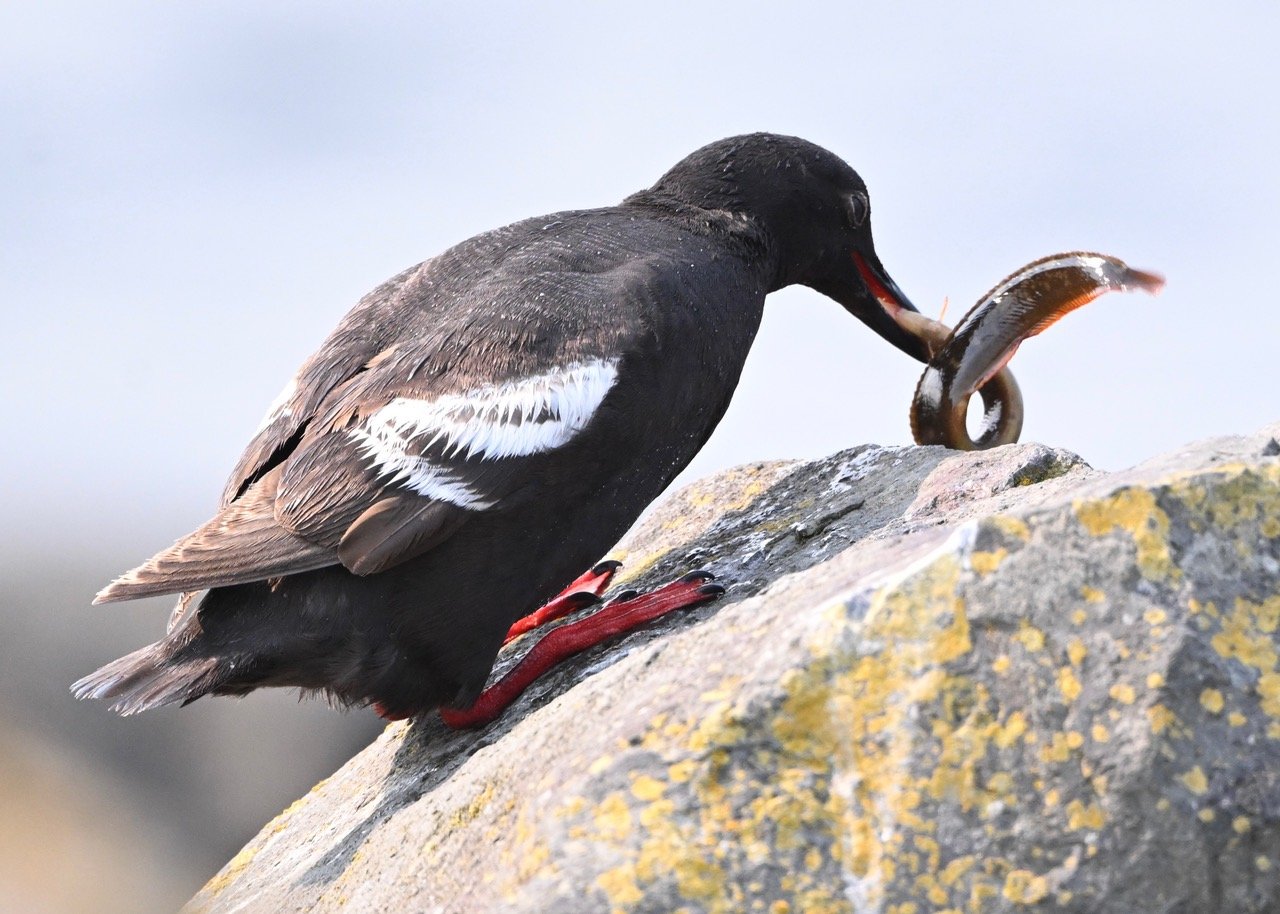
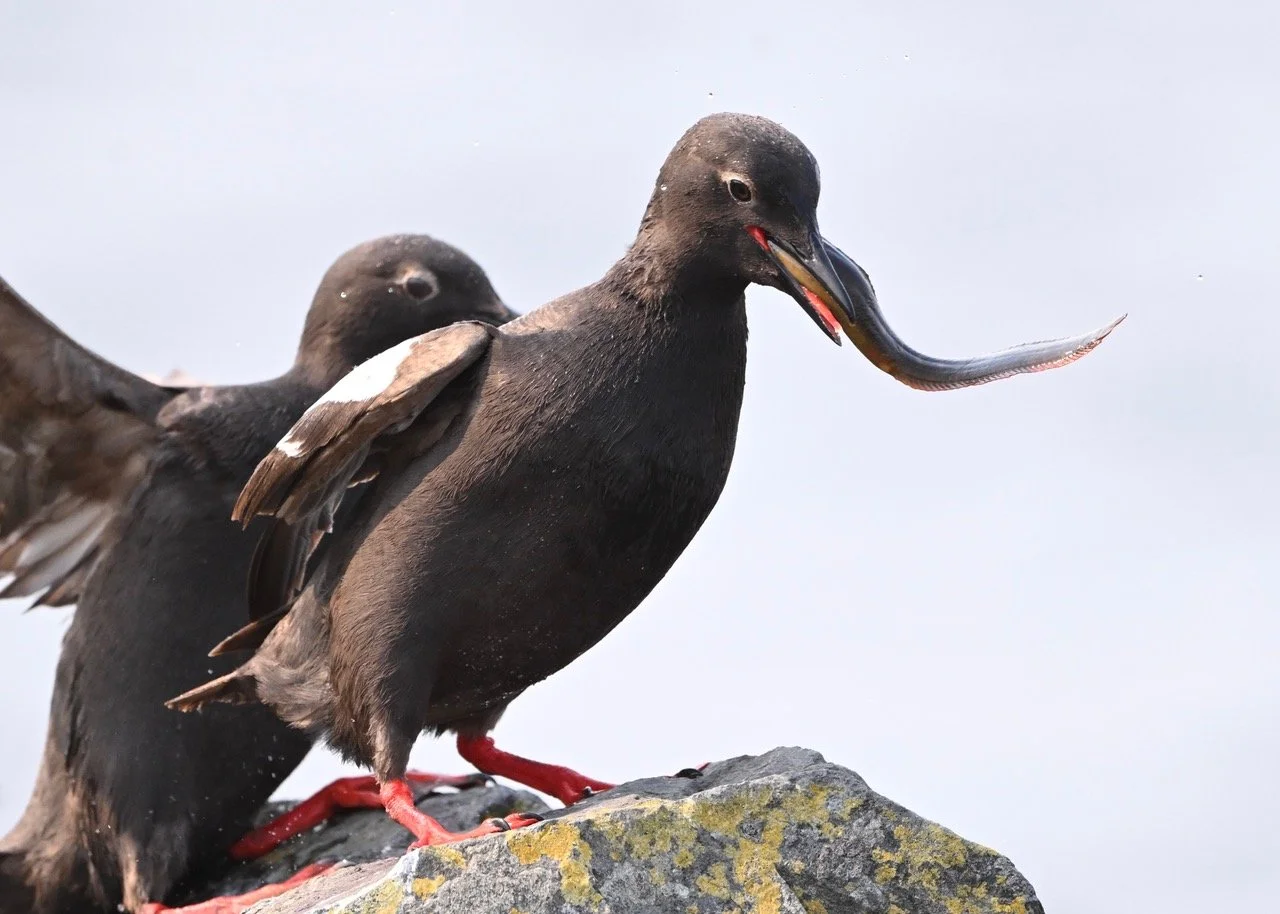
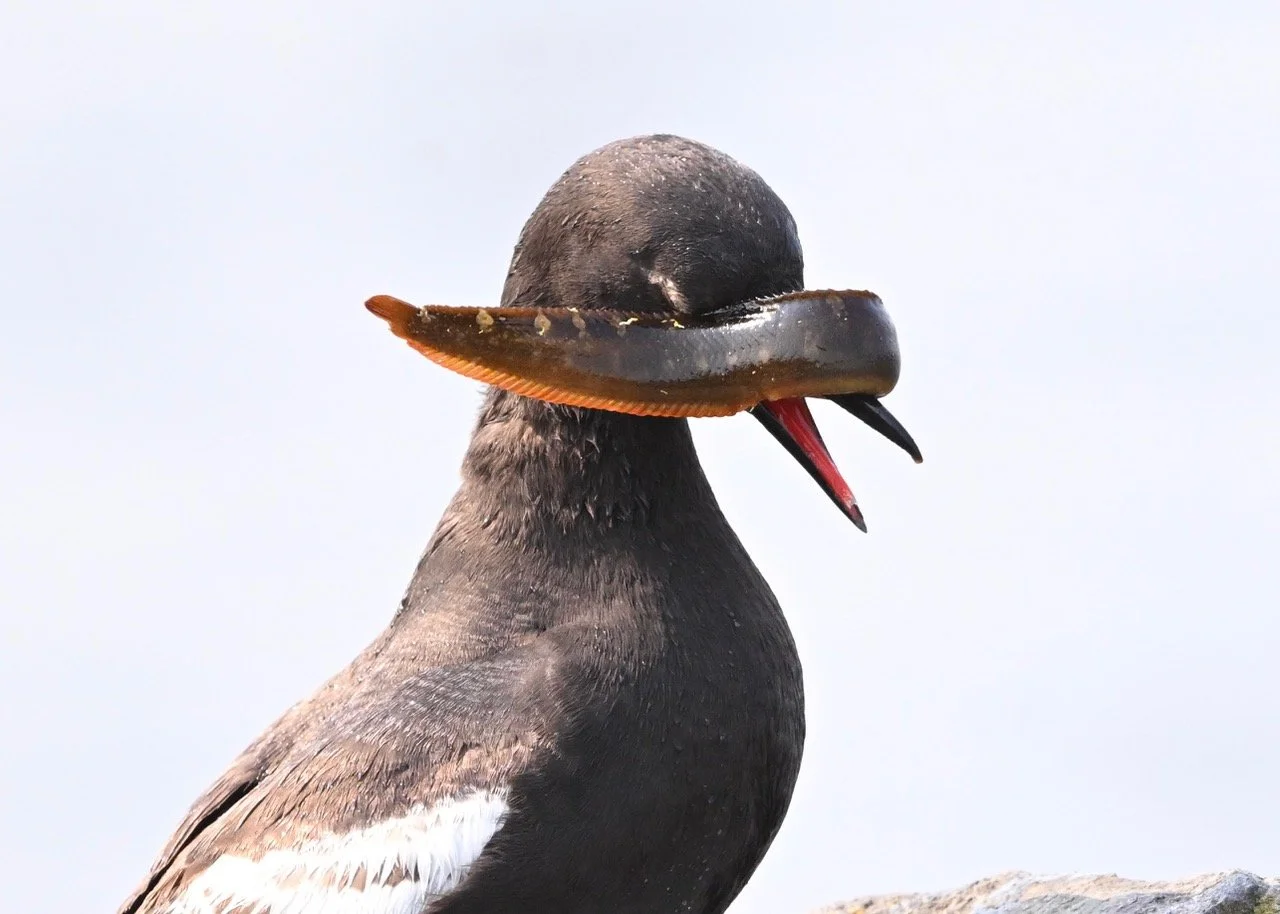
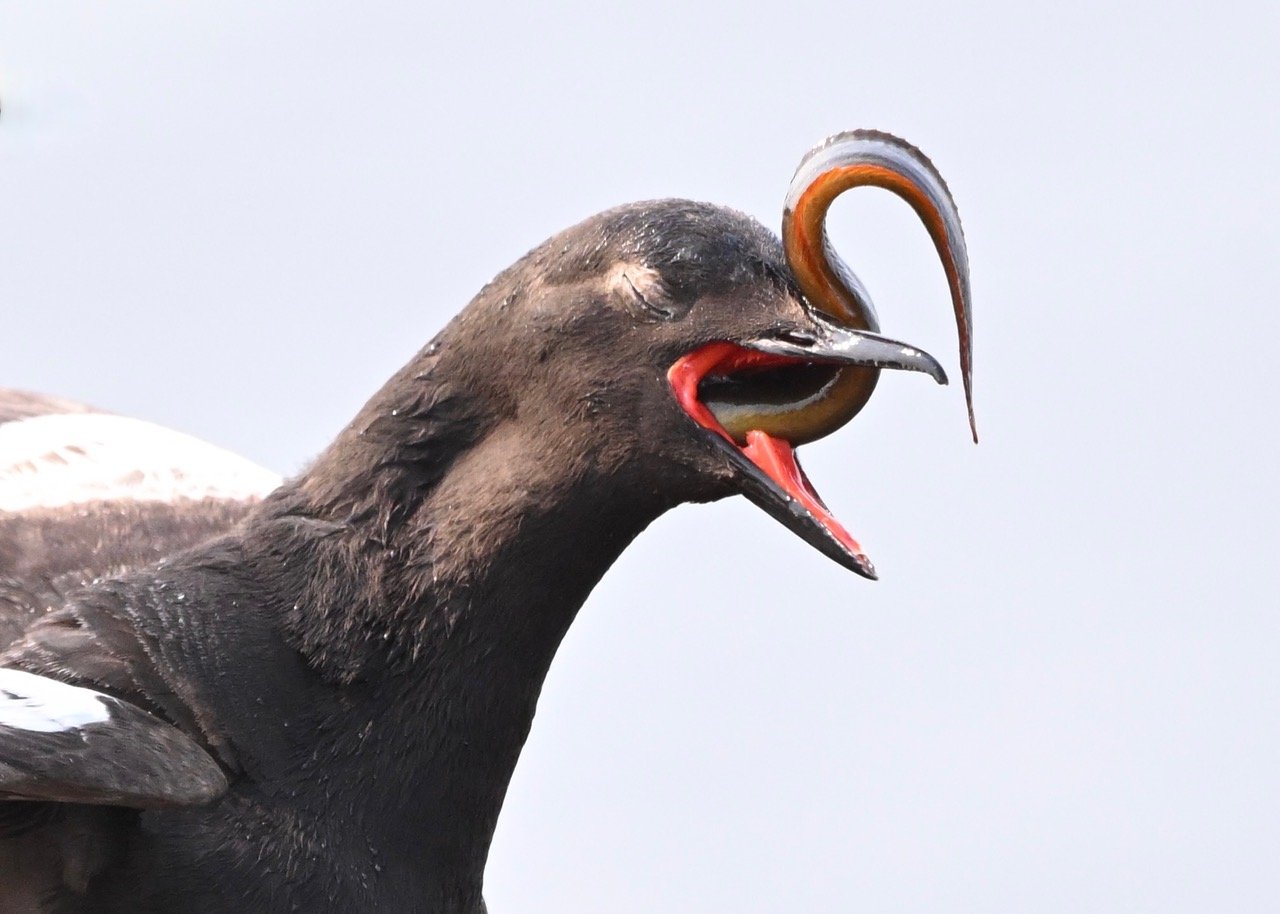
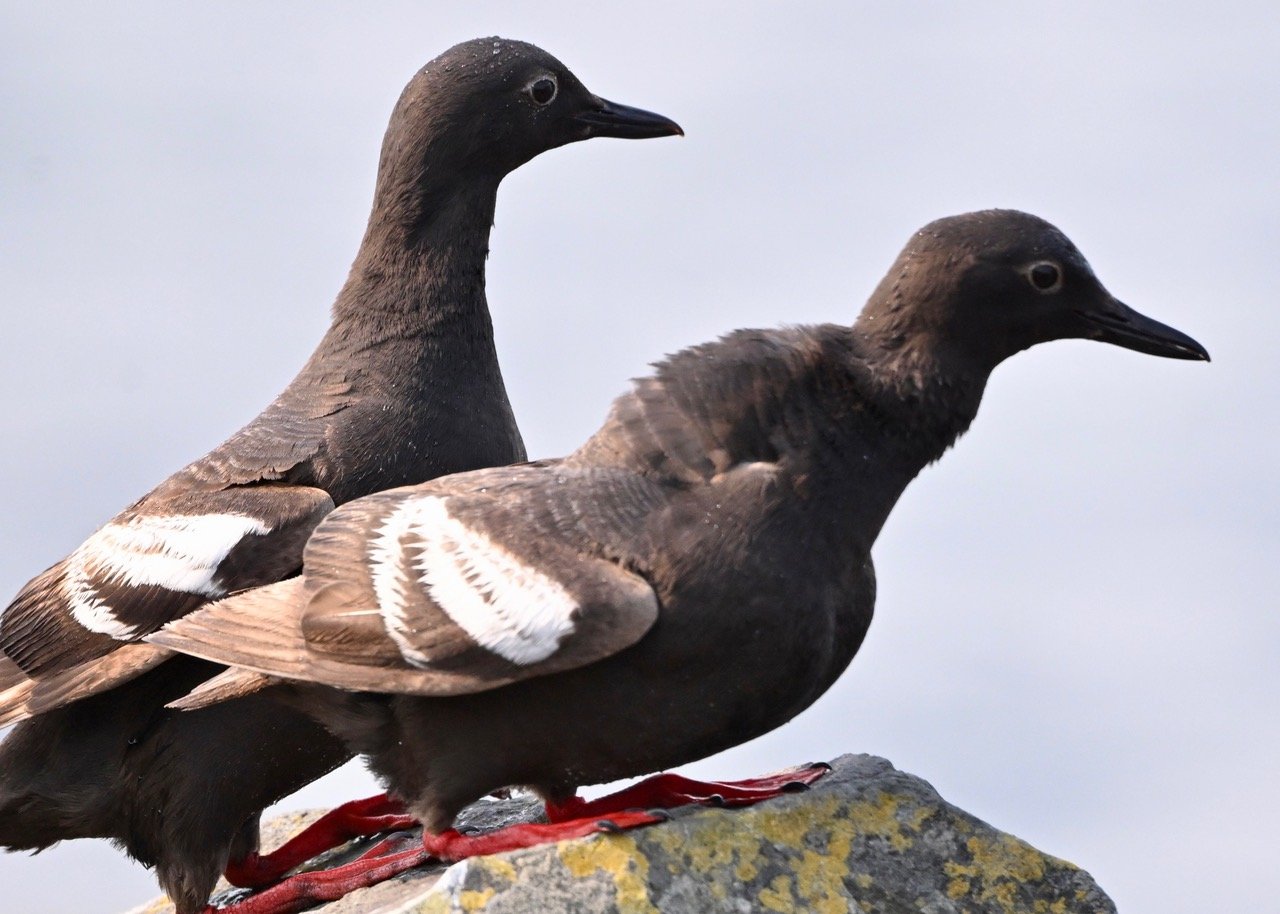
Last but not least, we can always count our roving Whidbey photog Lac Pope to bring us some amazing photos of guillemots being guillemots. This series showcases something many of us have experienced while out on a survey, but maybe not in such detail. We see a PIGU fly in and hold a prey, we get excited and wait patiently for it to deliver—only to have it throw its beak up and swallow the prey itself—down the hatch! The tiny pang of disappointment in the lack of burrow delivery is placated by the sheer wonder of it! A guillemot has got to eat! (Check out the lump that gunnel created in its throat!) Lac also commented that the poor gunnel did not go down without a fight. Lac, thank you for this awesome series of photos!
Onward to Week 10!! Thank you so much to all of you—to those who are finishing up your season this week and to those who are pressing forward! Your efforts and dedication are second to none! Take care!
Shannon